The Arethousa Archaeological Museum in Chalkida is one of those hidden gems in Greece that completely surprised me.
Located in Evia’s (Euboea) capital, Chalkida, just over an hour from Athens, this underrated coastal town is full of history, charm, and local life that often gets missed by visitors.

As a Greek who’s always exploring new places around the country, I recently spent some time in Chalkida and visited the Arethousa Museum, and I was genuinely impressed.
Here’s everything you need to know about visiting the Arethousa Archaeological Museum in Chalkida.
This post includes links that may be affiliate links. If you choose to make a purchase through them, I may earn a small commission at no extra cost to you. Please see my disclaimer/privacy policy for more information.
My Latest Video on Evia Island
I took the ferry from Oropos in Attica to Eretria, explored the ancient archaeological site, visited the spectacular Arethousa Museum in Chalkida, and ended the day with a long stroll at sandy Alykes Beach.
What is the Arethousa Archaeological Museum?

The Arethousa Museum opened in 2021 and is situated within a beautifully restored historic distillery building. It’s not your typical museum building—and that’s part of what makes it special.

The Arethousa Museum is thoughtfully curated, with smart lighting and interactive displays that make it easy to connect with the stories and objects on show.
I’d been meaning to visit for ages, but I was honestly surprised by how amazing this museum turned out to be!
The Collections of the Arethousa Archaeological Museum

The exhibits cover a huge time span, from prehistoric times to the Byzantine period, focusing on finds from Evia and Skyros.
There’s a lot to take in at the Arethousa Archaeological Museum, and the exhibits are way more interesting than you might expect. Here’s what you’ll come across as you walk through:
Political Organization

In this section, you’ll get a look at how society and leadership changed in Evia over the centuries.
It starts way back in the Bronze Age and takes you through the time of city-states, feudal rulers, and into the Ottoman era.
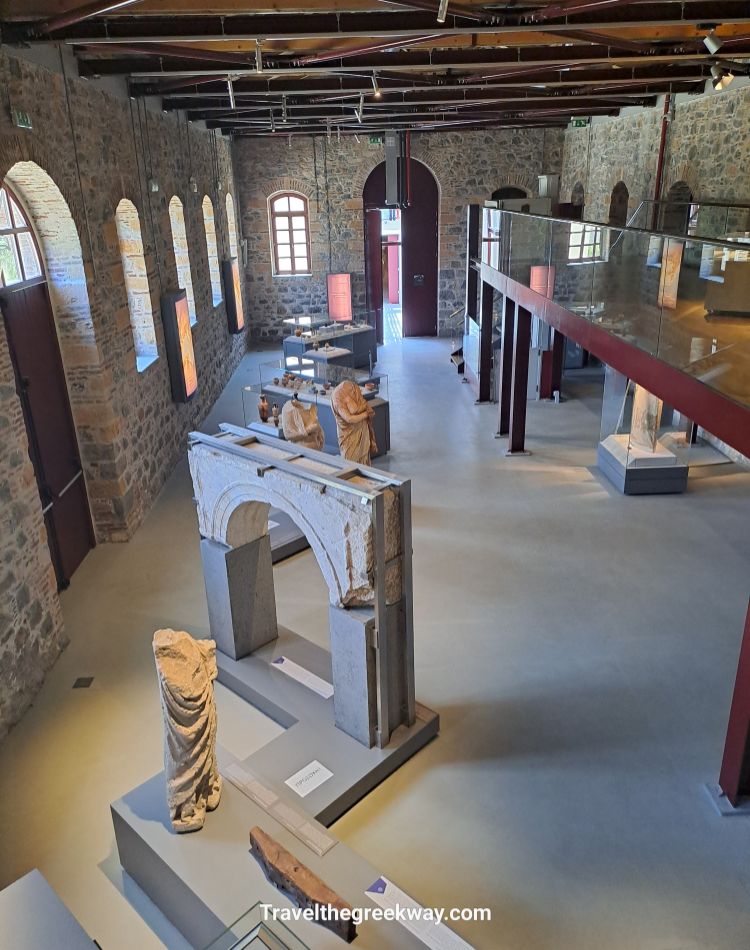
You’ll spot ancient coins from Euboea and Skyros, check out how early towns were planned, and see one of the museum’s star pieces—a rich burial from Lefkandi that shows just how well-connected and prosperous the area was around the 10th century BC.
Economy

This part walks you through how people in Evia used the land and sea to make a living. You’ll learn about the clay-rich Lelantine Plain and the famous Karystos stone quarries.
There are tools and raw materials from as far back as prehistoric times, along with copper finds from Skyros.

There’s also a cool section about sea trade, showing how Chalkida (known back then as Negroponte) played a key role during the Venetian and Ottoman years.
Cultural Identities

Here’s where you get a real feel for how Evia was connected to the wider world.
From the Aegean to the Mediterranean and even Europe, this section shows how cultures mixed and evolved over time.

You’ll see Cycladic figurines, pottery from both Evia and Athens, a Byzantine doorway, a Western-style statue of the Virgin Mary, and even Ottoman tobacco pipes.
Worship

This section dives into how people in Evia practiced religion, from ancient rituals to the rise of Christianity.
You’ll come across prehistoric figurines, offerings to Greek gods, and objects from places like the sanctuary of Artemis in Avlida and the Mycenaean cemetery at Mikro Vathy.

You’ll also see how Eastern gods like Isis and Serapis made their way into local worship. The section wraps up with the arrival and spread of Christianity on the island.
Colonization & Alphabet

This part tells the story of how the people of Evia helped shape the ancient world. Between the 8th and 6th centuries BC, they were out founding colonies in places like Northern Greece, Italy, and Sicily. Their pottery traveled all over the Mediterranean.
But the biggest legacy? The Euboean alphabet—one of the earliest versions of Greek writing, which eventually influenced the Latin alphabet we use today.
Top Exhibits Not to Miss

- The Euboean Alphabet: One of the museum’s most fascinating displays explains how this local alphabet helped shape written Greek as we know it.
- Funerary Textile: A 3,000-year-old fabric, incredibly preserved, gives you a glimpse into the burial traditions of the region.
- Prehistoric Tools and Pottery: See how people lived thousands of years ago on Evia.
The Museum’s Historical Building

The Arethousa Archaeological Museum is housed in a beautifully restored former distillery, built in 1899. It was once used to produce alcohol and spirits, later on soap and ice, and operated until 1980.
Locals knew it as the “Arethousa” factory, named after the mythological nymph Arethousa.

Today, the building is officially recognized as a cultural heritage monument.
It’s located in a historic part of Chalkida, close to the Ottoman aqueduct, the Arethousa spring, the ancient Agora, and the Rock-Cut Stairway—making it a great stop for anyone exploring the area.
Fun fact: the entire building was constructed using porcelain bricks and reinforced with S-shaped iron supports to make it more durable and sturdy.
Arethousa Spring
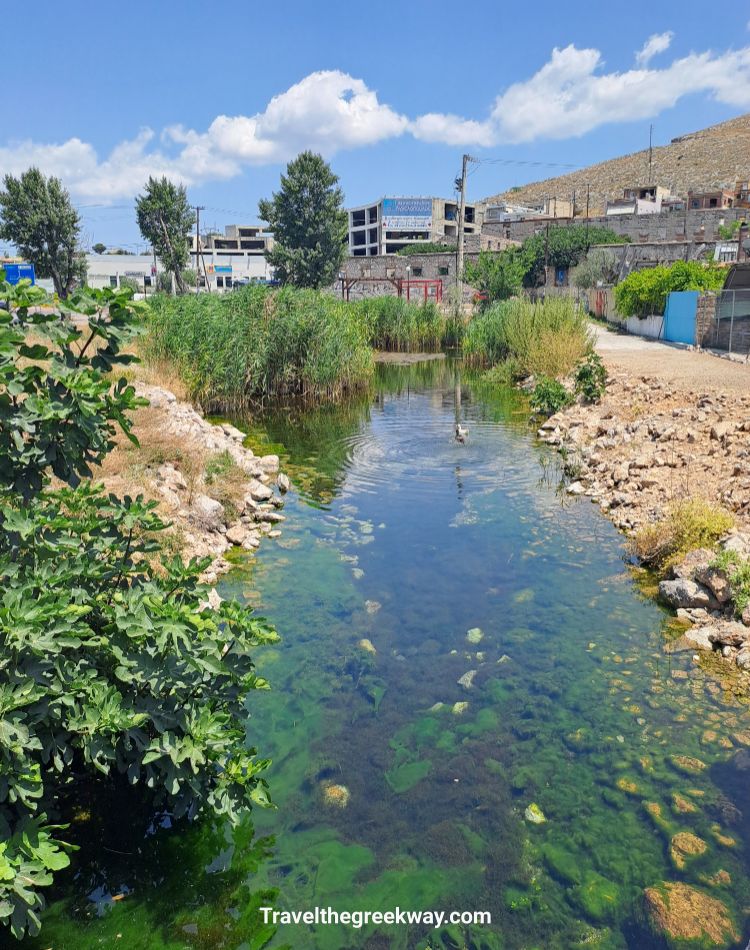
According to local legend, Arethousa was a nymph, daughter of Nireas and Dorida, who had a love affair with Poseidon along the shores of the Evripos, but jealous Hera turned her into a spring.
Ancient writers even mention this source, and locals have been telling the story since at least the Archaic period to explain the name of Chalkida’s most famous spring.
FAQs

Where is the best place to stay in Chalkida
If you want to stay right in the center of Chalkida with a seafront view, AMAYA – Sea View Suites is a great pick.
Prefer the mainland side? Brown Beach Chalkida Kosher Resort offers a fantastic stay—plus an amazing swimming pool.
And if you’re all about peace, stunning views, and thoughtful touches (like a welcome bottle of wine!), check out Elia Luxury Residence.
How to get to the museum?
The museum is in the area of Agios Stefanos in Chalkida, right across from the Arethousa spring. It is 2.5 km from the old bridge of Chalkida. The easiest way to get there is to get a taxi from Chalkida center. If you are traveling from Athens, the most convenient way is to rent a car.
How much does the entrance ticket cost?
The general ticket costs €10, but you may be eligible for a reduced price (€5) if you are a student or an EU citizen over 65 years old.

How Big is the Museum? How Long Should You Plan to Spend?
The museum has exhibits on three levels: the ground floor, the mezzanine, and the upper floor. Depending on your pace, I would say that you will need between an hour and two.
What Are the Museum’s Hours, and Is It Open Every Day?
The museum is open from Monday to Sunday, 8:30 AM to 3:30 PM, and closed on Tuesdays.
Is the Museum Accessible to People with Disabilities?
The museum is easy to get around, with ramps and wide paths—great for strollers, wheelchairs, and anyone who needs a bit more space. Perfect for families or visitors with mobility needs.

What are the best sites nearby?

After the museum, take time to enjoy Chalkida itself. The town sits right along the Evripos Strait, where the water famously changes direction several times a day due to tidal currents—it’s a strange and fun thing to watch.
If you have more time, you could also take a short drive to Eretria or relax at one of the local beaches.
Discover here a full guide for Chalkida: 10 Best Things to Do in Chalkida
Guided Tours from Athens
If you’re planning a visit to Chalkida, let me help you make the most of it by recommending the best guided tours.
- Thebes & Chalkida Island Private Tour from Athens.
- Explore Evia Private Full Day trip from Athens.
- Food tour in Evia Island -road trip- small group.
- Private Transfer from Athens to Chalkida/Eretria.
Why It’s Worth a Visit
What stood out to me the most was how thoughtfully designed the Arethousa Museum is. It’s modern, well-organized, and genuinely interesting—and not crowded like so many better-known museums in Greece.
It’s perfect for history lovers, families, or anyone interested in exploring what to do in Euboea beyond the beaches. If you’re looking for hidden gems in Greece, this is definitely one of them.
Plus, Chalkida itself makes a great base or a stop on your Greece road trip. Whether you stay overnight or come for the day, it adds a lot to your itinerary without the crowds.
Join Our FB Group & Subscribe to My YouTube Channel!
For more Greece travel tips and ideas for your next trip, join my free Facebook Group or follow me on YouTube for more videos from around Greece.
Happy and safe travels,
Evgenia
Essential Travel Resources for Greece
- ‘Hello’ and ‘Thank You’ in Greek: “Ya sou” and “Efharisto”
- Booking.com: I use Booking.com mostly for Europe.
- All-Inclusive Resorts in Greece
- Rent an Affordable Car in Greece
- Athens Metro Website (timetables and ticket info)
- Trains (Hellenic Train)
- Public Buses KTEL
- Get Your Guide: For all your day or multi-day tours and city guide needs, I use Get Your Guide
- Emergency Numbers Anywhere in Greece: AMBULANCE 166 – FIRE 199 – POLICE 100– EMERGENCY NUMBER 112
