Hi, I’m Evgenia! I live in Athens, but my heart belongs to the Peloponnese.
My family roots run deep here, specifically in the beautiful villages of Krestena and Savalia in the Elis (Ilia) region.
I’ve spent my life exploring the hidden corners of this peninsula—not as a tourist, but as someone who calls this land home.
From the birthplace of the Olympic Games to rugged mountain peaks, this guide is my way of sharing the best things to do in the Peloponnese, Greece, from a truly local perspective.

Best Things to Do in the Peloponnese, Greece: A Regional Guide
The Peloponnese is not just a region; it is a vast, leaf-shaped peninsula that technically became an island after the cutting of the Corinth Canal. It is the birthplace of the Olympic Games and home to UNESCO sites, magnificent towns, and picturesque seafront villages.
- Distance from Athens: The gateway to the Peloponnese (the Corinth Canal) is approximately 75 km (~47 miles) from central Athens, making it an easy 1-hour drive.
- Total Area: It covers roughly 21,550 sq. km (~8,320 sq. miles).
- Travel Tip: To see the “Real Peloponnese,” you need at least 10–14 days, as the driving distance from Patras in the north to Mani in the south is over 260 km (~162 miles) of winding coastal roads.
To help you navigate it, I have organized this guide into the seven distinct regions that make up the Peloponnese. We will begin our journey with the region closest to Athens.
1. Corinthia: Vineyards, Fortresses, and Alpine Escapes
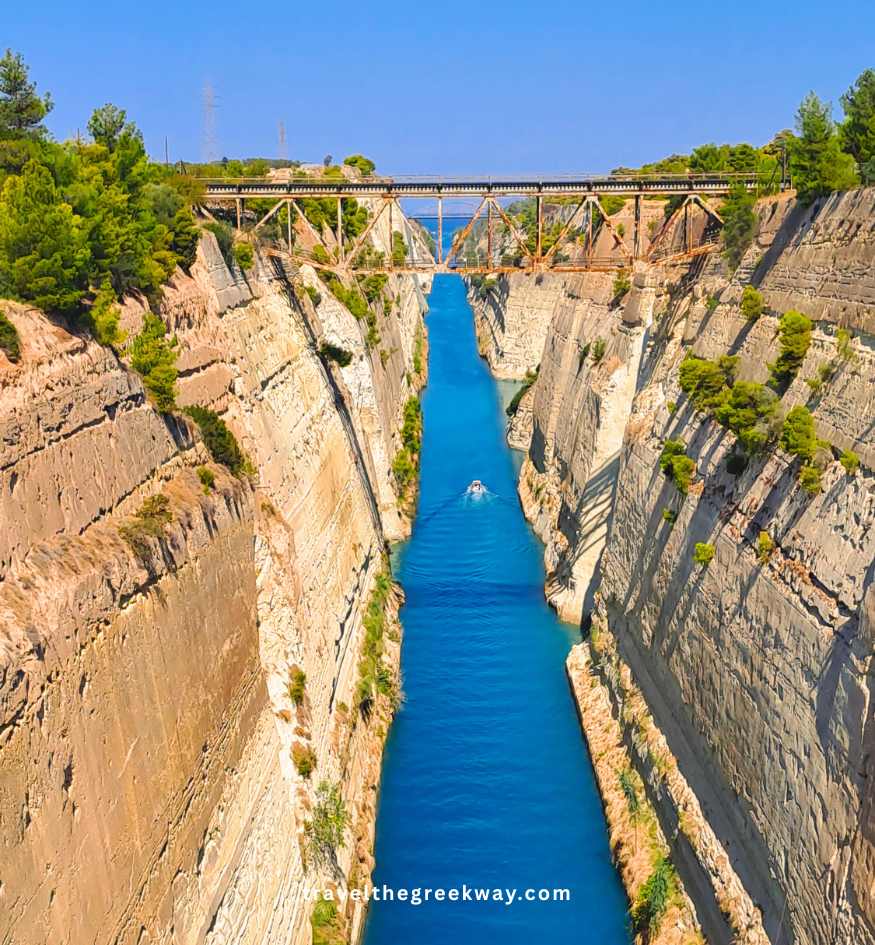
Corinthia is much more than just a canal or a bungee jumping destination; it is a premium wine-growing region with a massive history and some of the most diverse landscapes in the Peloponnese.
- Ancient Corinth: Explore the ruins of one of the most powerful city-states of antiquity. See the Temple of Apollo, walk through the Roman Forum, and the Bema, where Apostle Paul preached. You can also visit the nearby Archaeological site of Isthmia.
- The Diolkos: Near the modern canal, you can still see the remains of this ancient paved trackway, which allowed boats to be moved overland between the Saronic and Corinthian Gulfs.
- Best Thing to Do: Hike or drive up to Acrocorinth. This fortress sits on a massive limestone rock with 360-degree views of the Gulf. It is widely considered the most impressive natural fortress in Greece.

Beyond the Famous Sites (The Insider Circuit):
- The Vineyards of Nemea: Known as the heart of the “Roads of Wine,” Nemea is home to the Temple of Zeus and the ancient stadium. It is world-famous for its Agiorgitiko (the “Blood of Hercules”) red wine. Most wineries offer excellent tours and tastings.
- Loutraki & the Casino: Famous since antiquity for its natural thermal springs, Loutraki is a vibrant seaside town with a cosmopolitan atmosphere and one of the largest casinos in Europe.
- Lake Doxa & Gkoura Village: Head into the “Peloponnesian Switzerland.” Lake Doxa is an alpine lake surrounded by pine forests, featuring the tiny St. Phanourios chapel on a peninsula. Nearby, the stone-built village of Gkoura offers incredible local architecture and mountain views.
- Ziria Mountain Ski Resort: Located on Mount Kyllini, this is the perfect spot for winter sports or summer hiking, proving that the Peloponnese is a true year-round destination.
- Ancient Port of Kechries: Visit the ruins of the eastern port of Ancient Corinth, where the sea has partially submerged some of the ancient structures.
Best Beaches in Corinthia
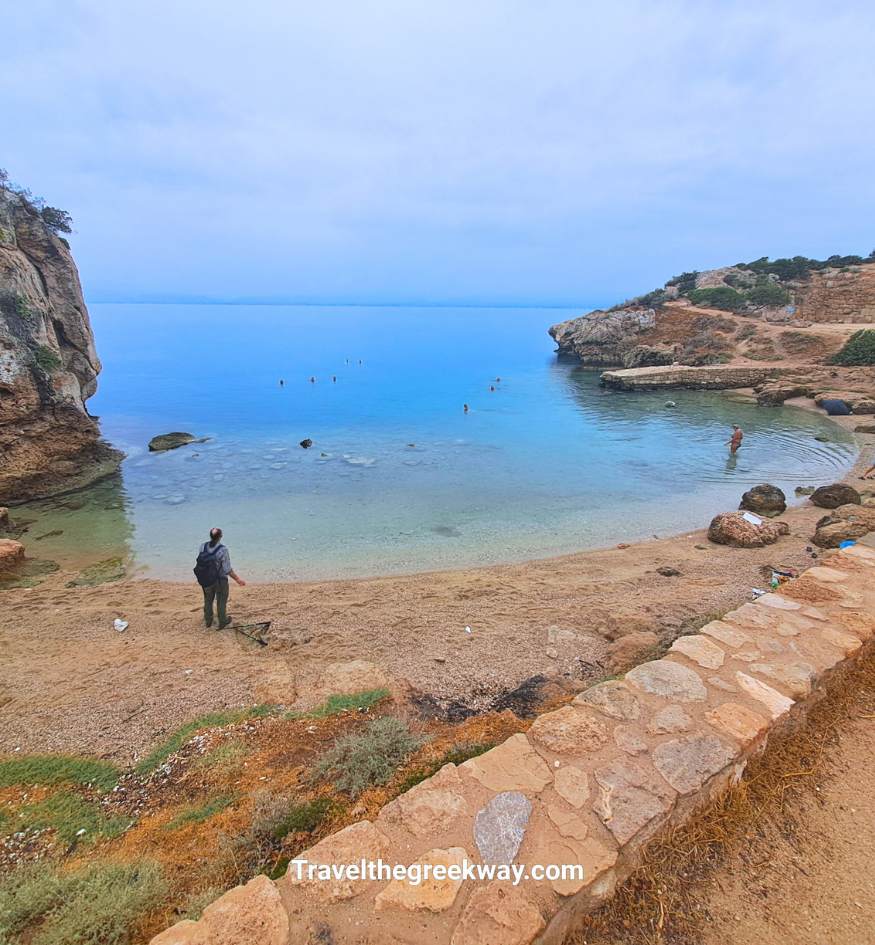
- Loutraki Central Beach: A long, pebbled beach with crystal-clear, deep blue water, located right in front of the town’s cafes and restaurants.
- Iraion (Perachora) & Lake Vouliagmeni: Located about 15 km (~9.3 miles) from Loutraki. Lake Vouliagmeni is a saltwater lagoon perfect for calm swimming. Just beyond it lies the Heraion, an ancient temple dedicated to Hera, where you can jump into the sea directly from the ruins.
- Milokopi Beach: A “hidden gem” reachable via a dirt road (a 4×4 is recommended). It offers a stunning pine-fringed double bay with turquoise waters, perfect for those seeking seclusion.
2. Argolis: The Mythical Region
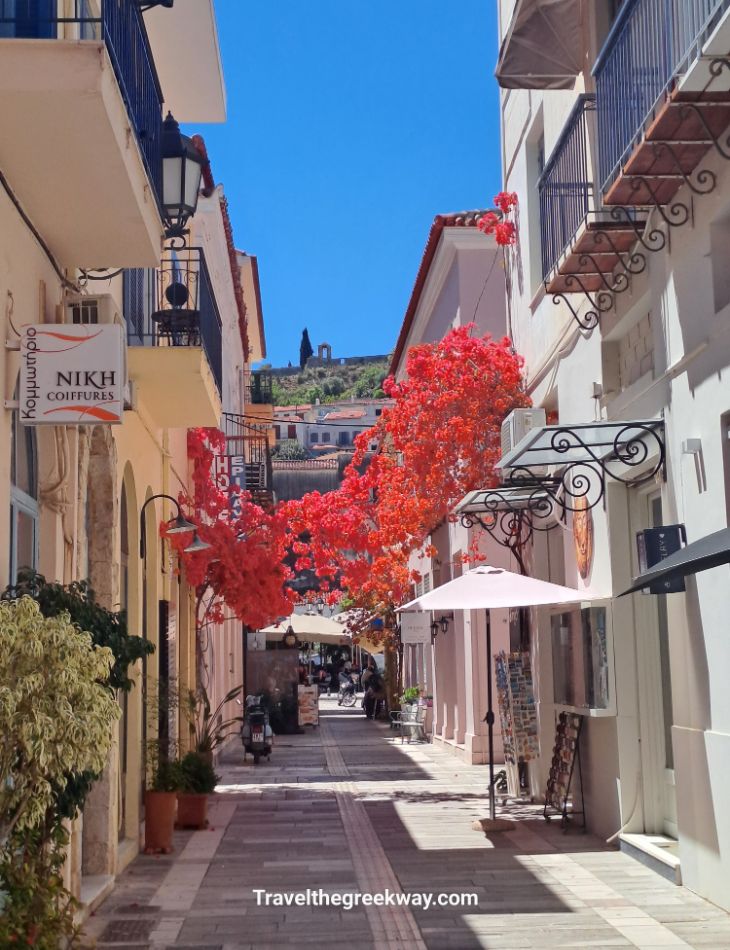
Argolis is the “heavy hitter” of Greek history. It is often the first stop for travelers because it contains more UNESCO sites and ancient citadels than almost anywhere else in Europe.
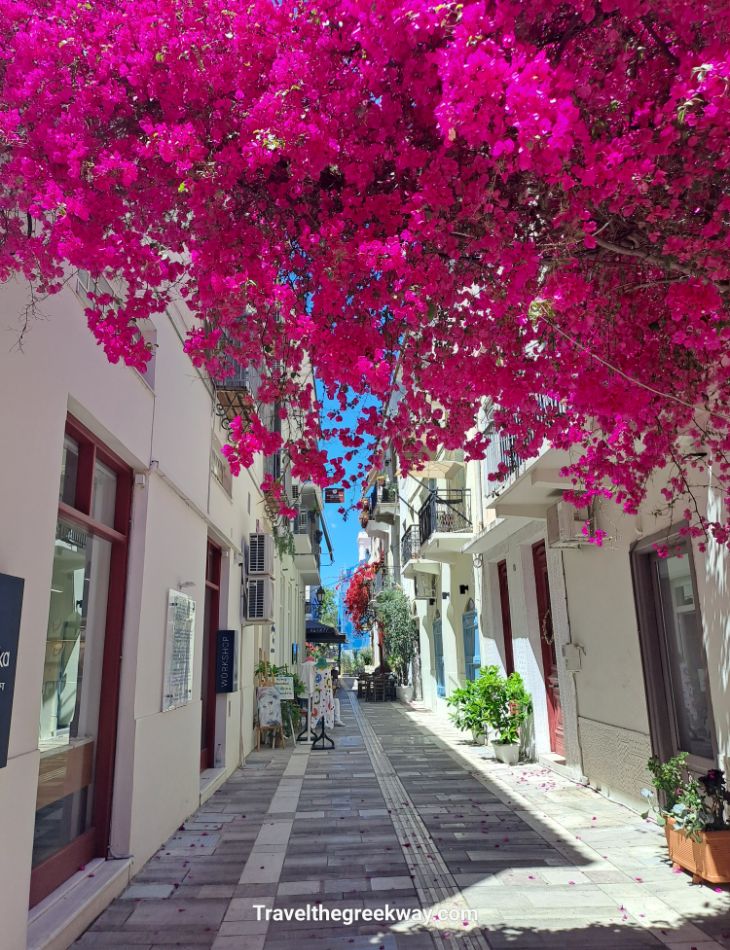
- Nafplio (The Base): A romantic, Venetian-style seaport that served as the first capital of modern Greece. Use this as your “home” while exploring the region. Do not miss the Palamidi and Acronafplia fortresses and take the boat to the Bourtzi castle.
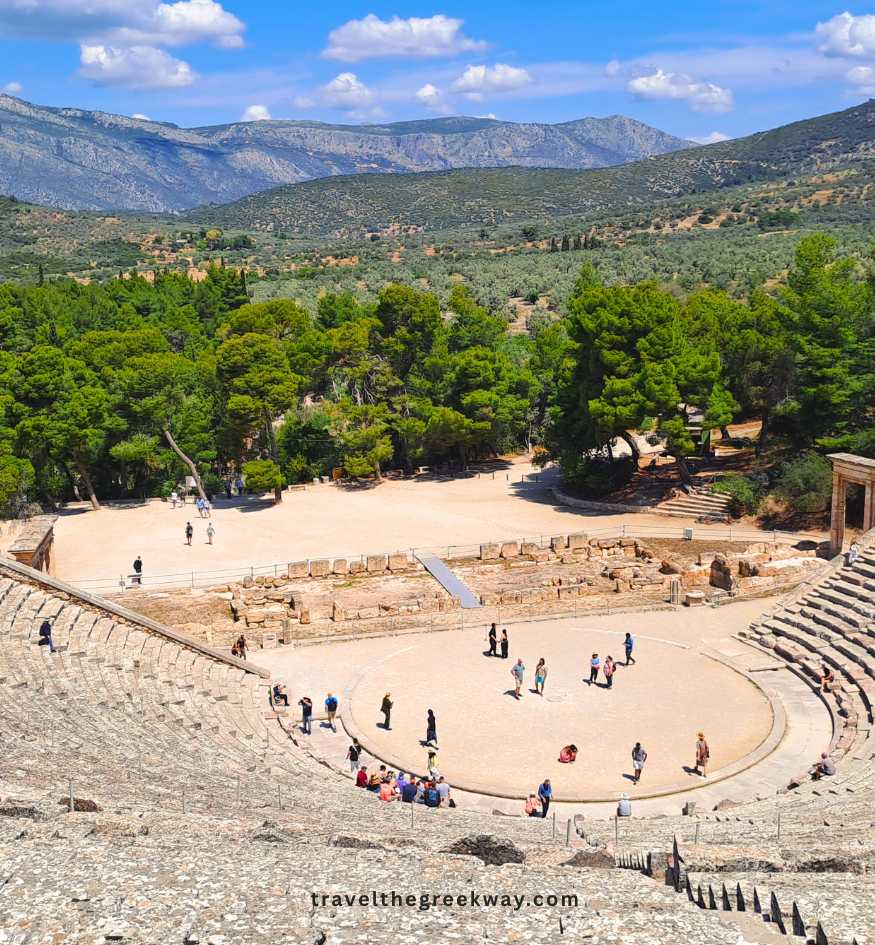
- Best Thing to Do: Experience the impossible acoustics of the Ancient Theater of Epidaurus.
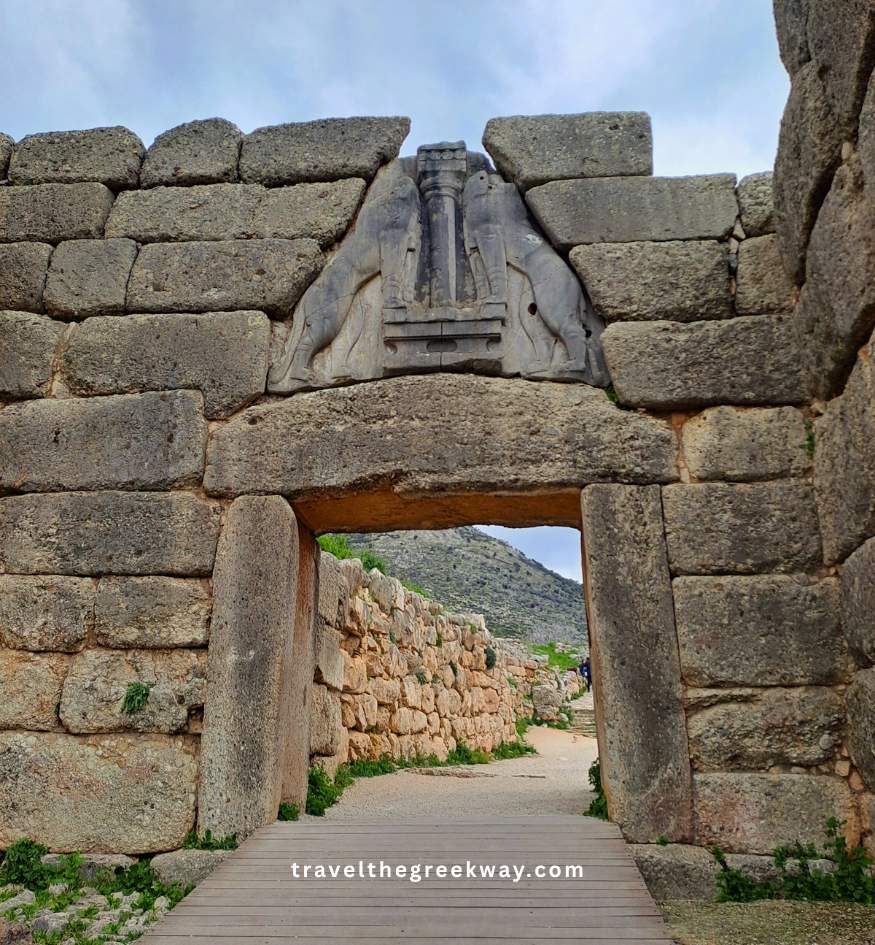
- Must-See: The “Lion Gate” at Mycenae, the center of the powerful Mycenaean civilization.
Beyond the Famous Sites:
Ermioni & Porto Heli: These sophisticated coastal towns offer a more cosmopolitan vibe. Ermioni feels like an island with its pine-covered peninsula (Bisti), while Porto Heli is the playground for luxury yachts and high-end villas.
Argos Town: One of the oldest continuously inhabited cities in the world. Don’t miss the Ancient Theater of Argos (which is actually larger than the one at Epidaurus) and the Larissa Castle overlooking the plain.
Tiryns: Just outside Nafplio, this UNESCO site features “Cyclopean” walls—massive boulders so large that ancient Greeks believed only the giant Cyclopes could have moved them.
Best Beaches in Argolis
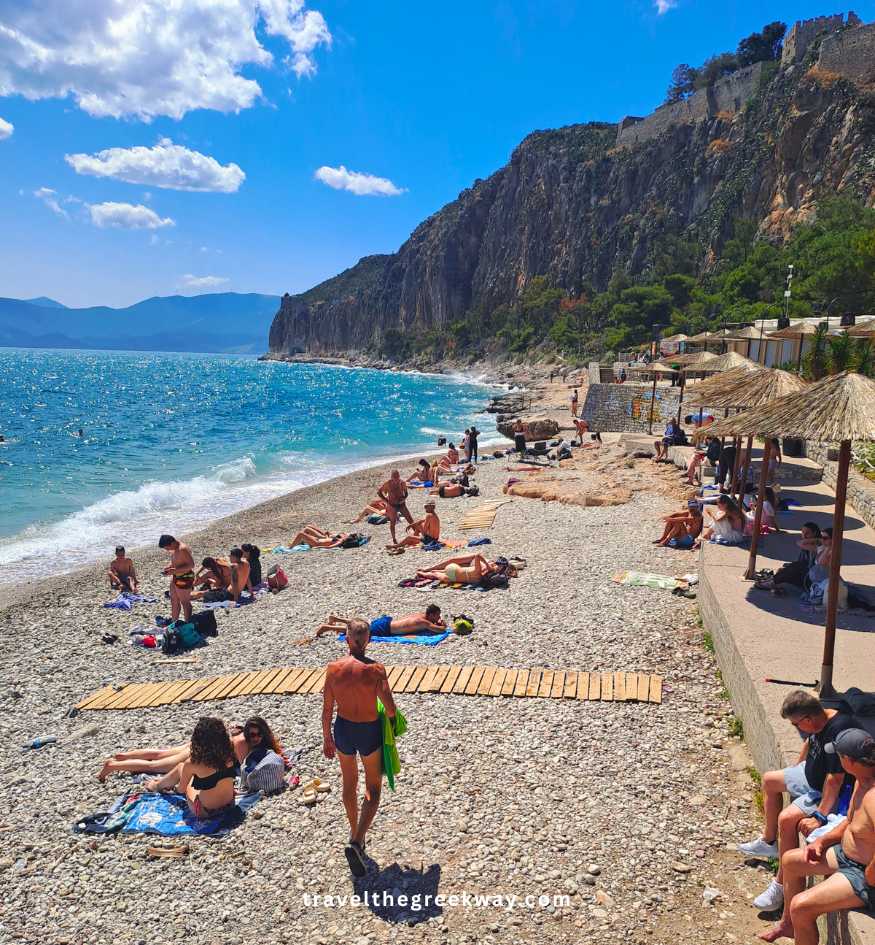
No trip to the Argolis is complete without a dip in its crystal-clear waters. Just a short 10-minute walk from the center of Nafplio, Arvanitia Beach is a local favorite nestled right under the Palamidi Fortress.
For a more expansive sandy stretch, head 5 km (3.1 miles) south to Karathonas, a blue-flag bay perfect for families.
If you’re looking for that “fine sand” experience the name promises, Psili Ammos in Tolo is a must-visit, located about 12 km (7.5 miles) from Nafplio.
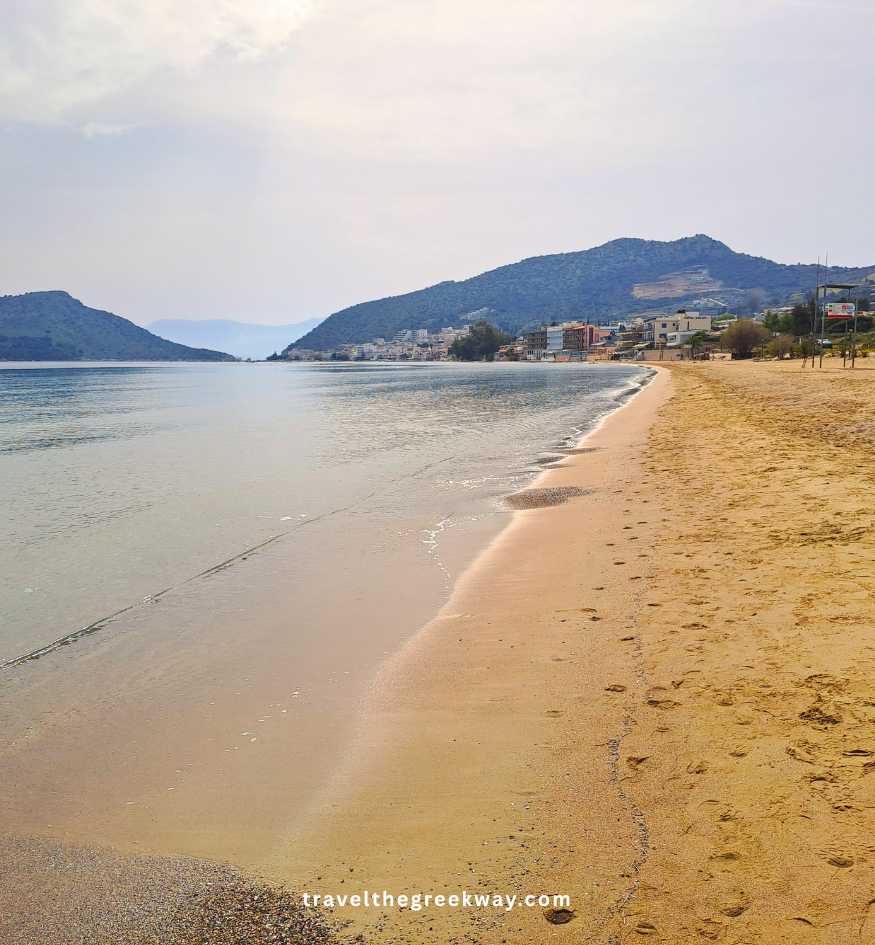
Finally, for those who love a bit of history with their swim, the beach at Ancient Asini—also 12 km (7.5 miles) away—offers a tranquil pebbled shore right next to the ruins of the Mycenaean acropolis.
Island Hopping from the Argolis Coast
One of the best-kept secrets of the Argolis peninsula is how easily you can visit the Saronic Islands without going back to Athens. If you are staying in Porto Heli, Ermioni, or Galatas, you are just a few minutes away from some of Greece’s most iconic islands.
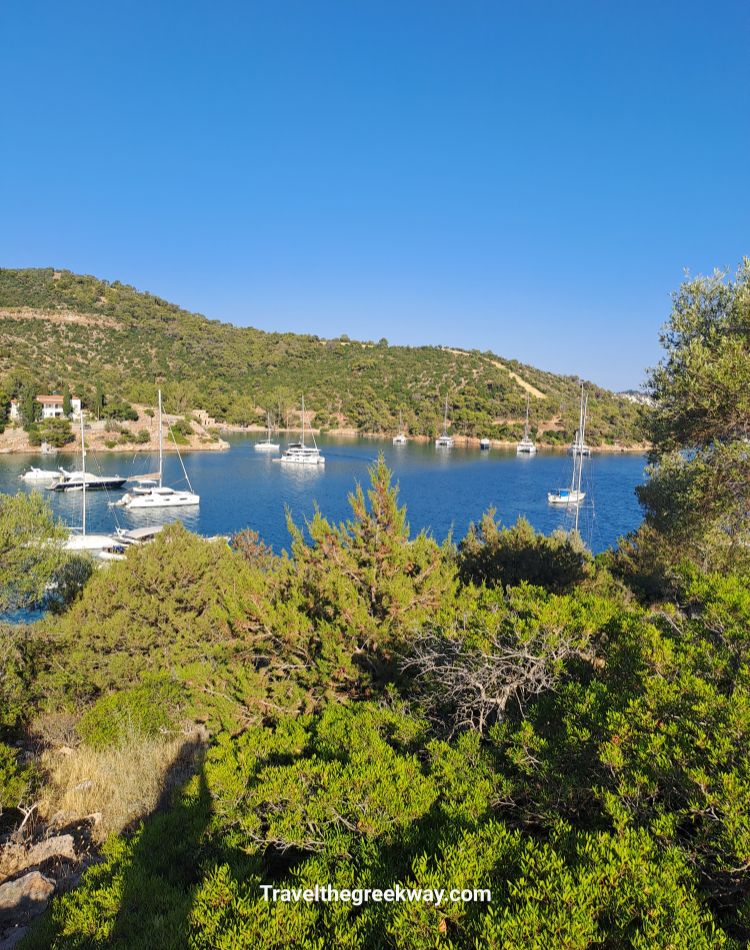
- From Galatas to Poros: This is the easiest crossing in Greece. Ferries and small boats depart every 15–30 minutes, and the trip takes only 5 minutes. You can see the clock tower of Poros from the Galatas waterfront!
- From Kosta to Spetses: Just a 10-minute drive from Porto Heli is the small port of Kosta. From here, you can hop on a traditional kaiki boat or a ferry to the elegant, car-free island of Spetses. The crossing takes about 15 minutes.
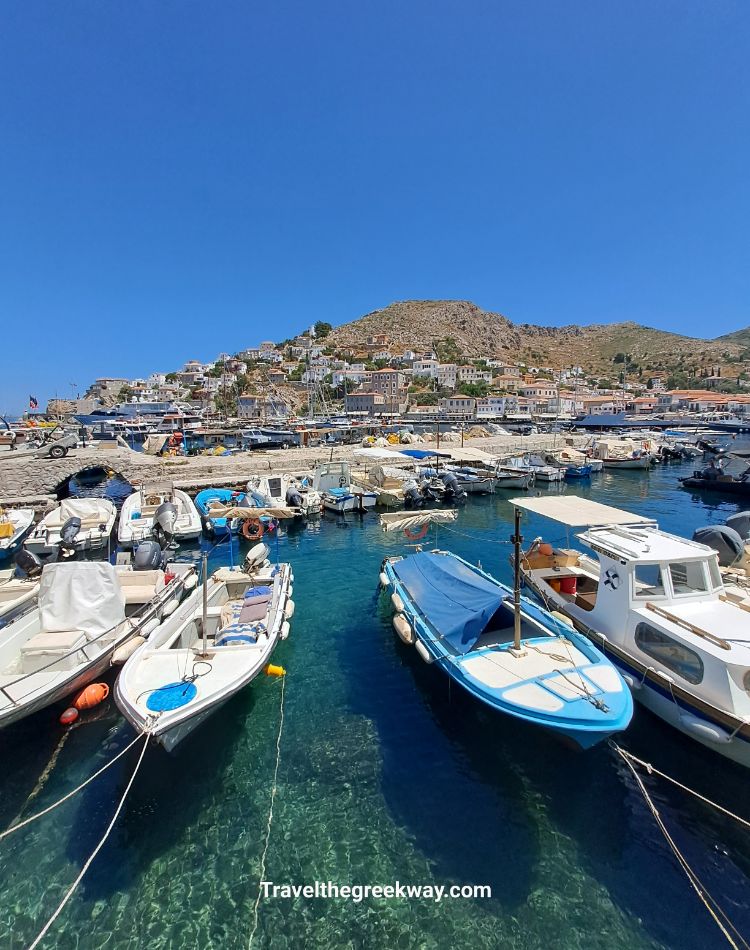
- From Metochi or Ermioni to Hydra: If you are driving, head to the small pier at Metochi (past Ermioni). There is a secure parking lot where you can leave your car, and small boats will take you to Hydra in just 20 minutes.
- Alternatively, high-speed hydrofoils depart directly from the port of Ermioni and Porto Heli, reaching Hydra in about 25–50 minutes.
3. Achaia: The Gateway to the Ionian and the Alps

Achaia is the northern powerhouse of the Peloponnese. Dominated by the port city of Patras—the gateway to Western Europe—it offers a dramatic transition from the blue waters of the Gulf of Corinth to the snowy peaks of Mount Helmos.
- Patras: Greece’s third-largest city. Visit the St. Andrew’s Basilica (the largest church in Greece) and the Achaia Clauss Winery, a 19th-century castle-winery famous for its Mavrodaphne dessert wine.

- Best Thing to Do: Take the Odontotos Rack Railway. This narrow-gauge train climbs from the seaside town of Diakopto through the Vouraikos Gorge to the mountain town of Kalavryta. It is one of the most spectacular rail journeys in the Balkans.
- Must-See: The Cave of the Lakes (Spilaio Limnon) near the village of Kastria. Unlike other caves, it features 13 tiered subterranean lakes formed by natural stone dams.

Beyond the Famous Sites:
- Mega Spileon Monastery: Carved into a massive cave on a 120-meter cliff, this is one of the oldest monasteries in Greece (founded in 362 AD). It houses a miraculous icon of the Virgin Mary made of wax and mastic.
- Lake Tsivlou: A “hidden” alpine lake created by a landslide in 1913. Located at an altitude of 800 m, it is surrounded by pine forests and is perfect for a mountain swim or a picnic.
- Ano Vlasia & Taxiarchi Waterfall: A lush, green escape. The Taxiarchi Waterfall is a double-drop fall tucked away in a verdant canyon near the traditional village of Ano Vlasia.
Best Beaches in Achaia
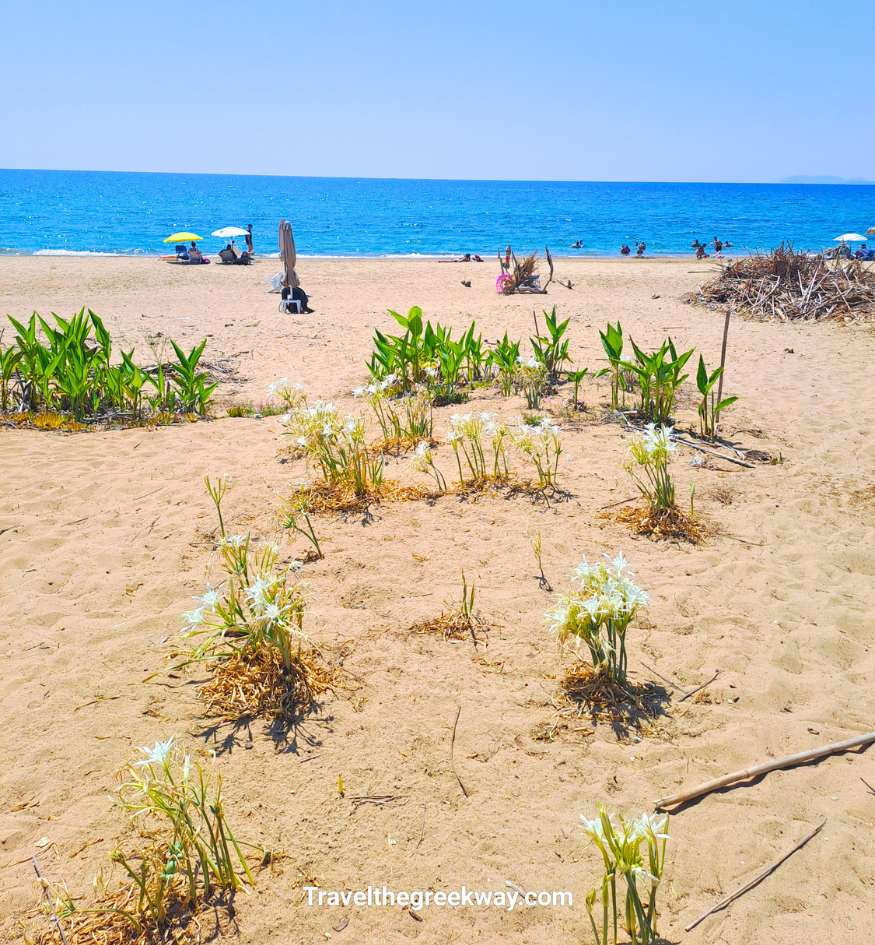
- Kalogria Beach: Located about 45 km (~28 miles) west of Patras, this is a paradise of massive dunes and shallow turquoise water. It sits right next to the Strofylia Forest, the largest stone pine forest in Greece.
- Gianiskari: A “secret” beach near Kalogria, reached by a dirt road. It is rugged, pristine, and rarely crowded even in August.
- Pounta & Trapeza: Located near Diakopto, these beaches offer deep, crystal-clear blue waters and are favorites for locals living in the northern Peloponnese.
4. Elis (Ilia): The Land of the Olympics and My Home
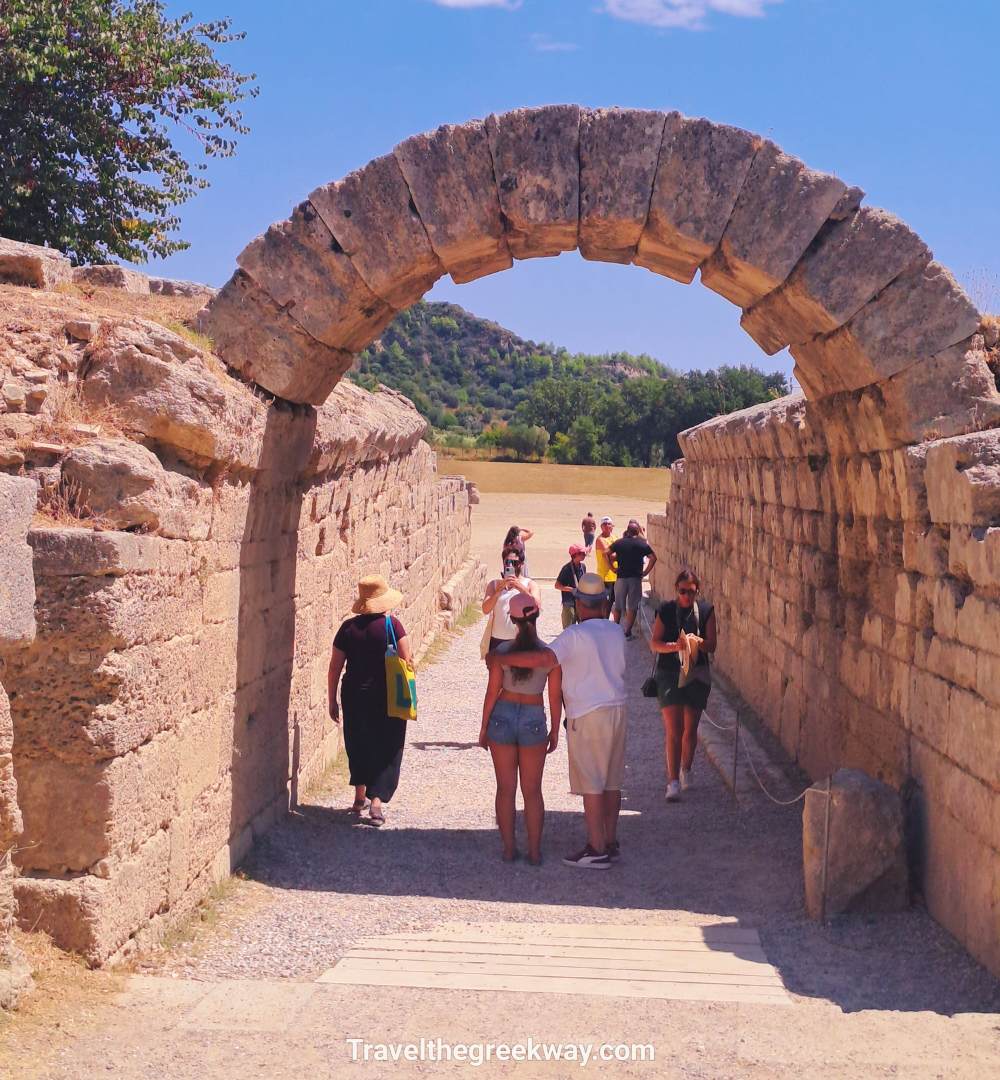
This is the region closest to my heart. While many travelers only stop for a few hours to see the ruins of Olympia, Ilia is a land of fertile plains, ancient mythological forests, and some of the longest sandy beaches in Europe.
My own family roots run deep here, specifically in the villages of Krestena and Savalia.
- Ancient Olympia: Walk the original marble starting line of the Ancient Stadium. Don’t miss the Temple of Zeus and Hera and the museum, which houses the world-famous Hermes of Praxiteles.
- Temple of Epicurius Apollo (Vassae): Located high in the rugged mountains near Andritsena, this was the first Greek site to be named a UNESCO World Heritage site. It is a 20-minute drive from the town and sits under a massive protective tent.
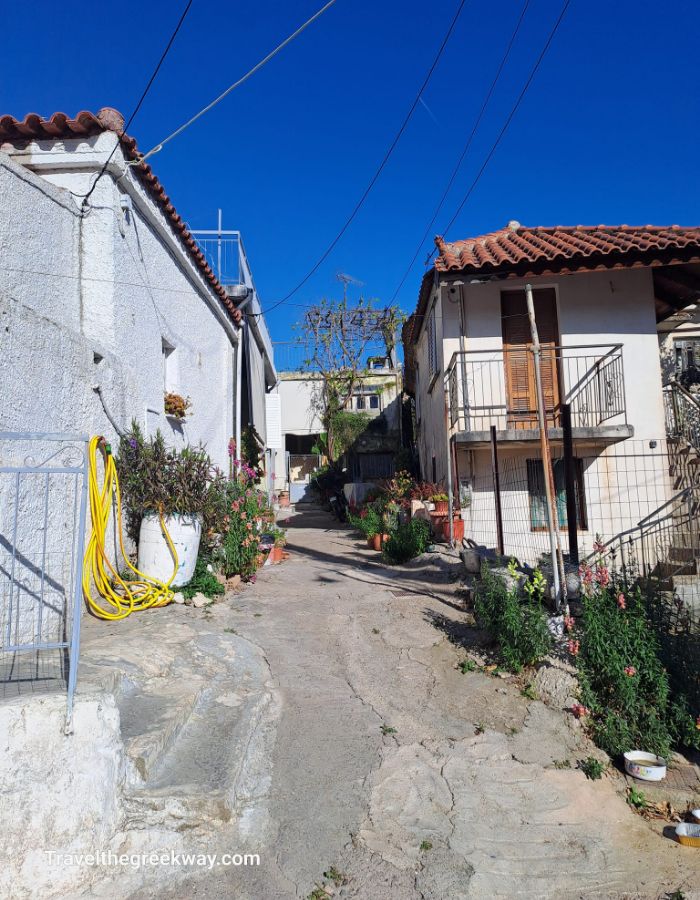
Beyond the Famous Sites:
- Foloi Oak Forest: A flat, plateau forest of thousands of ancient oaks. Legend says this was the home of the Centaur Pholus. It’s a dream for easy cycling and hiking.
- Krestena & Savalia: My family’s home base. These villages offer an authentic, non-touristy glimpse into the agricultural heart of the Peloponnese.
- Kyllini: Home to the Chlemoutsi Castle and the famous thermal springs. This is also the main port for ferries to Zakynthos and Kefalonia.
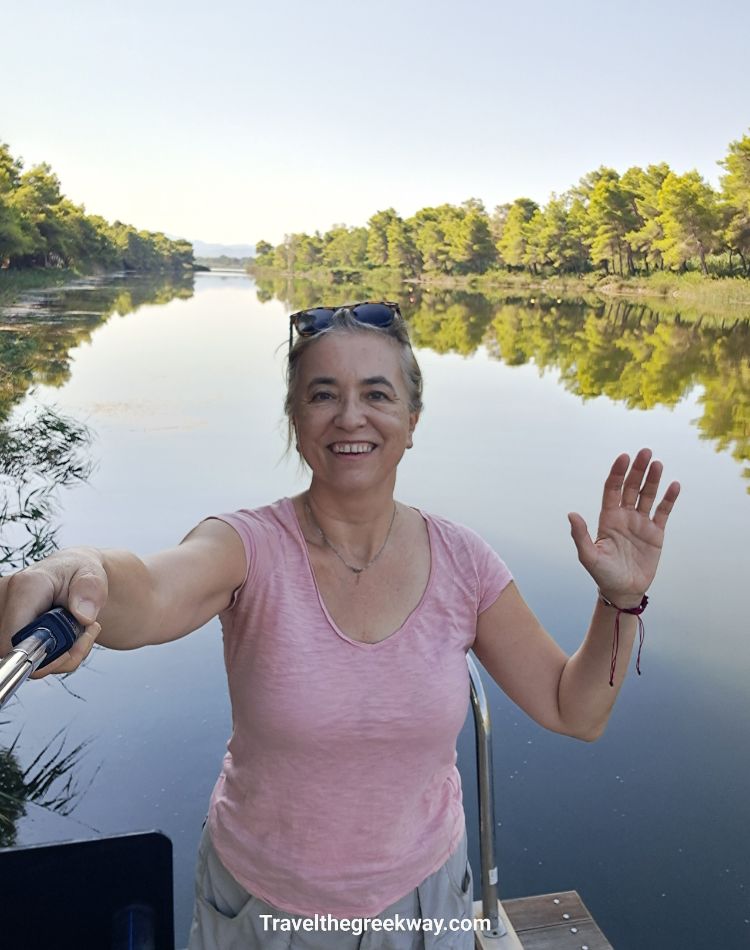
Best Beaches in Elis (Ilia)
- Kato Samiko: Located near Krestena, this is my personal “hidden gem.” It offers miles of golden sand and crystal-clear water with almost no crowds.
- Kourouta Beach: Just outside Amaliada, this is the place to be for beach bars, a vibrant boardwalk, and beautiful sunsets.
- Zacharo & Kaiafas: The beach at Zacharo is endless. Nearby Lake Kaiafas features thermal caves and a rare pine forest that grows right onto the dunes.
Want to see Andritsena for yourself? Take a walk with me through this traditional mountain town in the Peloponnese, with its stone houses, cobbled streets, and beautiful mountain setting.
5. Laconia: The Rugged, Spartan South
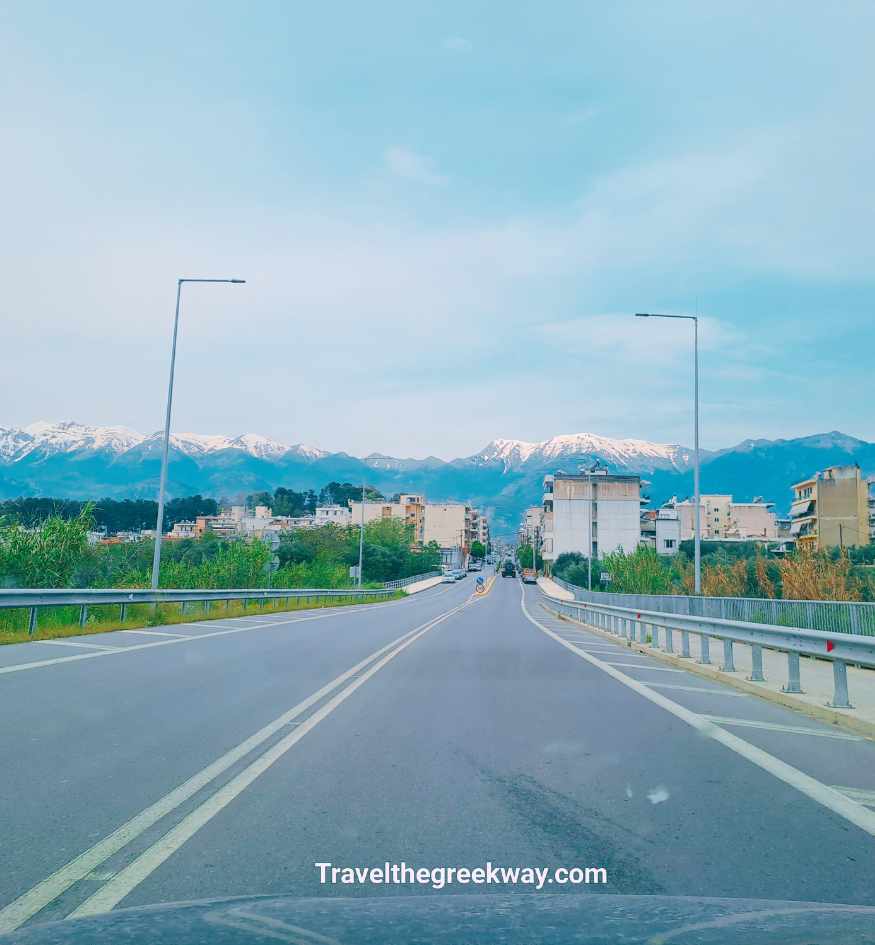
If you want drama, history, and a touch of wildness, go to Laconia. This region is dominated by the towering Taygetus Mountains and the fierce, independent spirit of its history.
From the peaks of Sparta to the southern tip of Europe, Laconia is where the Peloponnese feels most legendary.
The “Must-See” Highlights
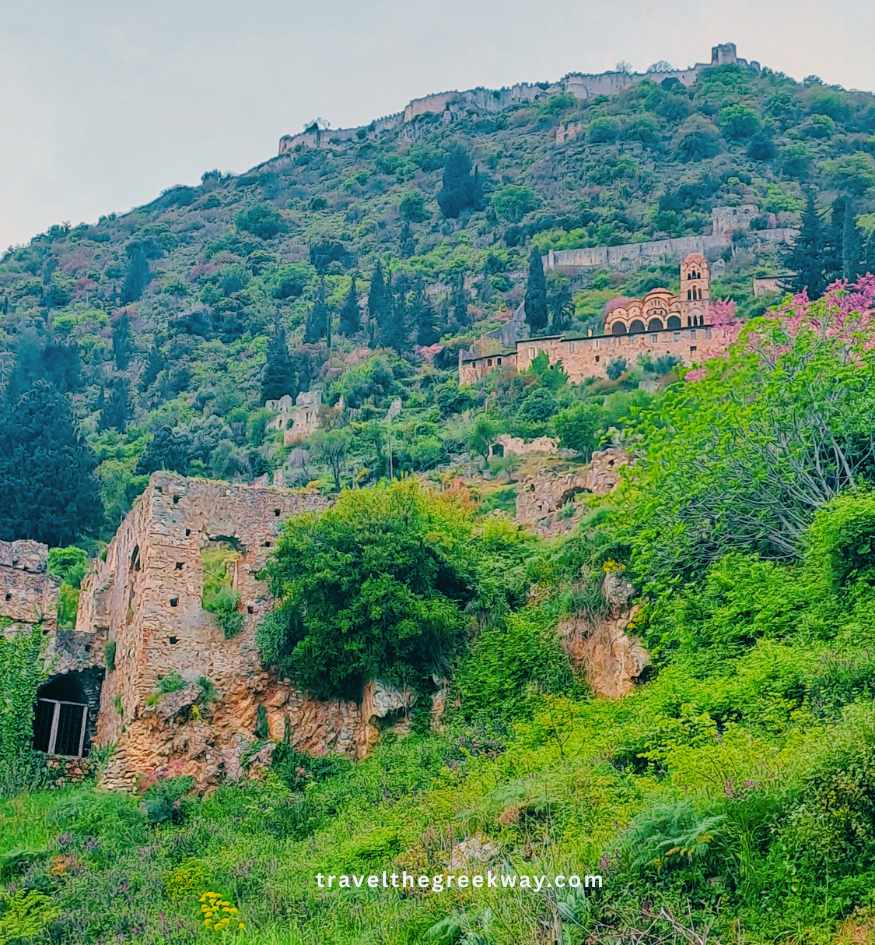
- Mystras (The Ghost City): A UNESCO World Heritage site and a breathtaking Byzantine capital, filled with preserved palaces and churches with rare frescoes. It’s just 5 km (~3.1 miles) from the modern town of Sparta.
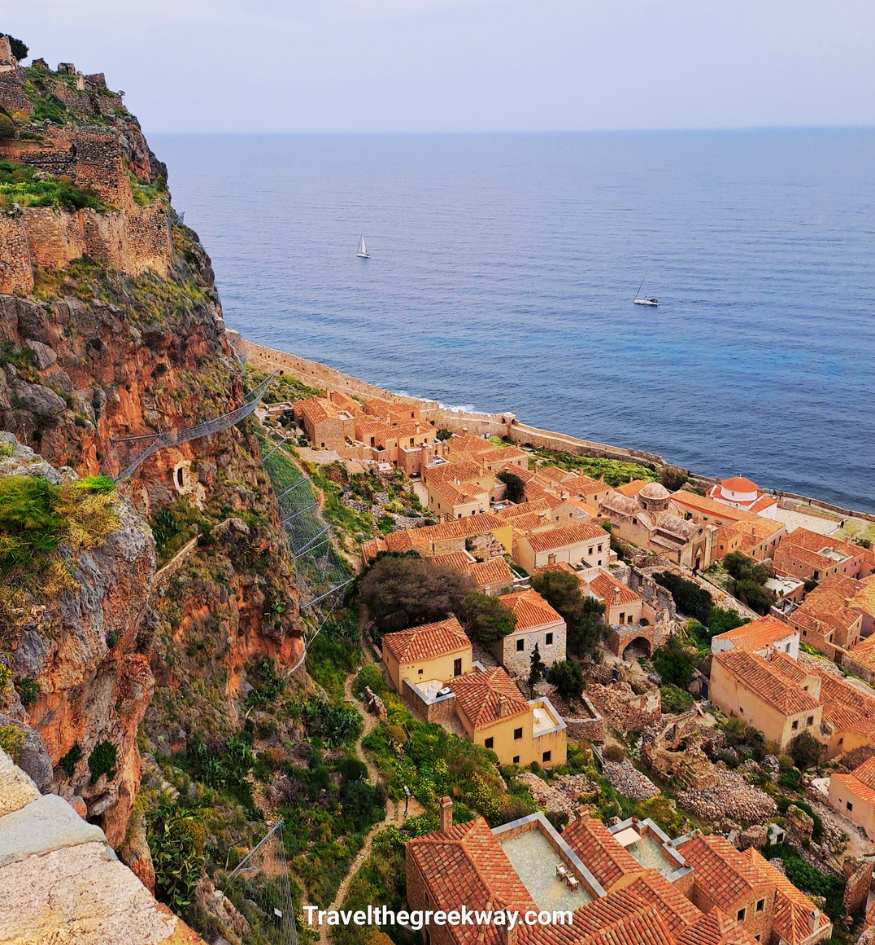
- Monemvasia (The Gibraltar of the East): A massive rock-island linked to the mainland by a single causeway. Inside the medieval walls lies a car-free “living” museum of stone mansions and hidden squares.
- Distance from Sparta: ~86 km (~53 miles).
- The Deep Mani & Vathia: Drive into the heart of the Mani peninsula to see the iconic stone tower houses. The village of Vathia, perched on a hill with its ghost-like towers, is the most photographed spot in the region.
- Elafonisos & Simos Beach: Take the 10-minute ferry to reach what many call the best beach in Greece. Simos Beach is famous for its twin bays, turquoise water, and dunes that reach 10 meters high.
The Laconia “Insider” Circuit
To truly see the region like a local, make sure these spots are on your map:
- Limeni & Oitylo: Limeni is arguably the most beautiful coastal village in the Mani, where the turquoise sea literally touches the doorsteps of stone towers. Nearby Oitylo offers incredible views over the bay.
- Areopoli: The historic “City of Ares” (the God of War). This stone-built town is the gateway to the Deep Mani and is the best place to stay for traditional Mani nightlife.
- Kyparissi: A hidden “secret” village tucked between the mountains and the sea. Until recently, it was only accessible by boat, making it one of the most secluded spots in Greece.
- Geraki: Often called “the Small Mystras,” this village features a stunning medieval castle and Byzantine churches without the crowds.
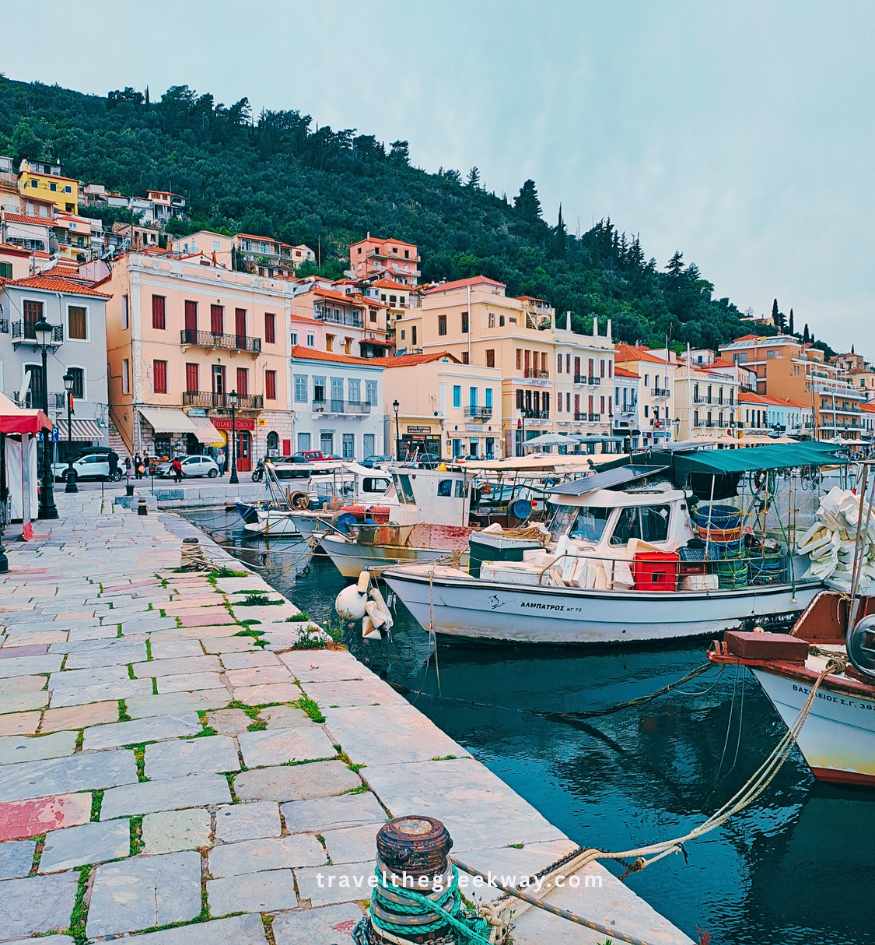
- Gythio & Kotronas: Gythio is a charming harbor town with neoclassical houses, while Kotronas offers a more rugged, pebble-beach experience in the Eastern Mani.
- Cape Tainaron (Kavo Malias): Hike to the lighthouse at the southernmost tip of mainland Greece. Ancient Greeks believed the cave here was a Gate to Hades.
Best Beaches in Laconia
- Mavrovouni Beach: A massive 6 km (~3.7 miles) sandy stretch near Gythio, famous for windsurfing and sea turtle nesting.
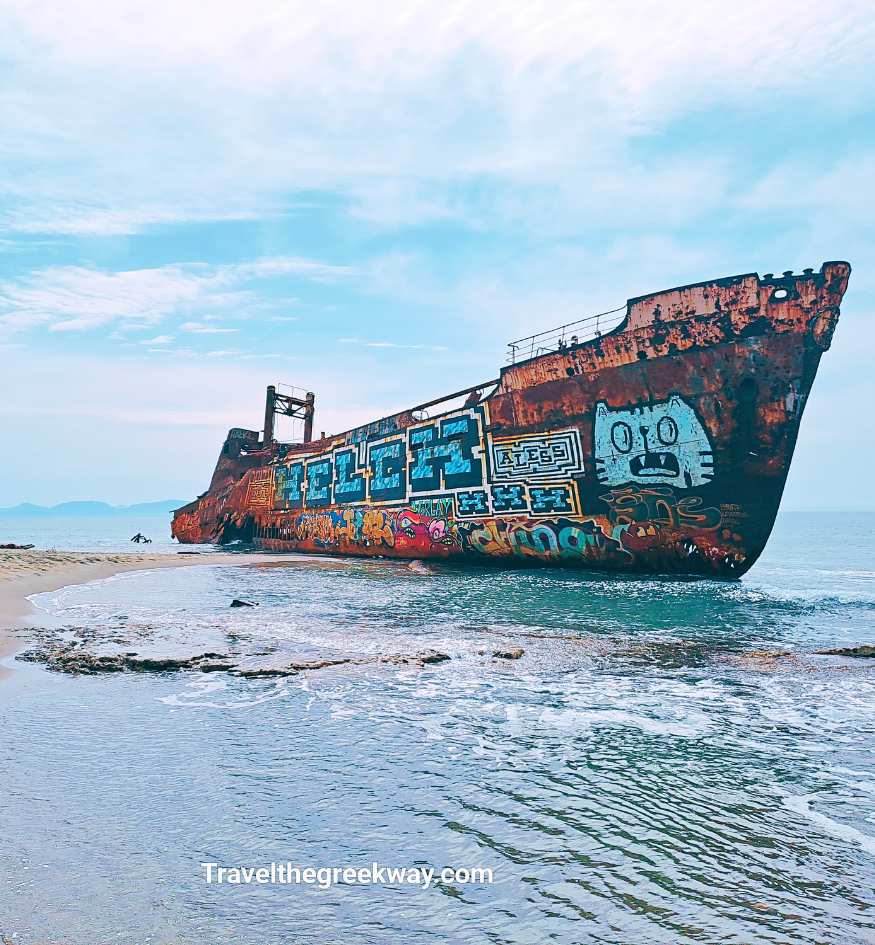
- Valtaki Beach: A shallow, sandy cove featuring the iconic Dimitrios shipwreck just 5 km (~3.1 miles) from Gythio.
- Alypa Beach: A tiny, cinematic Mani cove with large white pebbles and incredibly clear, still water.
- Marmari (Cape Tainaro): A wild, sandy retreat at the tip of the peninsula, located 80 km (~50 miles) from Sparta.
- Plytra & Archangelos: Calm, family-friendly sandy beaches with shallow waters and sunken ancient ruins nearby.
- Skoutari: A beautiful sandy bay featuring a small Byzantine church right at the water’s edge.
6. Messenia: Olives and Turquoise Bays
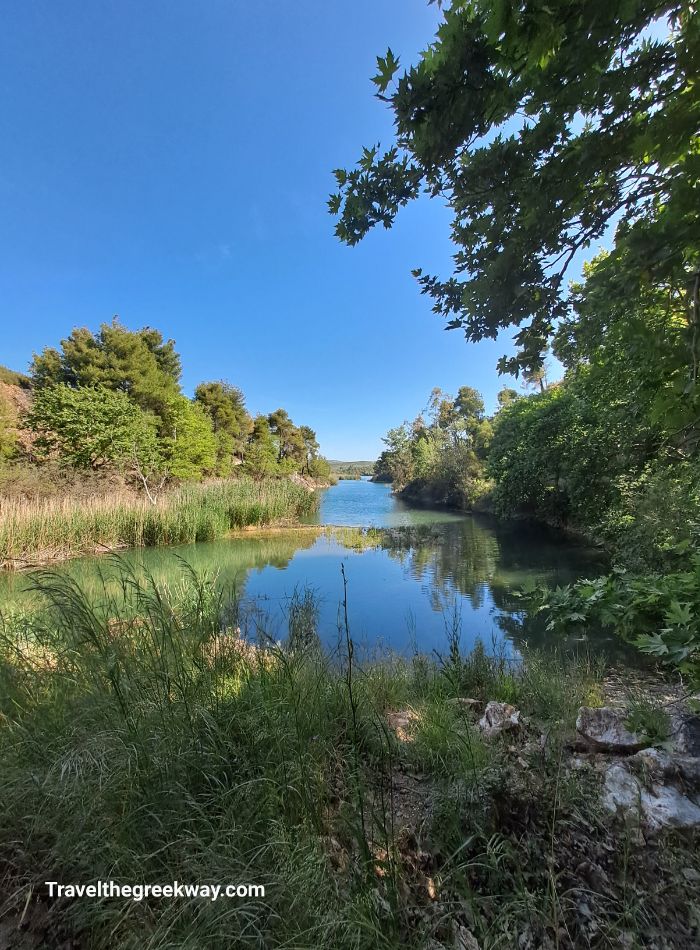
Famous for its world-class Kalamata olives, Messenia offers a lush, green contrast to the rugged Mani. This is a land of massive Venetian fortresses, ancient palaces, and some of the most uniquely shaped beaches in the world.
The “Must-See” Highlights
- Voidokilia Beach: Often called the most beautiful beach in Greece, this perfectly round bay is shaped like the Greek letter Omega (Ω). It is located 12 km (~7.5 miles) from Pylos and is a protected Natura 2000 site.
- Polylimnio Waterfalls: A hidden paradise featuring 15 emerald lakes and cascading falls tucked inside a lush canyon. The hike is moderate but leads to the stunning “Blue Lagoon.”

- The Venetian Trio (Castles): Methoni: A massive sea fortress with the iconic octagonal Bourtzi tower.
- Koroni: A “living” castle where residents still live within the medieval walls.
- Kyparissia: Offers the “Castle of the Giants” with some of the best sunset views in the Peloponnese.
- Ancient Messene: One of the most impressive and well-maintained archaeological sites in Greece, featuring a giant stadium and ancient theater, located about 30 km (~18.6 miles) from Kalamata.
- Nestor’s Palace: A remarkably complete Mycenaean palace mentioned in Homer’s Odyssey, located near Pylos.
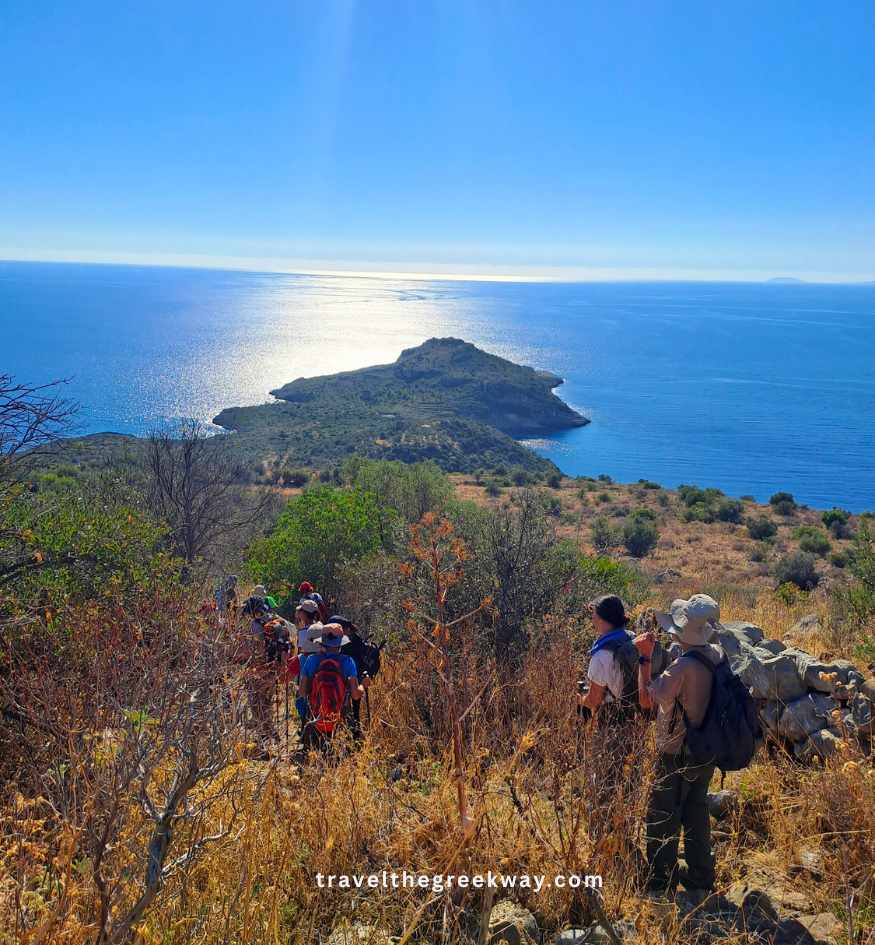
The Messenia “Insider” Circuit
- Kardamili: A sophisticated stone village in the Outer Mani, famous as the home of writer Patrick Leigh Fermor and for its crystal-clear pebble beaches.
- Costa Navarino: A world-renowned sustainable luxury destination that has put Messenia on the global map for high-end tourism and golf.
- Neda Waterfalls: Located on the border with Elis, this is the only “female” river in Greece, offering a spectacular canyoning and trekking experience.
Best Beaches in Messenia
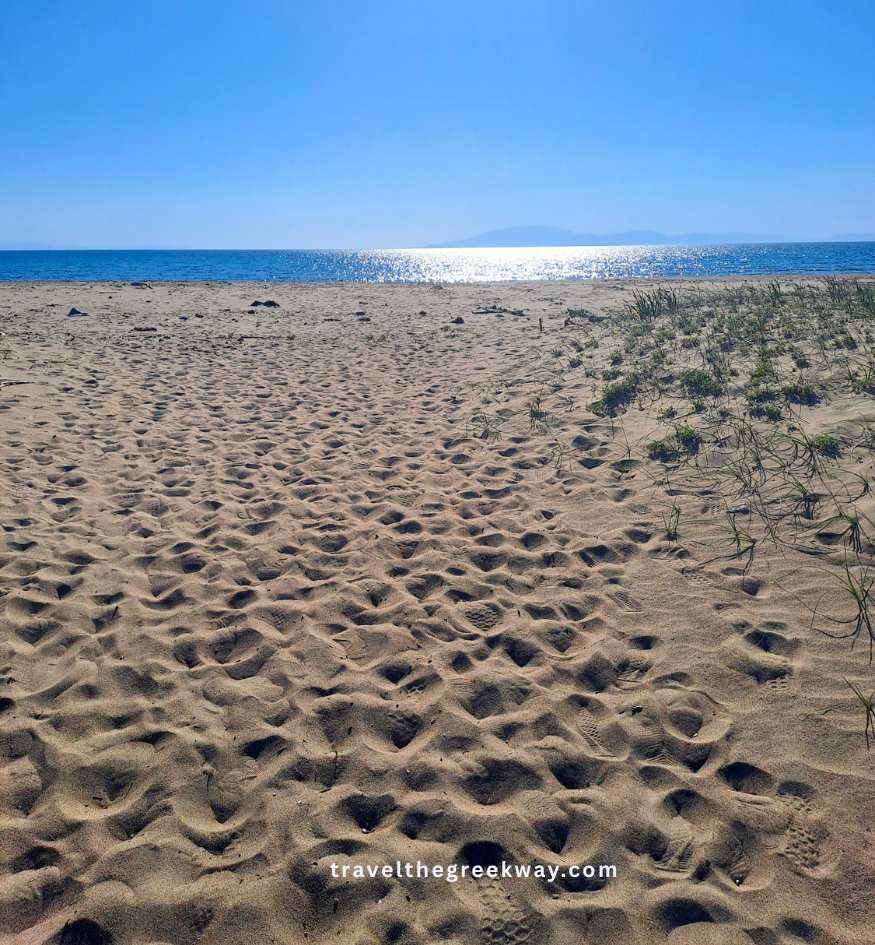
- Foneas Beach: A hidden gem in the Mani featuring a massive rock in the center of the bay and emerald waters.
- Sani Beach: A long, golden sandy stretch near Kyparissia that is rarely crowded even in August.
- Kalogria Beach (Stoupa): A famous sandy beach with turquoise water and underground freshwater springs that keep the sea refreshing.
- Peroulia Beach: A lush, exotic beach near Koroni with fine golden sand and trees that reach the water’s edge.
7. Arcadia: The Mountain Wilderness

Arcadia is the “Switzerland of Greece.” Located in the center of the Peloponnese, this is a land of dense fir forests, deep gorges, and stone-built villages that feel frozen in time.
It is where the locals go for world-class hiking, rafting, and authentic traditional life.
The “Must-See” Highlights
- Lousios Gorge: A spectacular canyon offering one of the best hikes in Greece. The trail leads you to monasteries like the Monastery of Prodromos, which is built directly into the vertical cliff face, appearing to hang over the river.
- Stemnitsa & Dimitsana: These two “sister” villages are the jewels of Arcadia. Dimitsana (~950m elevation) is famous for its Open-Air Water Power Museum, while Stemnitsa is the legendary home of gold and silversmiths.
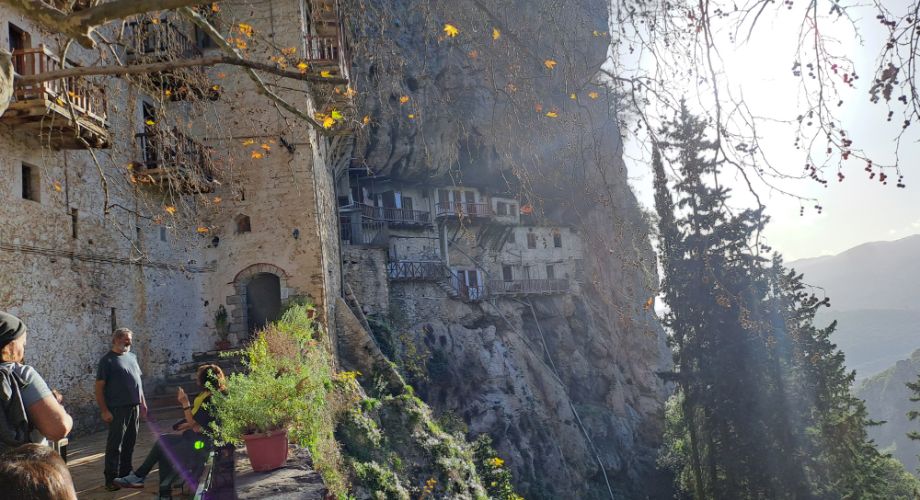
- Karytaina: Often called the “Toledo of Greece,” this village features a stunning 13th-century Frankish castle perched on a hill and a famous bridge over the Alpheios River.
- Agia Theodora Vasta: A tiny, miraculous chapel where 17 massive trees grow from its roof, yet no roots are visible inside. It is located about 35 km (~21.7 miles) from Megalopoli.
- Kapsia Cave: One of the top ten caves in Greece, famous for its rare “forest” of colorful stalactites and stalagmites. It is situated just 15 km (~9.3 miles) from Tripoli.
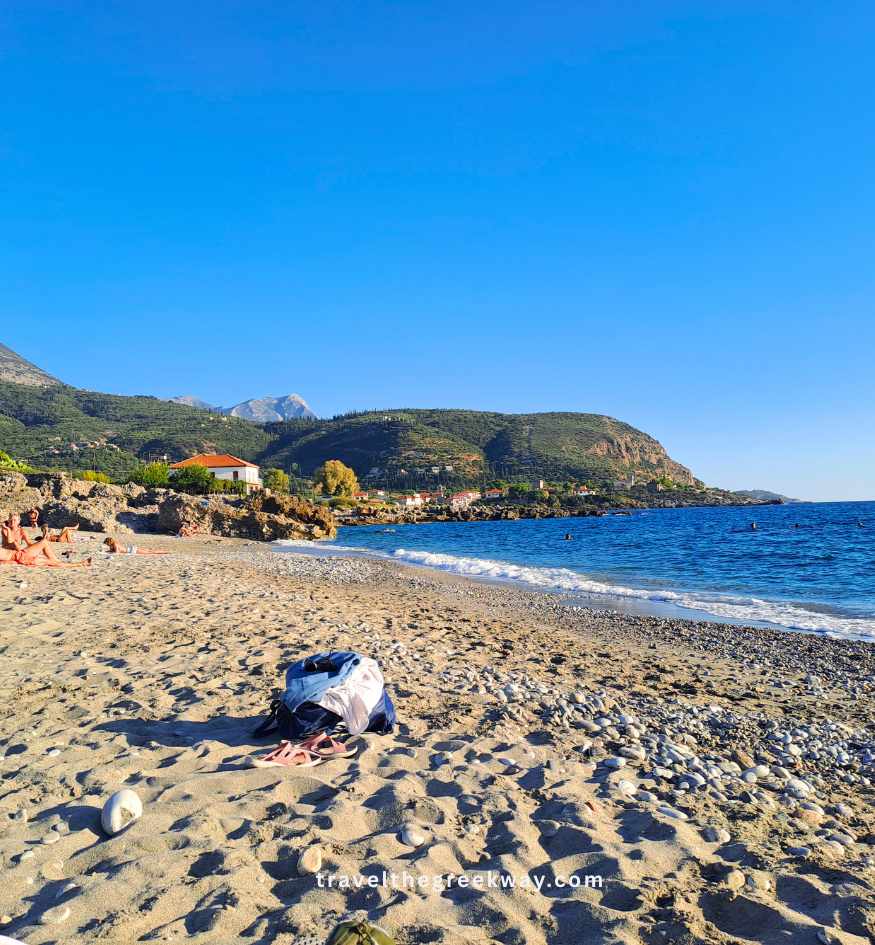
Best Beaches in Arcadia
While Arcadia is famous for its mountains, its eastern coastline (North Kynouria) features some of the most pristine waters in the Peloponnese.
- Paralio Astros: A beautiful coastal town with a long sandy beach and a medieval “Castle of the Estella” on the hill.
- Fokianos Beach: Often cited as one of the best hidden beaches in Greece, it is a perfect semi-circle with large white pebbles and deep blue water.
- Zaritsi Beach: A quiet, family-friendly bay surrounded by olive groves near the village of Tyros.
- Kryoneri: A small, organized beach famous for its freshwater springs that flow directly into the sea.
Planning Your Peloponnese Road Trip: Distances & Times
The Peloponnese is meant for driving. To help you plan your itinerary, here is a breakdown of the distances and approximate travel times from central Athens to the main hub of each of the 7 regions.
| Peloponnese Region | Hub City | Distance from Athens | Approx. Drive Time |
| Corinthia | Corinth | 83 km (~51.5 miles) | 1 hour |
| Argolis | Nafplio | 138 km (~85.7 miles) | 1 hour 45 mins |
| Arcadia | Tripoli | 158 km (~98.2 miles) | 1 hour 50 mins |
| Achaia | Patras | 211 km (~131.1 miles) | 2 hours 15 mins |
| Laconia | Sparta | 213 km (~132.4 miles) | 2 hours 30 mins |
| Messenia | Kalamata | 238 km (~147.9 miles) | 2 hours 45 mins |
| Elis (Ilia) | Ancient Olympia | 290 km (~180.2 miles) | 3 hours 15 mins |
How to Get Around the Peloponnese
The Peloponnese is a vast territory, and your choice of transport will define your trip. While public options exist, this region is the ultimate road-trip destination.
1. By Car (The Best Way)
To see the “Real Peloponnese,” a car is essential. Most of the highlights—like the stone villages of Arcadia, the Deep Mani, and hidden beaches like Foneas—are not accessible by public transport.
- Driving in Greece: The main motorways (Athens–Tripoli–Kalamata and Athens–Patras) are modern and excellent. However, once you enter the Mani or the mountains of Arcadia, expect narrow, winding roads with spectacular views.
- Car Rental Tip: I recommend picking up your car from Athens International Airport to avoid city traffic. Compare local and international car rental rates here to find the best deal for your trip.
2. By KTEL Bus
The national bus network (KTEL) is reliable and connects Athens to major hubs like Nafplio, Kalamata, Sparta, and Patras.
- Pros: Affordable and air-conditioned.
- Cons: Once you reach the main bus station, you will find very limited local connections to smaller villages or beaches.
3. By Train
There is a modern suburban railway connecting Athens to Kiato (near Corinth) and then to Diakofto, where you can take the Odontotos Rack Railway in Kalavryta. There is no other train service in the Peloponnese.
Plan Your Peloponnese Adventure
This guide is just the beginning—I’ve shared my local secrets across hundreds of posts to help you navigate the “Real Greece.” Here’s how to take the next step in your planning:
- Step 1: Get Your Itinerary – Whether you are short on time or have weeks to explore, don’t miss my Best 4-Day Peloponnese Highlights or the comprehensive 8-Day Grand Loop Itinerary.
- Step 2: Join the Community – Have questions about driving conditions in the Mani or the best tavernas in Nafplio? Join our Travel the Greek Way Facebook Group for real-time advice from me and fellow Greece lovers.
- Step 3: Beyond the Peninsula – Ready for your next stop? Check out my deep dives into the Greek Islands, the best of Athens, and the wild beauty of the Mainland.