I have lived in Athens my entire life. From the neoclassical streets of my childhood to the modern, vibrant capital it is today, I have watched this city evolve firsthand. For me, Athens isn’t just a destination; it’s home.
While most travelers see Athens as a sprawling basin of over 3 million people, I see it as a collection of distinct neighborhoods, each with its own soul and history.
Whether you’re here for the Acropolis, Athens’ neighborhoods, museums, food, or the coast, this guide will help you plan your stay.

This post includes links that may be affiliate links. If you choose to make a purchase through them, I may earn a small commission at no extra cost to you. Please see my disclaimer/privacy policy for more information.
Athens Logistics: Getting Here and Around

Most travelers arrive at Athens International Airport (AIA), located in Spata, about 35 km (~21.7 miles) from the city center.
Navigating the capital has become significantly easier thanks to contactless payments, but the “flat-rate” rules still apply.
Quick Transport Reference
| Mode | Cost (Standard) | Travel Time | Frequency |
| Metro (Line 3) | €9 | ~40 min | Every 36 min |
| Express Bus (X95) | €5.50 | 60-90 min | 24/7 |
| Taxi (Flat Rate) | €40 (Day) / €55 (Night) | ~35-50 min | Immediate |
- Local Tip: You no longer need to queue for paper tickets. Just tap your credit card or phone at the Metro gates or on the bus.
If this is your first visit to the country, you might want to start with my step-by-step guide on how to plan your trip to Greece before diving into the Athens specifics below.
Athens is the gateway to the Aegean, but should you head to the airport or the port? I’ve broken down which is actually better: flying or the ferry, to help you decide.
When to Visit Athens

|
Season |
Months |
Weather & Vibe |
Budget (Hotels) |
|---|---|---|---|
|
Peak Season |
July – August |
Hot & Vibrant. Best for rooftops and beach combos. Expect 35°C+ (95°F+). |
Highest. Mid-range hotels: €180–€320. |
|
Shoulder Season |
April – June, Sept – Oct |
Perfect Balance. Ideal for walking the Acropolis. Mild sun and blooming flowers. |
Moderate. Mid-range hotels: €150–€180. |
|
Off-Season |
Nov – March |
Quiet & Authentic. Crisp air and no crowds. Free entry to sites on 1st Sundays. |
Lowest. Mid-range hotels: €80–€140. |
Local Insight: If you can, aim for May or September. You get the full “summer” experience with beautiful swimming weather at the Riviera, but without the intense August heatwaves or the highest hotel prices.
Where to Stay: Choosing Your Athenian “Village”
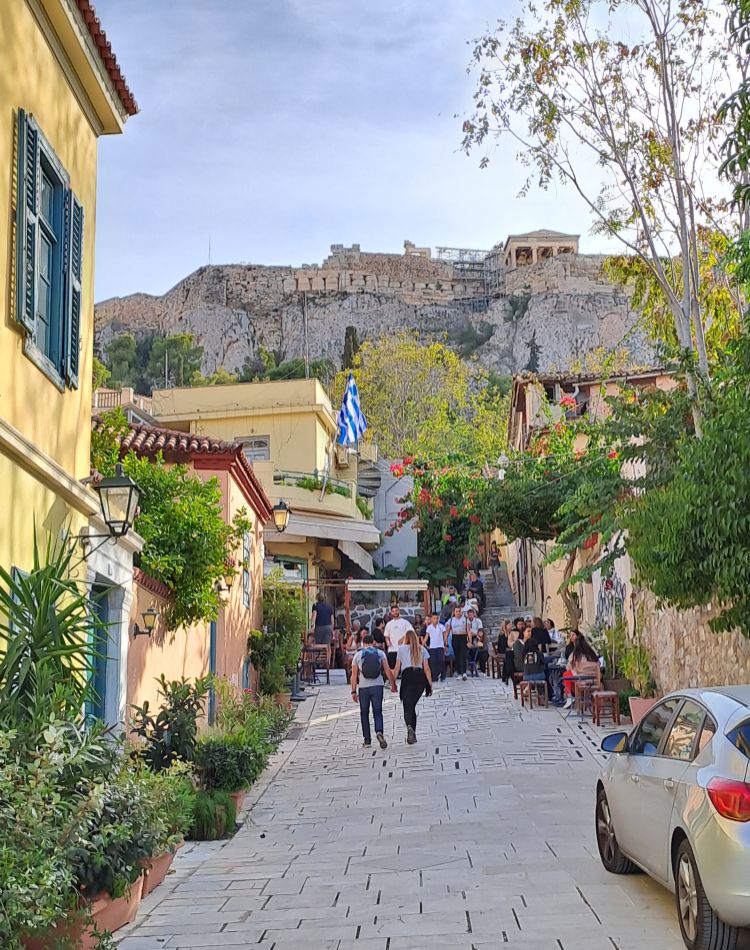
The Heart of the Ancient City
Plaka: The “Neighborhood of the Gods” Tucked directly under the shadow of the Acropolis, Plaka is one of the oldest continuously inhabited neighborhoods in the world. Its narrow, winding streets are a mix of neoclassical mansions and 19th-century cottages.
- The Vibe: Purely pedestrian and incredibly romantic.
- Don’t Miss: Anafiotika, a tiny “island village” built by masons from the island of Anafi. It’s a maze of whitewashed walls and blue doors, just a ~0.3 km walk from the main Plaka square.
Syntagma: The Modern Hub & Political Center

Syntagma is the main pulse of Athens. It’s where history meets the modern bustle of the city.
- The Vibe: Grand, busy, and prestigious. This is the best place for luxury travelers and those who want easy access to all three Metro lines.
- The Highlight: The Changing of the Guard at the Parliament. Watch the Evzones in their traditional pleated fustanellas—did you know each kilt has 400 pleats to represent the years of Ottoman occupation?
- Best Hotel in Syntagma: Grande Bretagne
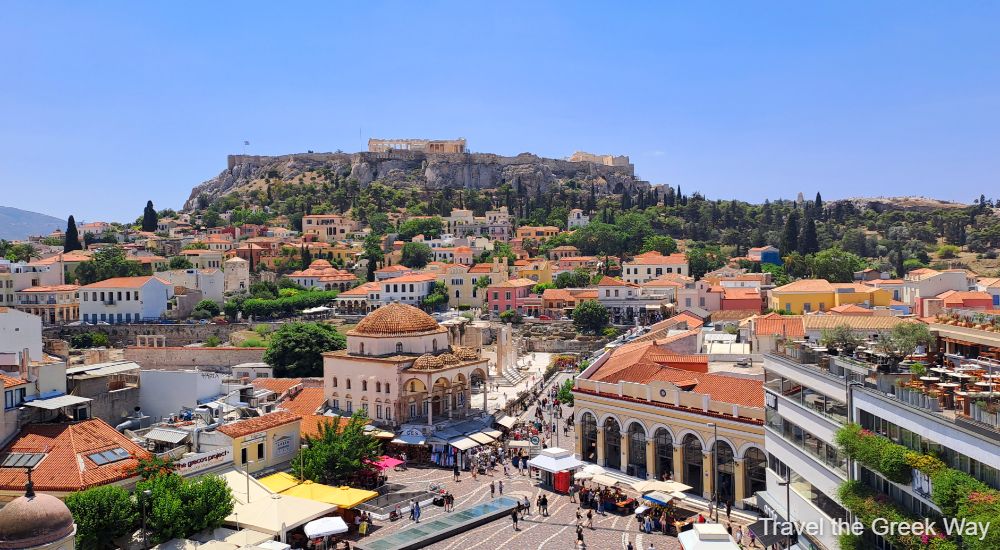
Monastiraki & Psirri: Markets, Myths, and Nightlife
This is where the ancient ruins and the gritty modern street art collide.
- The Vibe: High energy. Monastiraki is home to the famous Flea Market, while Psirri is the city’s creative playground, filled with artisan workshops and hidden bars.
- Local Tip: This area is roughly ~0.8 km (~0.5 miles / 2,600 ft) from Syntagma, making it an easy stroll down the shopping hub of Ermou Street.
Koukaki & Makrygianni: The Acropolis Doorstep

These two neighborhoods flow into each other and are the absolute best for museum lovers.
- Makrygianni: This is the prestigious strip directly in front of the Acropolis Museum. It is dominated by the pedestrianized Dionysiou Areopagitou, often called the most beautiful street in Europe.
- Koukaki: Just behind Makrygianni, Koukaki is the “neighborhood version” of the center. It feels lived-in, with laundromats and local bakeries sitting alongside trendy wine bars.
- Why Stay Here: You are literally ~150 meters from the Acropolis Hill entrance. It’s quiet at night but vibrant during the day.
The “Hidden Gems” & Up-and-Coming Local Favorites
Kypseli: The Creative & Multi-Cultural Soul
If you want to experience the “real” Athens away from the Acropolis crowds, Kypseli is the place. Centered around Fokionos Negri, a lush pedestrian boulevard built over an old stream, this neighborhood feels like a village within the city.
- Vibe: Art Deco architecture, independent bookstores, and a thriving arts scene.
- Don’t Miss: The Kypseli Municipal Market, a social entrepreneurship hub, and St. George’s Square for evening drinks with local actors.
Pangrati:

The Sophisticated Local Hub: Located just behind the Panathenaic Stadium, Pangrati is where the Athenian middle class and creative community live. It’s hilly, green, and lacks the “grittiness” of the center.
- Vibe: A high-end cafe culture where people actually read books. It’s home to the Goulandris Museum of Contemporary Art and the 2-Michelin-star Spondi.
- Logistics: It’s a short walk from the National Garden.
The Chic & The Urban

Kolonaki: High-End Luxury & Museums: Situated on the slopes of Mount Lycabettus, Kolonaki is the wealthiest district in central Athens. If you want designer shopping and “see-and-be-seen” coffee spots, this is your home base.
- Vibe: Manicured, safe, and filled with neoclassical mansions. It houses the Benaki Museum and the Museum of Cycladic Art.
- Insider Tip: Take the Teleferik (funicular) from the top of Aristippou Street to the summit of Lycabettus for the best sunset view in the city.
- Want to see what Kolonaki is like? Walk with me through one of Athens’ most elegant neighborhoods, from its cafés and shopping streets to the quieter streets around Lycabettus Hill.
Thissio: The Scenic Promenade. Thissio is the bridge between the ancient and the modern. It is defined by Apostolou Pavlou, a wide pedestrian walkway that circles the Acropolis.
- Vibe: Romantic and bohemian. It is famous for Cine Thission, one of the world’s best open-air cinemas where you watch movies with the Parthenon illuminated in the background.
- Ancient Ties: It’s home to the Temple of Hephaestus, which is even better preserved than the Parthenon.
Take a walk through Thisio with me to see Apostolou Pavlou, the neighborhood streets, cafés, a traditional wedding and some beautiful views of the Acropolis.
Gazi & Kerameikos: The Industrial Nightlife Pulse. Once an industrial gasworks district, Gazi has transformed into the city’s entertainment powerhouse.
- Vibe: Industrial-chic. Centered around Technopolis, you’ll find street art, massive clubs, and a vibrant LGBTQ+ scene.
- Top Activity: Visit the Kerameikos site, the Industrial Gas Museum by day, then head to a rooftop bar for a view of the Acropolis framed by red-brick chimneys.
The Escape: The Athens Riviera
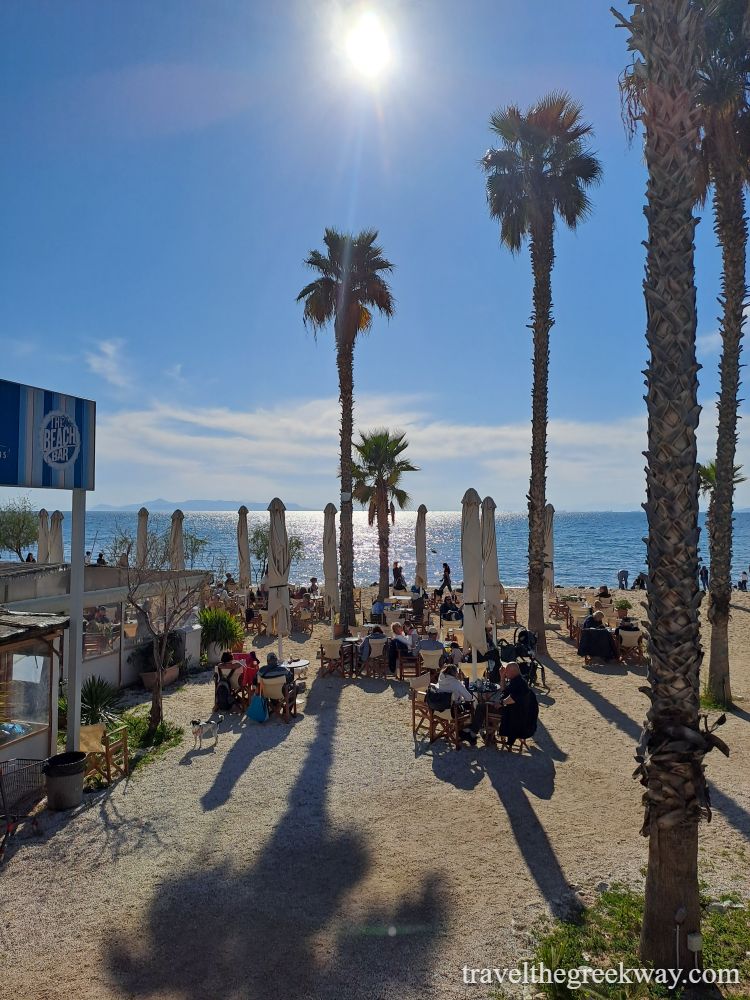
If you find the concrete center too intense, head south. The Athens Riviera stretches for 62.5 km (38.8 mi) from Piraeus down to Cape Sounion.
- Glyfada: Wide boulevards, palm trees, and luxury beach clubs. It’s perfect for those who want a city-beach hybrid trip.
- Vouliagmeni: Home to the famous Lake Vouliagmeni, a natural thermal spa that stays at 22–29°C (71–84°F) year-round. The lake’s mineral-rich waters are fed by underground springs and framed by towering limestone cliffs.
- Alimos: Much closer to central Athens, Alimos has a large marina, a long beachfront, and easy access by tram. It’s a good place for a seaside walk without going all the way down the Riviera.
Want to see another side of Athens? Come with me on my walk through Alimos, from the marina and the Allied War Cemetery to the residential streets and beach.
Choosing the right neighborhood is the difference between a relaxing trip and a logistical nightmare. The “Historic Triangle” is where you want to be if you prefer walking over commuting.
Read: My Ranked List of the Best Areas to Stay in Athens
Ancient Athens: The Archaeological Circuit

I have lived in the shadow of the Acropolis my entire life, and it remains the undisputed heart of my city. However, the “Sacred Rock” is surrounded by several other significant sites that are well worth a visit, if you have time.
The Acropolis & Parthenon
The walk from the Dionysiou Areopagitou pedestrian street to the Propylaea entrance is approximately ~0.8 km (~2,624 ft) of uphill climbing. The Acropolis ticket is €30, and time-slot booking is mandatory.
- Expert Tip: To navigate the entry rules and avoid the midday heat, read my 17 Essential Things to Know Before Visiting the Acropolis.
- Suggested Route: If you only have 24 hours, efficiency is key. Check out my Ultimate One-Day Itinerary in Athens.
Mobility Note: If the ~0.8 km (~2,624 ft) uphill climb is a concern, there is a modern elevator located on the north face of the Acropolis for travelers with mobility issues; just ensure you bring proof of disability or contact the site in advance to confirm access.
Other Important Sites Nearby
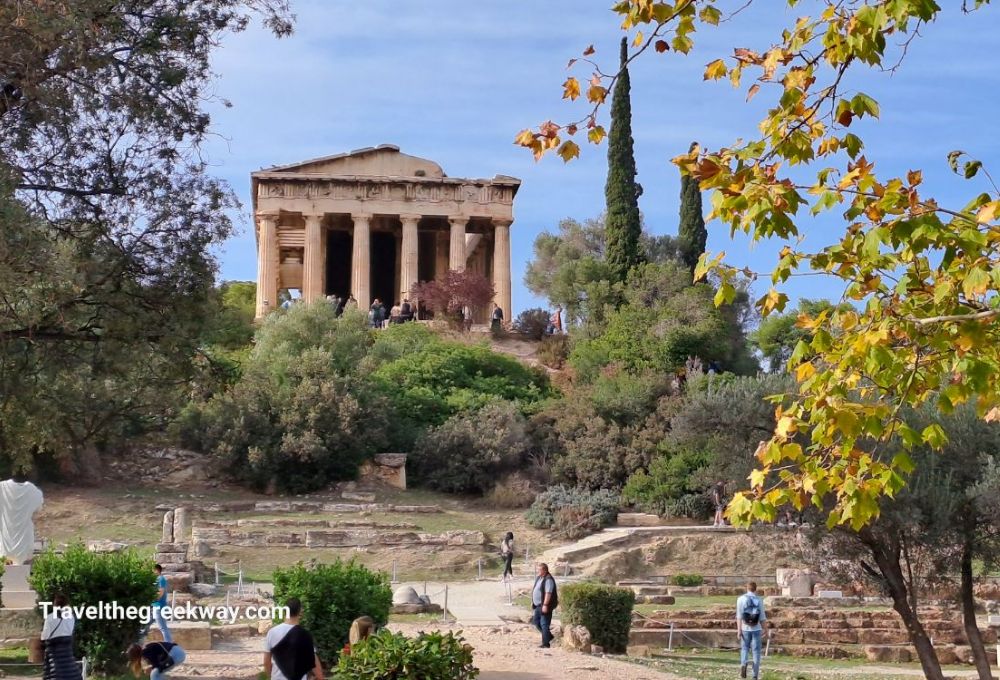
If you want to see more of the city’s layers, these landmarks are all within easy walking distance:
The Ancient Agora: The heart of democracy and home to the Temple of Hephaestus, which is the best-preserved ancient temple in Greece. It’s much greener and quieter than the Acropolis. Full Guide here.
Aristotle’s Lyceum: A quiet site past the National Garden where the famous philosopher once taught. Full Guide here.
The Roman Agora & Hadrian’s Library: Located right in Monastiraki, these two sites are just ~0.2 km (~656 ft) apart. Don’t miss the Tower of the Winds. Roman Agora Guide / Hadrian’s Library Guide.
The Temple of Olympian Zeus: Located just ~0.5 km (~1,640 ft) from the Arch of Hadrian, these massive columns show the scale of Roman-era Athens. Full Guide here.
The Kerameikos: The city’s ancient cemetery. It’s a peaceful, underrated spot about a ~1 km (~3,280 ft) walk from the Agora. Full Guide here.
Beyond the Ruins: Museums and Culture
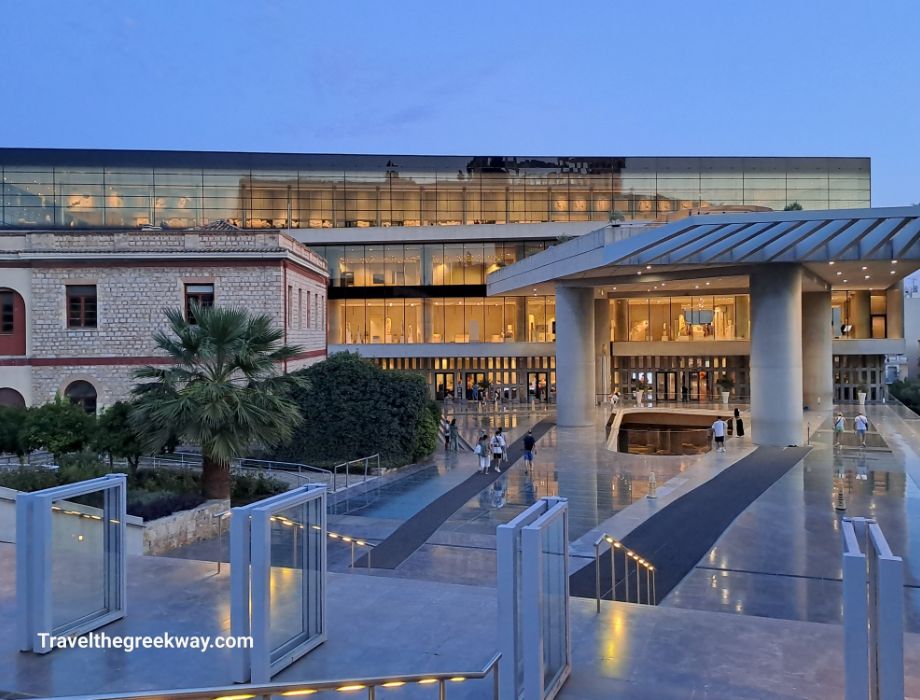
If the heat becomes too much, or if you want to see the real treasures that were found on the Acropolis, you must head indoors.
- Acropolis Museum: A glass-and-concrete masterpiece. The Parthenon Gallery on the top floor is the same dimensions as the actual temple.
- National Archaeological Museum: Located in the Exarchia neighborhood, this holds the “Antikythera Mechanism” and the Gold Mask of Agamemnon. It is a ~1.5 km (~0.9 mile) walk from Syntagma. Full Museum Guide here.
- Benaki Museum: My personal favorite for Greek jewelry and folk costumes.
Dining & Nightlife: Eating Like an Athenian
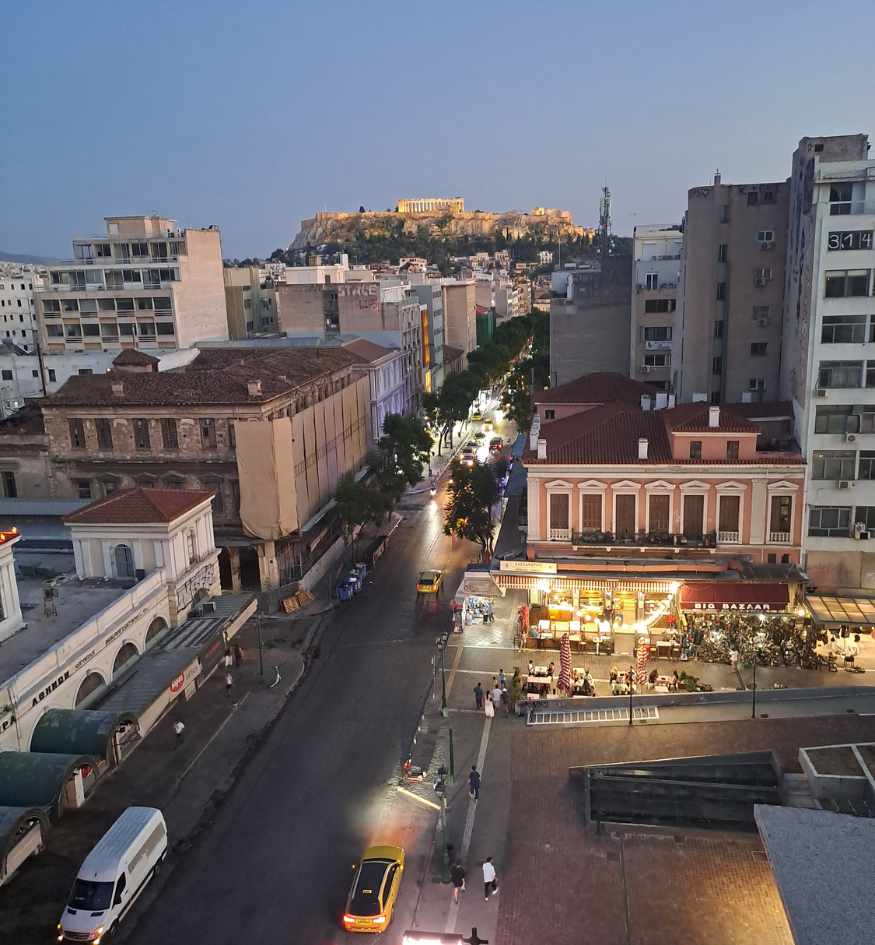
Greek food is more than just Moussaka. In Athens, we eat late (rarely before 8:00 PM) and we value “Mezedopoleia” (small plates).
- The Street Food Scene: A souvlaki (pita gyro) will cost you between €3.80 and €4.50. Look for spots in Monastiraki that have a line of locals, not just tourists.
- Coffee Culture: We take “Freddo Espresso” seriously. You’ll find locals sitting for hours over one coffee in the leafy squares of Pangrati or Kolonaki. Cost: between €3.50 and €4.50.
- Rooftop Bars: For the best view, head to the terraces in Psirri or Monastiraki. Seeing the Acropolis lit up at night while having a drink is one of the best ways to enjoy an evening in Athens.
In Athens, it is a tradition that the very first thing a waiter brings to your table—before you even order—is a free carafe of cold tap water. It’s our way of saying ‘Welcome’!
Athens with Kids
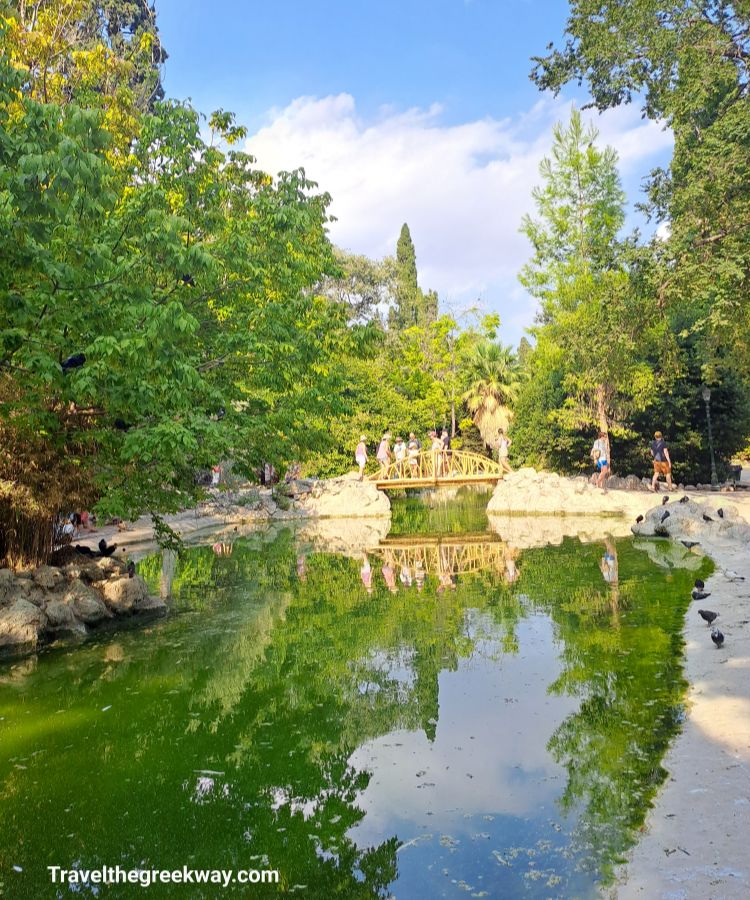
Athens is a vibrant playground for families. Here are the best spots to balance ancient history with pure fun:
Green Spaces & Adventure
- National Garden: This ~15-hectare (~38-acre ) park is a shaded oasis. Kids love the duck ponds, the mini-zoo with goats and parrots, and the large wooden playground.
- SNFCC (Niarchos Park) near Faliro: A modern favorite that has it all: a canal for kayaking, “dancing” fountains, and a 2.5 km (~1.5 mile) bike path. It’s the ultimate spot for the whole family to unwind.
- Museum of Illusions: Located on Ermou Street, this interactive museum features a “Vortex Tunnel” and “Anti-Gravity Room”—perfect for mind-bending family photos.
Fairy-Tale Treats & Sweets
- Little Kook (Psirri): More than a café, it’s a living fairy tale. The extravagant decorations change seasonally (like Alice in Wonderland), making it a magical stop for a dessert.
- Hans & Gretel: A themed candy shop where the staff dress in costume. The bubble waffles topped with gelato are a huge hit with kids.
- The Dark Side of Chocolate: A cozy gem in Kolonaki for true chocolate lovers. They serve artisanal hot chocolate ranging from 32% to a deep 100% cocoa, along with unique handmade chocolates.
Quick Family Tips
- The Happy Train: Catch this toy-like train at Syntagma Square for a 60-minute effortless loop around the major sights.
- Stroller Access: Strollers are not allowed in the Acropolis. The cobbled streets of Plaka can be bumpy—a sturdy stroller or carrier is recommended.
Local’s Quick Greek Phrase Box
You don’t need to be fluent, but in Athens, a little Greek goes a long way. Use these five essentials to get a smile from your server or taxi driver:
| Phrase | Pronunciation | Meaning |
| Yassas | yah-sas | Hello / Goodbye (Polite) |
| Efcharisto | ef-hah-rees-toh | Thank you |
| Parakalo | pah-rah-kah-loh | Please / You’re welcome |
| Pou ine to…? | poo ee-neh toh | Where is the…? |
| Yamas! | yah-mas | Cheers! (Literally: To our health) |
Local Tip: If you want to sound like a true Athenian, when you walk into a cafe, just say “Kalimera” (Good morning) before 12:00 PM. Saying Kalimera when you enter a café is always appreciated.
Day Trips: Escaping the Concrete
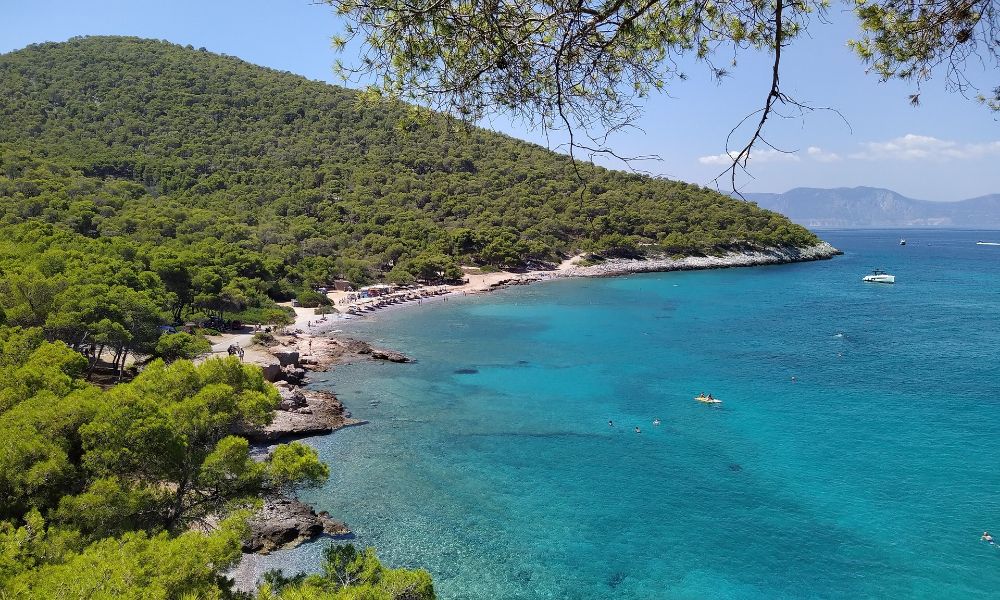
If you have more than three days, use Athens as your base to explore Attica.
- Cape Sounion: Home to the Temple of Poseidon. It is ~70 km (~43.5 miles) from downtown. The sunset here is arguably the best in Greece.
- The Athens Riviera: Explore the coast from Paleo Faliro and Alimos through Glyfada and Vouliagmeni, or continue farther south to Cape Sounion.
- The Saronic Islands: You can be on Aegina or Agistri in ~40-60 minutes via hydrofoil from Piraeus Port. Cape Sounion Day Trip: The Ultimate Sunset Guide
- Athens is the perfect jumping-off point for a road trip; once you’ve seen the capital, explore my detailed guides to the Greek Mainland to see what lies beyond the city limits.
Your Athens “Cheat Sheet” Summary
- Water: 100% Safe and high-quality. You do not need to buy bottled water in Athens. Carry a reusable bottle and refill it from any tap or the stone fountains in the historic center to save money and reduce plastic.
- Safety: Athens is a very safe capital, but stay alert in crowded areas. Watch your pockets on the Metro (especially Line 1/Green and Line 3/Blue) and in busy squares like Monastiraki. For a deep dive into local safety tips, check out my related post on Athens safety here.
- Connectivity: Contactless payment is the standard. You can tap your card or phone for the Metro, buses, and almost every shop or “Periptero” (kiosk).
- Emergency Numbers: Dial 112 for general emergencies (European emergency line) or 100 for the Greek Police.
- Electricity: Type C & F (Standard European 2-pin).
- Time Zone: EET (GMT+2) / EEST (GMT+3).
Athens Travel FAQ: Quick Answers for Your Trip
Is 2 days enough for Athens?
Two days (48 hours) is the perfect amount of time for a “Classic Athens” introduction. You can comfortably visit the Acropolis, explore the Acropolis Museum, and wander through the historic neighborhoods of Plaka and Monastiraki. However, if you want to include the Athens Riviera or a day trip to Cape Sounion—which is about ~70 km (~43 miles) round trip—I recommend staying for 3 to 4 days.
Can you walk everywhere in Athens?
In the historic center, yes! Athens is one of Europe’s most walkable capitals. The “Great Walk of Athens” is a pedestrian-only archaeological promenade that circles the Acropolis for about ~3 km (~1.8 miles), connecting the major sites without you ever having to cross a busy road. However, for neighborhoods like the Riviera or the SNFCC, you’ll want to use the Metro or the coastal tram.
Is the Acropolis worth it in the afternoon?
Absolutely. While many guides suggest going at 8:00 AM to beat the crowds, the late afternoon (2 hours before sunset) is often more magical. The “Golden Hour” light makes the marble of the Parthenon glow, the temperatures are cooler, and you can watch the Evzones (Presidential Guard) perform the flag-lowering ceremony at sunset. Just be sure to check the seasonal closing times, as the site shuts its gates exactly at sunset.
Plan Your Athens Adventure
This guide is just the beginning—I’ve written over 190 posts to help you navigate every corner of Greece. Here’s how to take the next step:
- Step 1: Get the Plan – Don’t miss a thing with my Best 2-Day Athens Itinerary or browse the full Athens Archive.
- Step 2: Join the Community – Have questions about neighborhood safety or ferry strikes? Join our Travel the Greek Way Facebook Group for real-time local advice.
- Step 3: Explore Beyond – Ready to leave the city? Check out my deep dives into the Peloponnese, the Greek Islands, and the Mainland.
- For answers to broader questions about currency, electricity, or local customs, check out my list of common Greece travel questions.
Safe travels—I’ll see you in Athens!