If there’s one museum you absolutely shouldn’t miss in Athens, it’s the National Archaeological Museum of Athens.
As a Greek living in Athens, I’ve visited many times, and every single visit feels like I’m discovering something new.
This is Greece’s largest museum, home to over 11,000 exhibits, and one of the world’s most important museums dedicated to ancient Greek art, covering an incredible timeline from 7000 BCE to 500 CE.
What makes it even more fascinating is that the collection doesn’t stop at Greece — you’ll also find pieces from Cyprus, Egypt, and Italy, painting a vivid picture of the ancient Mediterranean world and how cultures connected and influenced one another.
In this guide, I’ll share everything you need to know before you go — from what to see and tips for visiting, to why this museum really does live up to the hype.
This post includes links that may be affiliate links. If you choose to make a purchase through them, I may earn a small commission at no extra cost to you. Please see my disclaimer/privacy policy for more information.
Museum’s Quick Links

- Book a private tour with a licensed expert guide and tickets for the museum
- Stay at the Best Hotel in Athens Center: Gatsby Athens
- 🎥 YouTube Video: My visit to the museum and Exarchia.
Why You Should Visit the National Archaeological Museum of Athens
There are plenty of reasons why the National Archaeological Museum should be on your Athens itinerary. Here are a few key takeaways:
A Journey Through Time: The museum offers a chronological journey from prehistoric times to the late Roman period, providing a comprehensive look at the evolution of Greek civilization.

Stunning Artifacts: With everything from gold masks to marble statues and ancient technology, the museum showcases the incredible craftsmanship and creativity of ancient Greece.
An Alternative Experience: Visiting the museum allows you to experience a different side of Athens, especially when combined with exploring Exarchia’s bohemian charm.
It’s an opportunity to connect with the city beyond its more famous landmarks, such as the Acropolis and Plaka.
Where is the Museum Located?
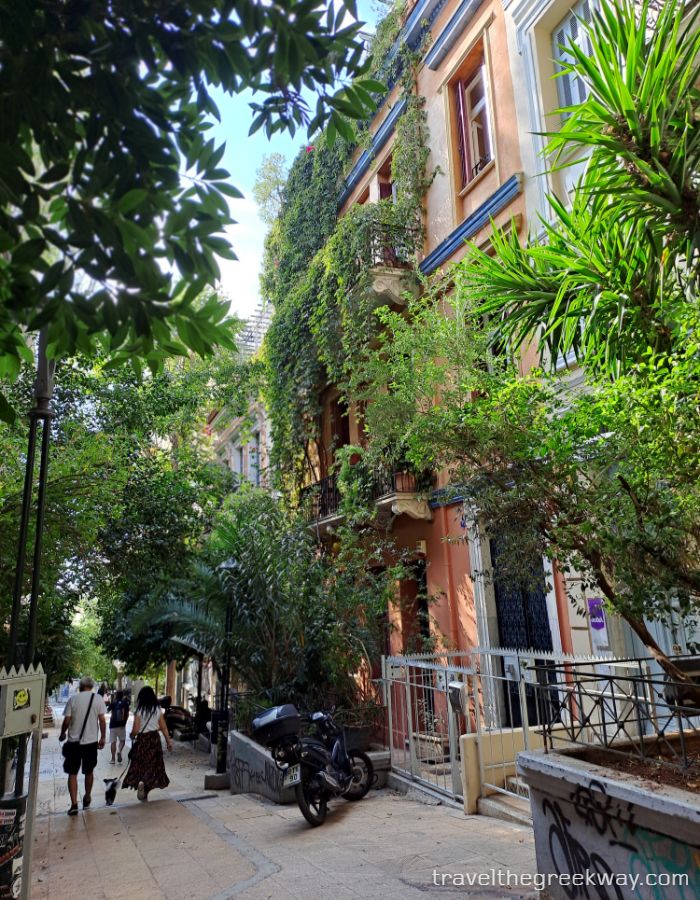
The museum is in the Exarchia neighborhood of central Athens, near the Omonoia or Victoria metro station.
You can easily reach the museum on foot as it is only 10 minutes away from either metro station.
What’s the Story Behind the Museum?
The National Archaeological Museum, Greece’s first museum, was founded in 1829 after Greece gained independence from the Ottomans.
Initially located in Aegina (Greece’s first capital), it moved to Athens in 1834.
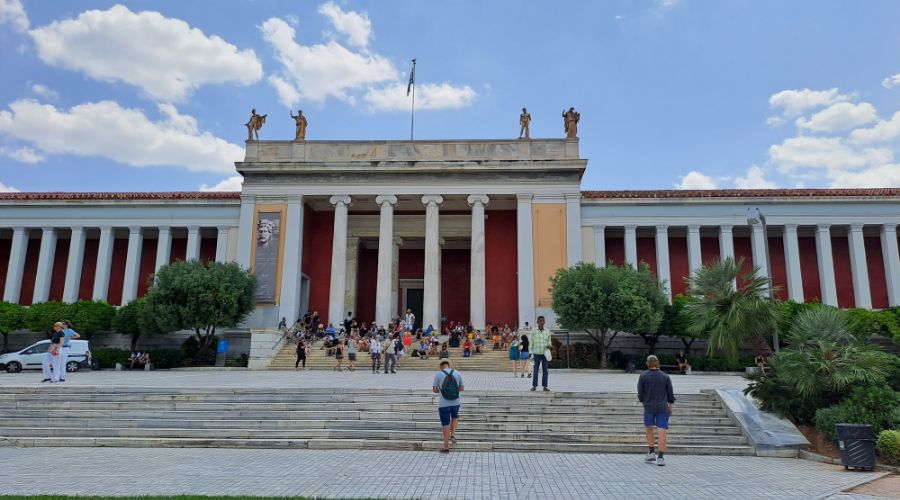
Construction of the imposing neoclassical building began in 1866, thanks to a land donation from E. Tositsa and funding from the Bernardakis family, with designs by L. Lange and façade modifications by E. Ziller.
The museum opened its doors to visitors in 1889, and since then, its collections have been expanded with each new excavation.

During WWII, all the exhibits were buried in the basements of the museum, hidden in caves and secret spots to avoid destruction and especially looting by the German troops.
In 1947, the first three halls of the museum opened again, and since then, it has been expanding.
What Kind of Collections Does the Museum Have?
Here’s a guide to some of the must-see exhibits and collections that highlight the museum’s incredible offerings.
The Prehistoric Collection
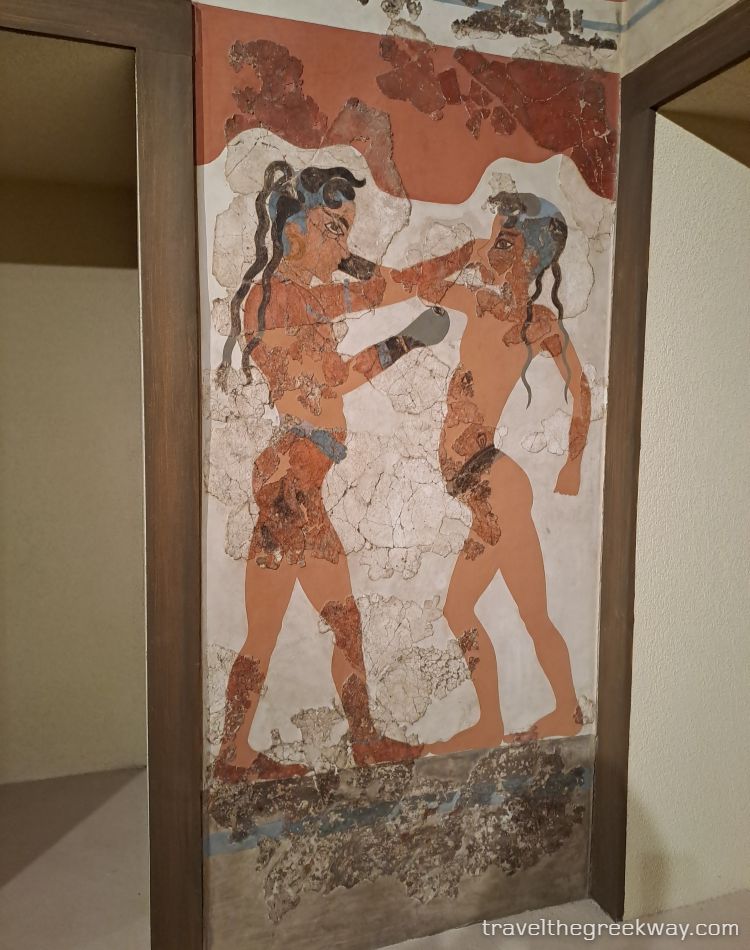
One of my favorite sections of the National Archaeological Museum of Athens is the Prehistoric Collection (ground floor, Rooms 3–6; upper floor, Room 48).
I’ve spent a lot of time here, and it never stops amazing me.
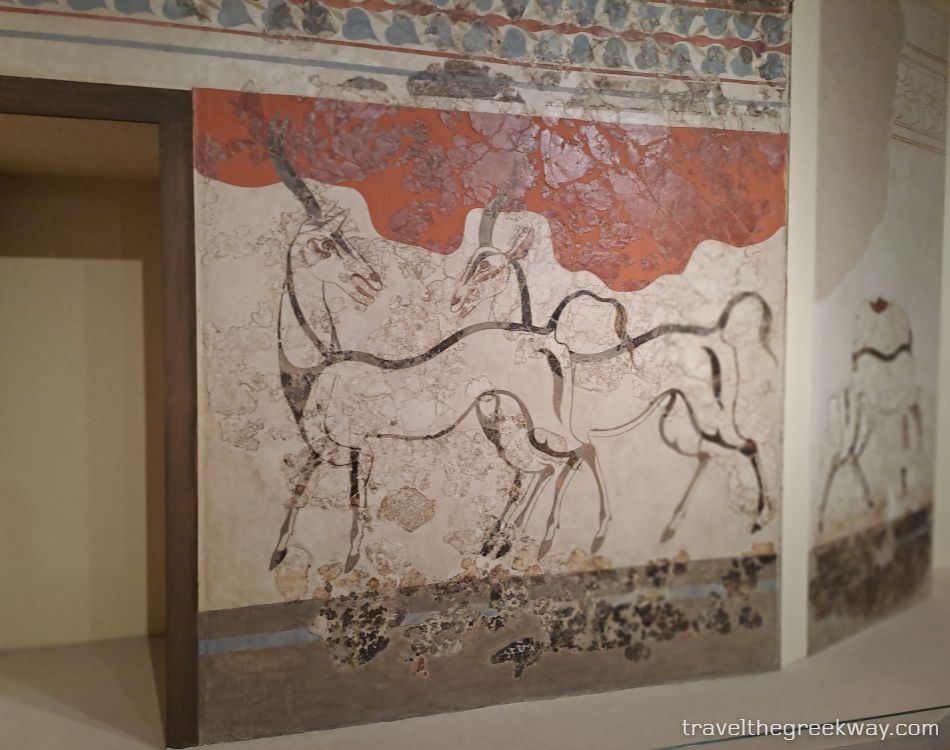
This collection takes you way back, from the Neolithic period all the way through the Cycladic and Mycenaean civilizations.
You’ll get a real feel for the great cultures that thrived in the Aegean islands and Troy between the 6th millennium and 1050 BC.
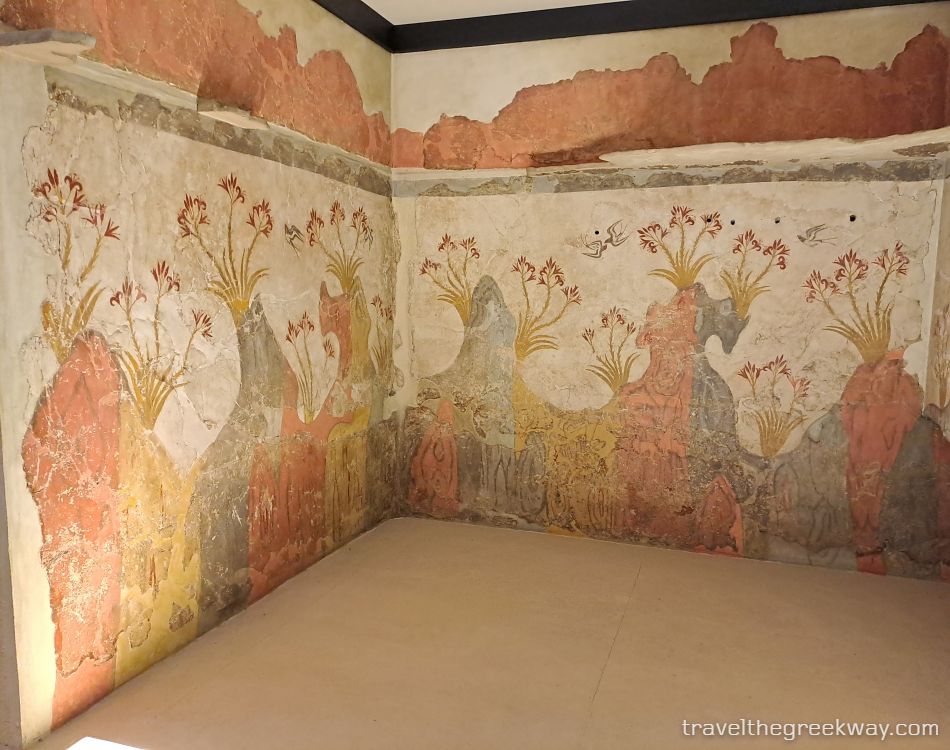
You’ll come across the “Spring Fresco,” the only wall painting in Akrotiri, Santorini, that was discovered still in its original spot.
It stretches across three walls of the same room and shows the rocky Theran landscape before the volcanic eruption — red lilies with yellow stems in bloom, while swallows glide above, symbolizing the arrival of spring.
The Sculpture Collection
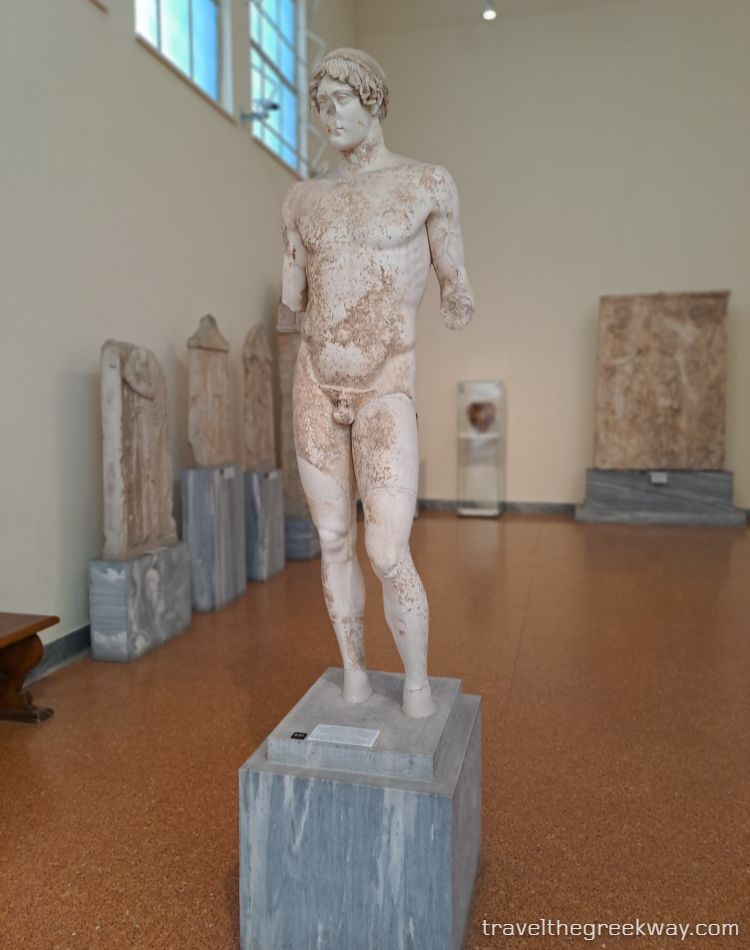
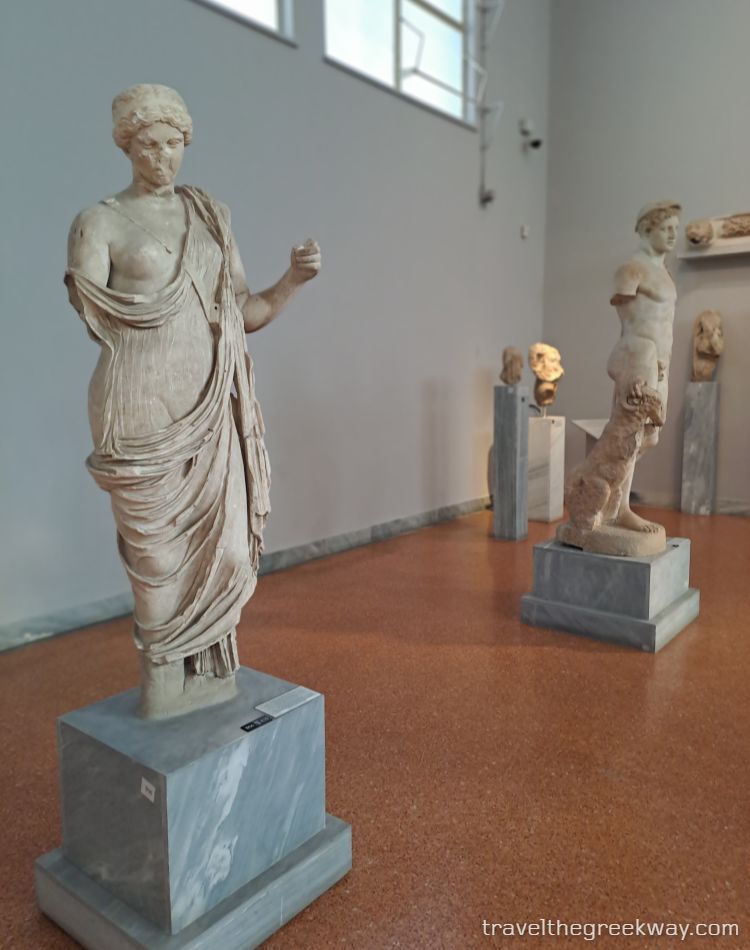
The Sculpture Collection is vast (ground floor, Rooms 7-34; Atrium), featuring works of ancient Greek sculpture from 700 BC to the 5th century AD.
It’s like walking through a time capsule, with sculptures depicting gods, athletes, and heroes in dramatic poses.
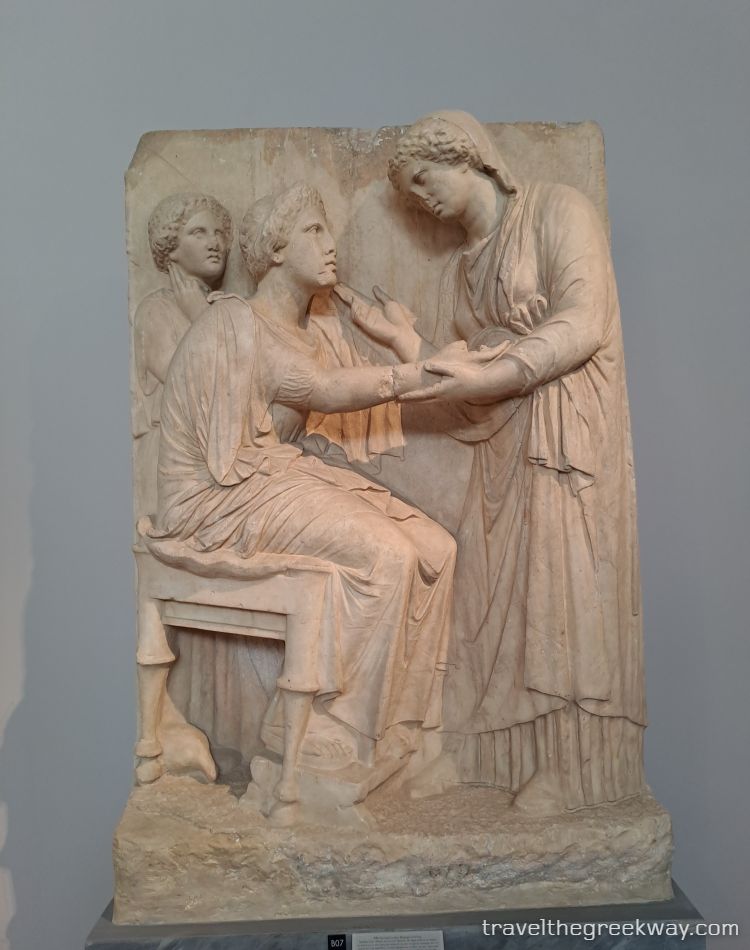
The collection currently includes approximately 16,000 sculptures from sanctuaries, necropolises, and public buildings across Attica, Eastern Central Greece, the Peloponnese, the Aegean islands, and other regions in Greece.
Metalwork (Bronze) Collection
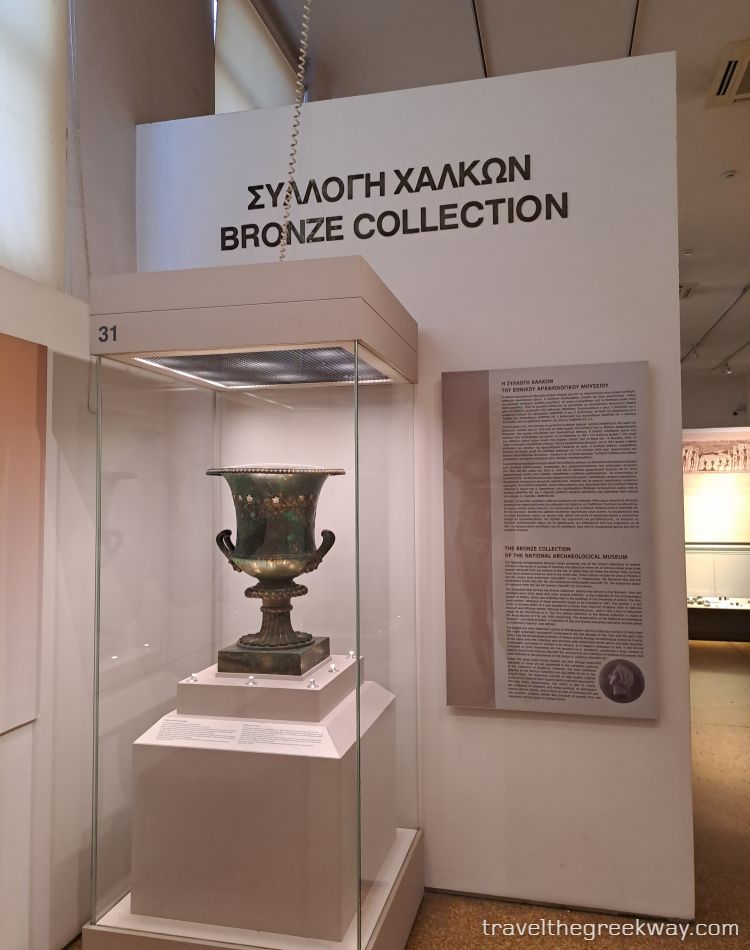
One of the most impressive areas of the museum is the Bronze Collection (ground floor, rooms 36-39).
Ancient Greek bronze work was exceptional, and this collection includes everything from weapons and armor to tools and statues.
You’ll find all kinds of metal artifacts here, including male and female figurines, mythological creatures, animals, weapons, and various vases and vessels.
You’ll also see incredible finds from the Antikythera Shipwreck, like the famous 1st-century BC Mechanism used to predict astronomical events and keep track of calendar dates.
The Vase Collection
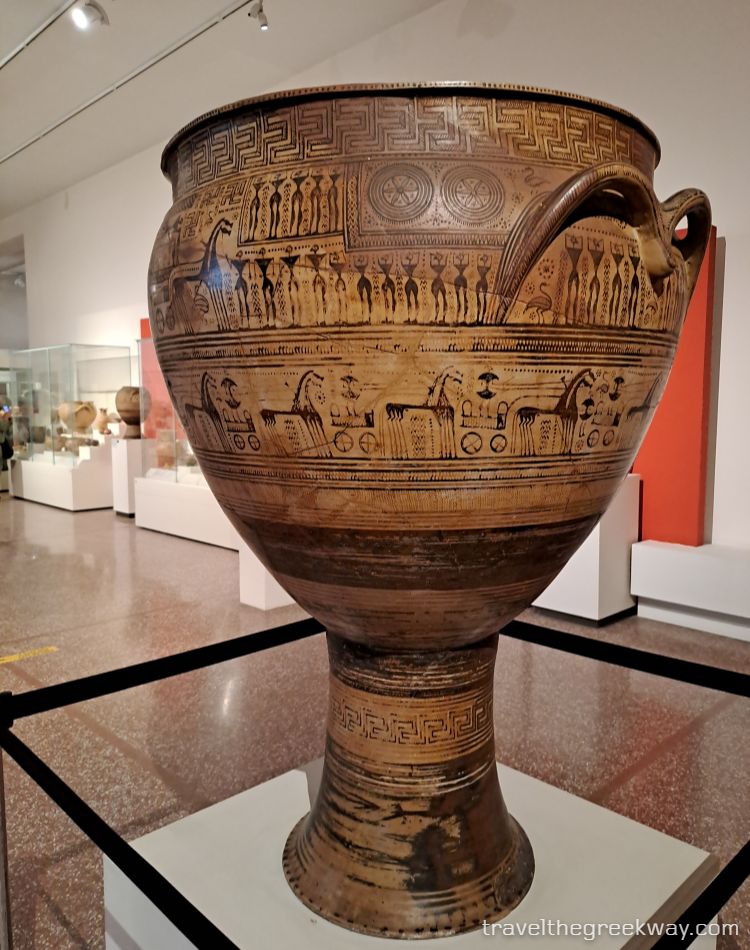
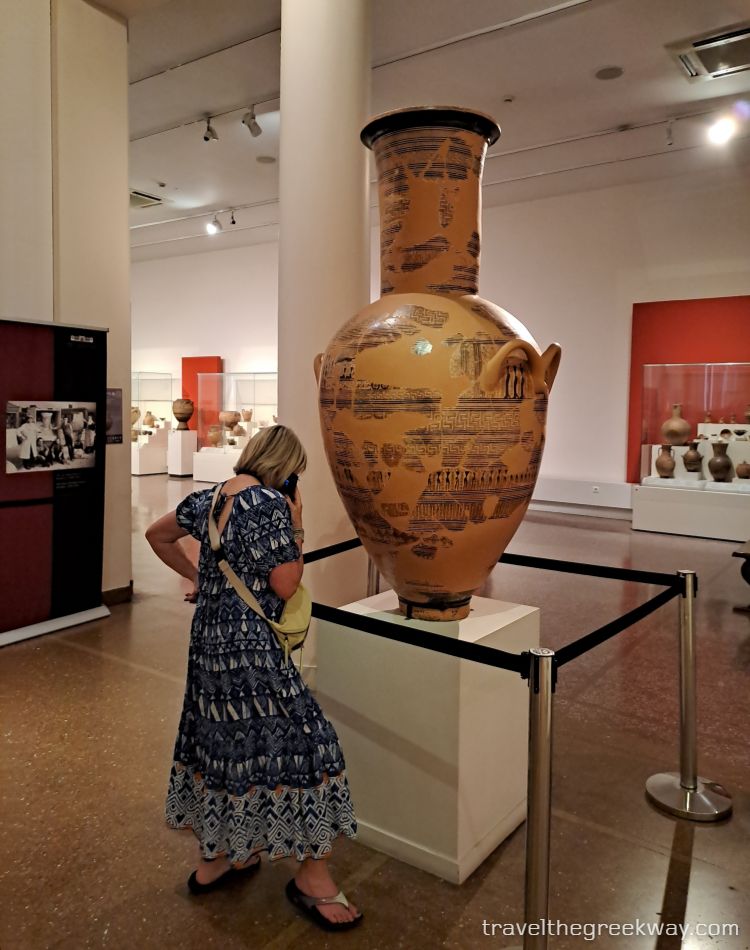
These stunning vases, some really big ones, tell stories of gods, battles, and daily life through intricate paintings.
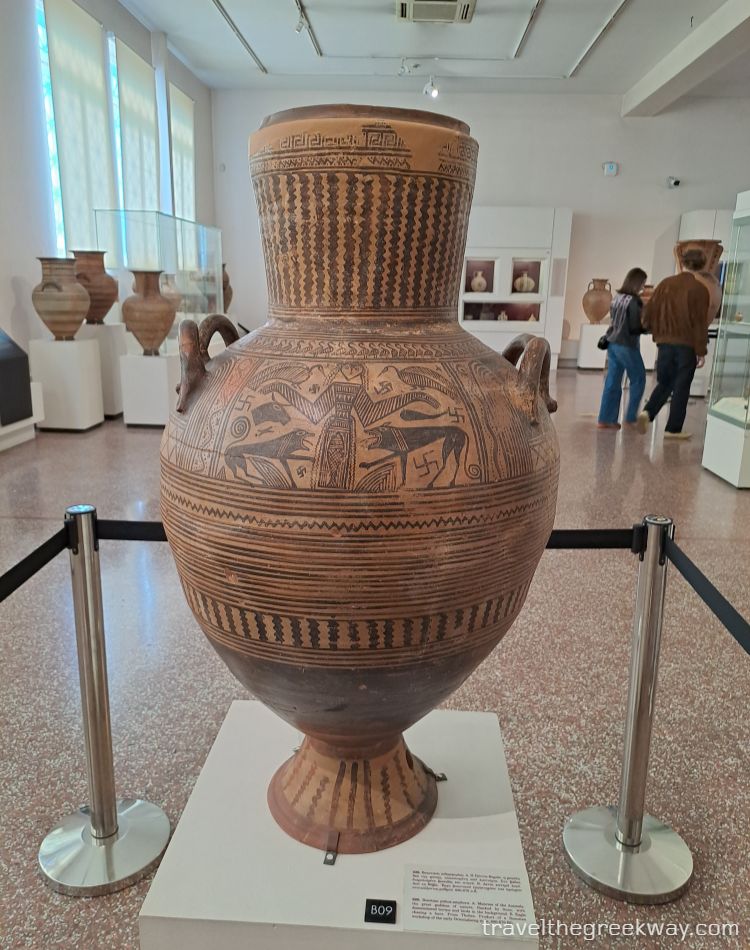
You can check out over 2,500 exhibits on the upper floor across rooms 49 to 57, tracing how Greek pottery and painting evolved from the 11th all the way to the 4th century BC.
As you wander through, you’ll see stunning pieces crafted by famous ancient workshops, including Attic, Boeotian, Corinthian, Laconian, and island-Ionian makers.
The Egyptian Artifacts

While the National Archaeological Museum is predominantly focused on Greek artifacts, there’s a section dedicated to ancient Egyptian art as well (ground floor, rooms 40-41).
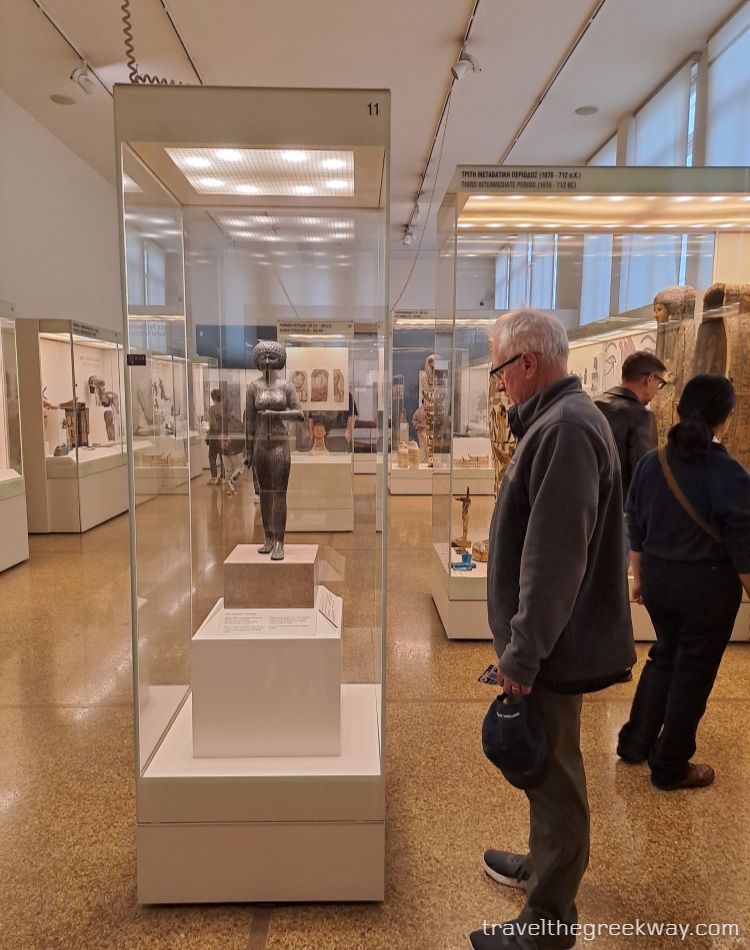
It’s a pleasant surprise for visitors who might not expect to find mummies and statues of Egyptian gods in the middle of Athens.
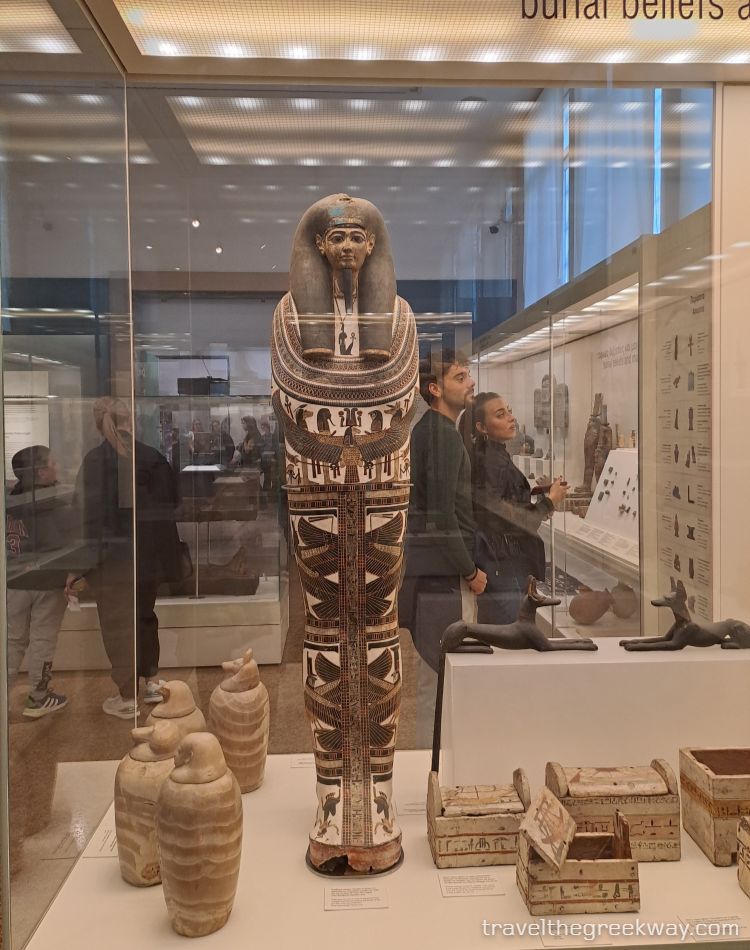
The collection is relatively small, but it spans from Early Predynastic times (5000 BC) to Late Antiquity (395 AD), offering a fascinating glimpse into the cultural exchange between ancient civilizations.
Cypriot Antiquities
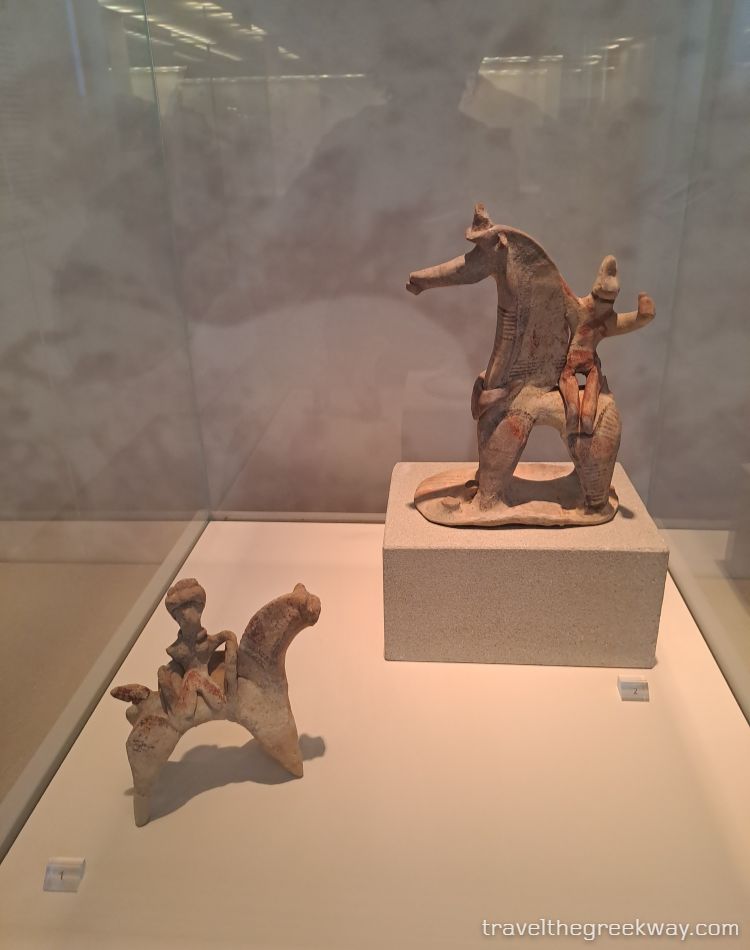
On the upper floor in room 64, you’ll discover around 850 pieces that walk you through every era of Cypriot history and art.
You can trace its story all the way from the Early Bronze Age around 2500 BC right up to the Roman Period in the 4th century AD.
The Goddess Athena Room
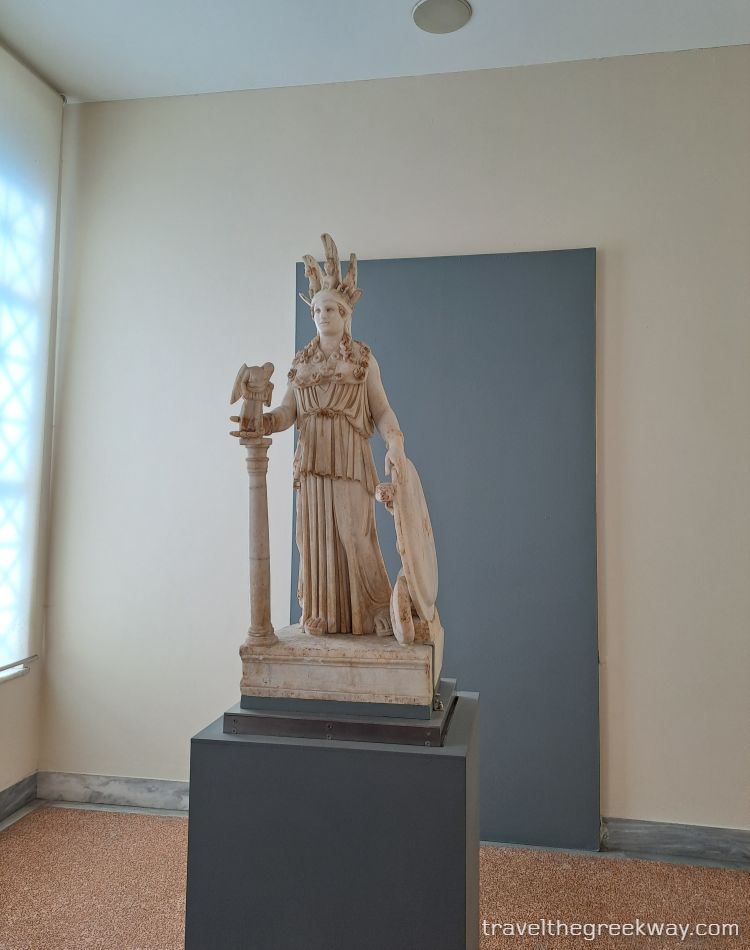
In room 20, you will find statuettes dedicated to the goddess Athena, protector of Athens.
The most notable exhibit is the Varvakeios Athena, the truest and best-preserved copy of the statue of Athena Parthenos by Pheidias, which was erected in the Parthenon temple in 438 BC. It was made in the first half of the 3rd century AD.
Top Exhibits of the Museum
Mask of “Agamemnon“
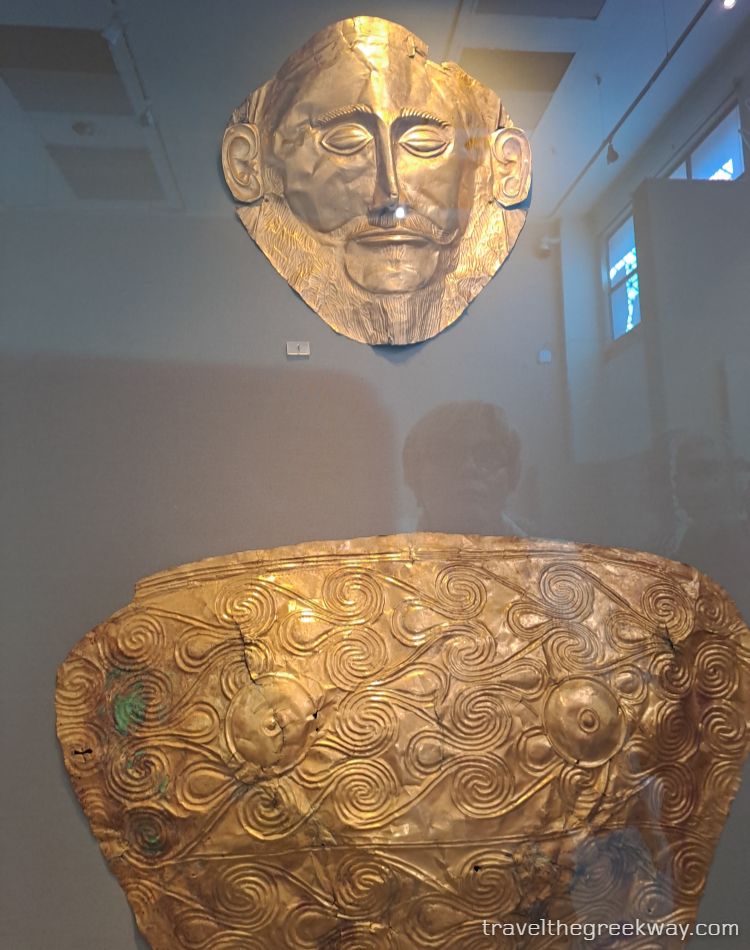
The Mask of Agamemnon was discovered during Heinrich Schliemann’s excavations at Mycenae in 1876. This gold funerary mask was found covering the face of a body buried in Grave V of Grave Circle A at Mycenae.
Schliemann believed he had uncovered the remains of the legendary king Agamemnon himself, which is how the mask got its famous name.
However, modern archaeological research shows that the mask actually dates to around 1550–1500 BC — roughly three centuries earlier than the time Agamemnon is thought to have lived.
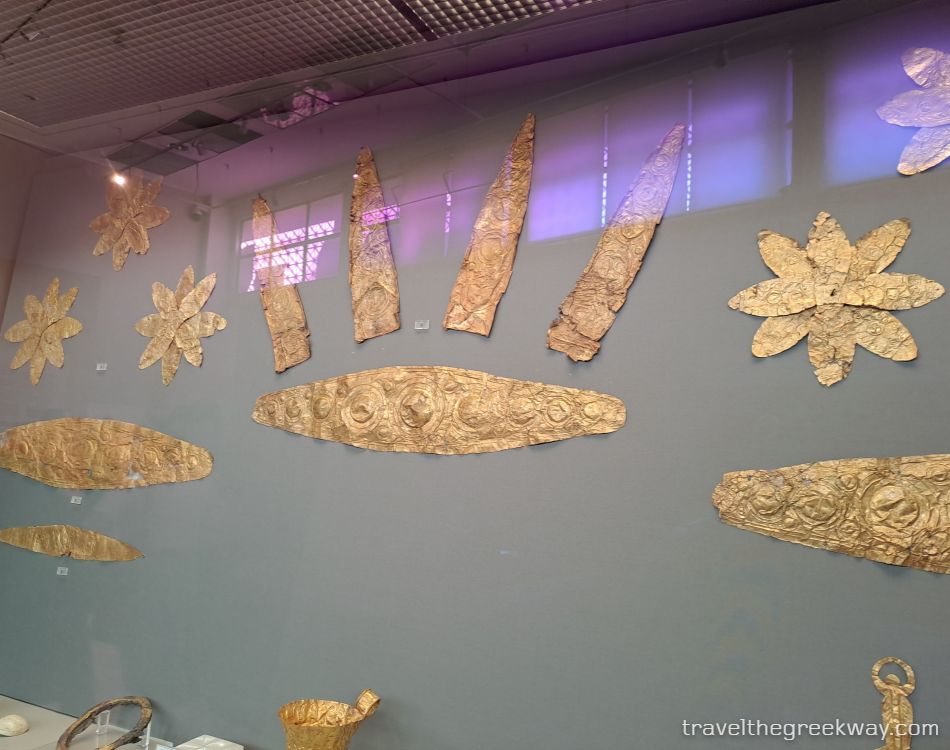
Still, the name “Mask of Agamemnon” stuck, and it remains one of the most iconic treasures of Mycenaean civilization.
You can find the mask in the Mycenaean Antiquities Hall, located directly opposite the entrance, along with other items (jewelry, gold artifacts, swords, etc.) discovered in the royal tombs of Mycenae.
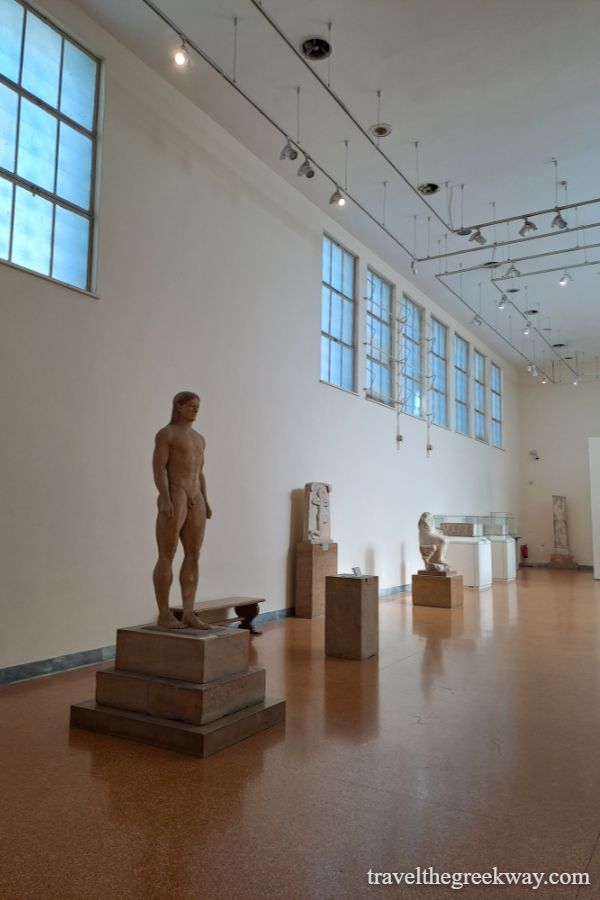
The Kouros Statues
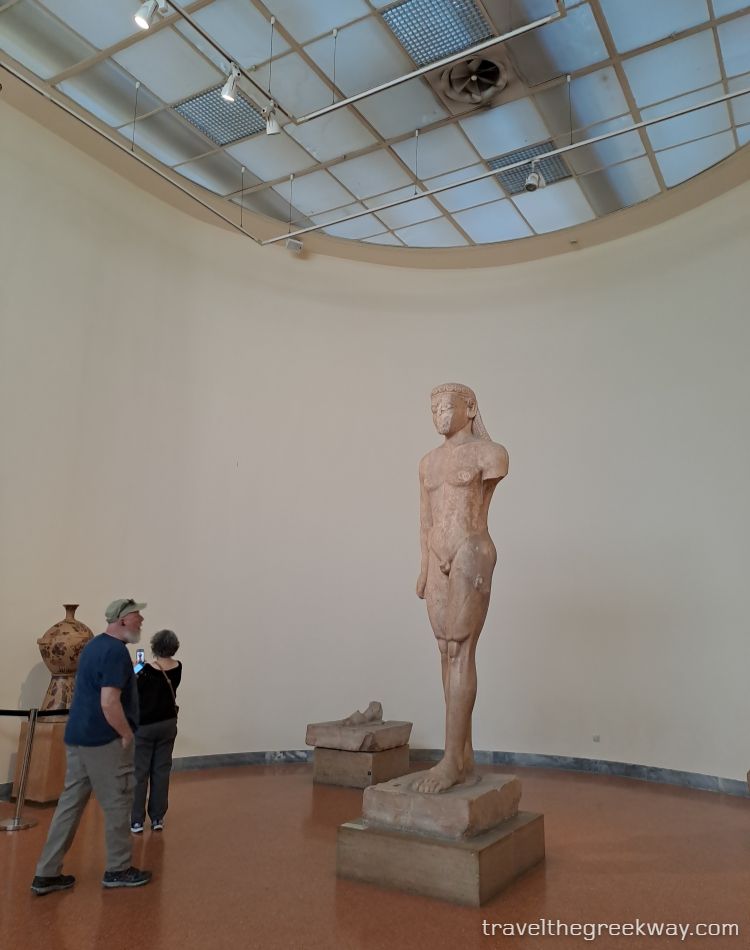
These life-sized sculptures of young men represent the ideal of youthful beauty and strength in ancient Greece.
They depict free-standing nude male youths, typically life-sized, though early colossal examples are up to three meters tall.
Poseidon of Artemision (450 BC)
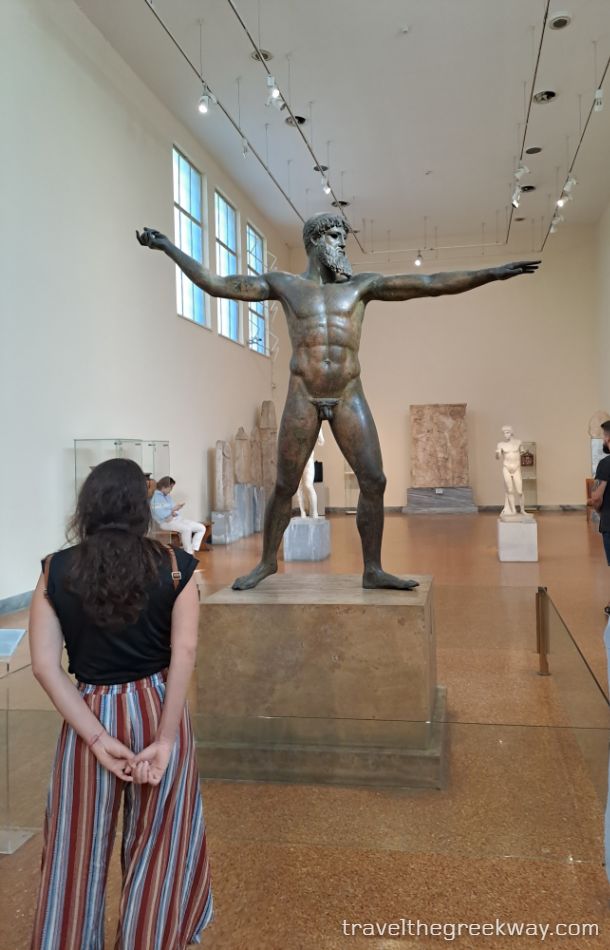
A powerful bronze statue believed to represent either Zeus or Poseidon, depending on how you interpret the raised hand (as if holding a lightning bolt or trident).
It is a masterpiece of Classical period sculpture, stands 2.09 meters tall, and is one of the few original bronze statues still preserved today.
Antikythera Mechanism
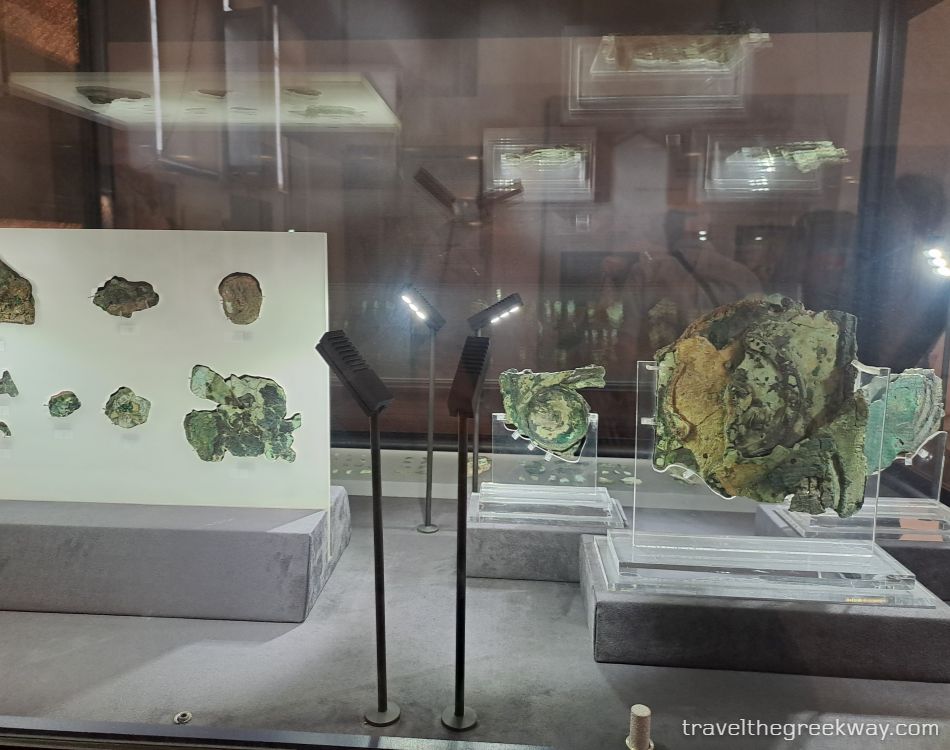
It is often called the world’s first computer. This ancient device, discovered in a shipwreck, was used to predict astronomical positions and eclipses—showcasing the advanced scientific knowledge of the Greeks.
The level of engineering behind the Antikythera Mechanism is astonishing, even by today’s standards. The museum has a special exhibit dedicated to it, including a replica and a detailed explanation of how it worked.
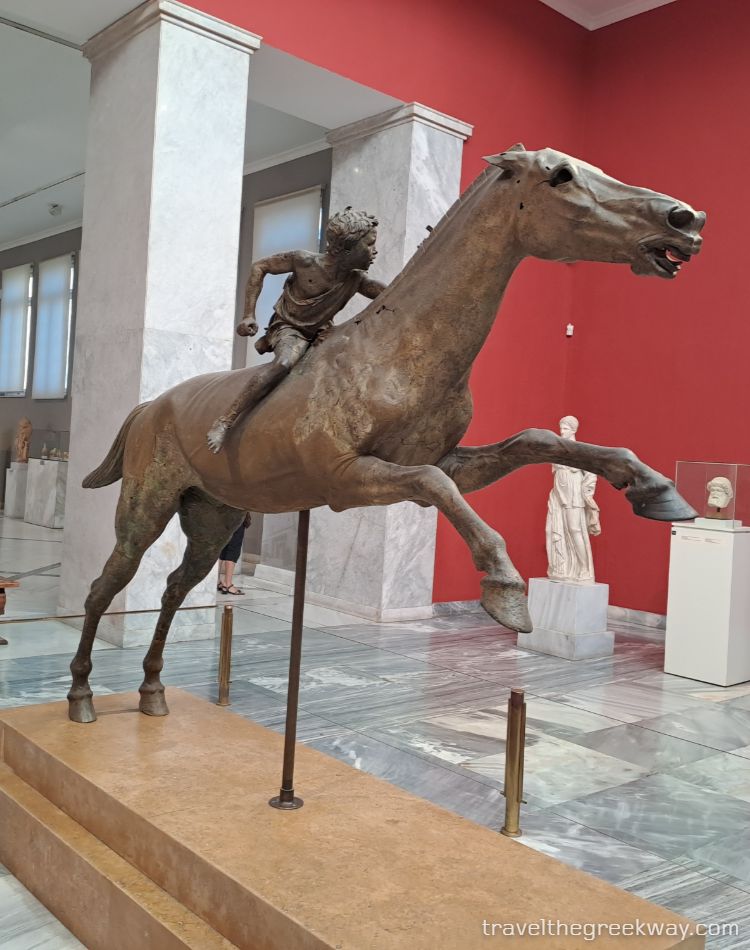
The Jockey of Artemision (circa 140 BC)

It was retrieved in pieces from the shipwreck of Cape Artemision in Evia Island, but was reassembled in 1971. Both the faces of the galloping horse and the young jockey reveal intense sentiments of agony and passion.
As most bronze objects would be melted and reused, this is an exceptionally rare exhibit and a centerpiece of the museum’s collection. You’ll find it in the statuary collection displayed in room 34.
Demetra and Persephone
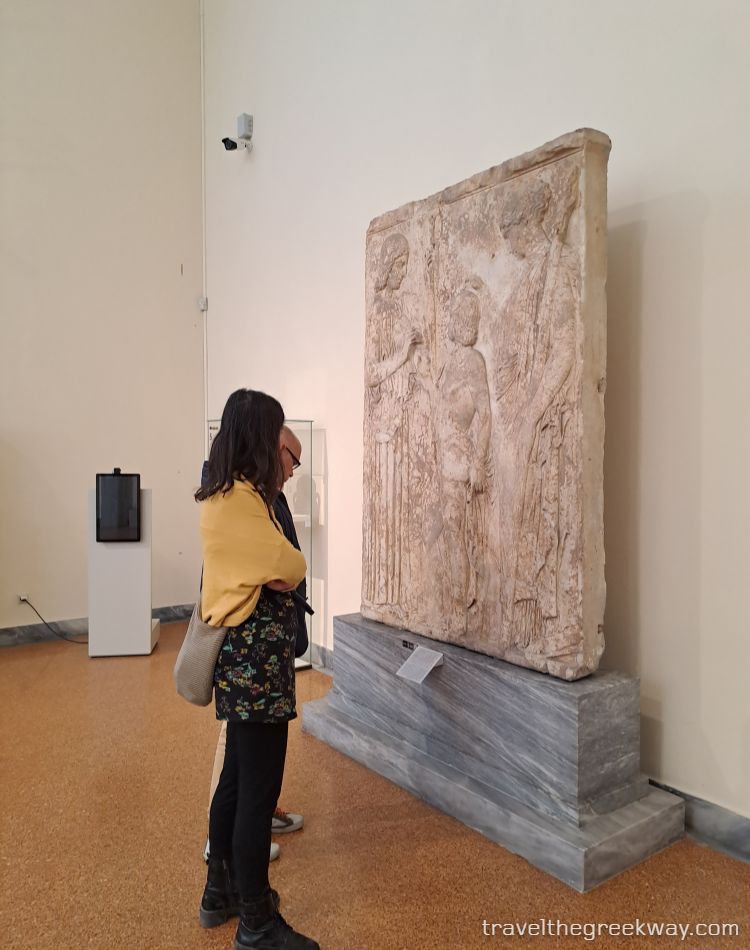
This is my favorite piece of art from the whole museum, as I have a soft spot for Eleusis and its archaeological site.
It is the largest and most important known votive relief made of Pentelic marble, created around 440–430 BC. It was dedicated to the Sanctuary of Demeter and Kore in Eleusis.
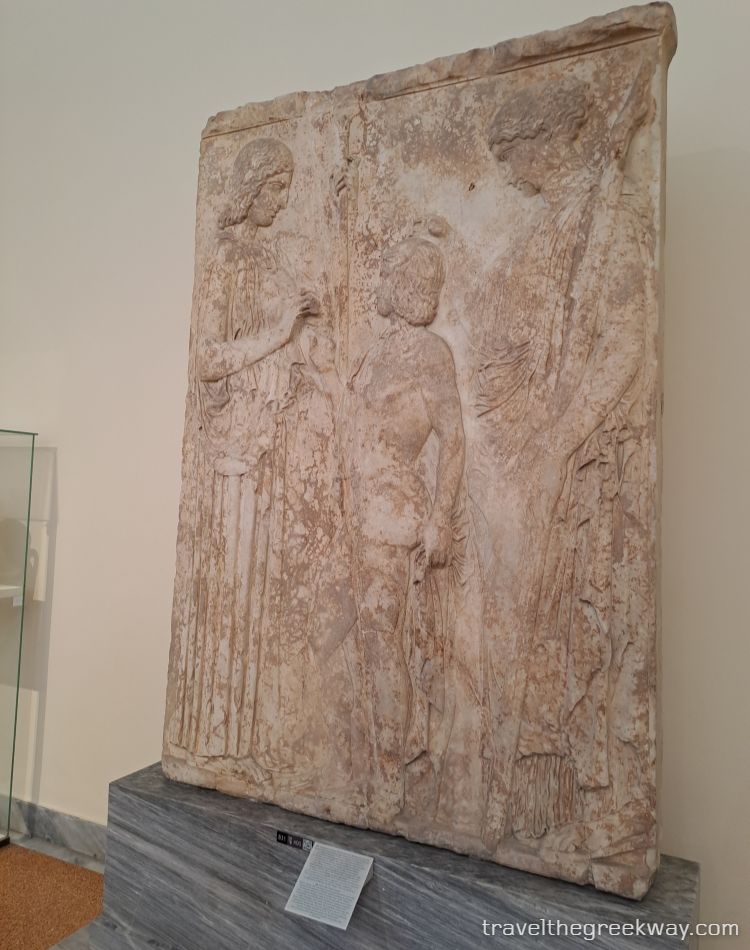
On the left, Demeter offers wheat to Triptolemos, son of the Eleusinian king Keleos, as a gift to humanity. On the right, Persephone blesses Triptolemos with her right hand.
The relief was so famous in the ancient world that it was copied during the Roman period.
The Skeletons from the Kerameikos
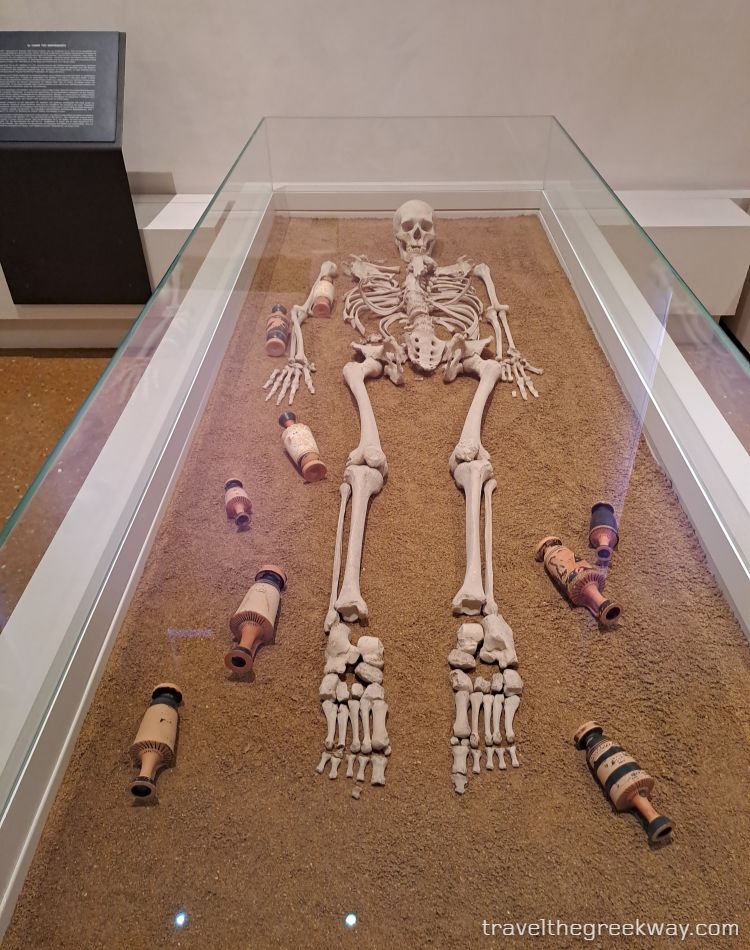
In 1891, excavations held by German archaeologists revealed a large part of the ancient cemetery that lay to the north-east of the present site of Kerameikos.
There, they found skeletons in excellent condition from 460-450 BC, and the experts have even identified conditions these people had — like osteoarthritis, tooth calculus, and abscesses in the upper jaw.
FAQs
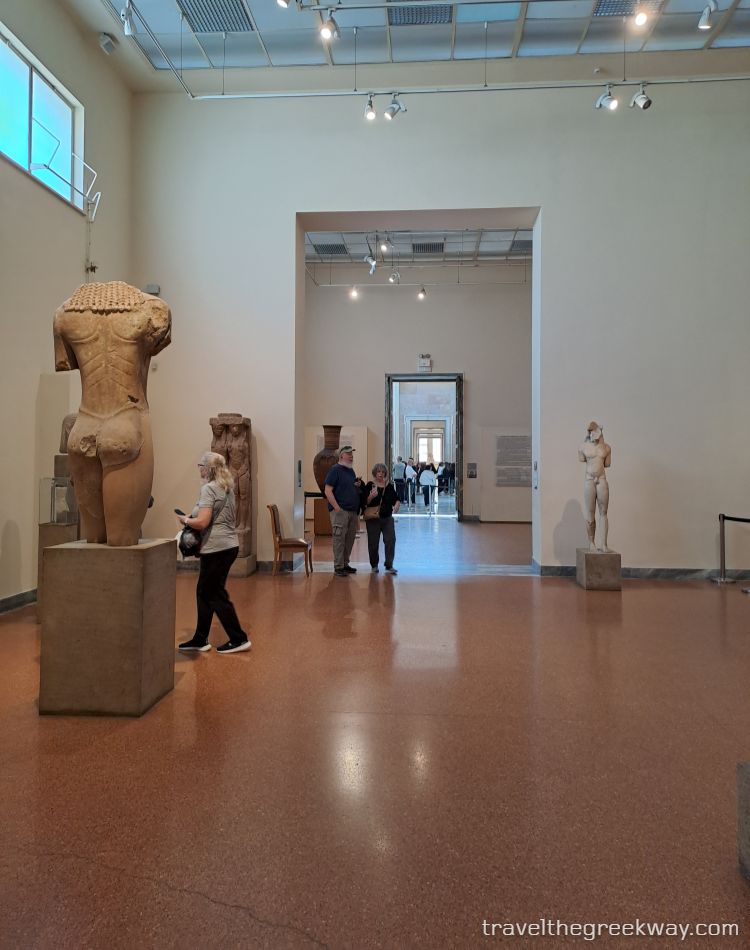
How Big is the Museum? How Long Should You Plan to Spend?
The building is 8,000 square meters (appr 86,111 square feet).
To fully explore the museum, I recommend spending a minimum of 2-3 hours, although you could easily spend half a day if you’re an archaeology enthusiast.
Can I Take Photos Inside the National Archaeological Museum?
Yes, you are allowed to take photos, but flash photography is strictly prohibited to protect the artifacts.
Professional photography and filming of individuals within the museum are prohibited without prior authorization.
What is the best time to visit the Museum?
Weekdays, especially in the morning, tend to be less crowded. Visiting in the off-season (fall or winter) can also provide a quieter experience.
As I live in Athens, I always visit the museum between November and March, which is a great time to see everything in peace.

What is the Difference Between the Acropolis Museum and the National Archaeological Museum?
The Acropolis Museum and the National Archaeological Museum offer distinctly different experiences and can’t really be compared.
The Acropolis Museum focuses on artifacts and findings from the Acropolis itself and its nearby areas, providing a deep dive into that specific historical site.
On the other hand, the National Archaeological Museum, though less modern and flashy, is one of Europe’s largest museums, showcasing artifacts from all over Greece, including the islands, and spanning all historical periods.
From a cultural and historical perspective, I believe the National Archaeological Museum is the top choice, especially if you’ve already explored the Acropolis, but I sincerely hope you can make time for both.
How Much Does the Entrance Ticket Cost?
Generally, tickets are 12€ (From April 1st until October 31st) and 6€ (From November 1st until March 31st) with discounts for students, seniors (EU), and children.
The museum offers free admission on certain days, such as International Museum Day, and every first Sunday between November and March.
You can book your ticket here with an optional audio guide.
Entry is only possible during the selected time slot. The ticket is valid from 15 min. before to 15 min. after the selected time slot. Visitors are advised to arrive 30 minutes before their selected timed entry slot.
What Are the Museum’s Hours, and Is It Open Every Day?
The Museum from November 1st – March 31st is open at:
Tuesday: 13:00 – 20:00
From Wednesday until Monday: 08:30 – 15:30
April 1st – October 31st
Tuesday: 13:00 – 20:00
From Wednesday to Monday: 08:00 – 20:00
The National Archaeological Museum is closed on December 25th – 26th, January 1st, March 25th, May 1st, and Orthodox Easter Sunday (April 5th, 2026).
Is there a Guided Tour available?
Yes, the museum offers guided tours in multiple languages. You can also book a private tour with a licensed guide for a more in-depth experience.
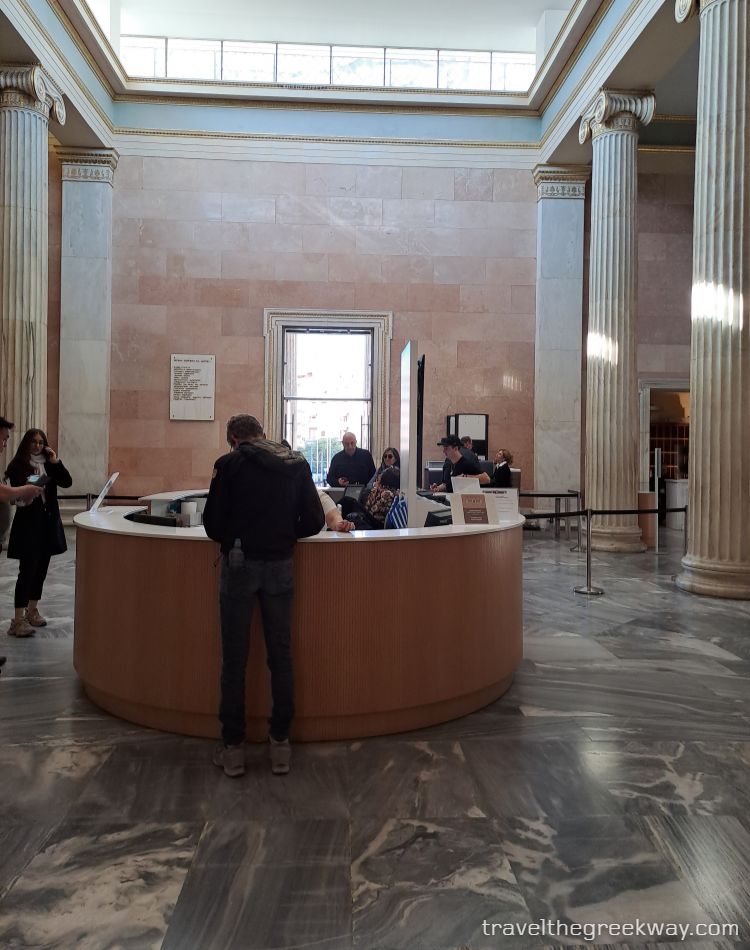
Is the Museum Accessible to People with Disabilities?
Yes, the museum is wheelchair-accessible, with ramps, elevators, and adapted restrooms for visitors with mobility challenges.
It has a separate entrance for people with disabilities on the side of Vas. Herakleiou Street, accessed either by a ramp from the main entrance of the Museum or directly from the pavement of Vas. Herakleiou.
Also, in the basement, there are restrooms for the disabled with all the appropriate infrastructure. To access both the basement level and the first floor, there are elevators.
What Facilities are Available for Visitors?
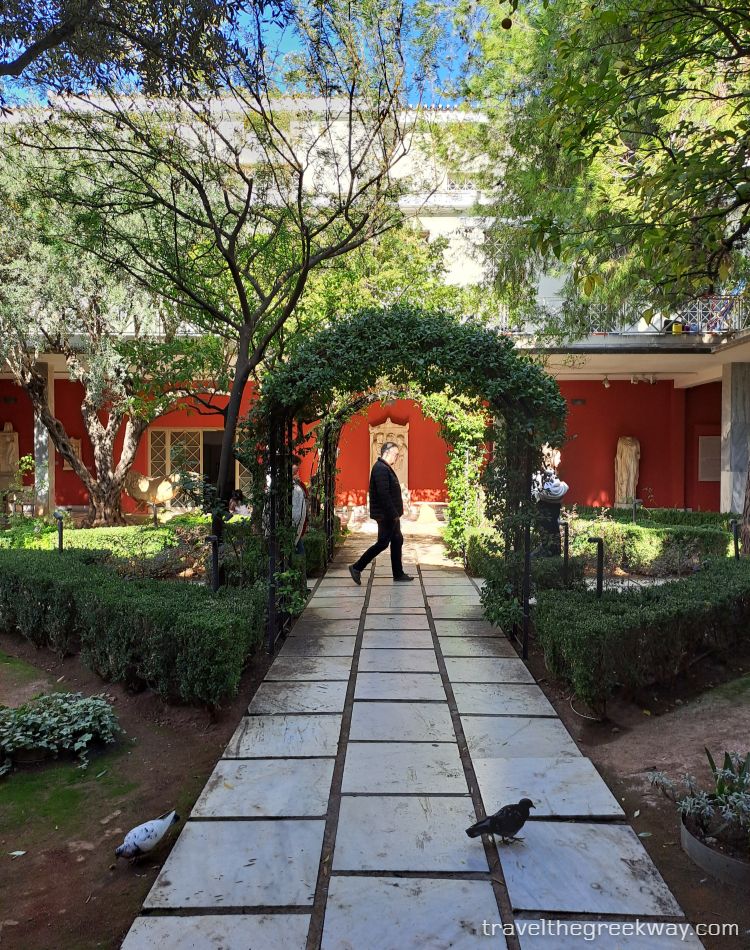
The museum has a lovely café with a garden, gift shop, restrooms, and a cloakroom. The café offers refreshments and snacks, while the gift shop has books, replicas, and souvenirs.
When should I visit the museum?
The museum is open daily, but hours may vary. It’s best to check ahead and book an early morning visit to avoid crowds, especially during the busy summer months.
What should I wear when visiting the museum?
Wear comfortable shoes, as the museum is large and requires a lot of walking.
Are backpacks allowed inside the museum?
Backpacks are not allowed inside. They must be left at the entrance, where they will be securely stored with special locks.
What can I do after visiting the museum?
After your visit, take a short walk to Exarchia, a lively neighborhood with great cafes, restaurants, and a relaxed atmosphere—perfect for unwinding after a few hours at the museum.
Where to Stay in Exarchia
For a superb stay close to everything, you should choose ZEN Neapoli Penthouse Apartment, a spacious apartment with two bedrooms and a living room.
Areos Hotel, located next to the large Pedion tou Areos park, has bright and comfortable rooms plus a spacious terrace with stunning views of Lycabettus Hill.
Finally, beautiful Strefi Hill Suites are built right on the slopes of Strefi with a stunning terrace.
Wrapping Up: A Day Well Spent in Athens
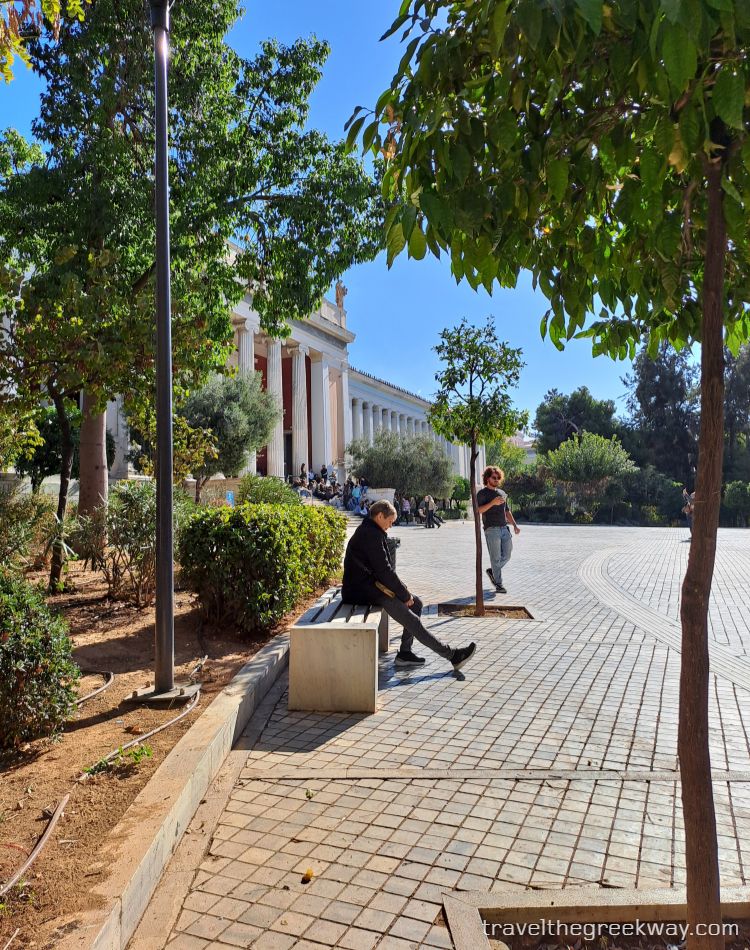
A visit to the National Archaeological Museum is more than just a museum trip—it’s a journey into the heart of ancient Greece.
From the awe-inspiring statues to the fascinating stories behind each artifact, every corner of the museum invites you to explore and learn.
Step outside, and you’re in Exarchia — the perfect spot to chill, grab a coffee, and take in the buzzing, modern vibe of Athens.
Discover Next:
- The Ultimate Athens Travel Guide (2026)
- National Historical Museum of Athens
- 25 Top Things to Do in Athens
Join the FB Group & Subscribe to My YouTube Channel!
For more Greece travel tips and ideas for your next trip, join my free Facebook Group or follow me on YouTube for more videos from around Greece.
Happy and safe travels,
Evgenia
