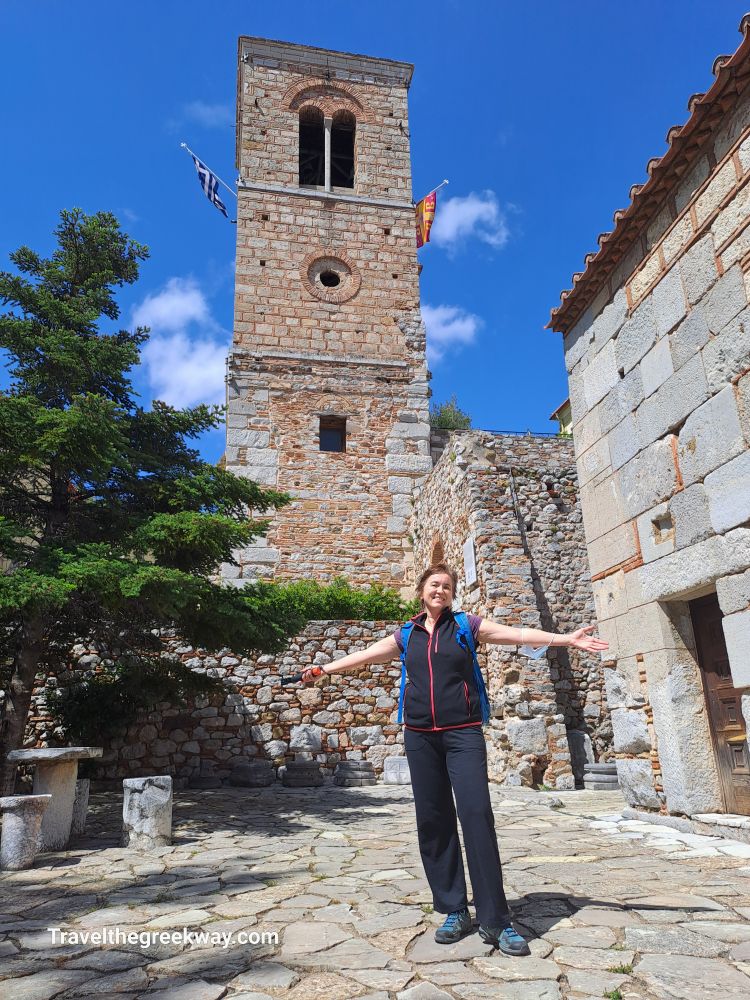
If you’re heading toward Delphi, the UNESCO-listed Hosios Loukas Monastery (Μονή Οσίου Λουκά) in Boeotia is a must-visit.
I recently stopped by this 11th-century masterpiece while hiking the nearby Kleisoura Gorge, and the preservation of its frescoes and imperial architecture is simply stunning.
Located on the slopes of Mount Helicon (Ελικώνας), the complex feels remarkably authentic.
Beyond the two magnificent churches, you can explore the ancient monastic cells, the Agia Varvara crypt where Saint Luke lies, and the impressive underground cistern.
It is a rare, spiritual escape that perfectly complements a day on the trails.
This post includes links that may be affiliate links. If you choose to make a purchase through them, I may earn a small commission at no extra cost to you. Please see my disclaimer/privacy policy for more information.
My Latest Video on Hosios Loukas
The monastery is 36 km northeast of Delphi and Arachova town. So in one visit, you can combine two spectacular UNESCO Greek historical sites: an ancient and a Byzantine one!
Who Was Hosios Loukas?
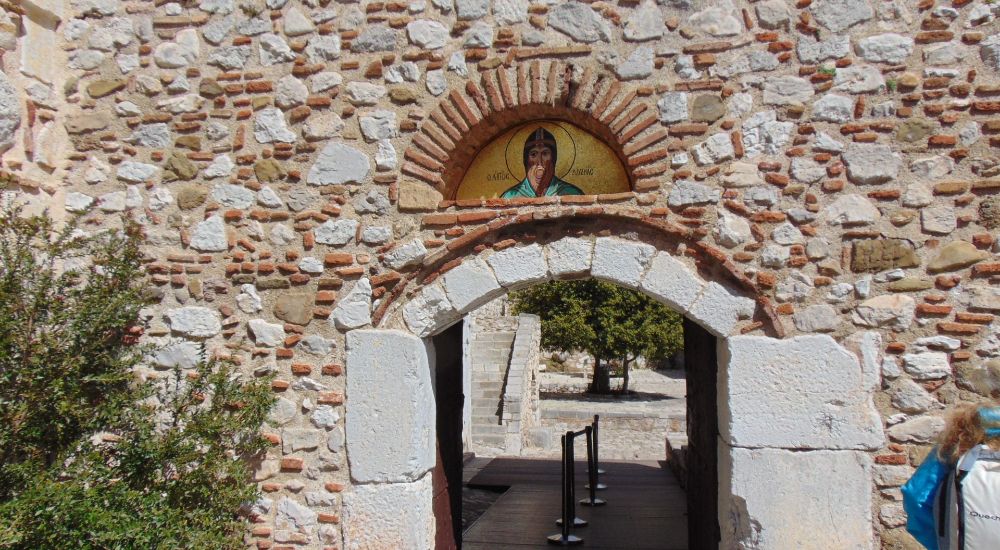
Whatever we know today about Hosios Loukas comes from the works of an anonymous author in 962, first published in 1874 in “Phocika,” by the historian G. Kremos.
According to the biography, Hosios Loukas spent the last seven years of his life (946-953) in ascetic practice here.
Born in Kastrí, Phocis, in Beotia in 896 to refugee parents from Aegina, Loukas embraced monastic life early.
By 910 or 911, he was a monk in Athens. Later, he moved to various hermitages in Phocis and the Corinthian coast, always staying one step ahead of Symeon’s Bulgarians.
In 946/947, he finally settled in the location of the present monastery, where he passed away in 953.

Hosios Loukas was a beloved figure in the local community known for his charitable work, healing skills, and prophecy abilities. In 941, he famously predicted the recapture of Crete by General Nikiphoros Phokas during the reign of Romanos II in 961, saying, “Romanos will conquer Crete.”
His incredible abilities and enduring reputation turned the area into a popular pilgrimage site.
The Holy remains of Hosios Loukas, which the Crusaders moved to the Vatican in the 13th century, were finally found in Venice. On December 13, 1986, they were returned to the reliquary of Catholikon.
History of Osios Loukas Monastery

The monastery of Hosiοs Loukas is one of the largest and most significant monuments of the Middle-Byzantine Period. Hosios Loukas built a beautiful church that is more like a crypt that you can visit, dedicated to Agia (Saint) Barbara.
After he died, the Church of Theotokos was constructed as the first and most intricate example of the cross-in-square complex four-columned design in Greece.
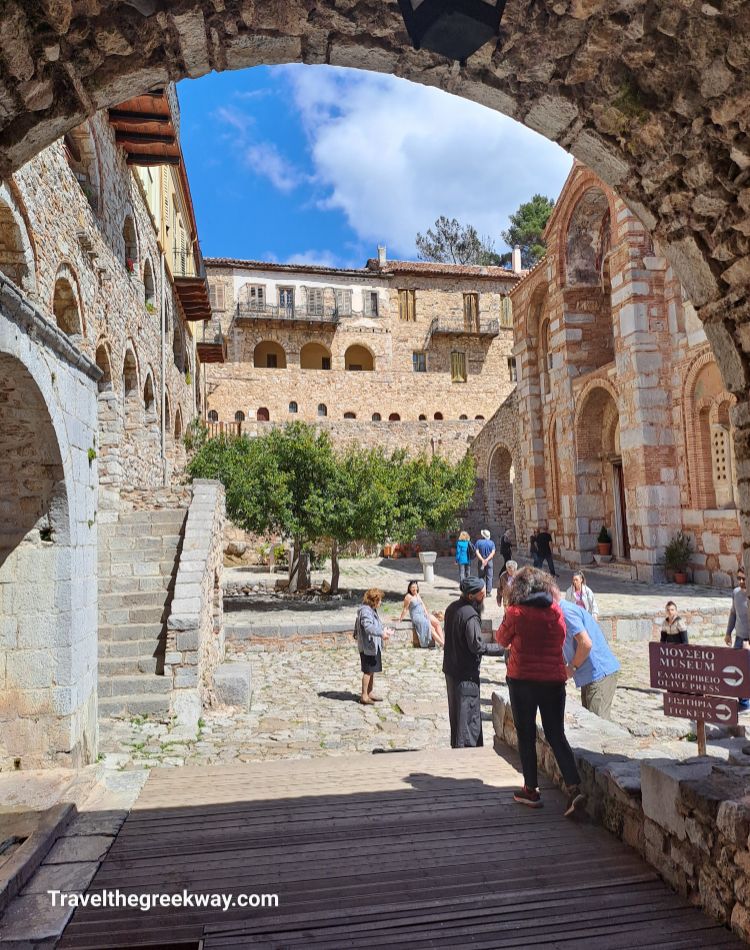
In 1011, the Catholicon, the main church of the monastery and dedicated to Hosios Loukas, was built next to the Church of Theotokos, incorporating part of the existing structure to house the Saint’s miraculous relics, which still draw many pilgrims today.
The two churches are connected through a passage.

The monastery was originally fortified, but now only a few remnants of its enclosure wall remain. Today, the complex includes many auxiliary buildings and cells adjacent to the two churches.
Some structures date back to the 11th century, like the restored refectory, which has housed an interesting collection of Byzantine sculptures since 1993.

Over its long history, the monastery has faced significant damage and looting, including during WWII. Conservation efforts began in 1938 and continue today.
Since 1990, this remarkable site has been recognized as a UNESCO cultural heritage site.
Byzantine Architecture
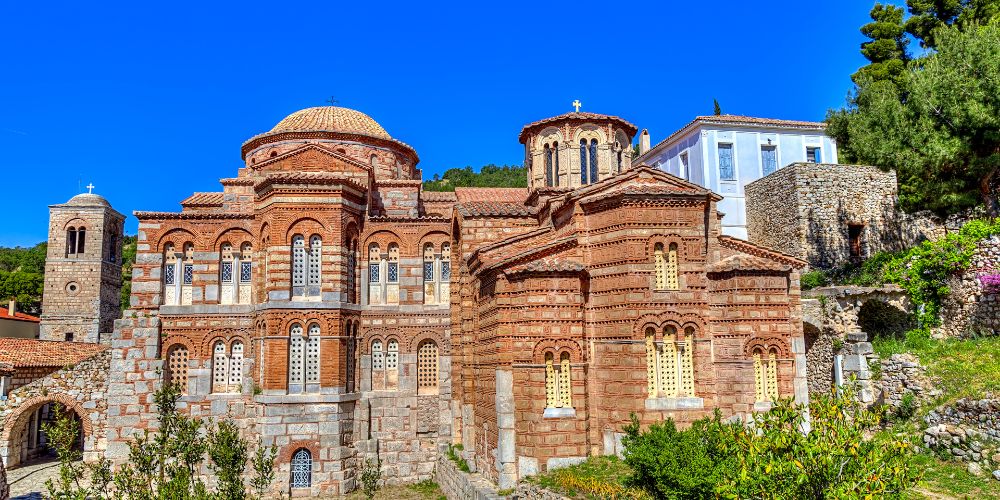
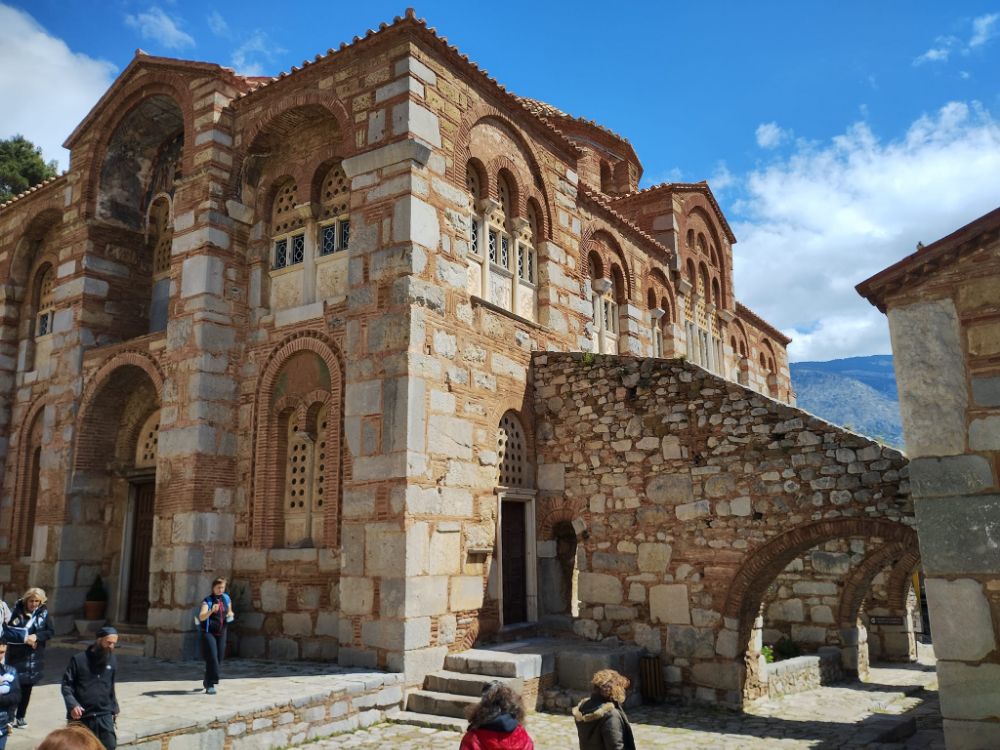
The Catholicon church, designed as a Greek-cross domed octagon with a large dome supported by eight huge pillars, became the model for future churches of this style in Greece.
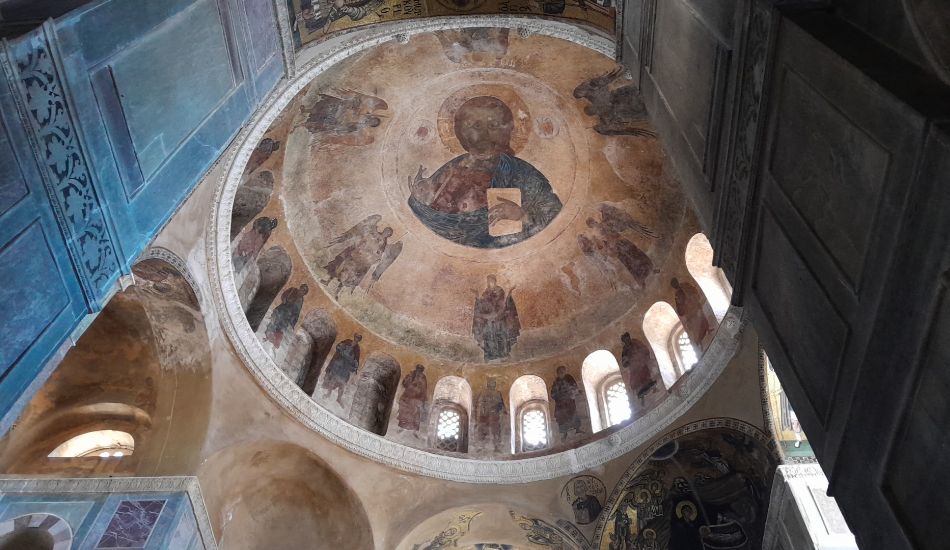
The masonry is a mix of bricks, stones, and marbles arranged in alternating horizontal bands. The marbles come from the ruins of ancient buildings, primarily temples.
The exterior walls are left unplastered and are not adorned with ceramics.
The interior is particularly impressive due to its luxurious decorations.
The particularly tall (5.5 m height) and large dome has a diameter of 8.98 m with 16 windows and is covered with tiles, as is the roof of the church. At the edges, the church has marble gutters.
Byzantine Art in Hosios Loukas Monastery

The impact of Crete’s reoccupation (after 961) is evident in the earliest wall painting of the Monastery, dating back to the late 10th century.
This artwork adorns the western wall of the narthex in the Church of Theotokos, depicting Archangel Michael appearing to Joshua, the leader of the Jews, just before the fall of Jericho.

The floors and lower walls are covered in colorful marble, while the upper walls showcase amazing mosaics, great examples of Byzantine art. The holy figures in these 11th-century mosaics stand out for their unique, abstract style.

The religious scenes are carefully chosen and crafted, following strict rules that artists still stick to today. But I don’t think Byzantine art is all about rigidness and stillness.
These artists were deeply inspired by ancient art, capturing its harmonious proportions and elegance.
Byzantine art is unique in Europe because it began at the end of antiquity and lasted until the Renaissance, bridging the ancient world with modern history.
The Buildings of the Monastery
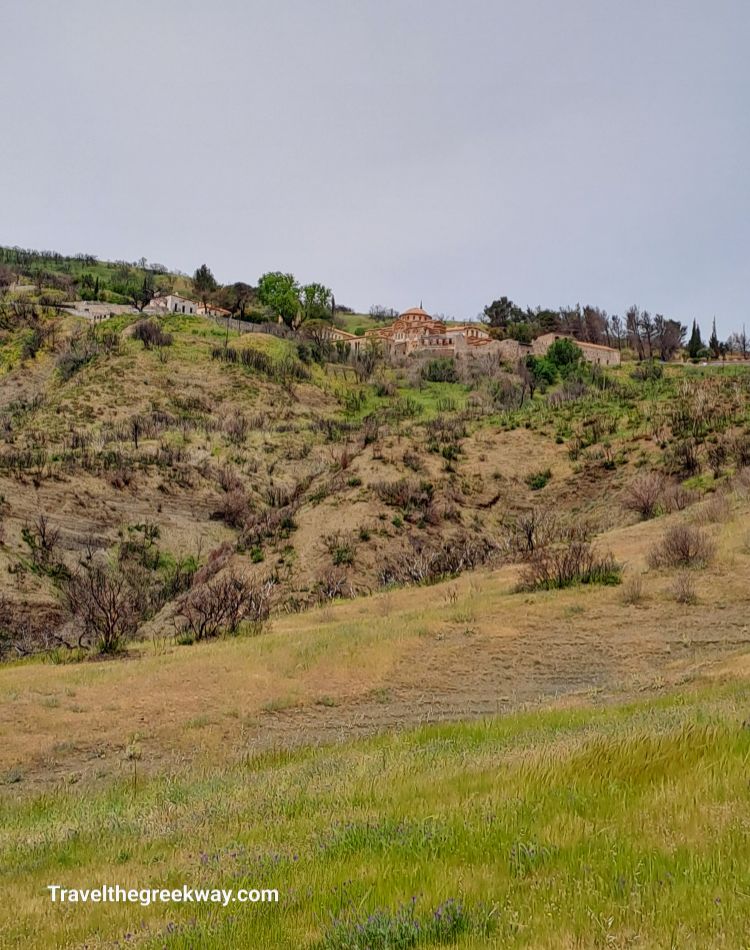
There are various areas where you have full access, such as the churches, the Agia Varvara crypt containing Hosios Loukas’ tomb, the exhibition rooms on the upper floor with monk cells and photographs, as well as small shops offering memorabilia and religious items.
Additionally, there is a vast courtyard where you can enjoy beautiful views of Mount Elikonas.

There is a museum that I suggest you visit with a small entrance ticket. There are also quite a few other facilities that you are either not allowed to use (monk cells) or are currently under restoration works. The most important buildings are:

- The Catholicon Church is dedicated to Hosios Loukas.
- The Theotokos Church.
- The Crypt of Agia Varvara with Hosios Loukas’ tomb.
- The Vordonareio (stable) houses 18th-century detached frescoes from the Church of Saint Spyridon.
- The Fotanamma with its distinctive chimney.
- The Northern Stoas serve as exhibition rooms.
- and the Refectory, which has been functioning as a museum since 1993.
Osios Loukas Monastery Visitor Information
The Monastery is open daily between 8.30-15.30.
Just to be on the safe side, especially if you are planning to visit just the monastery, give them a call at +30 22670 22797 to check if, for some reason, the monastery is closed.

As in every monastery in Greece, you have to wear modest clothes to visit it. I suggest you wear long pants and cover your shoulders; a simple T-shirt will do. You will also need comfortable walking shoes and a hat.
There is a small shop where you can buy water and snacks. You can take your water with you, but snacks should be consumed outside of the monastery in the yard with the beautiful mountain views.
Day trip to Hosios Loukas Monastery from Athens

If you love driving, then I recommend you rent a car and enjoy the scenery from Athens to the Monastery and Delphi.
However, if you do not feel confident about driving or you prefer to relax and leave the task to someone else, then you should book this great Delphi & Hosios Loukas Full Day Private Tour.
It has full pick up and drop off from your hotel, stopping at Hosios Loukas, Delphi, and Arachova town, and you can book it here.
Where to Stay Near Hosios Loukas
Most visitors stop at the monastery on their way to Delphi. Depending on your preference for mountain air or the sea, I recommend these three mid-range, family-friendly hotels:
Arion Hotel (Delphi): Best for history lovers. It is located very close to the archaeological site and offers stunning views over the “Valley of a Million Olive Trees.”
Paeonia Arachova Hotel (Arachova): A perfect mountain escape just ~10 km (~6.2 miles) from Delphi. Rooms blend traditional decor with balconies overlooking Mount Parnassus.
Hotel Kalafati (Itea): Ideal if you prefer the coast. This hotel offers sea views and easy access for swimming or evening strolls by the Corinthian Gulf.
The Best Time to Visit
Anytime is good to visit the monastery, preferably not on a rainy or snowy day, so that you can explore the place more easily.
How to get to Hosios Loukas Monastery
The Monastery of Hosios Loukas is located 200 km away from Athens (approximately 2 hours by car). Take the national road towards Thessaloniki and take the exit to Parnassus, Arachova, and Delphi.
Before reaching the town of Arachova, you will see road signs where to turn and head towards the villages of Distomo and Styri. Continue driving for about 9 km, and the road will lead you to Hosios Loukas Monastery.
Top Paleochristian and Byzantine Monasteries in Greece
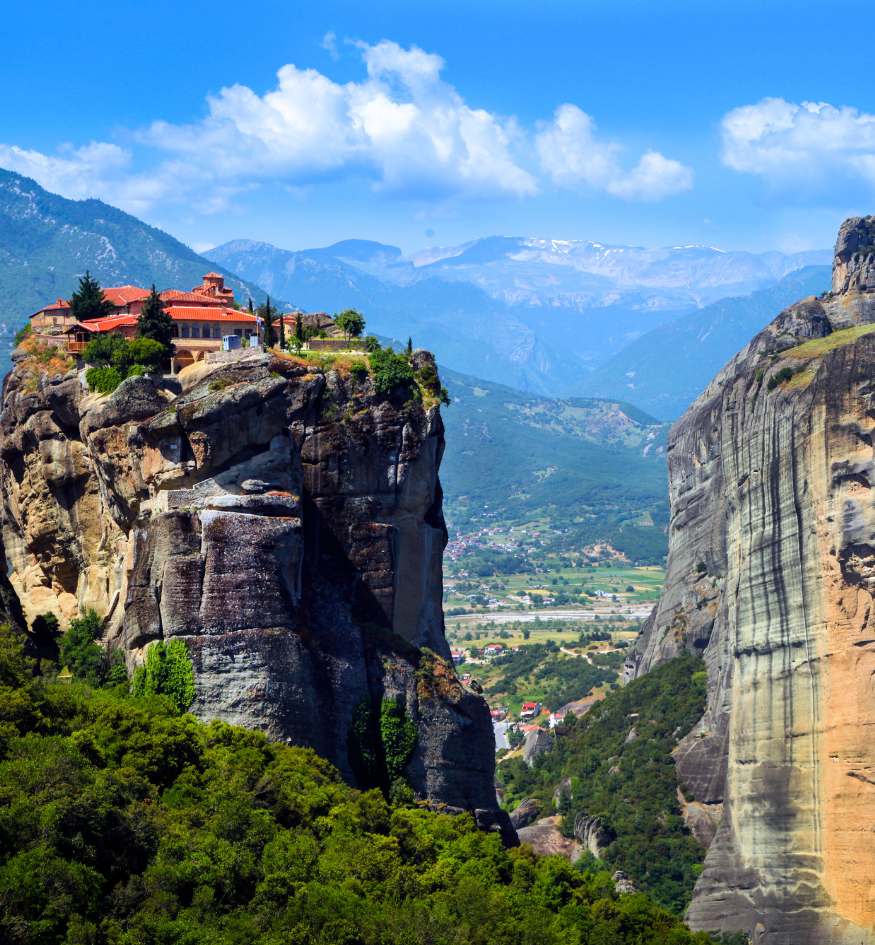
If you love exploring early Christian and Byzantine monuments, then you should focus on these areas: Thessaloniki, Meteora, Mystras, Chios, and Boeotia.
- Thessaloniki Historical Churches: Holy Apostles, Saint Demetrius, Saint David, Panagia Acheiropoietos, Saint George (Rotunda), Hagia Sophia, Panagia ton Chalkeon, Monastery of Vlatadon.
- Meteora Monasteries: Great Meteoron, Saint Nicholas Anapafsas, Hosios Varlaam, Roussanou, Saint Stephen, Agia Triada (Holy Trinity).
- UNESCO New Monastery of Chios Island (Karyes).
- UNESCO Monastery of Hosios Loukas, Boeotia (Stiri).
- UNESCO Monastery of Daphni, Athens.
- Mystras: Monastery of Brontochion(Lower Town), Church of Saint Demetrius, Church of Evangelistria, Monastery of Pantanassa, Monastery of Perivleptos, Church of Hagia Sophia.
Test Your Knowledge of Byzantine Art
- What is the primary architectural feature of Byzantine churches in Greece?
A. Minarets
B. Domes
C. Spires
D. Gargoyles
2. Which famous Byzantine monument in Thessaloniki is known for its mosaics depicting Christian themes?
A. Hagia Sophia
B. Rotunda of Galerius
C. Church of Panagia Ekatontapyliani
D. Monastery of Hosios Loukas
3. What type of art is most commonly found in Byzantine churches in Greece?
A. Frescoes
B. Sculptures
C. Oil paintings
D. Abstract art
4. Which Byzantine monastery complex in Greece is renowned for its location atop tall rock formations?
A. Mount Athos monasteries
B. Meteora monasteries
C. Monastery of Daphni
D. Monastery of Saint John the Theologian
5. What is the name of the architectural feature that crowns the central area of a Byzantine church and symbolizes heaven?
A. Narthex
B. Pendentive
C. Apse
D. Dome
Answers:
B. Domes
B. Rotunda of Galerius
A. Frescoes
B. Meteora monasteries
D. Dome
Join Our FB Group & Subscribe to My YouTube Channel!
For more Greece travel tips and ideas for your next trip, join my free Facebook Group or follow me on YouTube for more videos from around Greece.
Happy and safe travels,
Evgenia
Essential Travel Info for Greece
- ‘Hello’ and ‘Thank You’ in Greek: “Ya sou” and “Efharisto”
- Booking.com: I use Booking.com mostly for Europe.
- All-Inclusive Resorts in Greece
- Rent an Affordable Car in Greece
- Athens Metro Website (timetables and ticket info)
- Trains (Hellenic Train)
- Public Buses KTEL
- Get Your Guide: For all your day or multi-day tours and city guide needs, I use Get Your Guide
- Emergency Numbers Anywhere in Greece: AMBULANCE 166 – FIRE 199 – POLICE 100– EMERGENCY NUMBER 112
