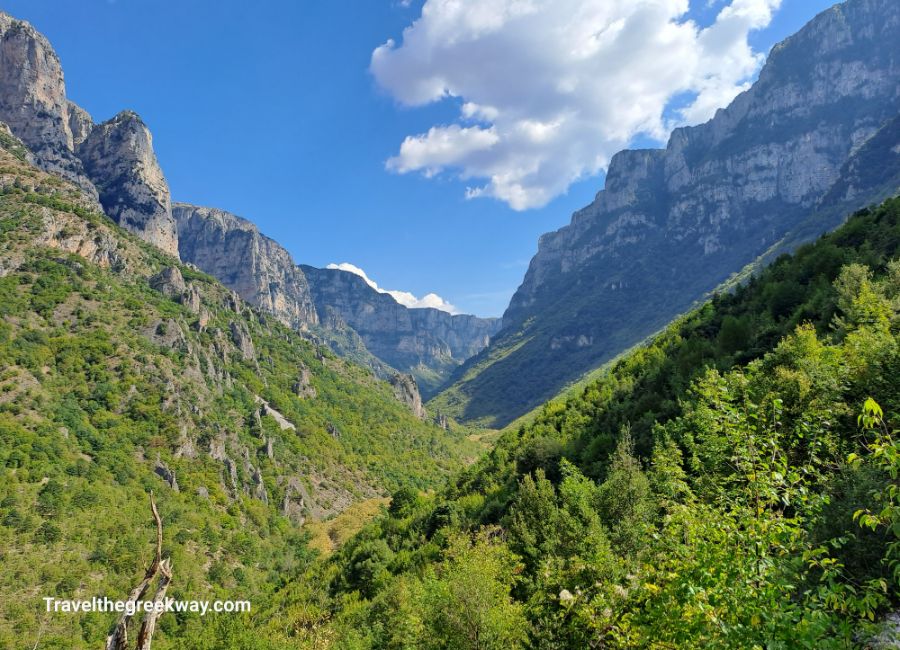
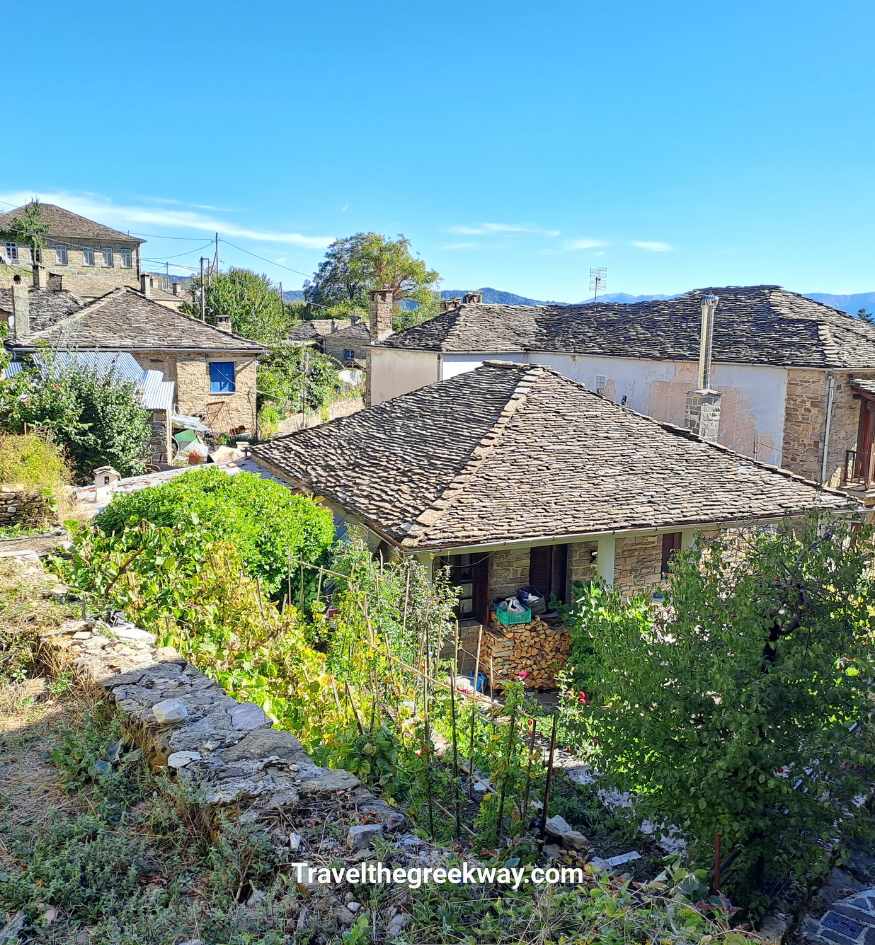
Zagori is a mountain region in northwestern Greece, known for its 46 stone-built villages, historic arched bridges, and dramatic landscapes.
Located in Epirus and also known as Zagorochoria, it became a UNESCO World Heritage Site in September 2023.
You can spend your days visiting villages, walking old trails, and stopping at viewpoints.
I’ve visited Zagori several times, stayed in Monodendri and Tsepelovo, and hiked through Vikos Gorge. In this guide, I’ll share the places I’d recommend, where to stay, and practical advice for planning your trip.
Planning a trip to Zagori? I’d recommend spending at least three days here. May, June, September, and early October are great months to visit.
Renting a car is the easiest way to get around, and Monodendri is a convenient base for first-time visitors.
This post includes links that may be affiliate links. If you choose to make a purchase through them, I may earn a small commission at no extra cost to you. Please see my disclaimer/privacy policy for more information.
Where Is Zagori, Greece?
Zagori is located in the Epirus region of northwestern Greece, about 30 km (19 miles) north of Ioannina, near the Albanian border.
It lies in the Pindus Mountains and includes 46 traditional villages, collectively known as Zagorochoria.
The villages are spread across a large mountainous area, surrounded by forests, rivers, and dramatic peaks. Zagori is also home to the famous Vikos Gorge, one of Greece’s most impressive natural attractions.
Ioannina is the main gateway to Zagori, and having a rental car is the easiest way to explore the villages, as public transportation is very limited.
I’ve marked the main villages and attractions on the map below to help you get your bearings and plan your trip around Zagori.
Why Visit Zagori, Greece?
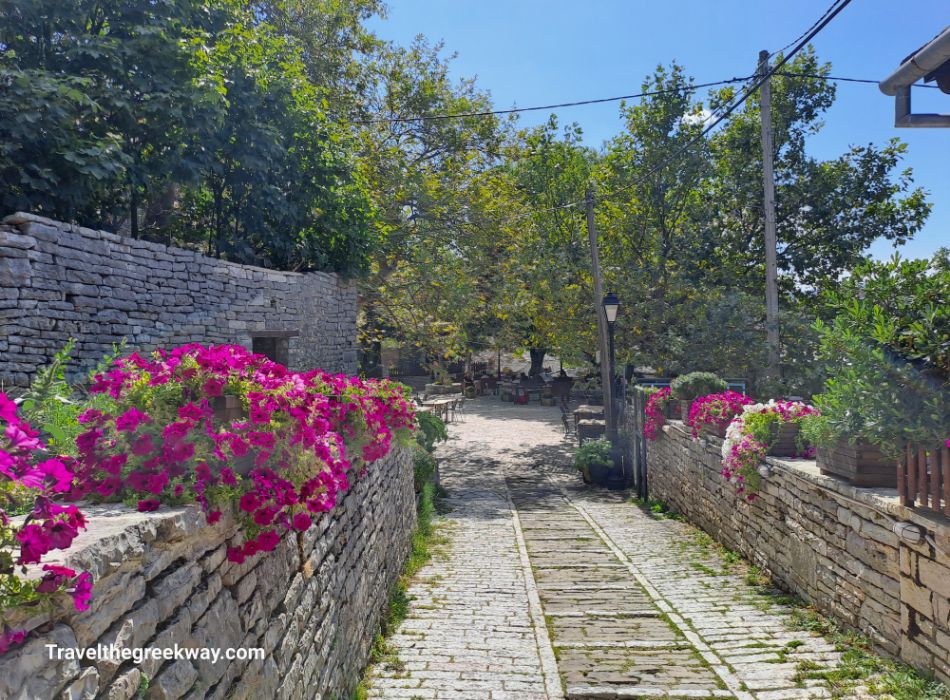
One of the reasons I love visiting Zagori is that it reminds me of old Greece. Everything feels so traditional, from the stone houses and cobblestone streets to the small village squares and local tavernas.
If you love mountains, traditional villages, and outdoor adventures, Zagori is one of the best places to visit in mainland Greece.
You can cross centuries-old stone bridges, hike through the spectacular Vikos Gorge, or simply enjoy a coffee in a quiet village square surrounded by mountains.
You can also try local pies and other Epirus dishes in village tavernas.

Best Villages to Visit in Zagori
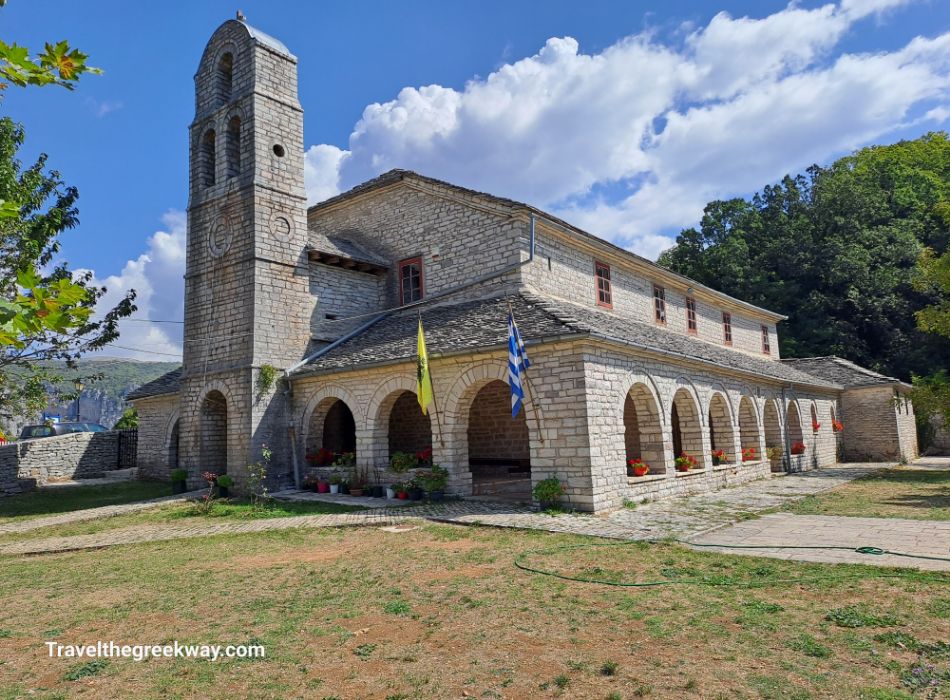
Zagori’s villages are known for their stone houses, slate roofs, cobbled streets, and old churches. Many have a central square shaded by a huge plane tree, where locals gather for coffee and village celebrations.
Some villages are popular with visitors, while others are quiet and rarely crowded. The mountain roads are winding, so I recommend visiting a few neighboring villages each day.
1. Monodendri
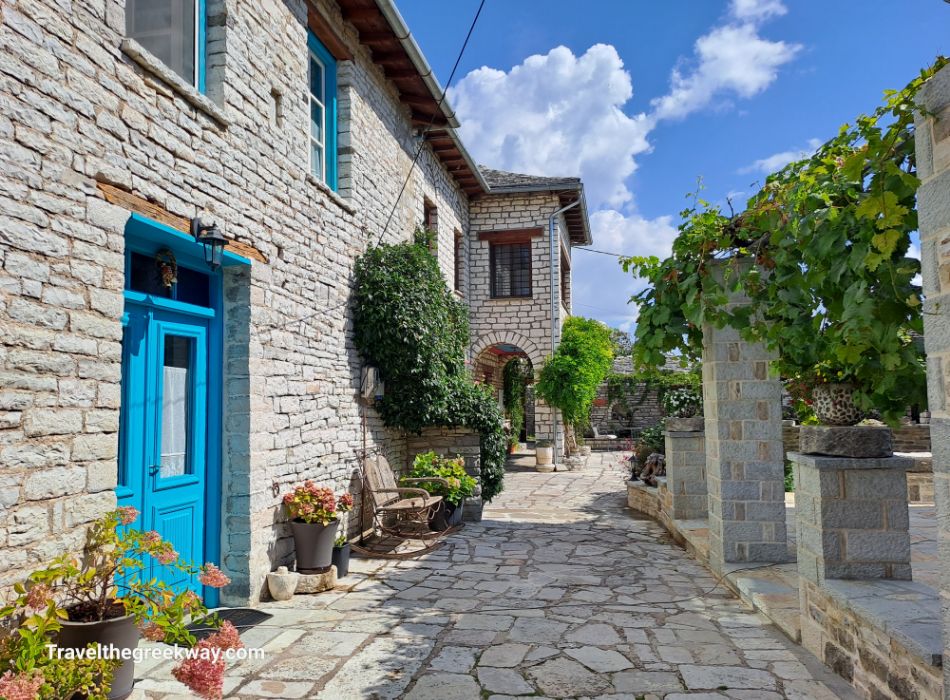
Monodendri is one of the best places to start your trip. Its central square has cafés and tavernas, while narrow lanes lead past old stone houses.
Don’t miss the 15th-century Agia Paraskevi Monastery, built on the edge of Vikos Gorge. The Stone Forest and Oxya Viewpoint are also nearby.
I stayed in the village in 2023 when I hiked the gorge. I returned more recently to visit the Stone Forest. I’d recommend staying here if you want easy access to the area’s main attractions.
2. Megalo Papigo and Mikro Papigo

Megalo Papigo and Mikro Papigo sit beneath the towering limestone cliffs of Astraka, one of Zagori’s most striking mountain landscapes.
Megalo Papigo is the livelier of the two, with guesthouses, tavernas, and a central square. Mikro Papigo is smaller and sits higher up the mountainside.
Between the villages, you’ll find the Papigo Rock Pools, also called Kolymbithres. Water has carved a series of natural pools into the limestone.
Mikro Papigo is also the starting point for the demanding trek to Drakolimni, the Dragon Lake.
3. Tsepelovo

Tsepelovo is one of Zagori’s largest villages. Its spacious square, shaded by plane trees, is a great place to stop for coffee or a meal.
I stayed at Gouris Guesthouse on my most recent trip. The courtyard was filled with hundreds of flowerpots, and the breakfast was delicious.

Mrs. Anthoula, our host, was incredibly kind and welcoming. I also loved walking through Tsepelovo’s narrow lanes and spending time in the village square with the locals.
A short drive away is the Monastery of Agios Ioannis Rogovou. It’s worth visiting for its frescoes and carved wooden iconostasis.
Tsepelovo also makes a convenient base for visiting nearby villages, including Kapesovo and Vradeto.
4. Aristi

Aristi is a good base for outdoor activities in western Zagori.
The Voidomatis River is nearby, with its clear turquoise water and riverside paths. You can also join a rafting trip or continue toward the Papigo villages.
Aristi has a village square, guesthouses, and several places to eat. I’d consider staying here if rafting and trips around western Zagori are high on your list.
5. Vitsa

Vitsa is close to Monodendri, making it easy to visit both villages on the same day.
Its narrow lanes wind past old mansions and stone-built houses. You can also find historic paths that once connected neighboring settlements before modern roads arrived.
Vitsa is worth a stop if you enjoy architecture and walking through small mountain villages.
6. Kipi

Kipi is the village I’d recommend if you want to see Zagori’s famous stone bridges.
The three-arched Plakidas Bridge and the single-arched Kokkoris Bridge are nearby. Both are reminders of how people once traveled between settlements across the region’s rivers and ravines.
You can visit several bridges on the same drive. Kipi is also a convenient stop for photography and short walks.
7. Dilofo
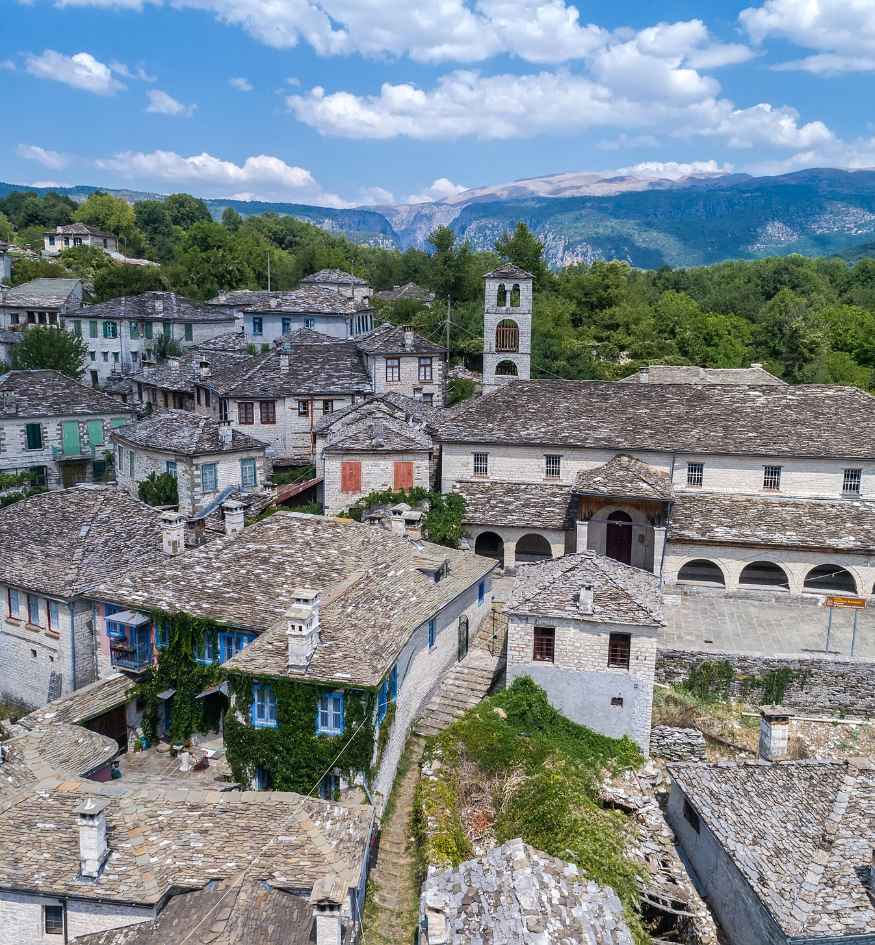
Dilofo is a good choice if you prefer smaller villages away from the busiest tourist spots.
Its narrow cobbled lanes pass old mansions and stone buildings. One landmark to look out for is the historic Anagnostopouleios School.
Take your time walking around. Dilofo is best enjoyed without a fixed sightseeing schedule.
Other Villages Worth Visiting

Koukouli is known for the Lazaridis Folklore Museum, while Kapesovo has the historic Paschaleios School.
Vikos village offers views toward the gorge. Ano Pedina and Kato Pedina are good stops if you want to discover smaller settlements.
Farther east, Vovousa sits beside the Aoos River, which flows beneath a historic stone bridge.
You can also visit Iliochori, known for the Balta di Stringa Waterfalls. A forest trail leads to waterfalls and natural pools. Check the trail conditions before setting off.
You don’t need to visit all 46 villages. Choose the ones that interest you most and leave time for unexpected stops.
Best Things to Do in Zagori, Greece
There’s much more to Zagori than its beautiful stone villages. The region is full of spectacular mountain scenery, deep gorges, rivers, old stone bridges, and hiking trails.
Whether you love outdoor adventures or prefer exploring at a slower pace, there’s plenty to see and do.
1. Explore Vikos Gorge
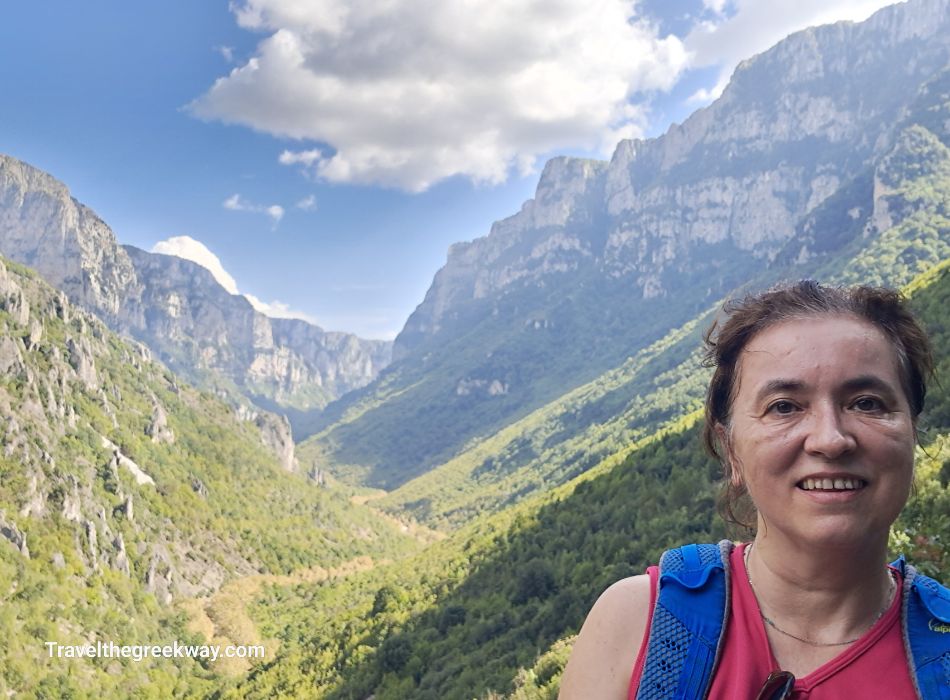
I hiked Vikos Gorge in 2023, starting from Monodendri and finishing in Vikos village. It was one of my favorite hiking experiences in the region, but definitely not an easy one!
The classic route usually takes around 6–8 hours, depending on your fitness, trail conditions, and stops. I preferred walking from Monodendri toward Vikos, although both directions are demanding.
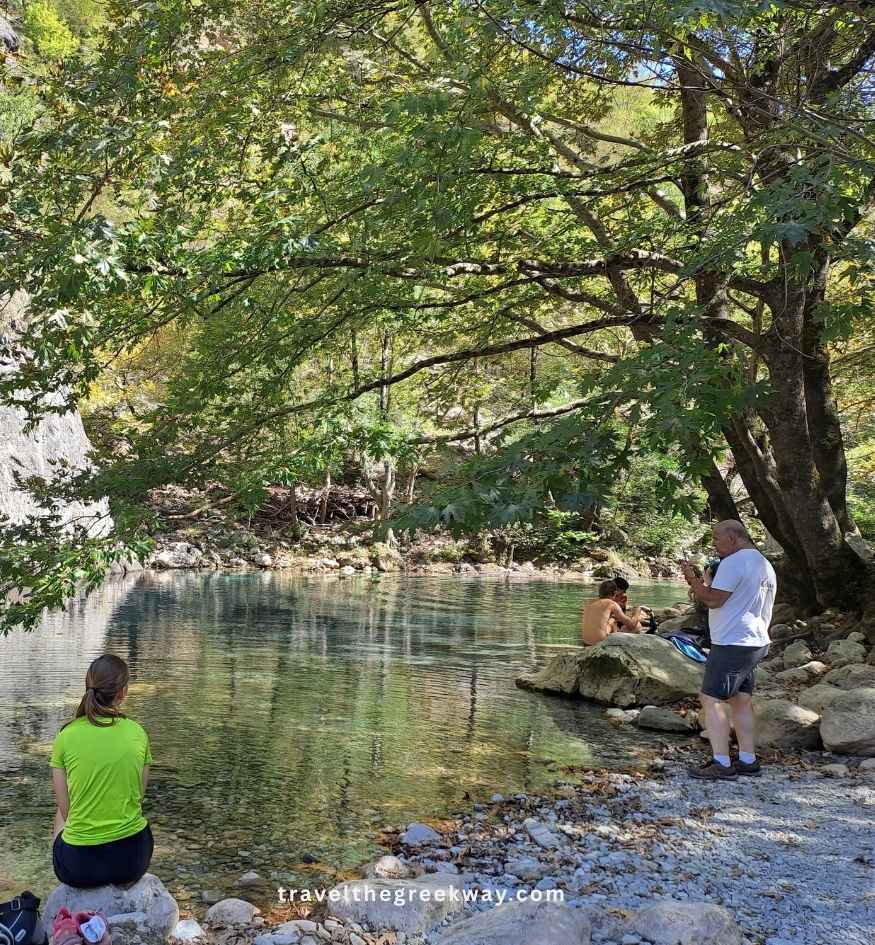

The hardest part for me came after our break at Voidomatis Springs. Just when I thought the difficult part was over, we had to tackle the steep final climb to Vikos village. By then, my legs were exhausted!
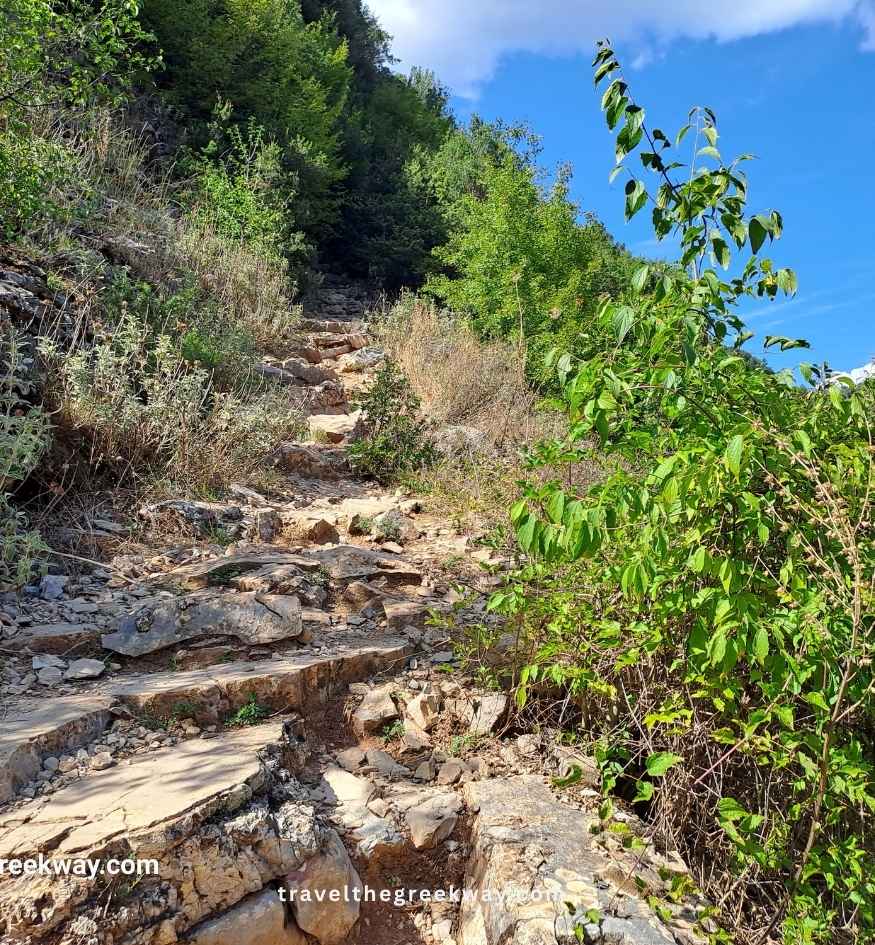
Wear proper hiking shoes, carry enough food and water, and arrange transportation back to your starting point. If you’re inexperienced, I’d recommend hiring a local hiking guide.
When Is the Best Time to Hike Vikos Gorge?
I wouldn’t recommend the full hike in winter. Heavy rainfall can raise water levels in the river and streams, making sections of the route dangerous or impassable.
May can be a good choice when conditions are safe. Summer is also possible if temperatures aren’t too high, but I’d personally favor September or early October. This is when we hiked in 2023.
Always check recent rainfall, river levels, weather forecasts, and current trail conditions before setting off.
2. Visit the Oxya and Beloi Viewpoints
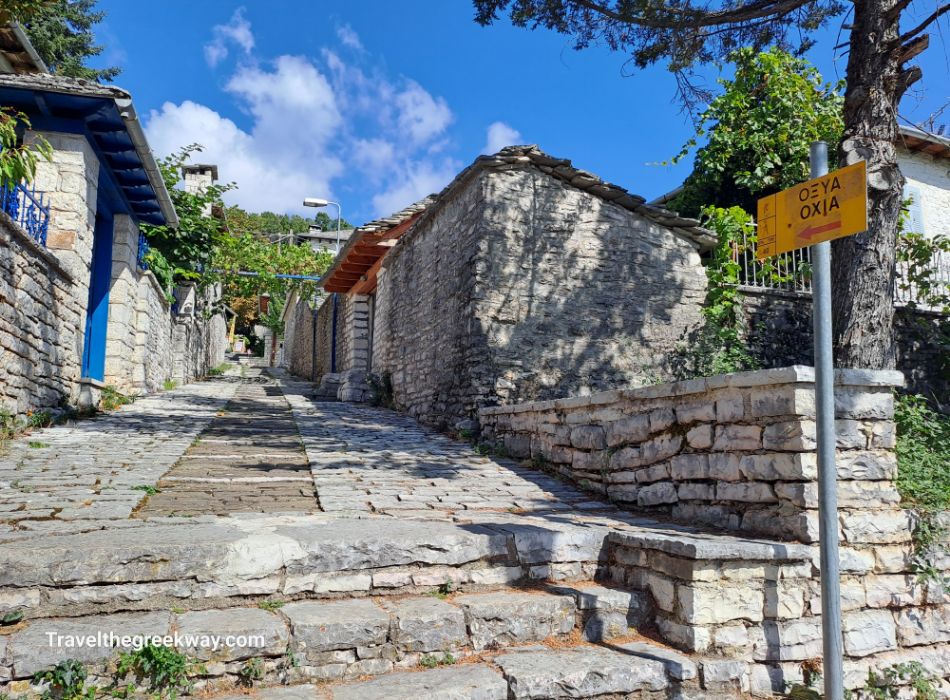
For some of the best views in Zagori, head to Oxya and Beloi, two viewpoints overlooking Vikos Gorge.
Oxya is one of the easiest viewpoints to reach. It’s located near Monodendri and requires only a short walk from the parking area.
Beloi is near the village of Vradeto and involves a longer walk along a rocky trail. The reward is an incredible panoramic view of the gorge and the surrounding mountains.
Both are worth visiting if you enjoy photography and dramatic landscapes.
3. Discover the Stone Forest

The Stone Forest is one of Zagori’s most unusual natural attractions, located along the road from Monodendri to Oxya Viewpoint.
Here, layers of limestone have been shaped by erosion into strange rock towers that look almost like stacks of giant pancakes. The formations rise among the trees, creating a landscape unlike anywhere else I’ve visited in Zagori.

I explored it on my most recent trip, and I’d recommend stopping where it’s safe to park and walking among the rocks rather than simply driving past them.
Afterward, continue to Oxya Viewpoint for spectacular views over Vikos Gorge.
4. See Zagori’s Famous Stone Bridges

Dozens of historic stone bridges are scattered across Zagori, many dating from the 17th to the 19th centuries.
They once connected villages across rivers and steep ravines, and some were named after the people who funded their construction.

Two of the most impressive are Kokkoris Bridge, also known as Noutsos Bridge, with its elegant single arch, and the three-arched Plakidas Bridge, also called Kalogeriko Bridge.
Both are near Kipi, along with the smaller Lazaridis Bridge.
Another beautiful example is Klidonia Bridge, which crosses the Voidomatis River near Klidonia.
You can visit several of the bridges around Kipi on the same drive. They’re especially photogenic in autumn, when the surrounding trees begin to change color.
5. Enjoy the Voidomatis River
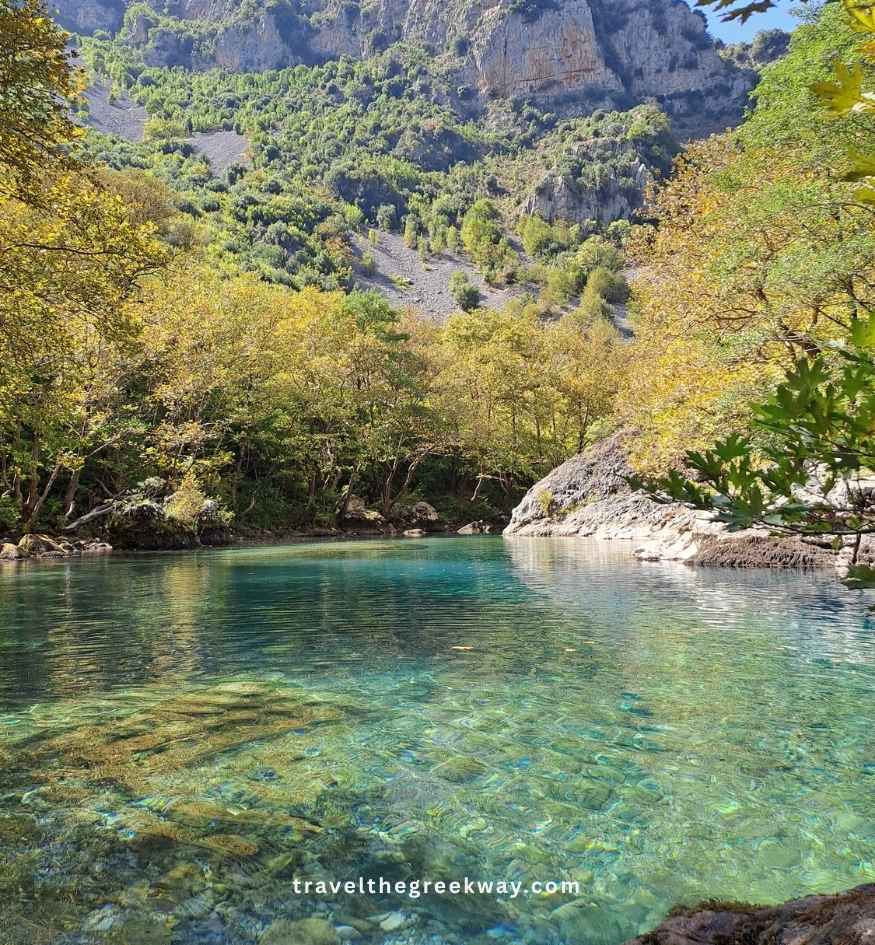
The Voidomatis River is famous for its incredibly clear, turquoise water and beautiful natural surroundings. It’s one of my favorite kinds of scenery in Zagori, with the river flowing between forested mountains and huge plane trees lining its banks.
One of the easiest places to enjoy the river is near the bridge on the road between Aristi and Papigo. You can stop to admire the scenery, take photos, or simply relax beside the water.
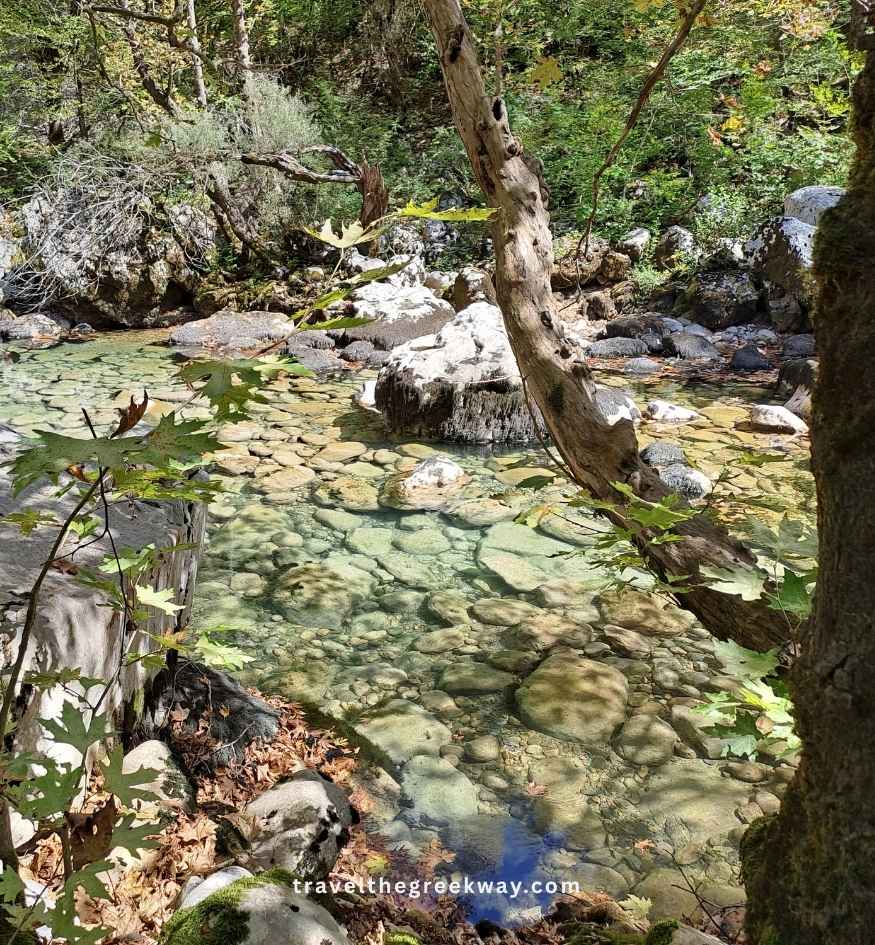
If you enjoy walking, there’s also a riverside trail connecting the Aristi Bridge area with the historic Klidonia stone bridge. The walk takes roughly two hours one way, depending on your pace, and follows the river through a lovely wooded landscape.
For something more adventurous, you can also try rafting on the Voidomatis. Rafting lets you see the river and its wooded banks from a different angle.
Just remember that the water is freezing cold, even in summer!
6. Explore the Papigo Rock Pools

Between Megalo Papigo and Mikro Papigo, you’ll find the Papigo Rock Pools, also known as Kolymbithres or Ovires.
These natural pools have been carved into the smooth limestone by flowing water, creating a series of small basins and waterfalls.
They’re a beautiful place to stop, particularly during the warmer months when visitors come to enjoy the scenery and cool off in the water.
The rocks can be slippery, so take care when walking around the pools.
7. Hike to Drakolimni, the Dragon Lake
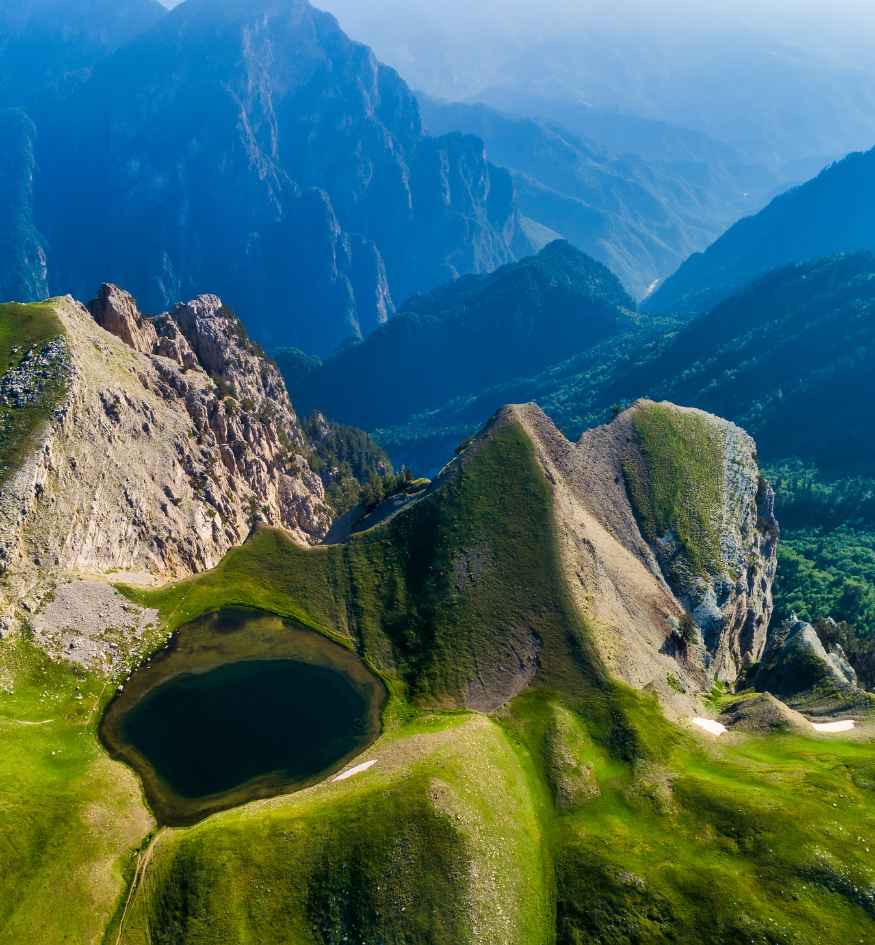
The hike to Drakolimni starts in Mikro Papigo. It takes around 3 hours to reach Astraka Mountain Refuge, followed by another 1–1.5 hours to the lake.
Allow approximately 4–5 hours each way, or 8–10 hours for the full round trip, depending on your pace and stops. The trail is about 8 km (5 miles) one way and is considered demanding.
If you don’t want to complete the entire hike in one day, you can arrange an overnight stay at Astraka Refuge during its operating season.
Once you arrive, you’ll be rewarded with open alpine scenery and views toward the Aoos Gorge and Mount Smolikas. The lake is also home to tiny newts, sometimes called little dragons!
8. Visit the Vradeto Steps
The Vradeto Steps, or Skala Vradetou, are one of Zagori’s most impressive examples of traditional stonework.
Built in the 18th century, this historic stone path has roughly 1,000 steps winding down the mountainside in a series of steep zigzags. It once connected Vradeto with Kapesovo and was an important route for villagers before modern roads existed.
Today, you can hike the old path between the two villages, enjoying beautiful mountain scenery along the way. Keep in mind that the descent is much easier than the climb back up!
9. Try Traditional Food in a Village Taverna
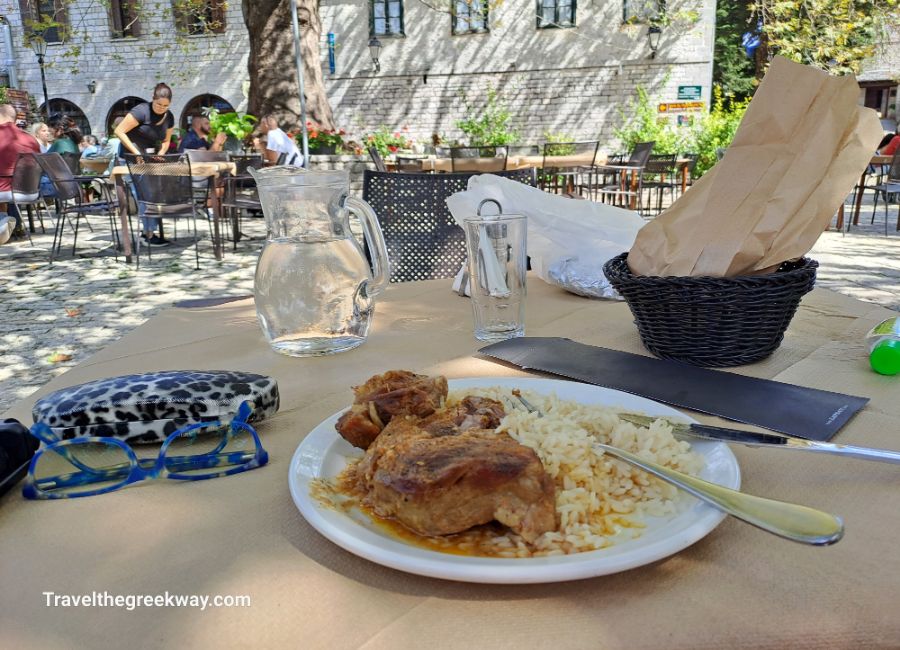
One of the best things to do in Zagori after a day of exploring is to sit down in a traditional taverna and enjoy some delicious local food.
Epirus is famous for its homemade pies, and you’ll find plenty of them in Zagori. Three worth trying are blatsaria, made with wild greens, feta, and cornmeal; zymaropita and kasopita, a delicious cheese pie without the usual pastry crust. You’ll also find meat pies, chicken pies, and sweet milk pies.
If you’re in the mood for something heartier, try tigania, a dish of bite-sized pieces of meat cooked in a pan, or locally prepared trout. Meat dishes and local cheeses are also popular throughout the region.
And of course, there’s nothing better than enjoying a good meal in a cozy stone-built taverna or sitting outside in a village square with mountain views!
Where to Stay in Zagori, Greece

Zagori has plenty of traditional stone guesthouses, boutique hotels, and mountain retreats. The best place to stay depends on which part of the region you want to explore.
I’ve stayed in both Monodendri and Tsepelovo, and each makes a good base for a different kind of trip. Here are the villages I’d consider when choosing accommodation.
Monodendri – Best for Vikos Gorge and Sightseeing
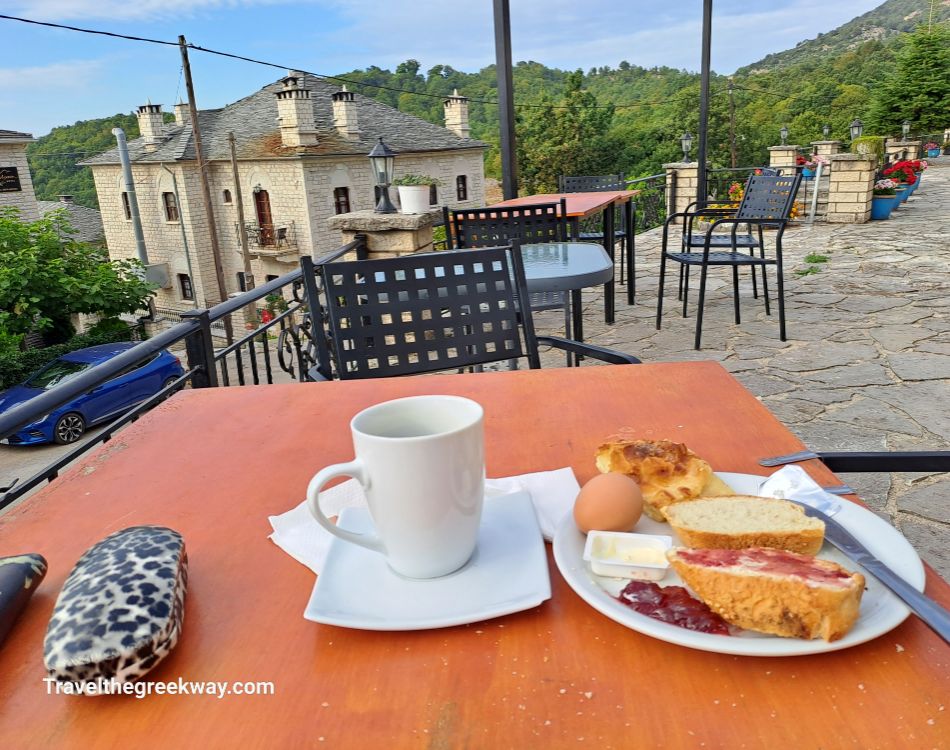
Monodendri is one of the most convenient places to stay in Zagori, especially if you’re visiting for the first time.
I stayed in Monodendri during my 2023 trip, when I hiked the gorge all the way to Vikos village at the Ladias Hotel. I found it a great base for exploring this part of Zagori.
Papigo – Best for Mountain Scenery and Hiking
If you’re planning to spend a night or two in Papigo, here are two lovely places to stay:
Papaevangelou Hotel: A charming stone-built hotel in Megalo Papigo with cozy rooms, mountain views, and a lovely homemade breakfast.
Papigo Towers: A traditional guesthouse in Mikro Papigo with stunning mountain views, comfortable rooms, and an on-site restaurant.
Aristi – Best for Comfort and Outdoor Activities
Aristi is another excellent base, especially if you want comfortable accommodation while staying close to nature.
Aristi Mountain Resort: A beautiful stone-built hotel with luxurious rooms, mountain views, and a spa, perfect for a relaxing getaway.
Hotel Taxiarches: A welcoming traditional hotel with cozy rooms and lovely views of the surrounding mountains.
Tsepelovo – Best for a Traditional Village Experience
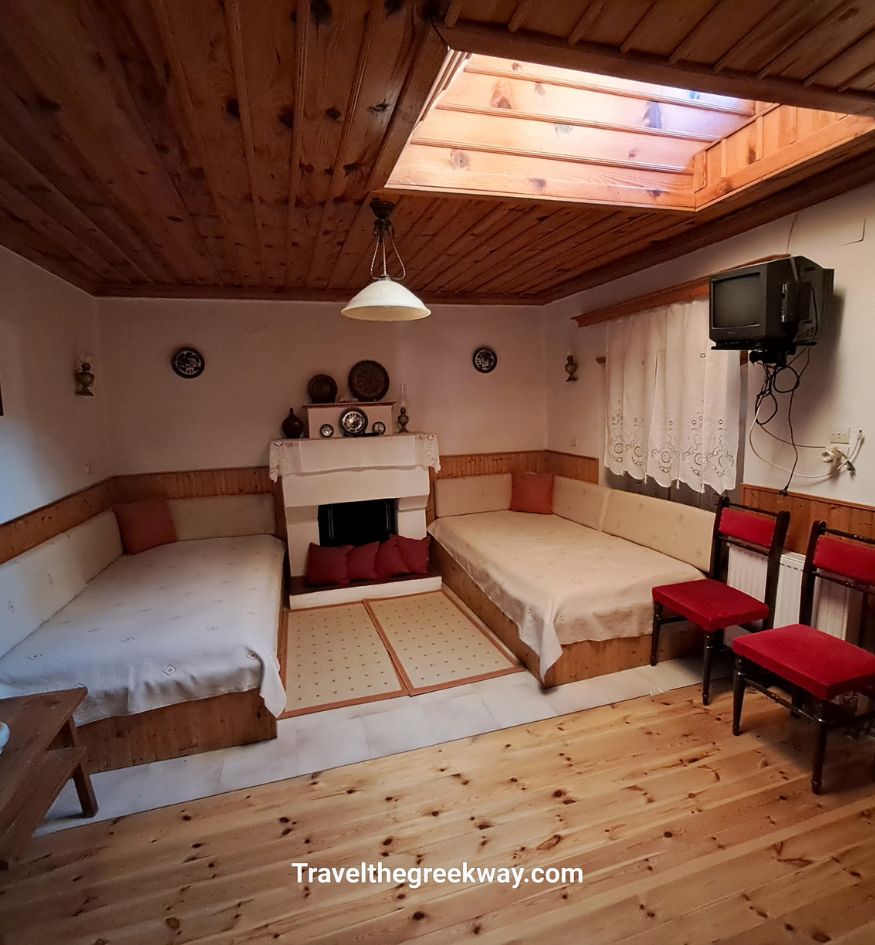
Tsepelovo is a lovely choice if you want to experience everyday life in a traditional Zagori village.
It’s one of the largest villages in the region, with a beautiful square, old stone mansions, and local tavernas.
I stayed in Gouris Guesthouse on my most recent trip to Zagori and really enjoyed its traditional atmosphere.
Kipi (or Kipoi)– Best for Exploring the Stone Bridges
Kipi is a good choice if you’re particularly interested in Zagori’s famous stone bridges and traditional architecture.
If you’re planning to stay in Kipi, here are two lovely hotels to consider.
Kipi Mountain Resort: A beautiful stone-built hotel with elegant rooms, mountain views, a swimming pool, and a spa.
Hotel Machalas: A charming traditional hotel with cozy rooms, fireplaces, and a restaurant serving local dishes.
How to Get to Zagori, Greece, and Get Around
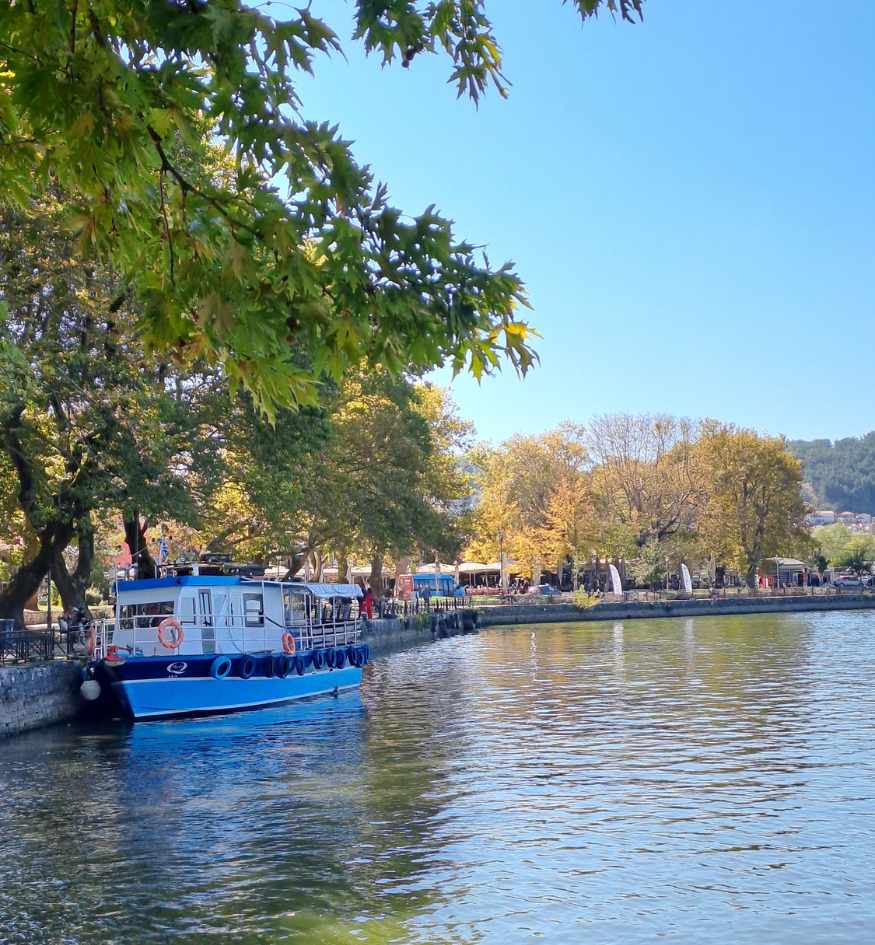
Zagori is located in northwestern Greece, in the Epirus region, and the easiest way to reach it is by car. The nearest major city is Ioannina, which is also the main gateway to the Zagori villages.
Although the region isn’t difficult to reach, getting around requires a little planning. The villages are scattered across the mountains, and many are connected by narrow, winding roads.
Getting to Zagori from Athens
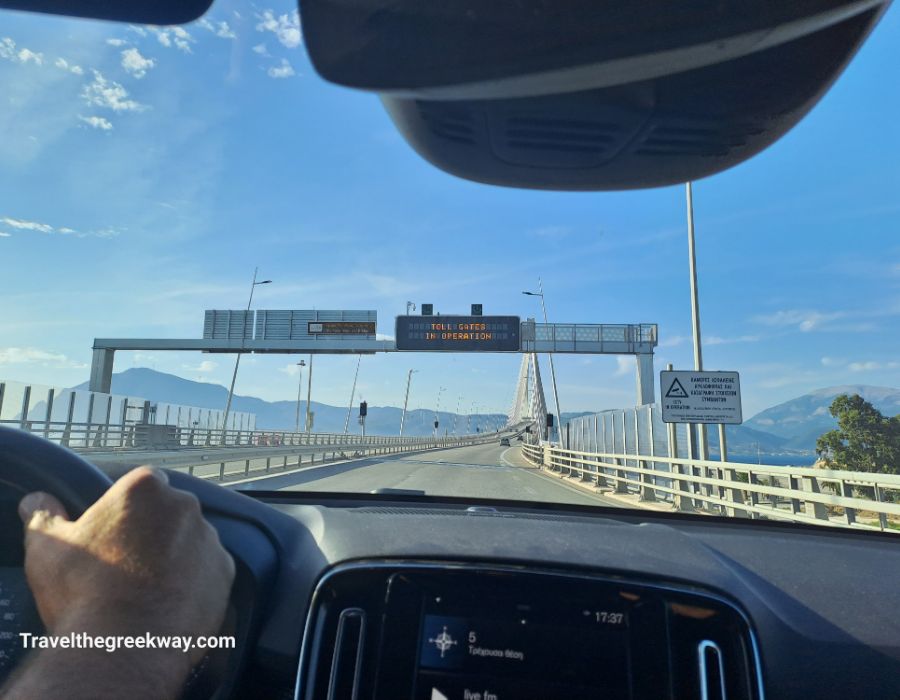
If you’re traveling from Athens, the drive to Zagori takes approximately 5–6 hours, depending on which village you’re visiting and how often you stop.
Most of the journey follows modern highways, including the Olympia Odos and Ionia Odos, before continuing toward Ioannina and into the mountains.
The scenery becomes greener and more mountainous as you approach Epirus.
Getting to Zagori from Thessaloniki

From Thessaloniki, allow approximately 3–4 hours to reach Zagori by car.
The usual route follows the Egnatia Odos highway toward Ioannina before turning north toward the villages. Egnatia Odos has many tunnels and quite a few tolls.
If you’re planning a road trip through northern Greece, Zagori combines well with other destinations in Epirus.
Getting to Zagori from Ioannina

Ioannina is the closest city to Zagori and a convenient starting point for exploring the region.
Depending on your destination, the drive from Ioannina to the Zagori villages generally takes around 40 minutes to 1.5 hours.
Monodendri, Vitsa, and Kipi are relatively convenient to reach, while villages farther into the mountains require more driving.
If you don’t want to travel all the way from Athens or Thessaloniki in one day, you can spend a night in Ioannina before heading into Zagori.
Do You Need a Car in Zagori?
Yes, I strongly recommend renting a car if you want to explore Zagori properly.
Public transportation between the villages is very limited, and many of the best attractions and the historic stone bridges are much easier to visit with your own vehicle.
Keep in mind that the mountain roads can be narrow, with plenty of bends, so allow extra time and avoid rushing.
You don’t generally need a 4WD vehicle to visit the main villages, as they are accessible by paved roads under normal conditions. However, winter weather can make driving more challenging, especially after snowfall.
Can You Visit Zagori Without a Car?
It’s possible, but your options will be limited.
You could travel to Ioannina by intercity bus and then arrange a taxi or private transfer to your accommodation. Some local operators also offer guided hiking trips and excursions with transportation.
However, visiting several villages and attractions independently without a car can be difficult and expensive.
If you’re planning to stay in just one village and join organized activities, you may manage without a rental car. Otherwise, driving is by far the most convenient option.
How Many Days Do You Need in Zagori?
I’d recommend at least three days in Zagori.
With two days, you can explore Monodendri, the Stone Forest, and some of the historic bridges. Three or four days give you time to visit Papigo, Aristi, and more villages.
If you have five days or longer, you can include a full-day hike through Vikos Gorge or explore quieter parts of the region.
Don’t try to fit everything into one trip. Leave time to enjoy the villages without rushing.
Suggested 5-Day Zagori Itinerary

If you have five days in Zagori, you can explore its beautiful stone villages, enjoy spectacular mountain scenery, and experience some of the region’s best natural attractions without rushing.
Day 1 – Monodendri
Start in Monodendri, exploring its cobblestone streets and visiting Agia Paraskevi Monastery, overlooking Vikos Gorge. Continue to the unusual Stone Forest and finish at Oxya Viewpoint for breathtaking views of the gorge.
Day 2 – Kipi, Stone Bridges, and Vradeto
Visit the famous stone bridges around Kipi, including Kokkoris and Plakidas. Explore Koukouli and Kapesovo before heading to Vradeto, where you can take the short hike to Beloi Viewpoint.
Day 3 – Hike Vikos Gorge
Dedicate the day to hiking Vikos Gorge from Monodendri to Vikos village. Allow approximately 6–8 hours for the hike, depending on your fitness, trail conditions, and stops.
This is a demanding one-way hike, so arrange your return transportation before setting off. Bring proper hiking shoes, plenty of water, food, and a reliable trail map.
If you’d rather skip the hike, spend the day exploring Vitsa, Dilofo, and other nearby villages.
Day 4 – Aristi, Voidomatis River, and Papigo
Explore Aristi and stop at the beautiful Voidomatis River before continuing to Megalo Papigo and Mikro Papigo. Don’t miss the Papigo Rock Pools, and consider a rafting trip if you’re feeling adventurous.
Day 5 – Tsepelovo and Nearby Villages
Spend your final day exploring Tsepelovo and its lovely village square. Visit the nearby Monastery of Agios Ioannis Rogovou, then discover some of the quieter villages.
Best Time to Visit Zagori, Greece
Zagori is worth visiting year-round, but I’d particularly recommend May, June, September, or October for exploring the villages and enjoying the mountain scenery.
Spring (March–May)
Spring brings green forests, wildflowers, and flowing rivers. It’s a beautiful season for photography, village walks, and activities such as rafting. The weather can be unpredictable, though, and snow may remain on higher mountain trails.
Summer (June–August)
Summer is a great time to escape the heat of Greece’s cities and islands. The villages are often cooler in the evenings, and the long days are ideal for sightseeing. If you’re hiking, start early and remember that exposed trails can still get very hot.
Autumn (September–November)
Autumn is one of the most beautiful seasons in Zagori. September is often pleasant for walking and exploring, while October brings lovely autumn colors to the forests.
Some villages also hold traditional festivals in early September, with local music, dancing, and food. By November, expect colder temperatures and a greater chance of rain.
Winter (December–February)
Winter is perfect for enjoying Zagori’s cozy stone guesthouses, traditional tavernas, and snowy mountain scenery.
However, snow and ice can make driving more difficult, and high-altitude hiking requires appropriate winter equipment and experience.
My recommendation: Choose September or October for a mix of sightseeing and beautiful scenery, or May and June if you prefer green landscapes and spring flowers.
Practical Travel Tips for Visiting Zagori
Before heading to Zagori, here are a few things worth knowing to make your trip easier.
- Bring comfortable walking shoes. Even if you’re not planning a long hike, the villages have cobblestone streets, steps, and uneven paths.
- Pack layers. Zagori is a mountain region, and temperatures can drop considerably in the evenings, even during summer.
- Allow extra driving time. The roads are generally paved, but they’re often narrow and winding. Distances on a map can be misleading.
- Parking is easy. I’ve never had trouble finding a parking spot in Monodendri or Tsepelovo. I also found it easy to park near the Stone Forest. Just make sure you use a safe, legal spot and don’t block narrow streets or entrances.
- Carry some cash. Cards are widely accepted at many hotels and restaurants, but cash is useful in smaller villages.
- Check hiking conditions. Mountain weather can change quickly, and some trails are challenging. Carry enough water, food, and appropriate equipment.
- Don’t try to see all 46 villages. Choose a few that interest you and take your time exploring them. Zagori is much more enjoyable when you’re not rushing from one place to another.
Frequently Asked Questions About Zagori, Greece
Is Zagori a UNESCO World Heritage Site?
Yes. Zagori was added to the UNESCO World Heritage List in September 2023 as a cultural landscape, recognized for its traditional stone villages, architecture, and relationship with the surrounding natural environment.
Can you visit Zagori without hiking?
Definitely! You can explore the villages, visit historic stone bridges, enjoy traditional food, and admire Vikos Gorge from viewpoints such as Oxya and Beloi. There are plenty of things to do without tackling demanding mountain trails.
Is Zagori suitable for families?
Yes, especially for families who enjoy nature and exploring traditional villages. However, some paths have steep drops or uneven surfaces, so supervise young children carefully.
Can you visit Zagori in winter?
Yes! Winter is a beautiful time to experience Zagori’s cozy guesthouses and snowy mountain scenery. However, you’ll need to check road and weather conditions, particularly if you’re planning to visit remote areas.
Final Thoughts on Visiting Zagori, Greece
Zagori is one of those places in Greece that I never get tired of visiting. I love its beautiful stone villages, peaceful mountain scenery, and the feeling that you’ve stepped back into an older, more traditional Greece.
Whether you’re coming for the hiking, the villages, or simply a few relaxing days surrounded by nature, I hope this guide helps you plan a wonderful trip to Zagori.
Have you visited Zagori, or are you planning a trip? I’d love to hear which villages and places you’re most excited to explore. Let me know in the comments!
For more Greece travel tips and ideas for your next trip, join my free Facebook Group or follow me on YouTube for more videos from around Greece.
Happy and safe travels,
Evgenia
