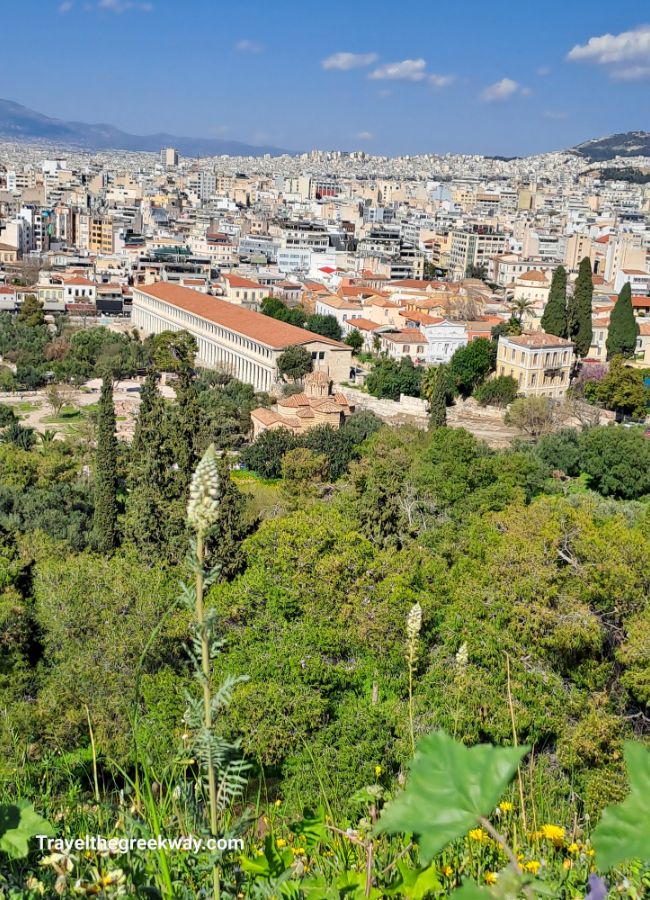
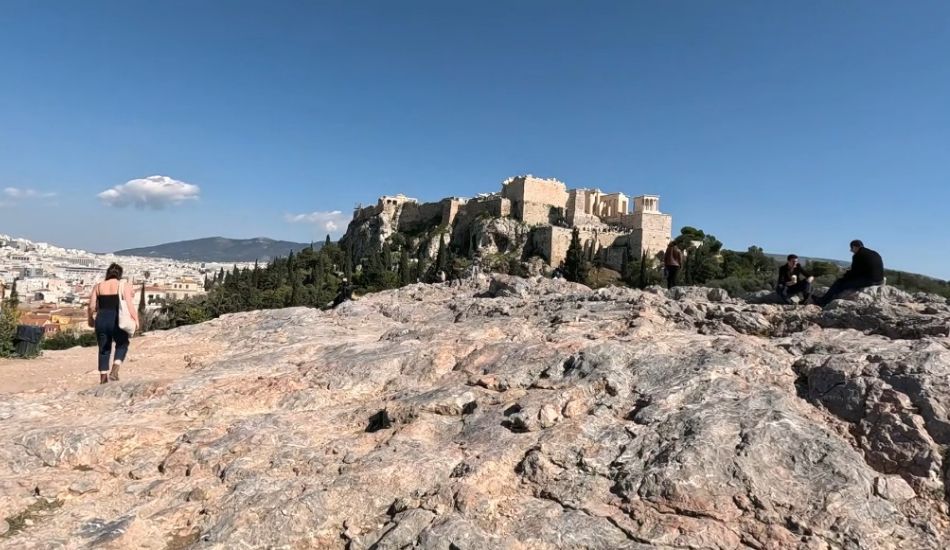
Areopagus Hill is a 115-meter-high rocky hill located right across from the Acropolis in Athens. I’m Greek, and this is one of those places locals know is just as meaningful as it is beautiful.
In ancient times, Areopagus was Athens’ main court of justice, and centuries later it became the site where Apostle Paul delivered his famous sermon about the “Unknown God.”

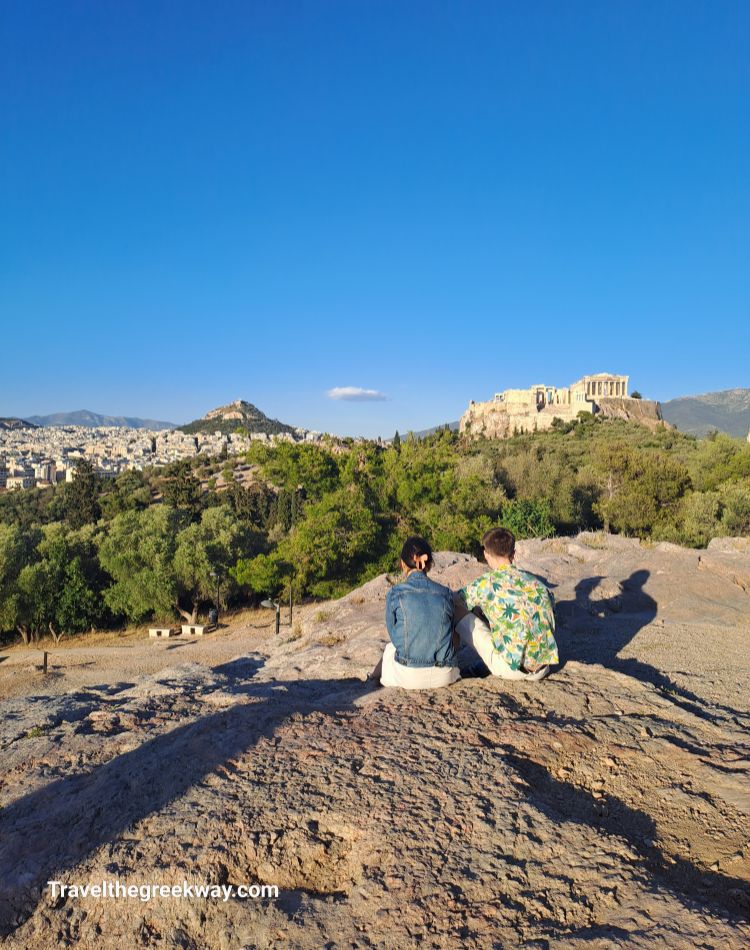
Today, it’s best known for its panoramic views and sunset atmosphere, especially as the sun sets behind Mount Aigaleo.
Below, I’ll explain the meaning of the name Areopagus (Mars Hill), its history, why Apostle Paul came here, and a few important tips to know before you climb up.
This post includes links that may be affiliate links. If you choose to make a purchase through them, I may earn a small commission at no extra cost to you. Please see my disclaimer/privacy policy for more information.
If you are wondering what Areopagus means, it is basically a union of two ancient Greek words:
- Αreios, an adjective referring to the god of war Ares, and
- Pagos, which the ancient Greeks used to describe any large and bare rock.
You will also find the hill under the name of Mars, which is the name of the god Ares in Latin.
Planning your Athens trip?
My Athens Travel Guide brings together where to stay, what to see, and how to plan your days — all based on local experience.
👉 Get the Athens Travel Guide here.
History of Areopagus Hill
Significant Milestones in the History of the Areopagus are:

- There is evidence that Areopagus was used as a court location that dealt with murder cases, during the Mycenean Era of Athens, around 1500 to 1300 BCE, back in the days of Cecrops and Theseus.
- According to Pausanias, a famed Greek traveler and writer (110 – 180 CE), the hill’s role in settling disputes dates back to the mid-7th century BCE, during the First Messenian War. This is more than two centuries before Classical Athens and the construction of the Temples in Acropolis.
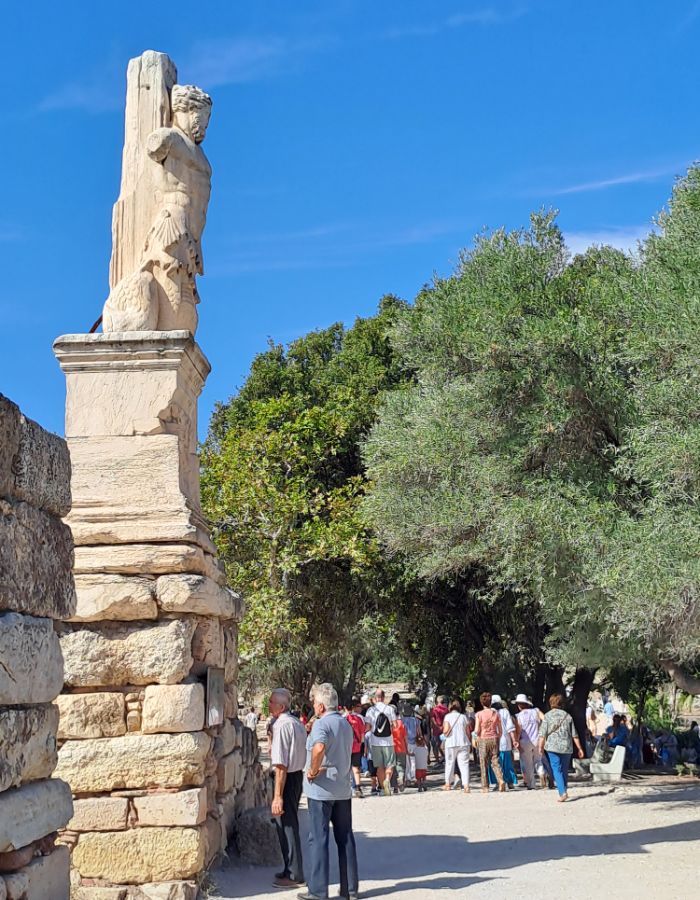
Prominent male Athenians constituted the Areopagus body, one of the most prestigious and politically powerful institutions in Athens.
Areopagus Hill served as a venue for judicial proceedings, specifically for the Council of the Areopagus, whose jurisdiction, after 462 BCE, included the trial of premeditated murders, arson, and blasphemy.
The Hill continued to function when the Romans conquered Athens (86 BCE) and served as an important meeting place where philosophy, religion, and law were discussed.
At the foot of the Areopagus was a temple dedicated to the Erinyes, where murderers could find sanctuary. Erinyes or furies were female chthonic deities of vengeance in ancient Greek religion and mythology. A famous Chtonic ritual was the Eleusinean Mysteries.
The Areopagus ceased operation as a political council by at least the early 5th century CE, according to Theodoret of Cyrus, a theologian (393-458 CE).
On October 16, 1834, a royal decree was published, establishing the Supreme Court of the newly formed Greek State, officially named Areopagus after the ancient tribunal of the same name.
Apostle Paul’s Sermon in Athens
A few meters before you reach the steps for the Areopagus hill, you will notice a bronze plaque on the wall.
It is inscribed in Greek and features Apostle Paul’s gospel presentation during his visit to Athens on his second missionary journey (49 CE).

When Paul arrived in Athens, he found a city “given over to idols”. He preached the gospel to Jews and Gentiles in the Ancient Agora of Athens and the Jewish Synagogue.
There, he encountered Epicurean and Stoic philosophers who were curious about “this new religion” and they “brought him to the Areopagus” to hear more.
Apostle Paul mentioned those altars dedicated to the “Unknown god” that Athens had plenty of. He talked about how God would judge the world through a man who rose from the dead.
This statement provoked sarcastic comments from the Athenians, who scoffed at him.
However, two of the listeners, Dionysios Areopagitis – who is today Athens’ patron saint – and Damaris, were converted to Christianity.
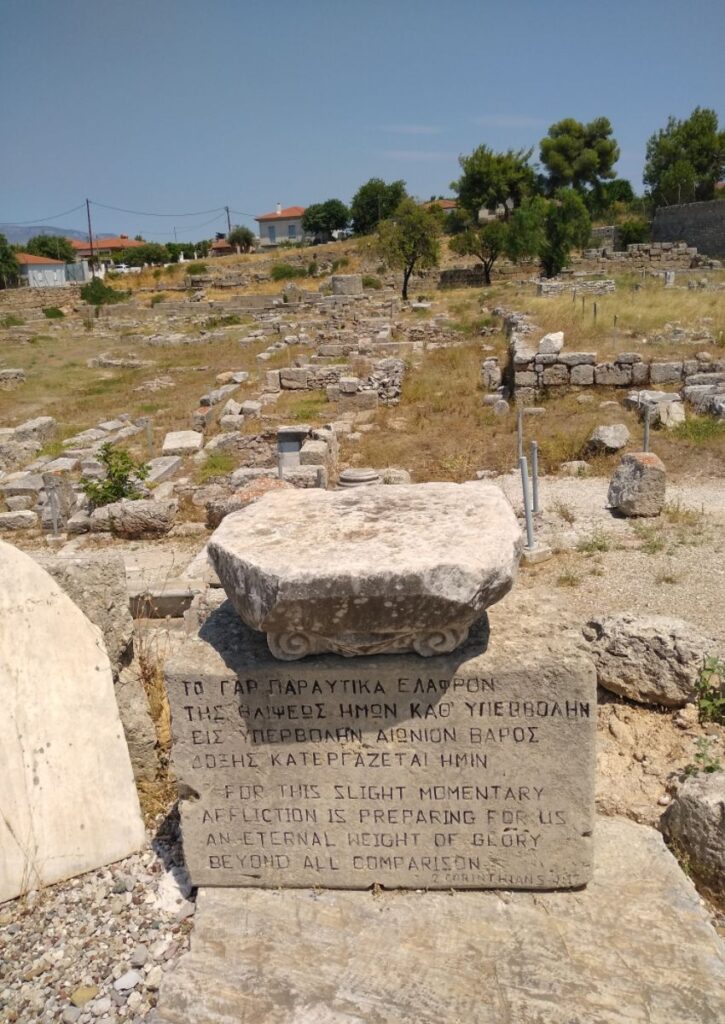
After Athens, Apostle Paul traveled to Corinth, where he stayed for a year and a half and wrote the Thessalonian Epistles. He then journeyed from Corinth, departing through the ancient port of Kechries, on his way to Ephesus.
Apostle Paul’s part of his original sermon:
“Άνδρες Αθηναίοι… διερχόμενος γαρ και αναθεωρών τα σεβάσματα υμών εύρον και βωμόν εν ω επεγέγραπτο, αγνώστω Θεώ (unknown God). Ον ουν αγνοούντες ευσεβείτε, τούτον εγώ καταγγέλλω υμίν… τίνες δε άνδρες κολληθέντες αυτώ επίστευσαν, εν οις και Διονύσιος ο Αρεοπαγίτης…”
Mythology and Areopagus
In Greek mythology, you will read that Ares (the god of war) faced trial among the twelve gods at this location for the killing of Alirrothios, Poseidon’s son.
Alirrothios had tried to rape Alcippe, the daughter of Ares, but was caught red-handed by Ares.
Another tale suggests that the hill served as the venue for the trial of Orestes, who was charged with the murder of his stepmother, Clytemnestra, and her lover, Aegisthus, in the Mycenaean Palace in the Peloponnese.
However, Orestes was acquitted by the goddess Athena’s favorable vote.
What to Do on Areopagus Hill
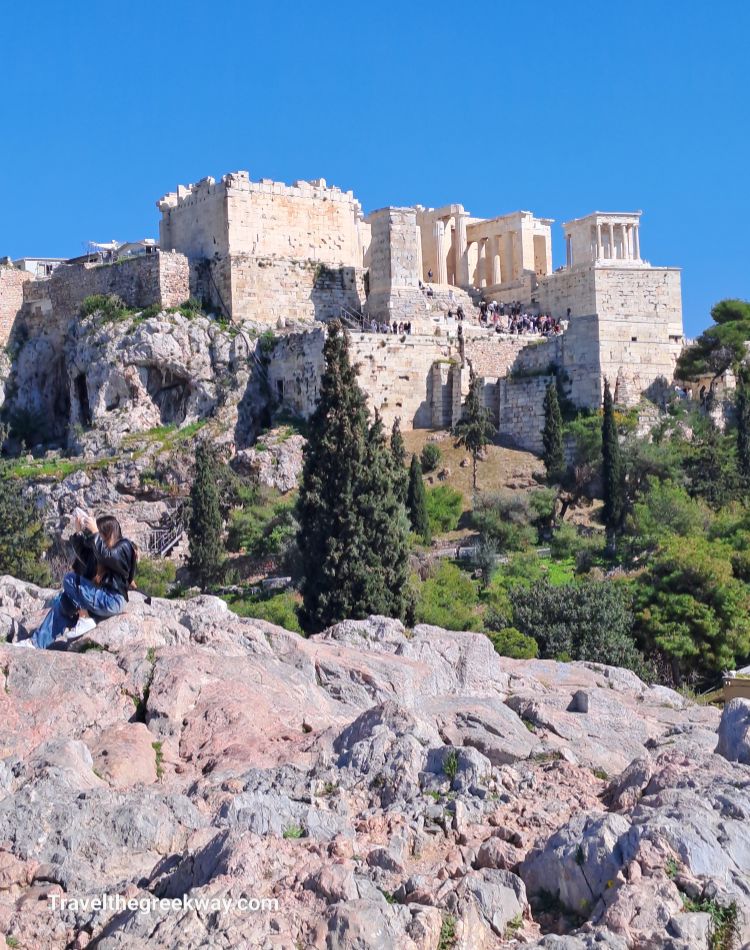
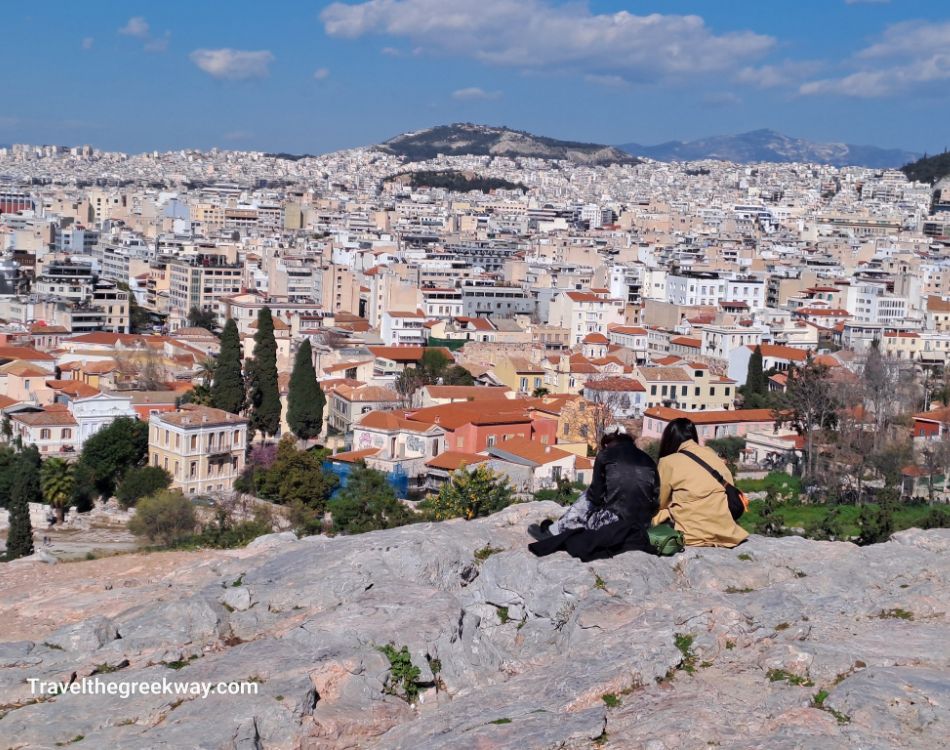
The best thing to do on Areopagus Hill is to take in all the incredible views, especially at sunset!
You get great unobstructed views of the city below and it is a nice photo opportunity for the Acropolis as well.
From Areopagus, you can walk downhill towards the pedestrian path of Thision that will guide you to the Pnyx, observatory, and other cool spots. Climb to the top of Pnyx Hill for an awesome Acropolis view and walk to Philopappou Hill.
Tips about Visiting Areopagus

- During the summer, the hill will be crowded and too hot to stay for more than a short time. I suggest you visit it as early as possible, or for the sunset, go after 7.30, but never in the dark, as in certain areas it is very slippery with minimal light.
- Wear flat shoes with a good grip and use the modern metal staircase.
- Areopagus Hill is always open, and the entrance is free of charge.

The last time I visited, I was a bit disappointed by the numerous cigarette butts and the graffiti spoiling a significant Athenian monument.
I know that the Athens municipality does clean the place, but as it is open and free for everyone to go, people do not respect the Areopagus as they should.
However, keep in mind that this is a wonderful place to be in Athens: for its history, its religious significance to Christianity, and for the lovely feeling of being high above Athens, an ancient and modern, vibrant city!
Which are the Best Areas to Stay in Central Athens?
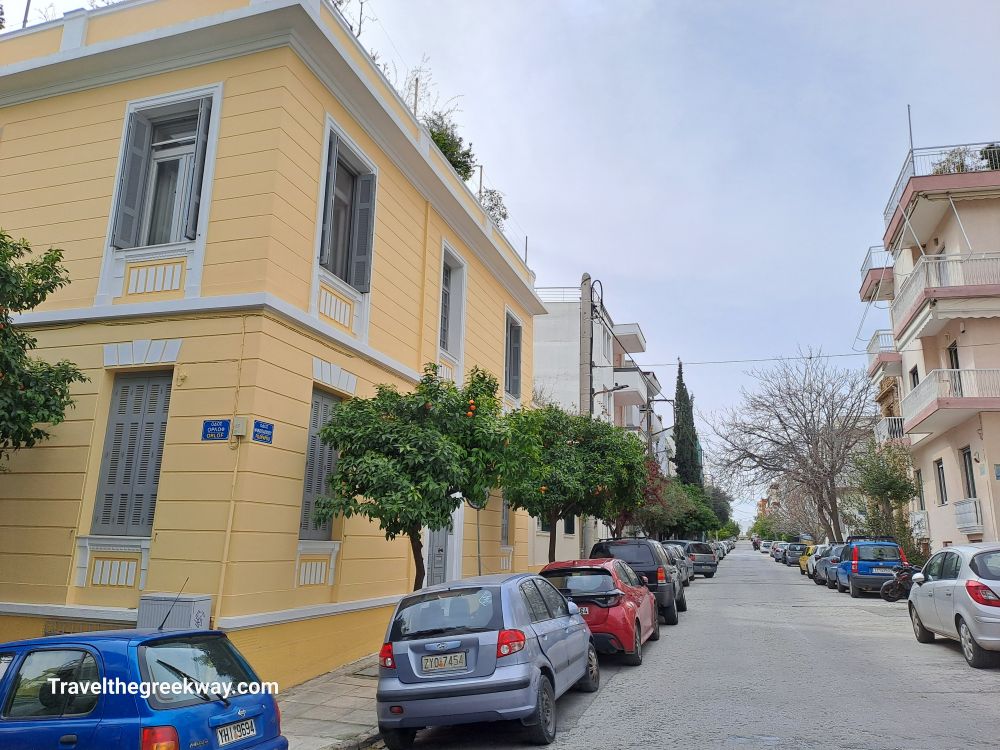
Athens offers a variety of neighborhoods, each with its own unique charm and attractions. I live in central Athens, toward the north, in a very residential neighborhood.
However, if you are visiting Athens for a short period, some of the best areas to stay in central Athens are:
- Plaka is the oldest and most picturesque neighborhood in Athens.
- Koukaki is a trendy and vibrant neighborhood.
- Syntagma is the central square of Athens with the Hellenic Parliament, a constant bustling hub of activity.
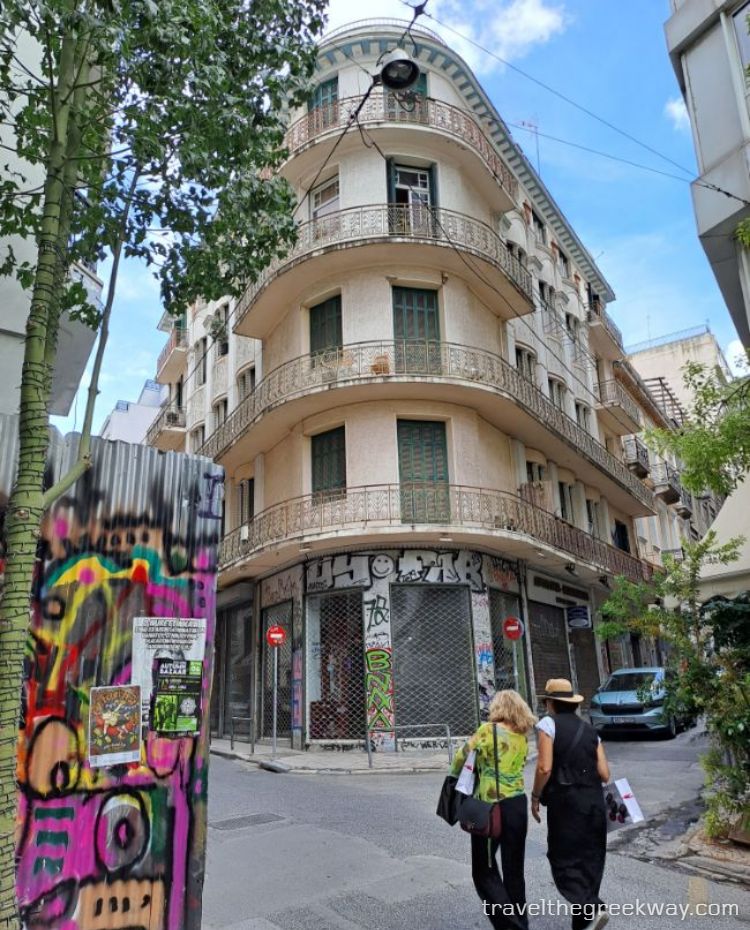
- Monastiraki is a bustling district known for its flea market, street art, and lively atmosphere.
- Psyrri is a lively hub of art, culture, and nightlife.
- Kolonaki is an upscale neighborhood known for its high-end boutiques, art galleries, and gourmet restaurants.
- Exarchia is a unique and energetic quarter in Athens, known for its alternative culture, political activism, and bohemian atmosphere. It is often described as the city’s “anarchist quarter.”
- Hotels near the Athens Airport.
I hope you enjoyed this article and I convinced you to visit Areopagus. Until next time, Happy travels! Evgenia.
Essential Travel Info for Greece
- ‘Hello’ and ‘Thank You’ in Greek: “Ya sou” and “Efharisto”
- Booking.com: I use Booking.com mostly for Europe.
- All-Inclusive Resorts in Greece
- Rent an Affordable Car in Greece
- Athens Metro Website (timetables and ticket info)
- Trains (Hellenic Train)
- Public Buses KTEL
- Get Your Guide: For all your day or multi-day tours and city guide needs, I use Get Your Guide
- Emergency Numbers Anywhere in Greece: AMBULANCE 166 – FIRE 199 – POLICE 100– EMERGENCY NUMBER 112
