The Ancient Agora of Athens is the second most important archaeological site in Athens, following the Acropolis Hill. Wondering why? The Ancient Agora served as the pulsating heart of Athens’ public center.
Everything unfolded in the Agora – Philosophers, politicians, and lecturers discussed and argued matters of their time, shaping the laws of the city in this way.

I live in Athens, and every time I take the metro, which passes right in front of the Agora, I feel so overwhelmed by the thought that this magnificent place was essentially a hands-on practice of Athenian Democracy.
Let’s explore together why the Ancient Agora of Athens is often referred to as the Birthplace of Athenian Democracy.
This post includes links that may be affiliate links. If you choose to make a purchase through them, I may earn a small commission at no extra cost to you. Please see my disclaimer/privacy policy for more information.
My Latest Video on the Ancient Agora of Athens
I took a long walk through the Ancient Agora of Athens in early December.
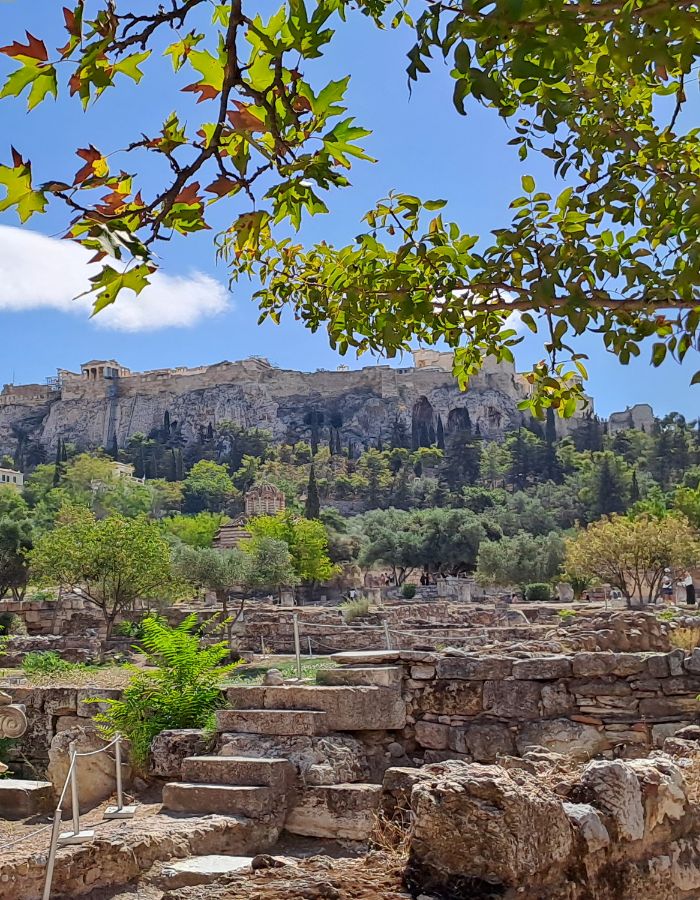
The Agora is a true historical treasure in the heart of the city. It’s one of my favorite archaeological sites because such a beautiful, natural setting surrounds the ruins and monuments.
Ancient Agora of Athens Quick Facts
Thanks to extensive findings from excavations and detailed accounts by ancient travelers, we now understand what the Agora was for ancient Athenians.
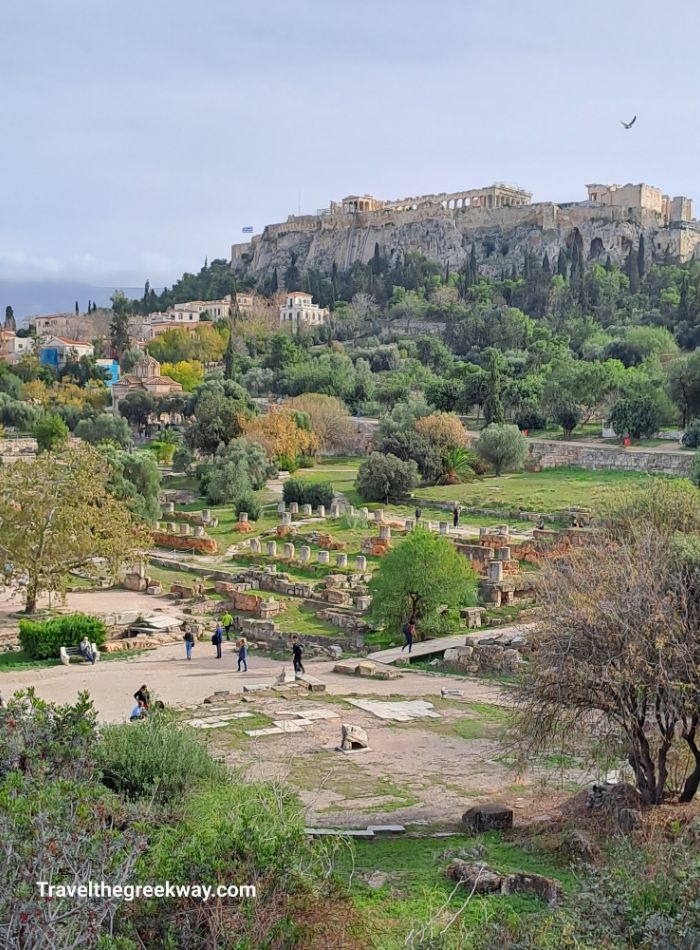
Commercial Center: A bustling marketplace teeming with shops where artisans such as potters, shoemakers, coppersmiths, and sculptors crafted and traded wares.
Religious Center: Evidenced by numerous small shrines and temples, the Agora held a significant place in the religious life of ancient Athens.
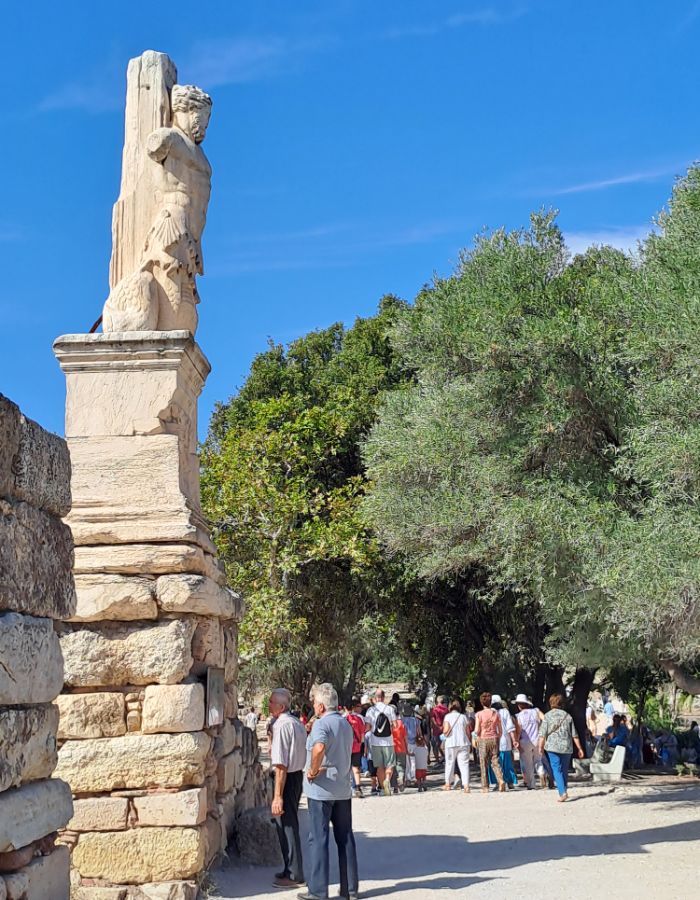
Cultural Center: Having a library and a conservatory, the Agora emerged as a cultural epicenter.
Renowned Greek tragedy playwrights Aeschylus, Sophocles, Euripides, and comedy playwright Aristophanes premiered their seminal works in and around the vibrant precincts of the Agora of Athens.
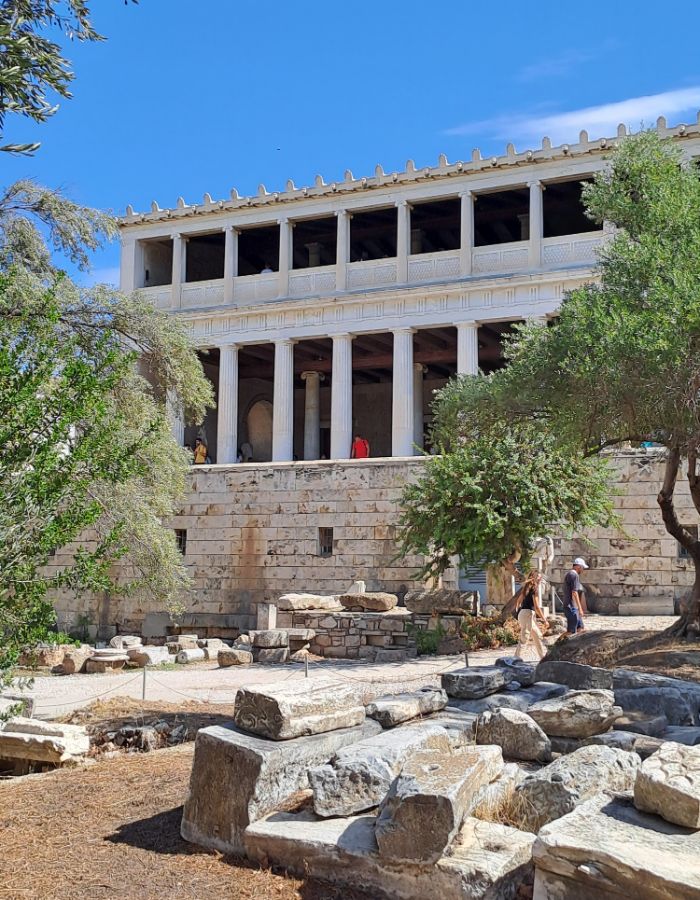
Administrative, Political, and Judicial Center: Inside the Agora was the Athenian Parliament, a place of legislative, political, and judicial significance. It was here that Socrates faced accusations of impiety in 399 BCE, leading to his tragic death sentence.
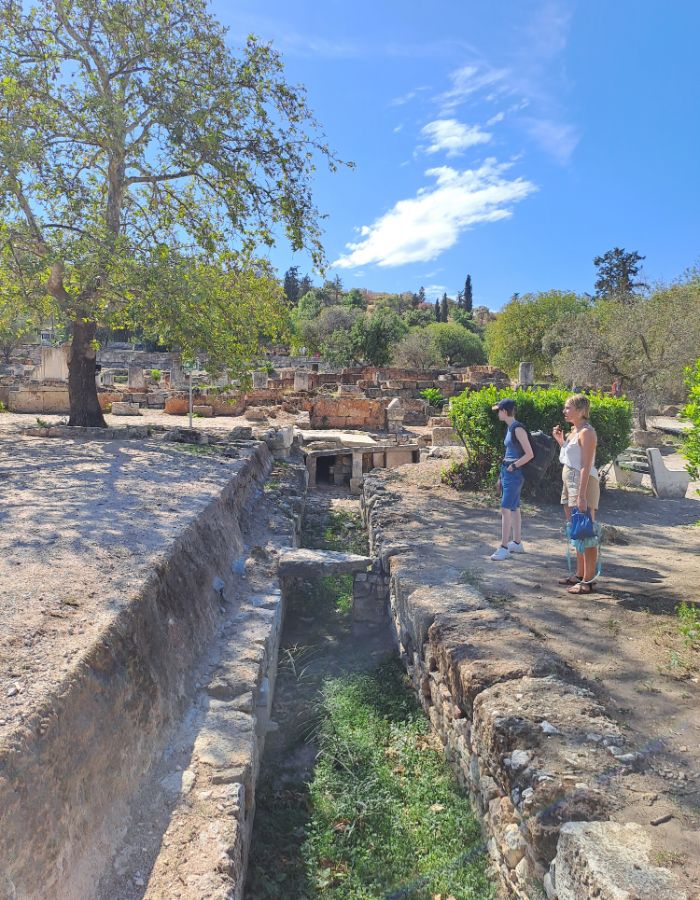
Philosophical Center: Agora was near Simon’s shoe shop, a historic site where Socrates engaged with his disciples. This is where Aristotle first listened to Socrates and became his student.
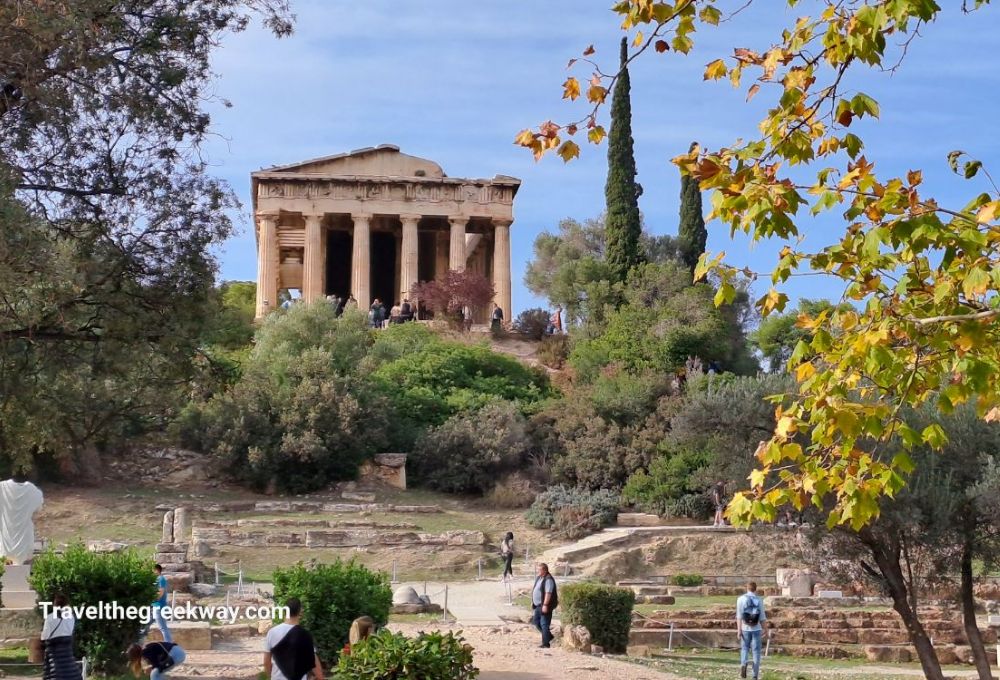
Social Center: Friends gathered amidst the beauty of the greenery, trees, gardens, monuments, and fountains, engaging in discussions spanning business, politics, and philosophy.
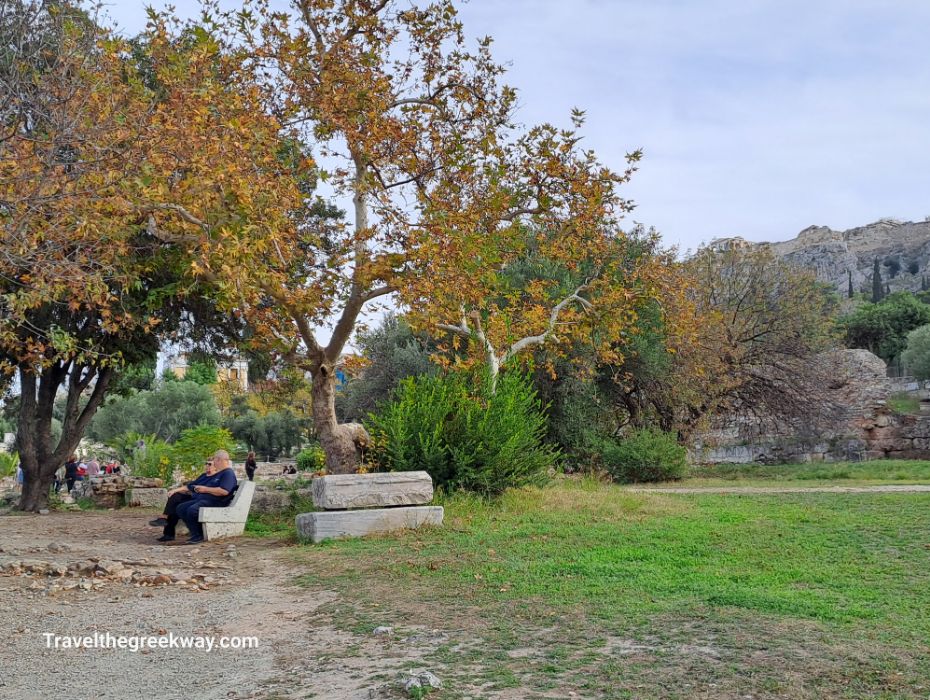
Even today, the park inside Agora remains a beautiful place to visit.
Greek History Time Frame
To better understand the time frame of the Ancient Agora operation, I have created this infographic of the major eras of the history of Greece.
Around 550 BCE, the Agora of Athens was founded on 122 acres northwest of the Acropolis Hill, between the hills of the Arion and the Agoraion Kolonos.
For at least four centuries, the Agora remained the bustling epicenter of Athens during the Classical and Hellenistic periods.
Important Dates in Agora’s History
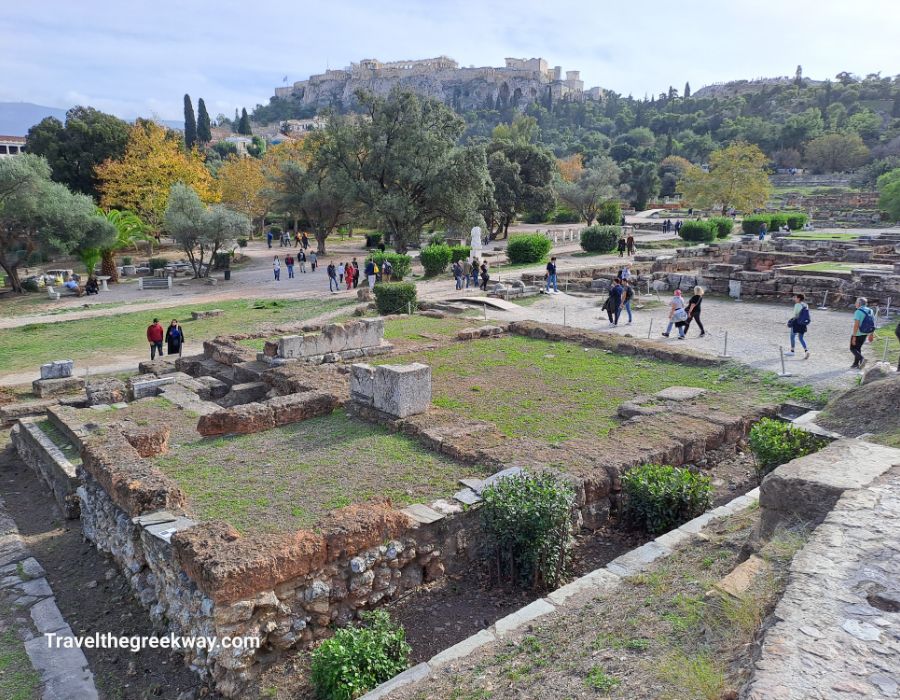
- 1600-700 BCE: The area served as a cemetery with evidence of Mycenaean Tombs
- 520 BCE: During the Pisistratos tyranny, the Southeastern Fountain and the Altar of the 12 Gods were built.
- 508 / 507 BCE: With the establishment of Democracy, an era of intense building activity commenced in the Agora.
- 480 / 479 BCE: The Persian invasion ruined many Agora buildings, but the ruler Pericles renovated them shortly after. Panathenaic Street, a central avenue, emerged, hosting the grand Panathenaic festival every four years.
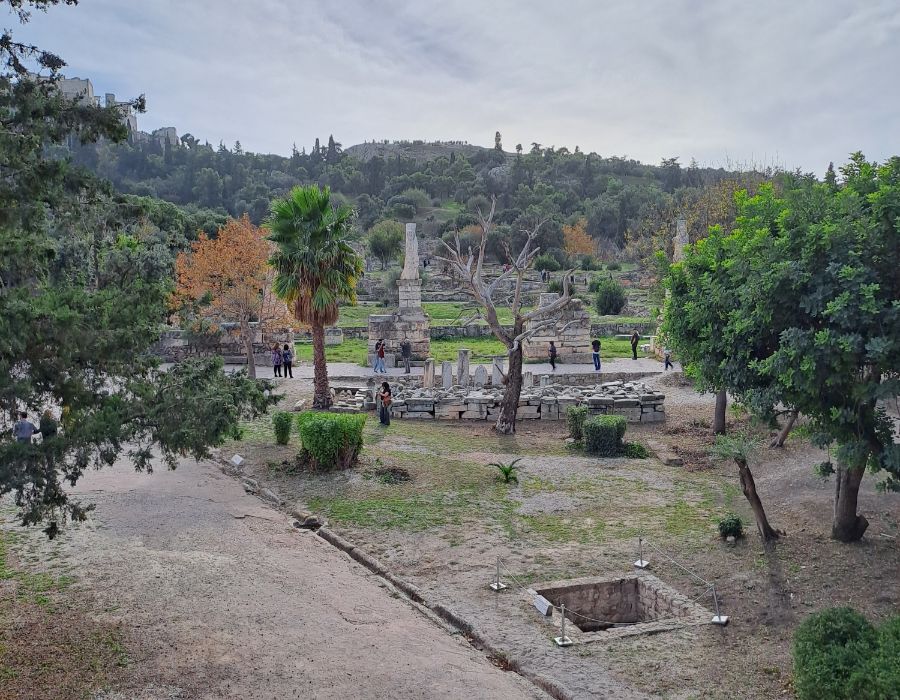
- 475 – Roman Times: There were more and more public constructions, which were directly linked to the flourishing of Democracy.
- 86 BCE: Roman Syllas destroyed the Agora as punishment for Athenian support of the King of Pontos against the Romans.
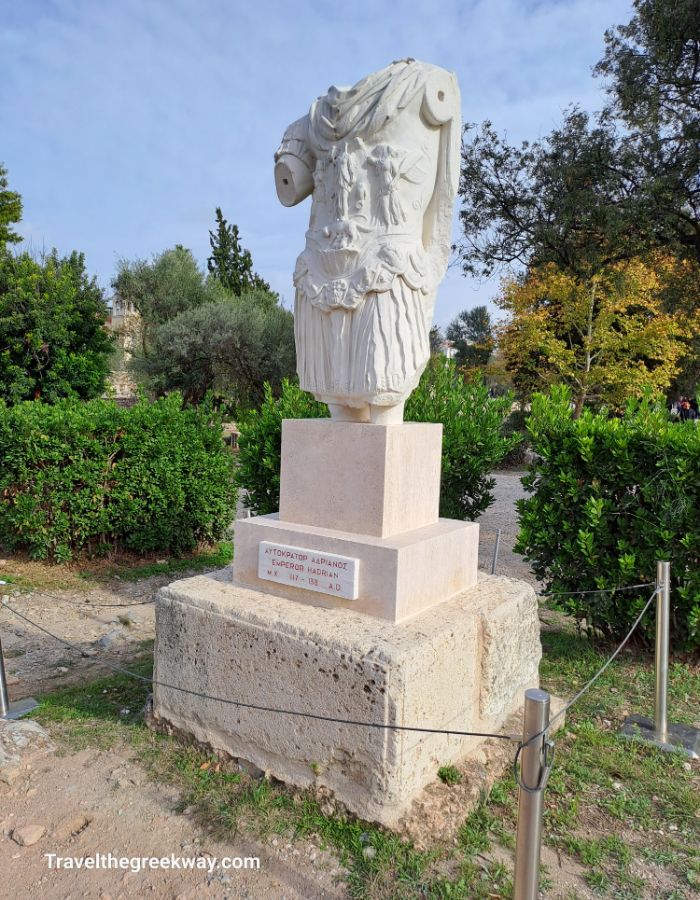
- 27 BCE – 138 CE: Roman Emperors Octavius and Hadrian contributed to the Agora’s prosperity by renovating, building odeons, and adding temples.
- 51 CE: According to the Book of Acts 17:16-33, Apostle Paul preached about the new religion.
- 267 CE: The invasion of the Germanic tribe Heruli led to the destruction of the Agora buildings.
- 396 CE: The Visigoths’ invasion destroyed the Agora even more. Some of the buildings were later rebuilt.
- 5th and 6th centuries CE: The Agora experienced a last flourish with the Athenians constructing opulent urban villas.
- From the end of the 4th to the end of the 6th century CE: Unfortunately, successive attacks by barbarian tribes resulted in the destruction of the Agora’s buildings once again, leading to its ultimate decline.

- 10th century: During the Byzantine Empire’s expansion, the Agora was re-inhabited. This era saw the construction of the Solakis church, adding to the cultural landscape of the area.
- 13th to 17th centuries: The Agora was abandoned, with all structures being buried under layers of mud, except the Temple of Hephaestus, which was transformed into a church.
- In 1931, the American School of Classical Studies in Athens started excavations in the area and more than 400 residential houses had to be demolished.
The Monuments in the Ancient Agora of Athens
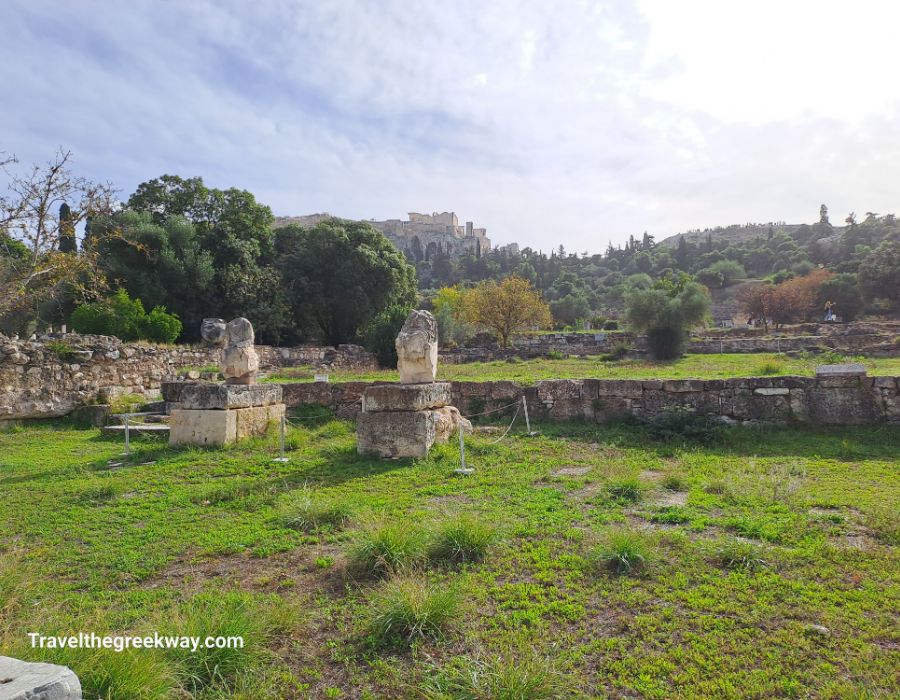
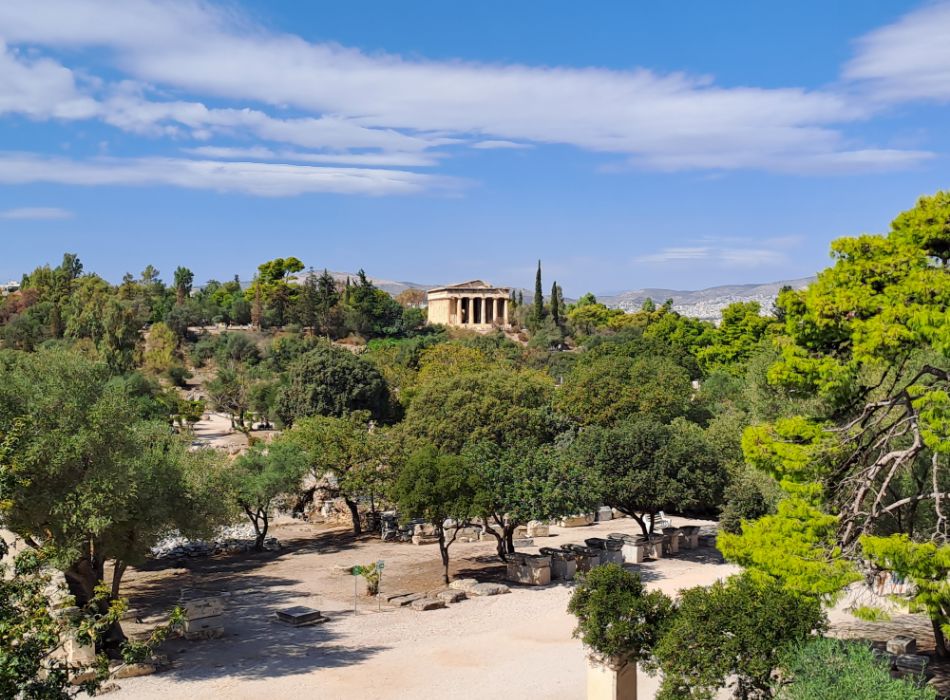
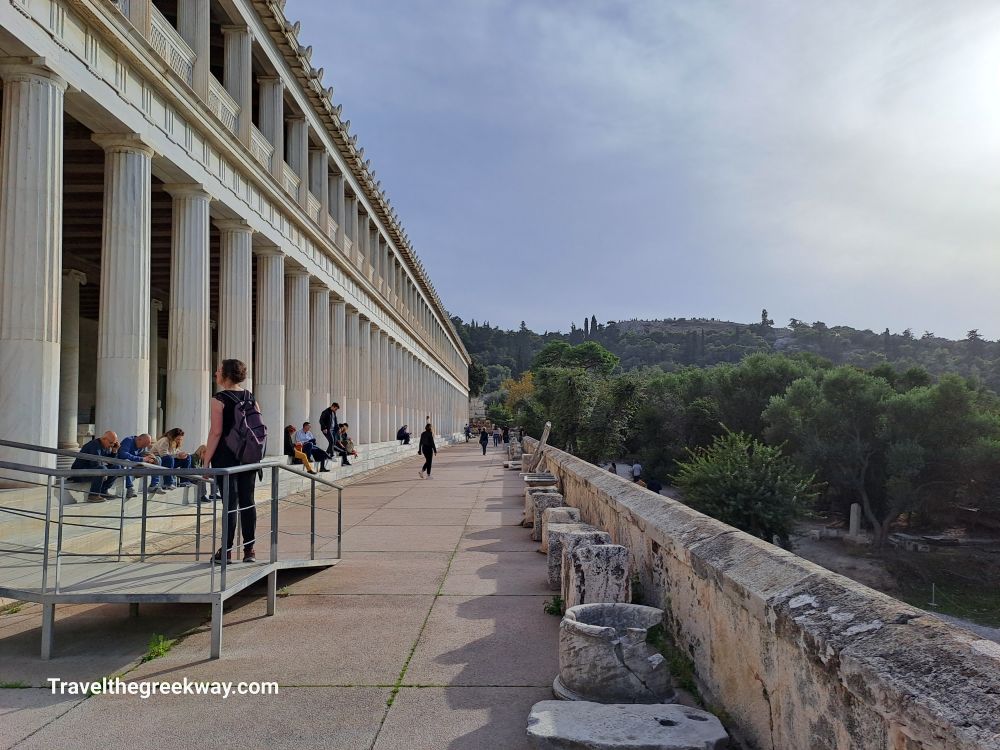
As you explore this historic site today, two remarkable structures stand— the iconic Temple of Hephaestus (Hephaesteion) and the (reconstructed) Stoa of Attalos.
But let’s discuss a bit more about the monuments you can see today:
The Temple of Hephaestus
Every journey on the above-ground metro, from Monastiraki towards Thission and Piraeus, unveils the magnificent Doric Temple of Hephaestus.
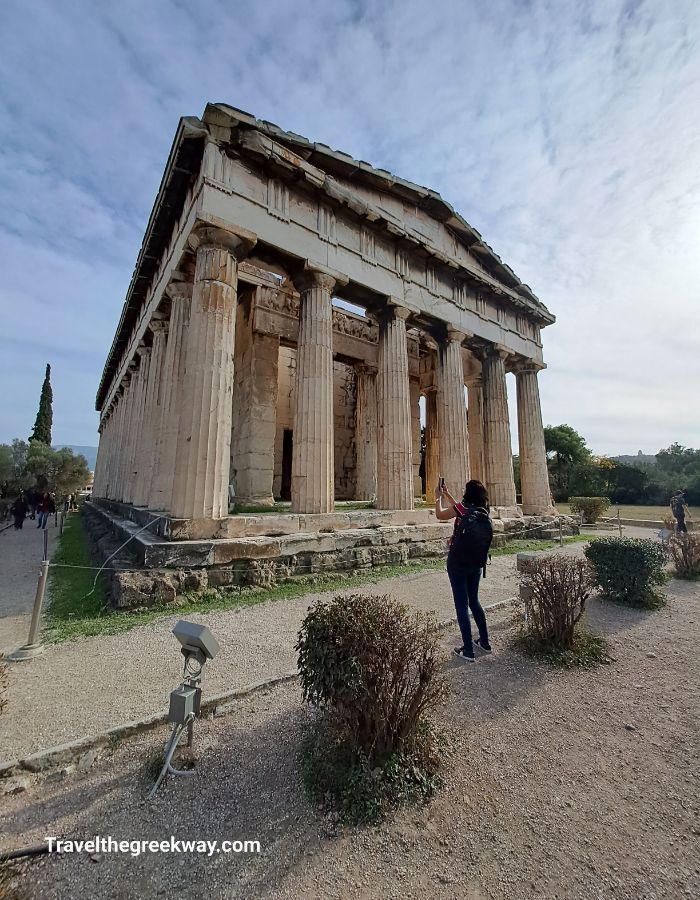
It is located atop the Agoraios Kolonos Hill, a natural western boundary of the Agora.
Dedicated to both Hephaestus and Athens, the Temple stands as one of Greece’s most impeccably preserved treasures.
The construction of the temple (we don’t know the architect’s name) was probably between the years 460 and 420 BCE.
It is made of Pentelic marble. Penteli is one of the four major mountains encircling Athens.
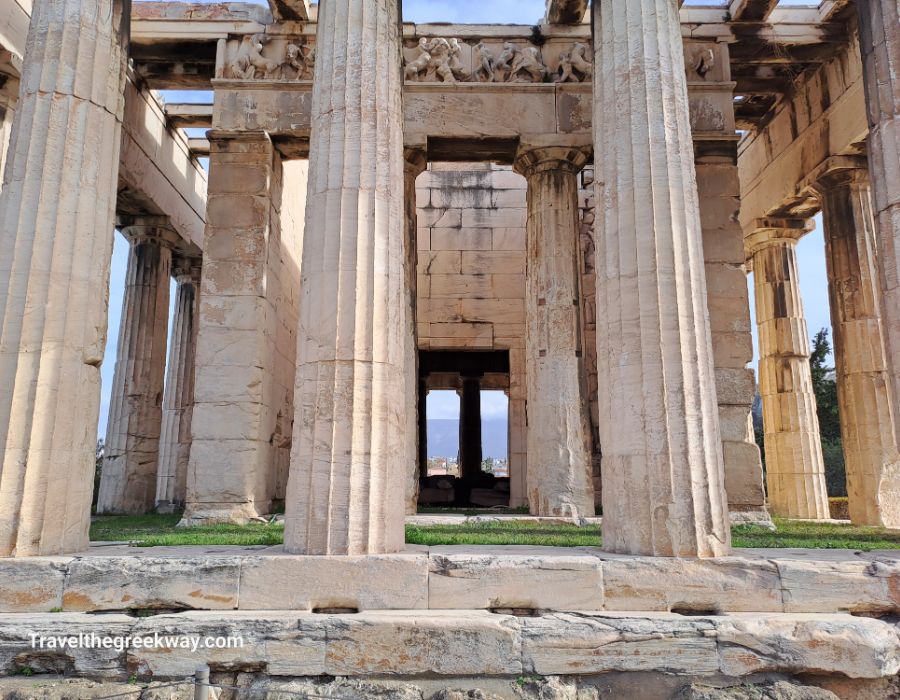
If you’re curious why the Temple of Hephaestus stands in such impeccable condition compared to many other ancient structures left in ruins, the answer may lie in its transformation.
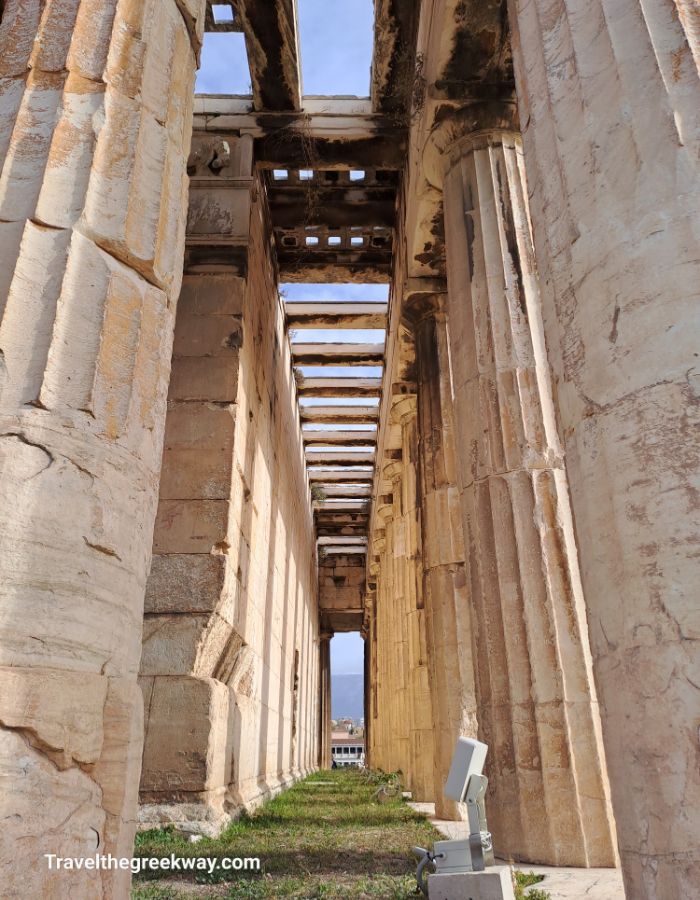
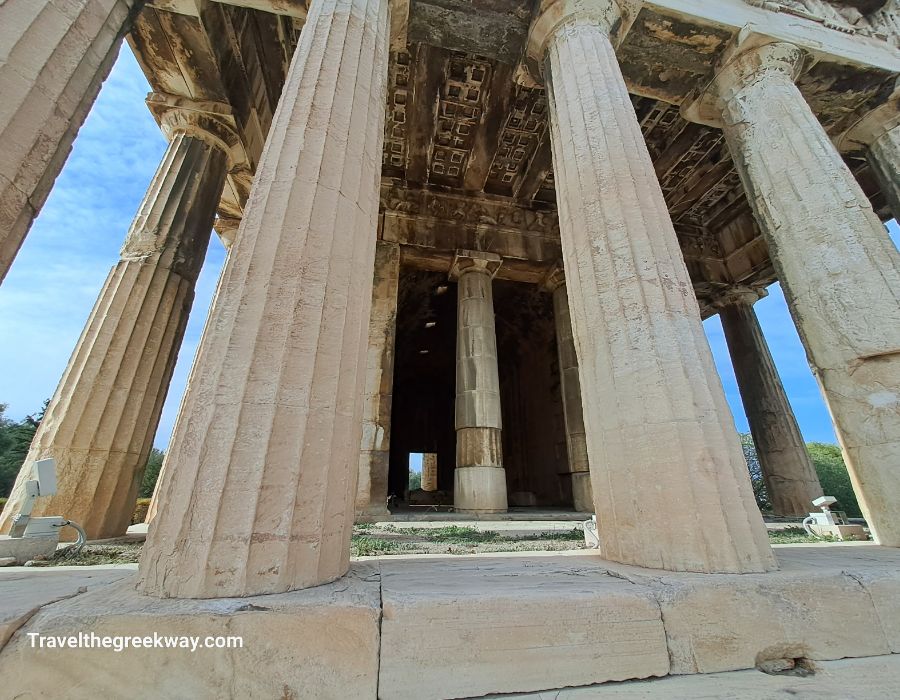
In the 7th century CE, the temple was converted into the church of Agios Georgios of Akamas until Greece gained liberation from the Ottomans in 1833.
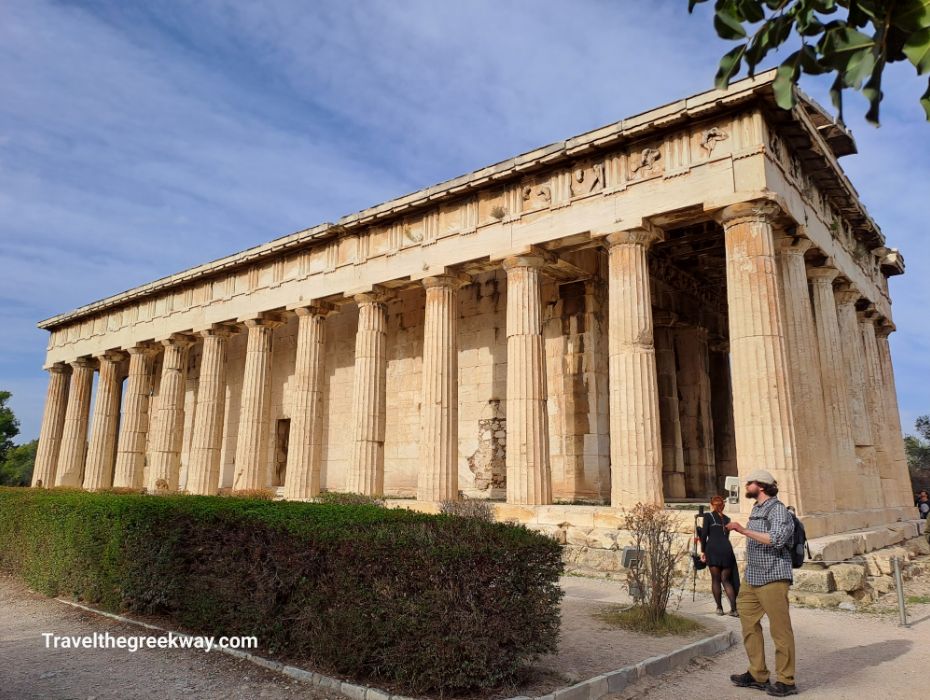

In 1834, the Ancient Agora of Athens was officially declared a protected archaeological site.
The Bouleuterion (Parliament)
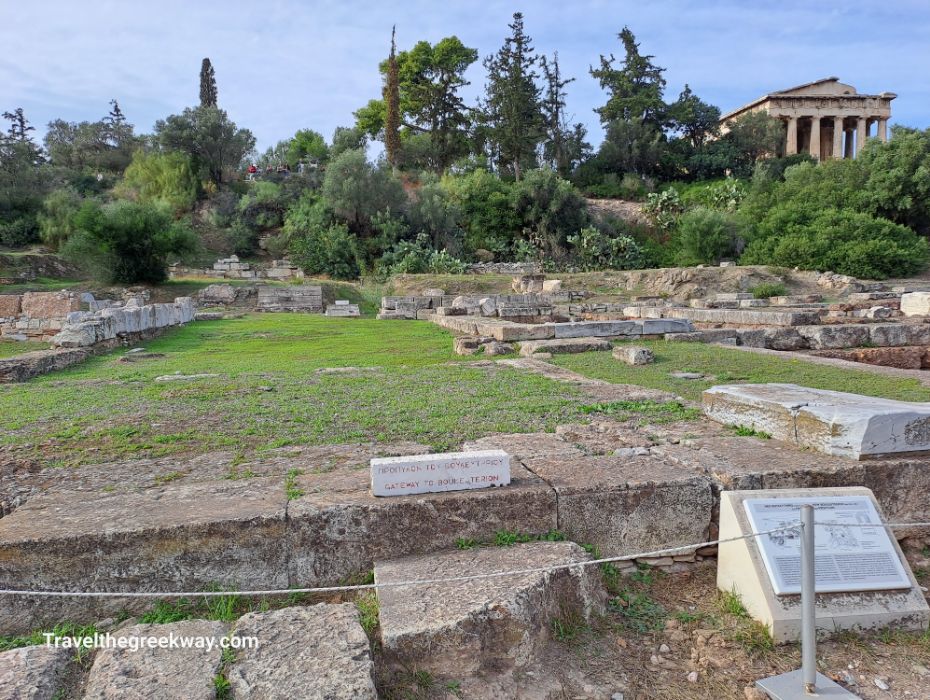
The Vouleuterion (or Bouleuterion) served as the meeting place for the Boule (Parliament), or the Council of 500, a central legislative body in Athenian democracy.
These representatives gathered at the Bouleuterion to discuss and make decisions on various public affairs.
It was initially introduced by Solon in 594 BCE but underwent significant reforms by Cleisthenes in 508/507 BC, hailed as the ‘Father of Athenian Democracy.’
Tholos
Tholos is an architectural feature that was popular in classical Greece. It is a circular temple of the Greek peripteral architectural type, surrounded by a circular colonnade.
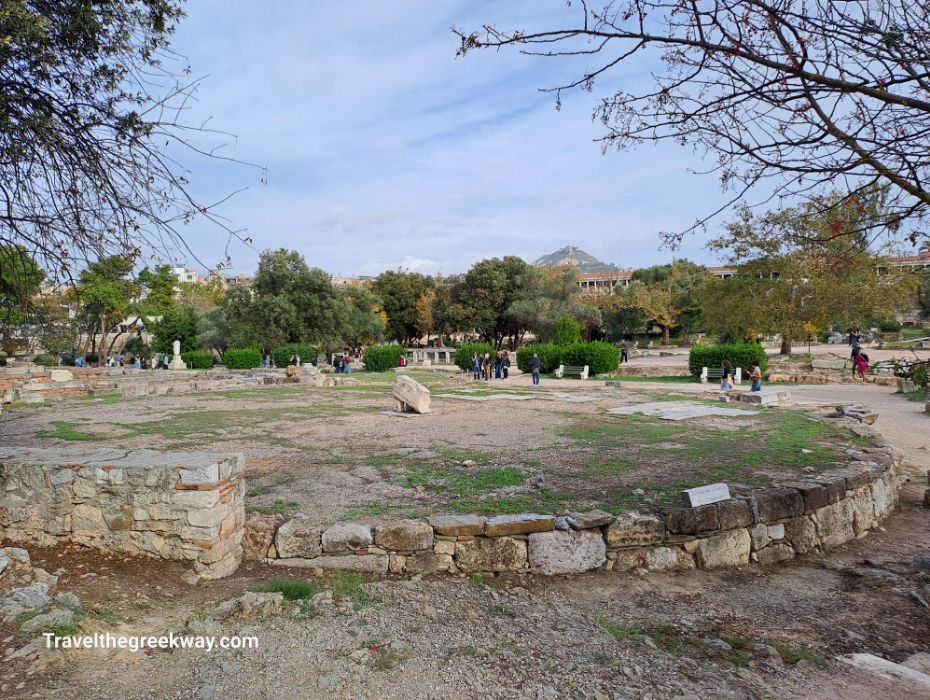
The Tholos of the Ancient Agora (c. 460 BCE) was a circular structure with six columns inside and a propylon on the east. It was the seat of the Council of 500 for 35 or 36 days before being succeeded by another 50 delegates.
The Tholos also served as the communal dining place where the Prytanes enjoyed their meals at public expense
Tip: Other famous Tholoi in Greece are:
- The Tholos in the Delphi archaeological site
- The Philippeion in Ancient Olympia
- The Tholos in the Asklepion Sanctuary of Epidaurus.
The Byzantine Church of Agioi Apostoloi Solakis
Toward the Acropolis hill and near the Stoa of Attalos, sits the gorgeous Byzantine temple of Agioi Apostoloi Solakis.
They built the church partly on an ancient monument dedicated to the Nymphs in the late 10th century.
It is the only medieval monument that survives in the area of the Athenian Agora and it was restored in its original form between 1954 and 1957.
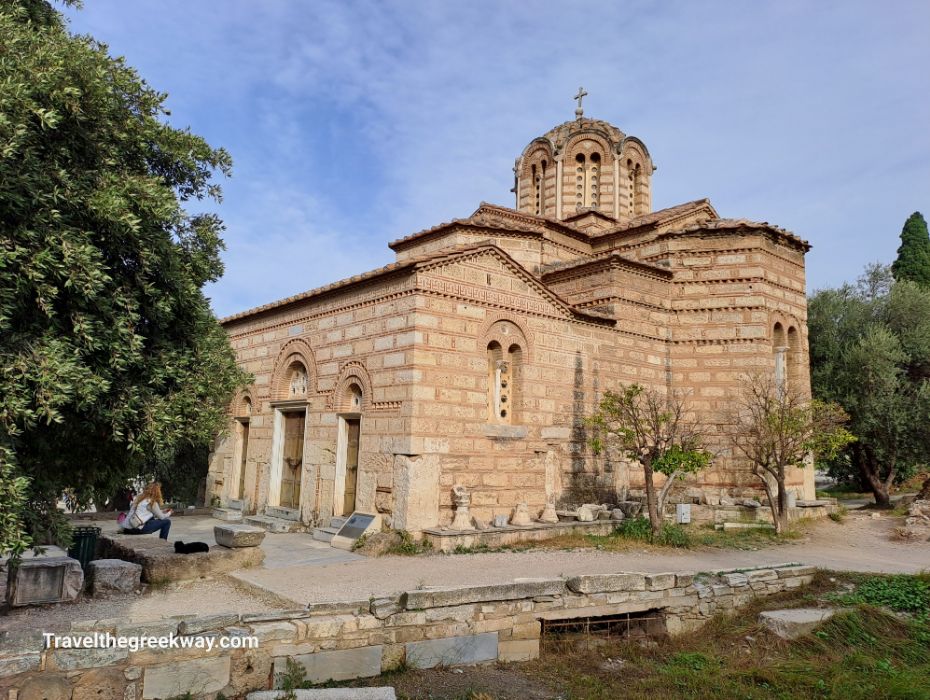
The Church operated for 1000 years until 1931, when the excavations started, and it became one of the monuments of the Ancient Agora of Athens.
However, once a year, on June 30th, there is a liturgy in the evening and it welcomes people.
You may also enjoy the best Byzantine Churches in Athens
Attalos Stoa and the Ancient Agora Museum
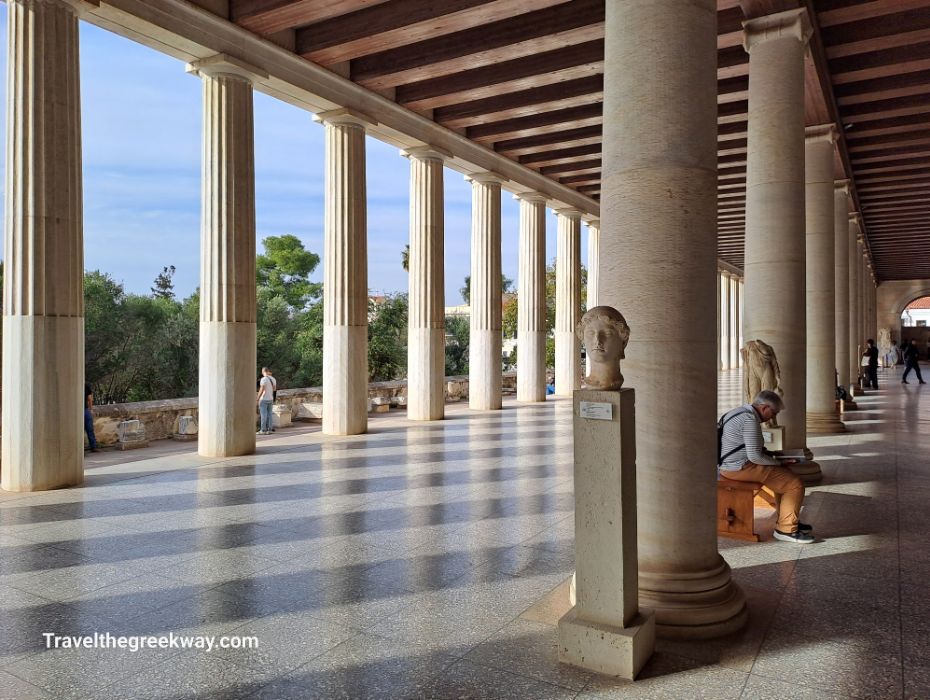
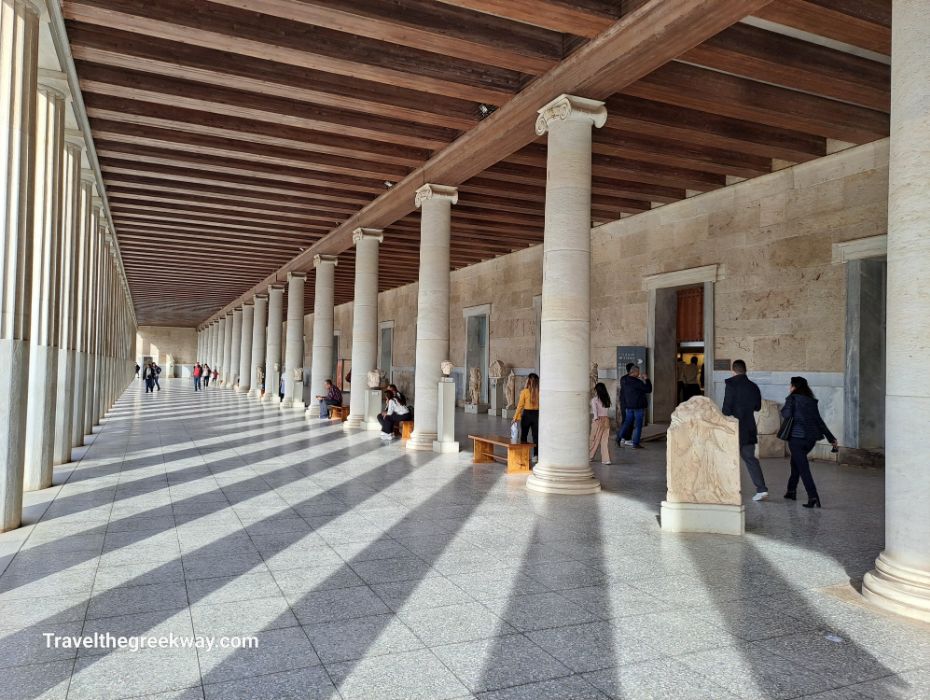
The Stoa of Attalos was a gift from King Attalos II Philadelphus of Pergamon to the city of Athens in 150 BCE.
The impressive construction boasted two floors, each hosting 21 shops, making it the largest roofed building in ancient Greece at 120 meters in length.
The Germanic Heruli and the Visigoths destroyed it completely.
Historical Insight: In an intriguing display of Hellenistic diplomacy, kings employed various gestures to maintain control over occupied Greek cities.
Among these diplomatic tools was the practice of presenting costly gifts to the cities, a strategy reflected in the construction of the Stoa of Attalos.
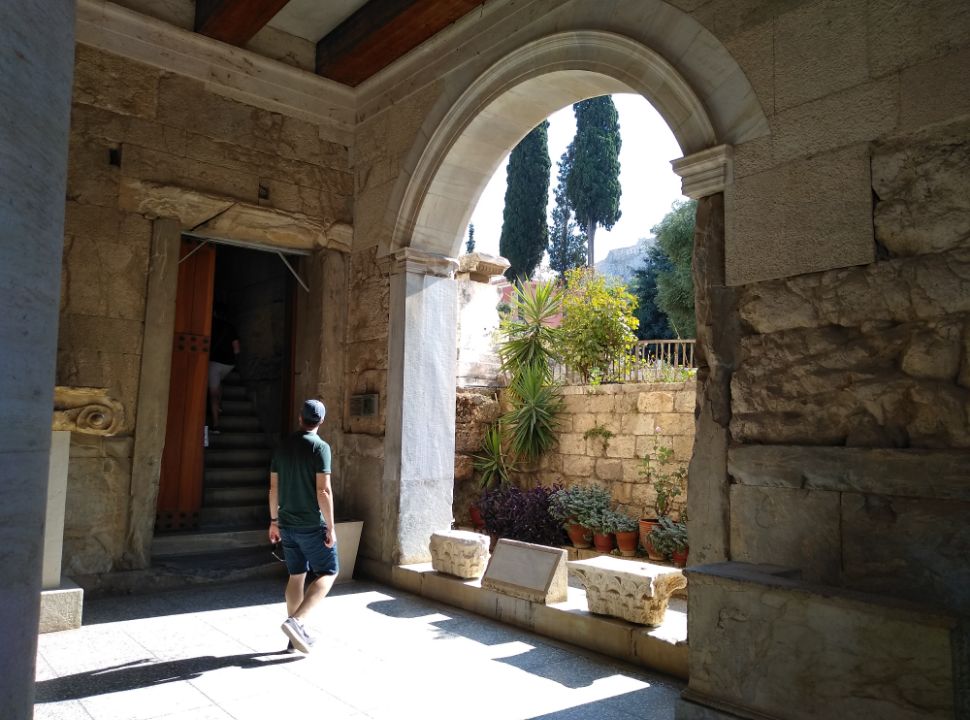
Between 1953 and 1956, the American School of Classical Studies undertook the restoration of the Stoa of Attalos, a project guided by the studies of Greek architect Ioannis Traulos.

This was made possible by the generous donation of John D. Rockefeller Jr.
Today, the Stoa of Attalos serves as the Ancient Agora of Athens Museum, showcasing the archaeological treasures unearthed during excavations.
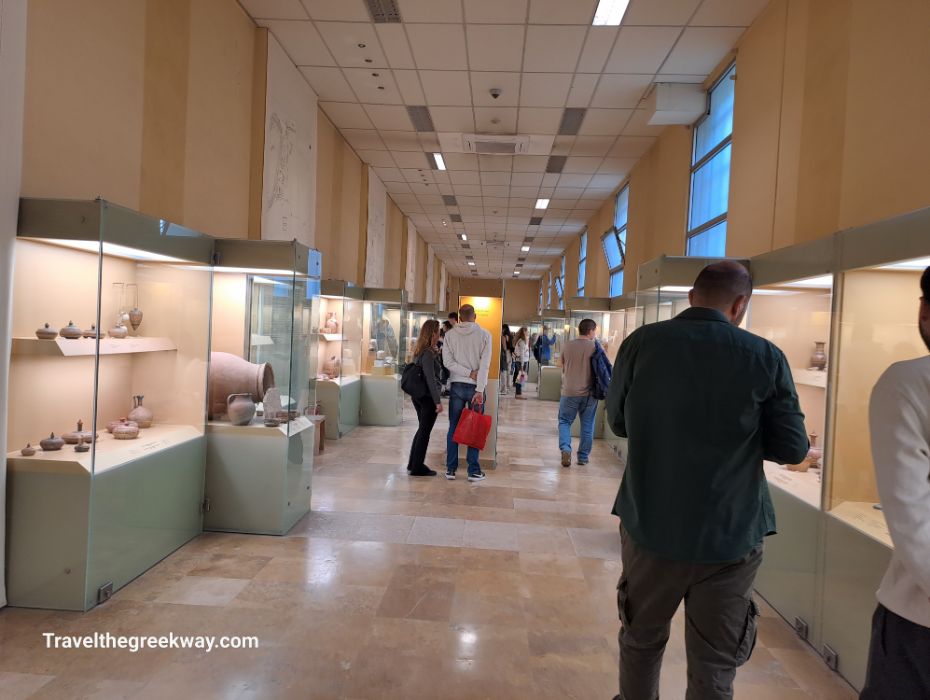
Exhibits in the museum include important remains of the Bronze and Iron Age burials from the earlier periods, and objects from Hellenistic, Roman, and Byzantine times representing the post-classical Agora.
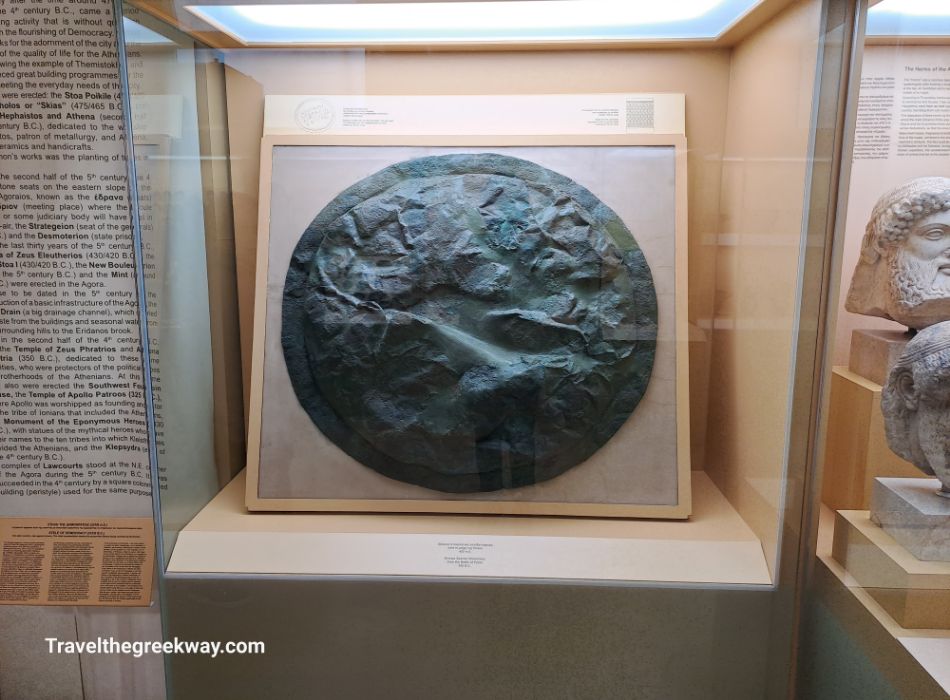
Two of its most important exhibits are the statue of Apollo Patroos (4th century BCE), a Spartan shield, and the column with the famous resolution against Tyranny (337-6 BCE).
Other Important Monuments in Agora
The above-mentioned monuments might be the most prominent, but you have to walk around the area to discover all the hidden treasures of the Ancient Agora of Athens. Keep an eye out for those:
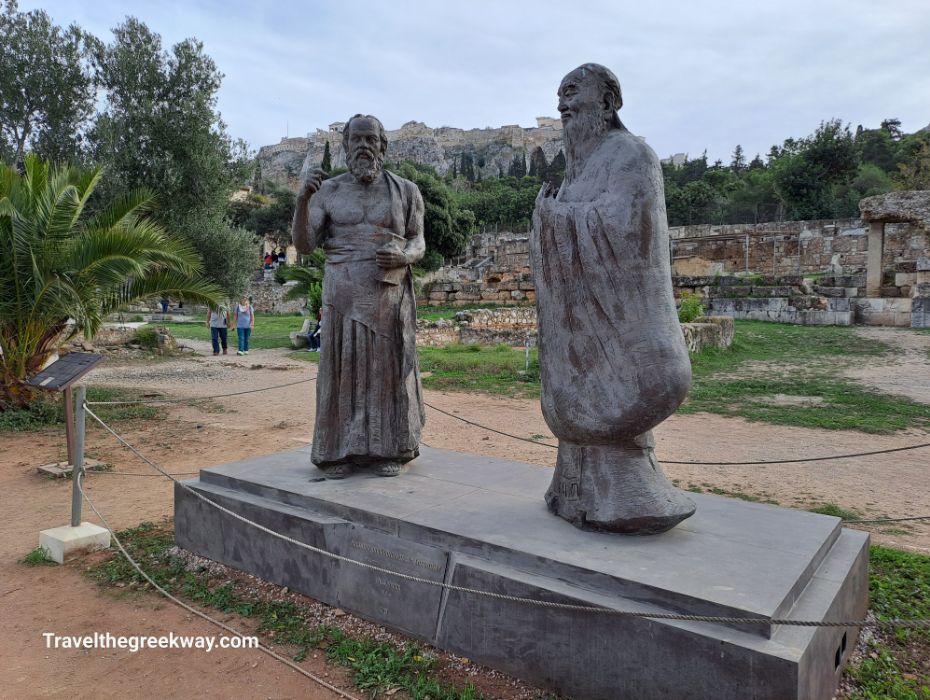
- A new statue of Socrates and Komfoukios discussing philosophy
- The surviving torso of a statue of the Roman Emperor Hadrian (117-138 CE)
- The fence that surrounded the Monument of the Eponymous Heroes (circa 330 BCE)
- The Klepsydra (water clock) was used to time speeches.
- The Altar of the Twelve Gods.
- Near the Klepsydra, you will see the Dekasterion or Courthouse.
- The Altar of Zeus Agoraios (4th c. BCE).
- The Southwest Fountain House.
- Nomismatokopio (where the coins were cut).
- Monument of the Eponymous Heroes (c. 330 BCE), a marble pedestal approximately 16 meters long. It contained the bronze statues of the mythical heroes of each of the ten tribes of Athens: Akámas, Aigéas, Aías, Antíochos, Kékropas, Erechthéfs, Ippothóontas, Leós, Oinéas, and Pandíon.
- Metroon.
- Public Baths.
- Agrippas Odeon.
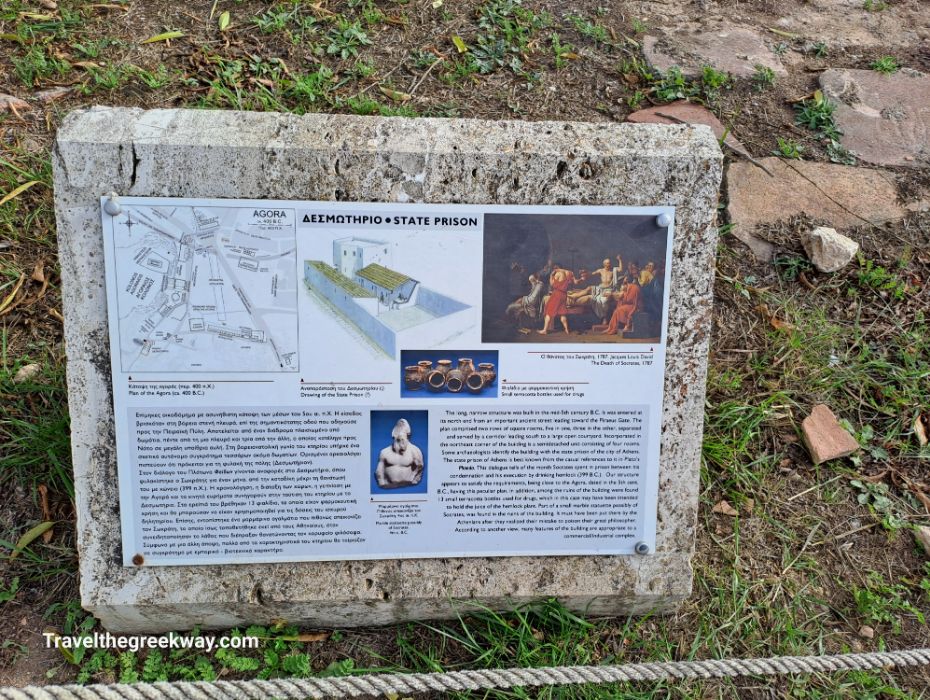
- State Prison.
FAQs for the Ancient Agora
When is the Ancient Agora open, and how much are tickets?
Summer Opening Hours are 8:00-19.30 and winter 8:00-17.00.
The general entrance fee to the Ancient Agora is €20 per adult. If you’re 25 or under from the EU, entry is free. Visitors under 18 from anywhere in the world also get in free. Just remember to bring a valid ID to prove your age.
Free Entrance: From November to March, admission is free on the first Sunday of the month and on the dates March 6th, April 18th, May 18th, the last weekend of September, and October 28th.
How much are tickets to the other archaeological sites in Athens?
The general ticket for the other sites is:
Acropolis Hill and Slopes (€30)
Roman Agora (€10)
Kerameikos (€10)
Hadrian’s Library (€10)
The Lyceum (Lykeion) of Aristotle (€5)
Olympeio (Temple of Olympian Zeus) (€20)
This applies to all the main archaeological sites in Athens: if you’re 25 or under from the EU, entry is free. Visitors under 18 from anywhere in the world also get free entry.
Tips for Visiting the Ancient Agora of Athens
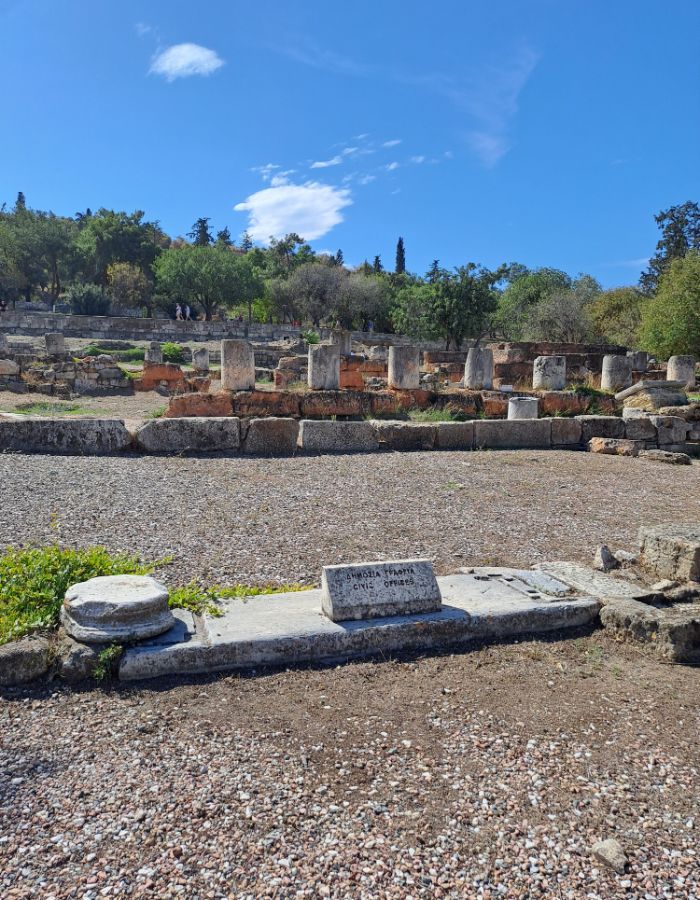
Is the Ancient Agora Accessible?
Yes, it is. There is flat access at the entrance, followed by a 15 m-long ramp going down into the Agora.
Is there a WC inside the Ancient Agora?
Yes, there is, free of charge, in Attalos Stoa.
Can I drink or eat inside the Agora?
You are not allowed to eat or drink inside the Agora; only water is allowed to be carried around. There is no café/restaurant inside the site.
How much time do you need in the Ancient Agora?
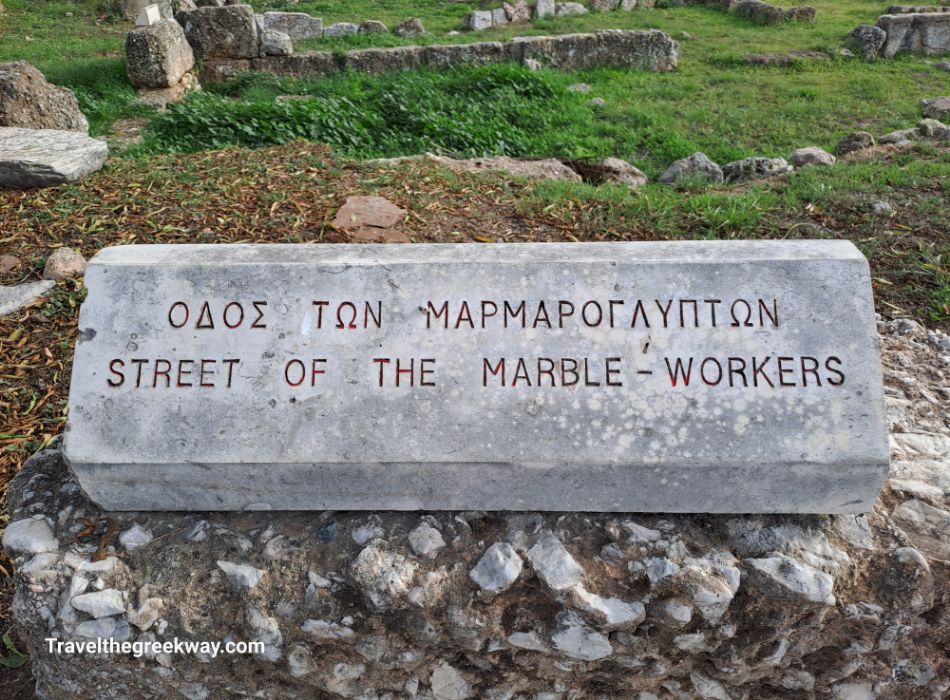
If you’re visiting the Ancient Agora on your own, plan to spend at least an hour there — though how long you stay really depends on your pace.
With its trees and benches, the Agora feels surprisingly calm, and it’s easy to forget you’re right in the middle of busy Athens.
Which guided tours in Athens are worth booking?
I highly recommend you book a Guided Tour of the Acropolis of Athens, Ancient Agora, and Agora Museum (4 hours) with a local licensed guide (from the Greek Ministry of Culture). It will bring to life how Athens of the 5th century BC was.
If you would like to enjoy a full-day, private guide to all Athens Highlights (8 hours) then this tour is highly recommended with a Badge of Excellence from Viator.
Where to Stay near Ancient Agora
If you’d like to stay close to the Ancient Agora, the Thissio neighborhood is a fantastic choice — here are my top hotel recommendations in the area:
1. The Stone Manor, Noho boutique Thissio
2. Greece U Around Athens Thissio Suites
3. Nileos House.
How to Get to Ancient Agora
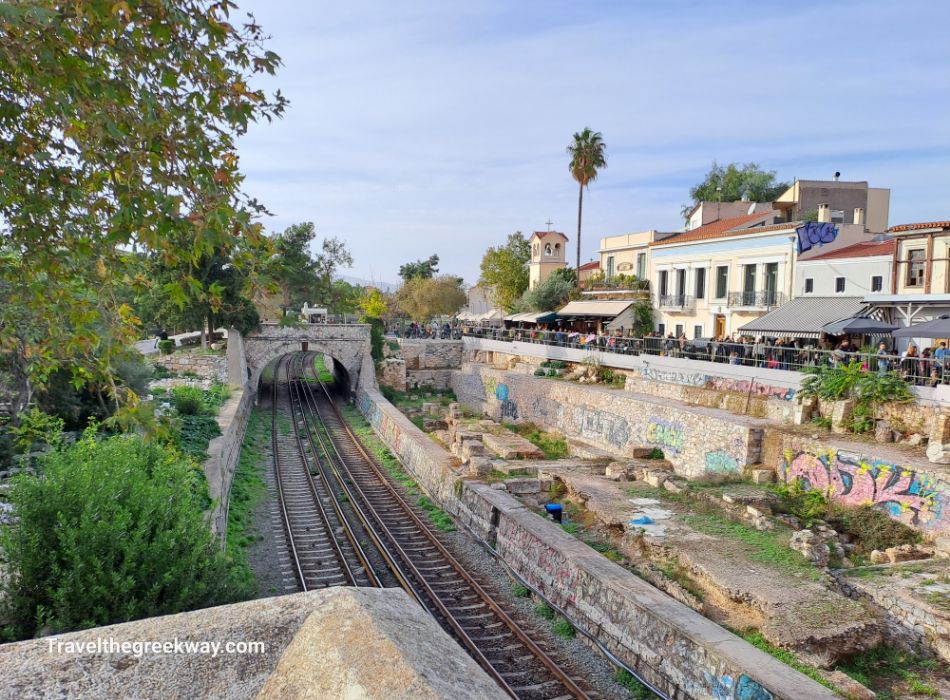
The Ancient Agora is conveniently located between two metro stations — just a 5-minute walk from either Monastiraki or Thision, along the pedestrian Adrianou Street (no. 24).
Many visitors reach it by walking downhill from the Acropolis, which takes about 15 minutes on foot. On the way, you can also stop by the Roman Agora.
Here is a detailed YouTube video on how to get from the Acropolis to the Ancient Agora.
Where else in Greece can you find ancient Agoras?
Roman Agora in Athens, very close to the Ancient Agora in the Plaka area
Roman Agora of Thessaloniki, located on the upper side of Aristotelous Square
Ancient Agora of Kos island
Ancient Agora of Thasos Island
Ancient Agora of Corfu Island
Ancient Agora of Megalopolis
Ancient Agora of Argos
What else to visit near the Ancient Agora of Athens
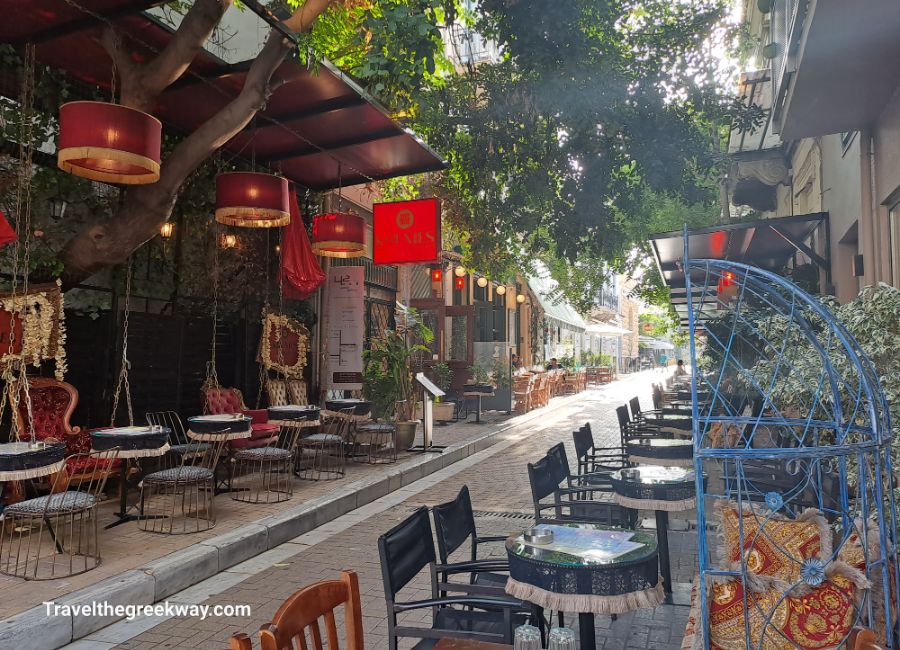
On the parallel street, you will find Ifaistou St, which is flanked by many shops, selling all kinds of clothes, shoes, and things.
Go to the Psiri area, which is hardly 10 minutes away, and choose one of its taverns for less tourist food.
Join Our FB Group & Subscribe to My YouTube Channel!
For more Greece travel tips and ideas for your next trip, join my free Facebook Group or follow me on YouTube for more videos from around Greece.
Happy and safe travels,
Evgenia
Discover Greece
- The Ultimate Athens Travel Guide
- Best Things to Do in the Peloponnese Greece
- Greek Island Hopping Guide
- Greece Packing List
Essential Travel Info for Greece
- ‘Hello’ and ‘Thank You’ in Greek: “Ya sou” and “Efharisto”
- Booking.com: I use Booking.com mostly for Europe.
- All-Inclusive Resorts in Greece
- Rent an Affordable Car in Greece
- Athens Metro Website (timetables and ticket info)
- Trains (Hellenic Train)
- Public Buses KTEL
- Get Your Guide: For all your day or multi-day tours and city guide needs, I use Get Your Guide
- Emergency Numbers Anywhere in Greece: AMBULANCE 166 – FIRE 199 – POLICE 100– EMERGENCY NUMBER 112

Great help. We’re doing a school project on recreating the agora, and we found almost everything we needed to know at this site. Thanks for the details.
I am very glad you found my post on Ancient Agora useful! I wish you the best of success with your school project 🙂
Evgenia