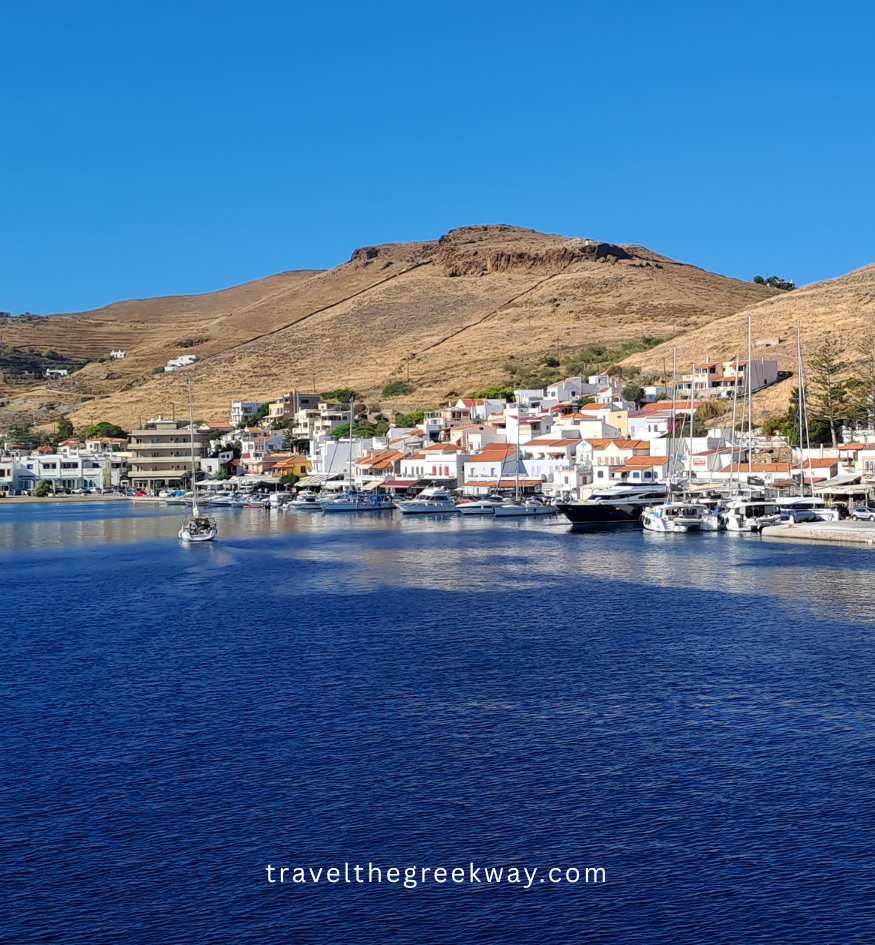
Is Kea worth visiting? Absolutely. If you are looking for a Greek escape that feels worlds away from the crowds of Mykonos or Santorini, welcome to Kea (Tzia).
This island swaps neon lights for rugged stone architecture, ancient oak forests, and a network of prehistoric footpaths that are a hiker’s dream.
As a Greek local who has trekked these trails, I’ve put together this guide to help you discover the authentic charm and deep history of this Athenian favorite.
This post includes links that may be affiliate links. If you choose to make a purchase through them, I may earn a small commission at no extra cost to you. Please see my disclaimer/privacy policy for more information.
Why Kea is the Perfect Alternative to Crowded Greek Islands
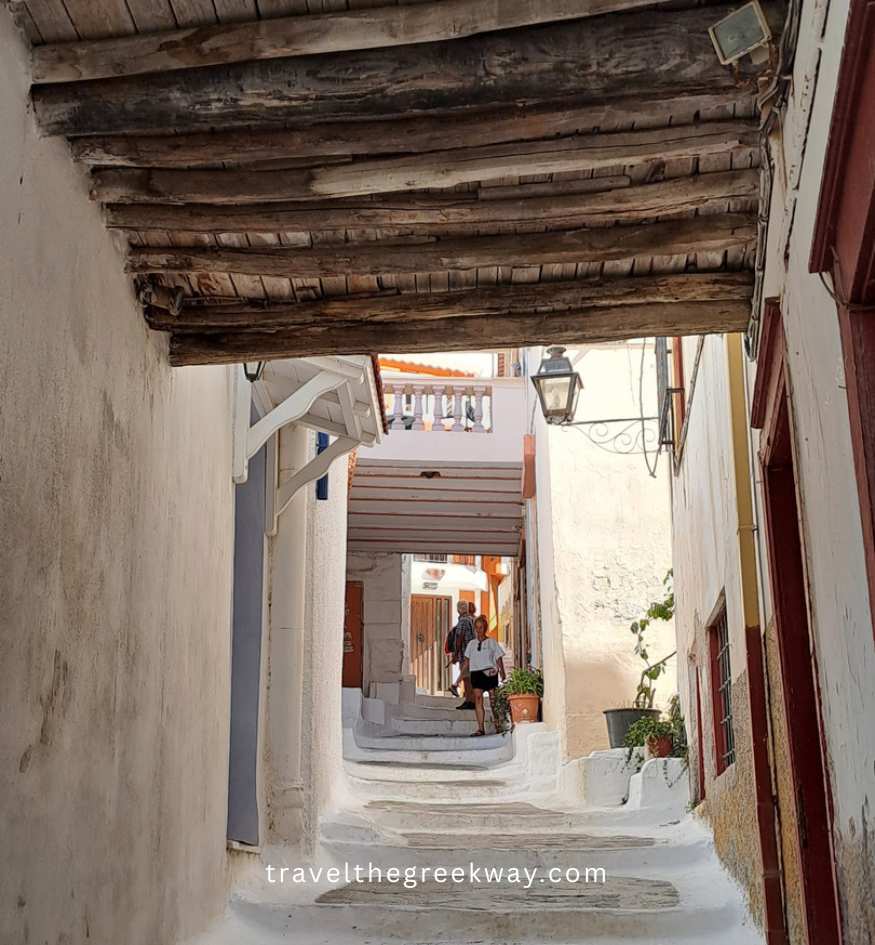
Unlike the typical whitewashed “sugar-cube” villages of the southern Cyclades, Kea’s architecture features earthy stone, red-tiled roofs, and the characteristic stegadia—traditional covered stone galleries that shade the narrow alleys of Ioulida.
Located only ~60 km (~37 miles / ~196,850 ft) from Athens, Kea is the northernmost gateway to the Cyclades and just a 1-hour ferry ride from the port of Lavrio.
From Neolithic settlements to world-famous shipwrecks like the HMHS Britannic (the Titanic’s sister ship), here are 9 reasons Kea belongs on your itinerary.
Best Things to Do in Kea

1. Explore Ioulida, Kea’s Hilltop Capital
If you want to see the heart of the island, you have to head to Ioulida (or Ioulis). It’s built like an amphitheater across three hills, and since it’s tucked away from the coast, it was the perfect hideout from pirates back in the day.
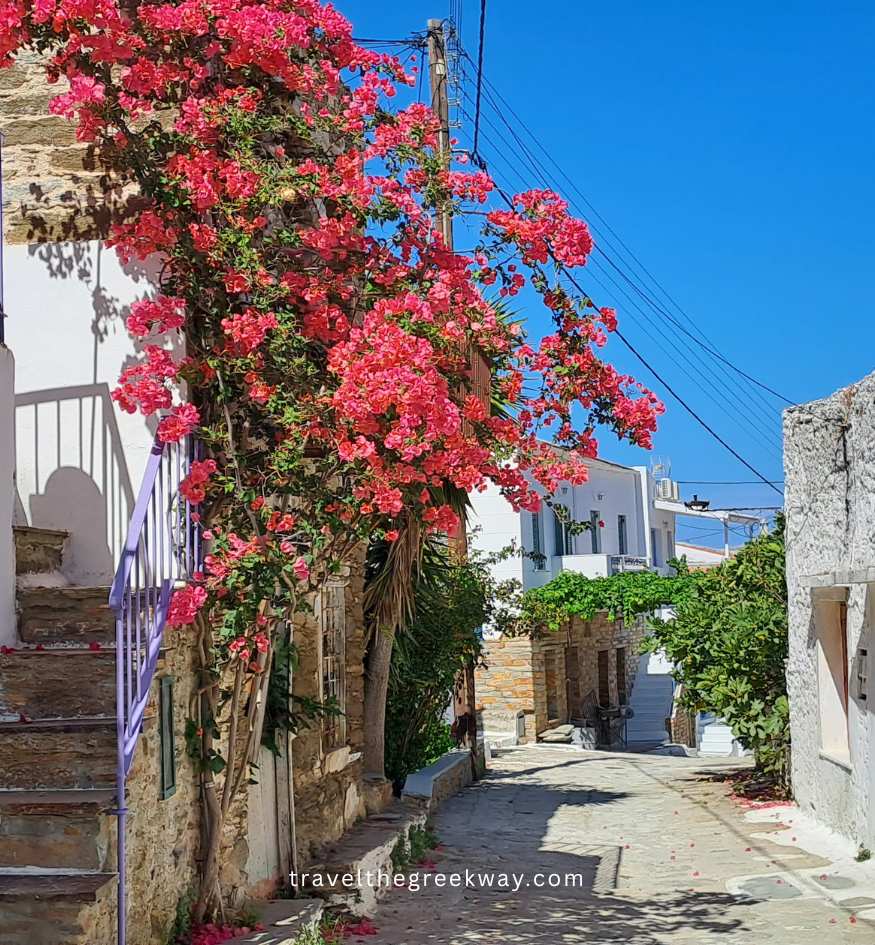
In Ioulida, instead of the typical Cycladic white boxes, you’ll see colorful homes with earthy tones and red-tiled roofs.
The whole town is a maze of winding, stone-paved alleys lined with massive bougainvillea. And since the streets are way too narrow for cars, it’s strictly for humans and donkeys—making it incredibly peaceful to walk through.
The town is split into four cool neighborhoods:
- Kastro: The historic center where you’ll find the remains of a Venetian castle from 1210.
- Katichori: This is the commercial hub. It’s where I go to hit up the small shops for local pastries and souvenirs.
- Messada and Panochori: These are the higher, quieter parts of town filled with traditional homes and even tighter alleys.
My Insider Tips:
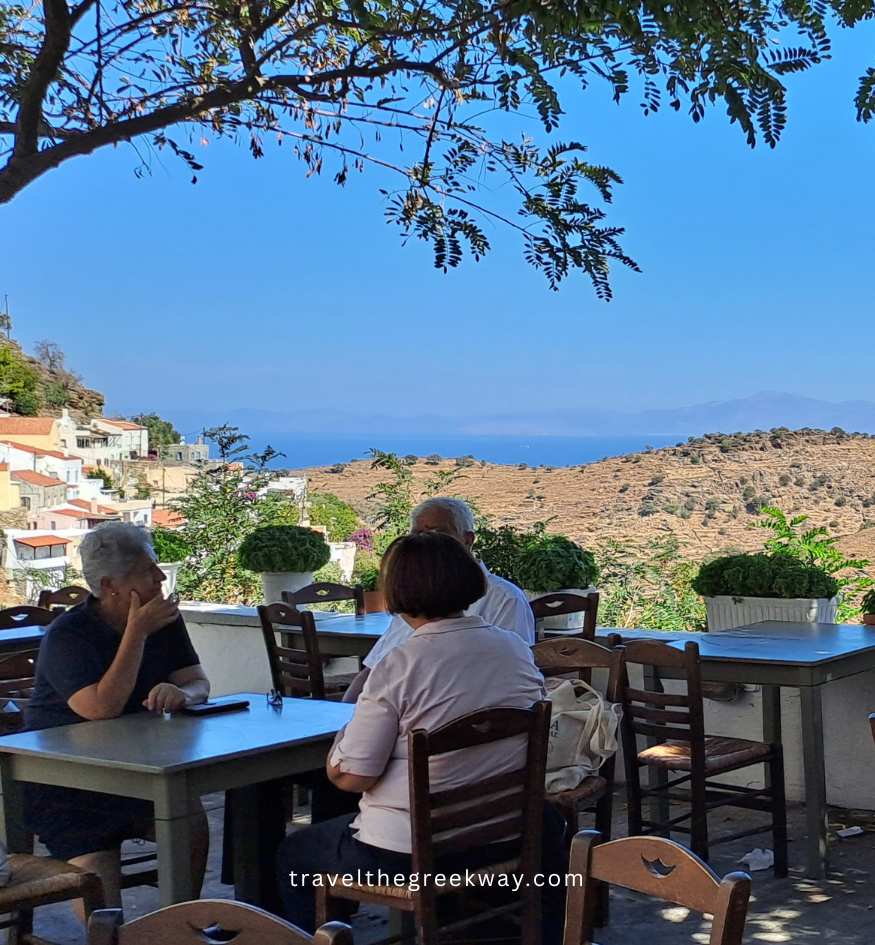
- Take a Break: Head to the main square and find a spot under the massive trees. The neoclassical Town Hall there is stunning—it was designed by the famous architect Ernst Ziller.
- Eat Like a Local: Grab a table at Kalofagadon in the square. Their traditional meat dishes are legendary.
- The Museum: Right at the town entrance is the Archaeological Museum of Kea. It’s small but impressive, housing finds from the island’s four ancient cities.
- Hours: Open Wednesday–Monday, 8:30 am – 3:30 pm. It’s usually closed on Tuesdays, so plan accordingly!
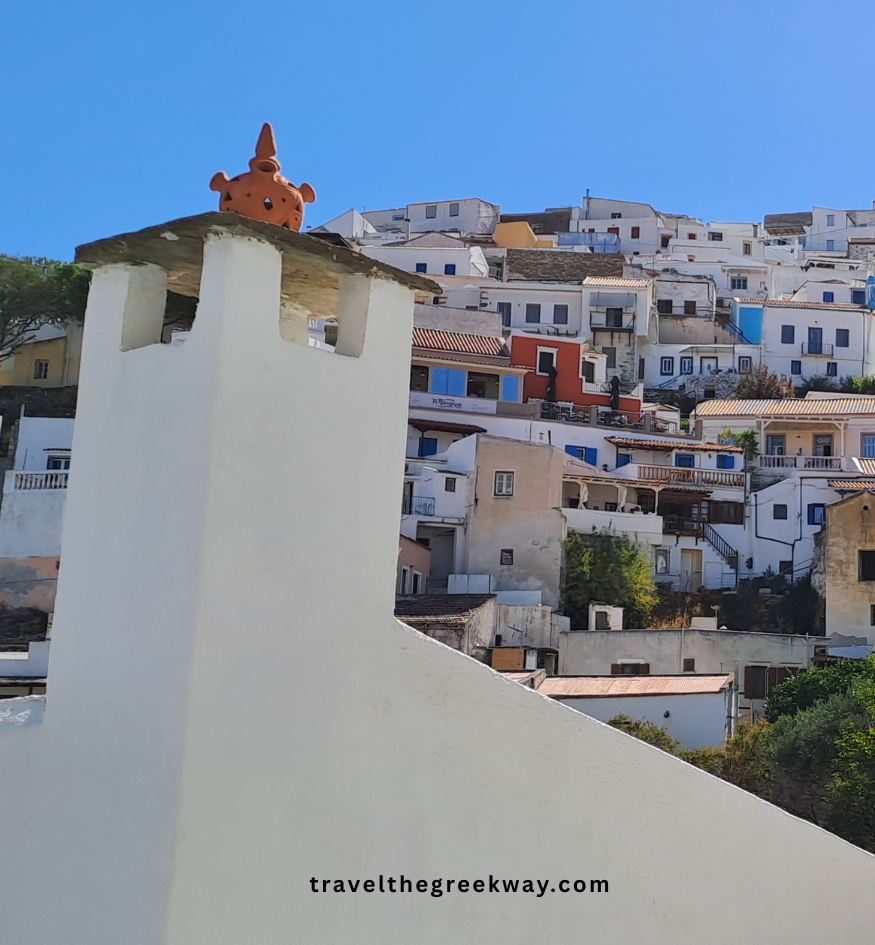
This car-free environment is a rare find in the Cyclades and adds to the town’s authentic charm. In fact, if you love the quiet, donkey-led pace of Hydra Island, you’ll find Ioulida offers that same serene atmosphere but with a unique hilltop Cycladic twist.
If you’re looking for a beautiful place to stay right in the heart of town, check out Villa Calliope Kea. It’s a beautifully renovated traditional house with a lovely veranda and some of the best sea views in Ioulida.
Just keep in mind that, like most places in town, there are a few stairs to reach it—but the sunset from that terrace makes it totally worth the climb!
Want to see what Ioulida is really like? In my walking video below, I explore its car-free streets, climb plenty of steps, wander through the traditional neighborhoods, and walk from Ioulida to the ancient Lion of Kea.
2. Walk to Kea’s Landmark: the Ancient Lion (Liontas)
Just a short trek from the edge of Ioulida lies the island’s most famous resident: the Lion of Kea.
Locally known as “Liontas,” this massive 20-foot-long monument was carved directly into the native slate bedrock sometime in the 6th century BCE.
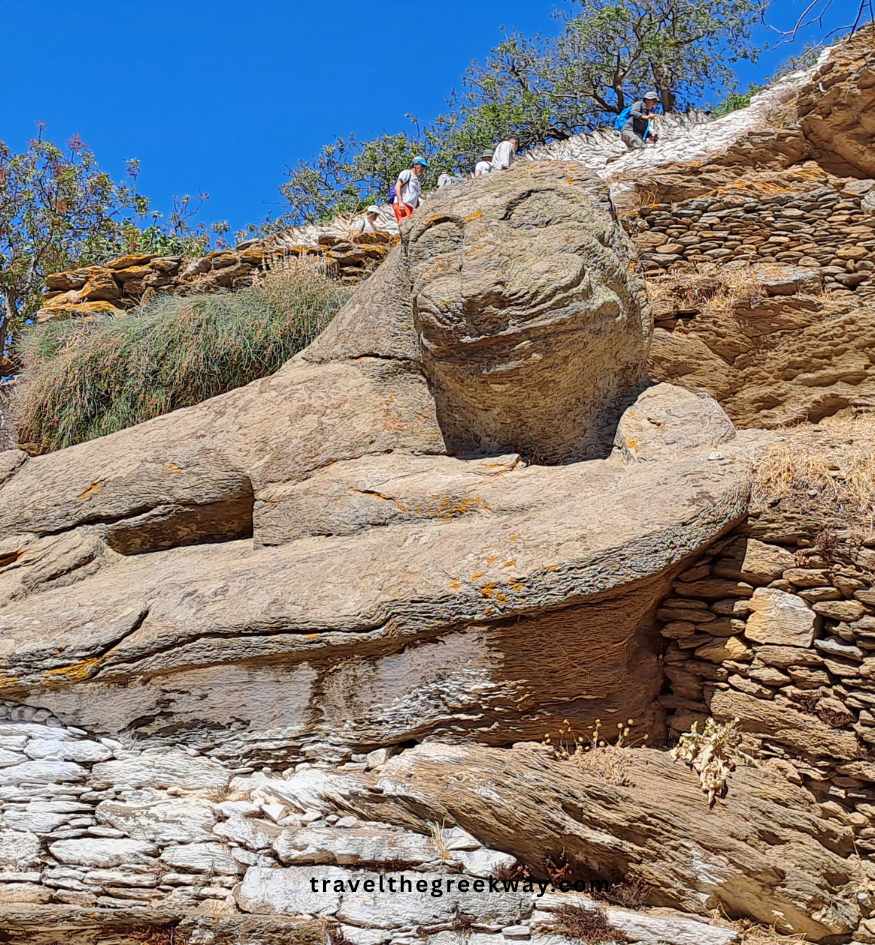
What makes this guy so special? It’s the “Archaic Smile.” Despite being thousands of years old, the lion has this enigmatic, almost “Cheshire Cat” grin that has puzzled historians for ages.

According to local legend, the island was once home to water nymphs whose beauty made the gods jealous.
To scare them away, the gods sent a lion to ravage the island. The nymphs fled, but a priest prayed to Zeus for help. Zeus sent a different lion to protect the people, and the islanders carved this statue to ensure the nymphs (and the gods’ wrath) never returned.

The Walk: The trail starts right at the edge of Ioulida (follow the wooden signs for “Αρχαίος Λέων”). It’s a super easy, scenic walk that takes you past a small cemetery and through some beautiful stone-paved alleys.
- Distance: ~1 km (~0.6 miles / ~3,280 ft)
- Time: About 15 minutes each way.
- You need to walk down some steps to get to the statue.
My Insider Tip: Try to time your walk for golden hour. Watching the sunset light up the Lion’s face while he gazes back at the town of Ioulida is one of those “magic moments” you’ll never forget.
3. Hike or Boat to Ancient Karthea (Karthaia)
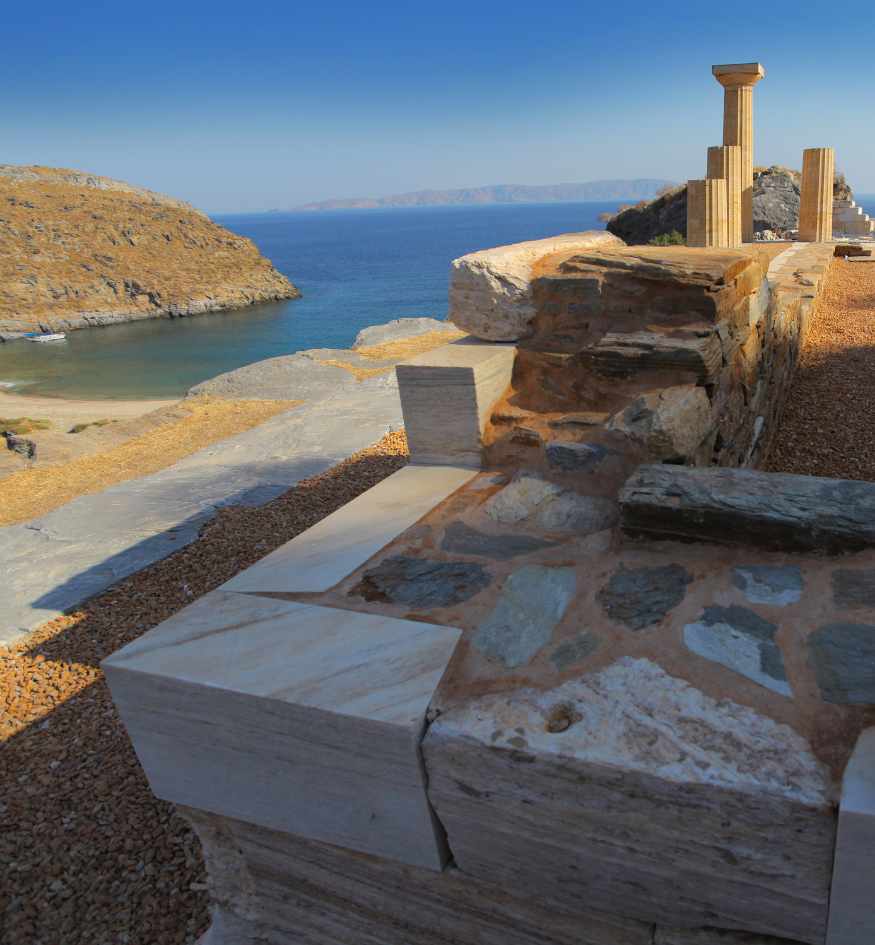
If you’re looking for the “Holy Grail” of Kea, this is it. Ancient Karthea is a remote archaeological site on the southeastern coast that you can only reach by boat or on foot.
It was one of Kea’s four original city-states back in the 6th century BCE, and because it’s so isolated, the ruins—including the Doric Temple of Athena and a stunning stone theater—feel like a private discovery.
How to get there:

- The Epic Route (Trail #3): This is a serious trek that starts in Ioulida. It’s about ~12 km (~7.5 miles / ~39,370 ft) and takes you across the spine of the island. It’s beautiful but demanding—I’d recommend a guide if you aren’t an experienced hiker.
- The “Short” Cut (Trail #6): This is the way I usually go. Drive to the village of Chavouna and take the trail from there. It’s about ~3 km (~1.8 miles / ~9,842 ft) each way. It’s an easy downhill walk to the ruins (about 45–50 minutes), but remember: the way back is all uphill!
My Insider Tips:
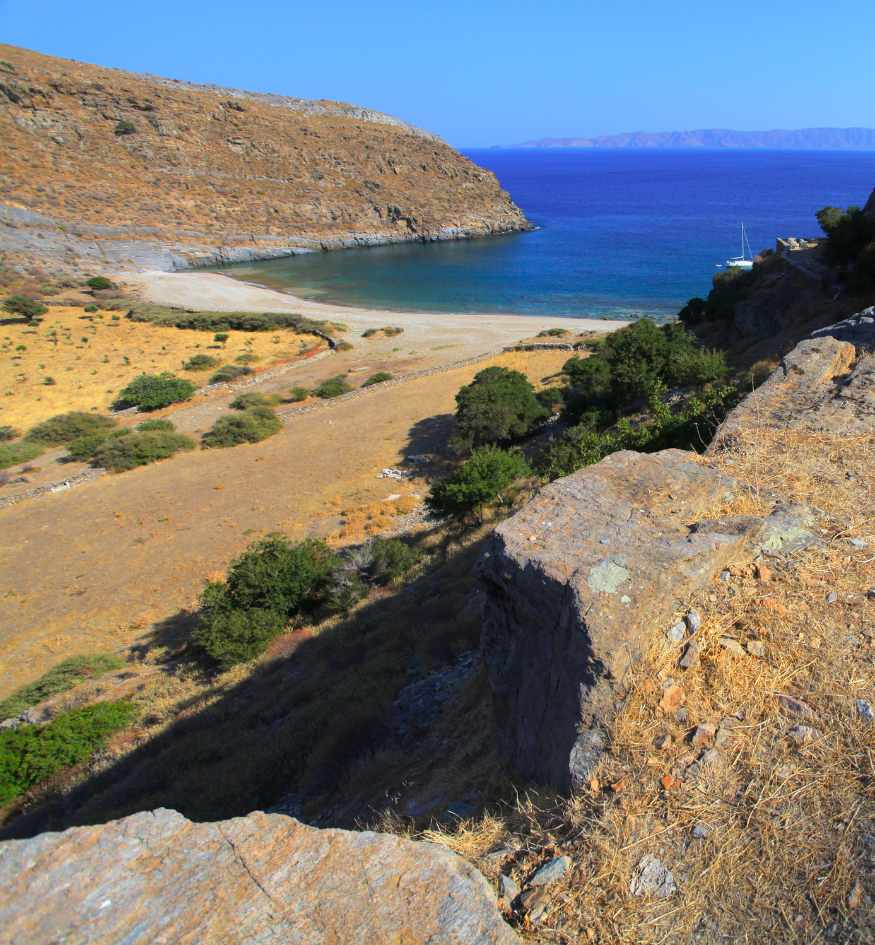
- The Beach: The site sits right above Poles Bay. After exploring the temples, head down to the water for a swim. It’s one of the quietest, crystal-clear spots on the island.
- Admission: As of this year, there is a 5 Euro entrance fee for the archaeological site. It’s usually open from 8:30 am to 3:30 pm, but it’s closed on Tuesdays.
- Gear Up: Even on the shorter trail, the Greek sun is no joke. Pack at least 2 liters (~0.5 gallons) of water, high-SPF sunscreen, and a good hat. Trust me, you’ll want hiking sticks for that uphill climb back to Chavouna!
4. Visit the Monastery of Panagia Kastriani
Perched on the edge of a jagged cliff in the northern part of the island, the Monastery of Panagia Kastriani is the patron saint of Kea and offers views that will honestly take your breath away.
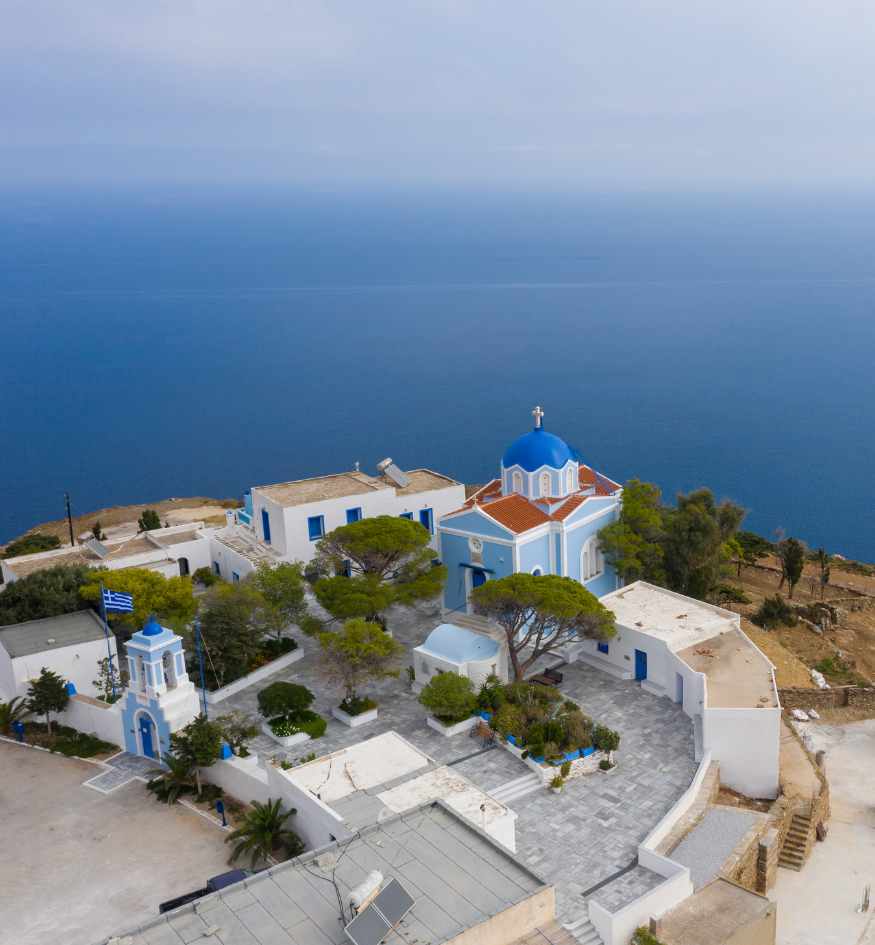
According to local tradition, shepherds found a glowing icon of the Virgin Mary buried here in 1700, and the first small chapel was built on that exact spot in 1708.
While it was quiet for a long time, the monastery was revived by a local family in the 1980s and is now a major pilgrimage site (the big celebration is on August 15th).
My Insider Tips:
- Stay the Night: If you really want to experience the peace of the island, you can actually stay in one of the 11 traditional guesthouses on the grounds. It’s a very simple, spiritual experience—and waking up to the sound of the Aegean crashing against the cliffs is unforgettable.
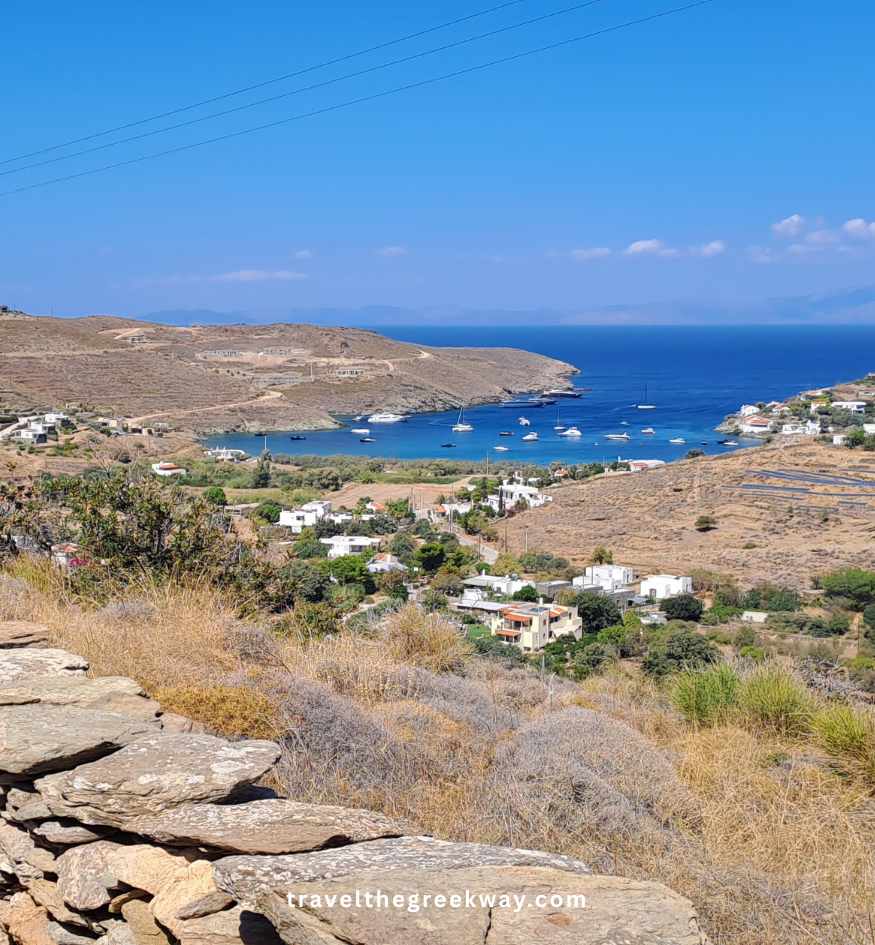
- The Drive: It’s about ~12 km (~7.5 miles / ~39,370 ft) from Ioulida. The road is paved but winding, so take your time and enjoy the view of Otzias Bay along the way.
- Contact: If you want to book a room or check their hours, you can reach them at +30 22880 24324 or +30 22880 24348.
- Pro Tip: The monastery is generally open daily from 9:00 am to 3:00 pm. It’s a sacred site, so make sure your shoulders and knees are covered when you visit!
5. Discover the Best Beaches on Kea Island
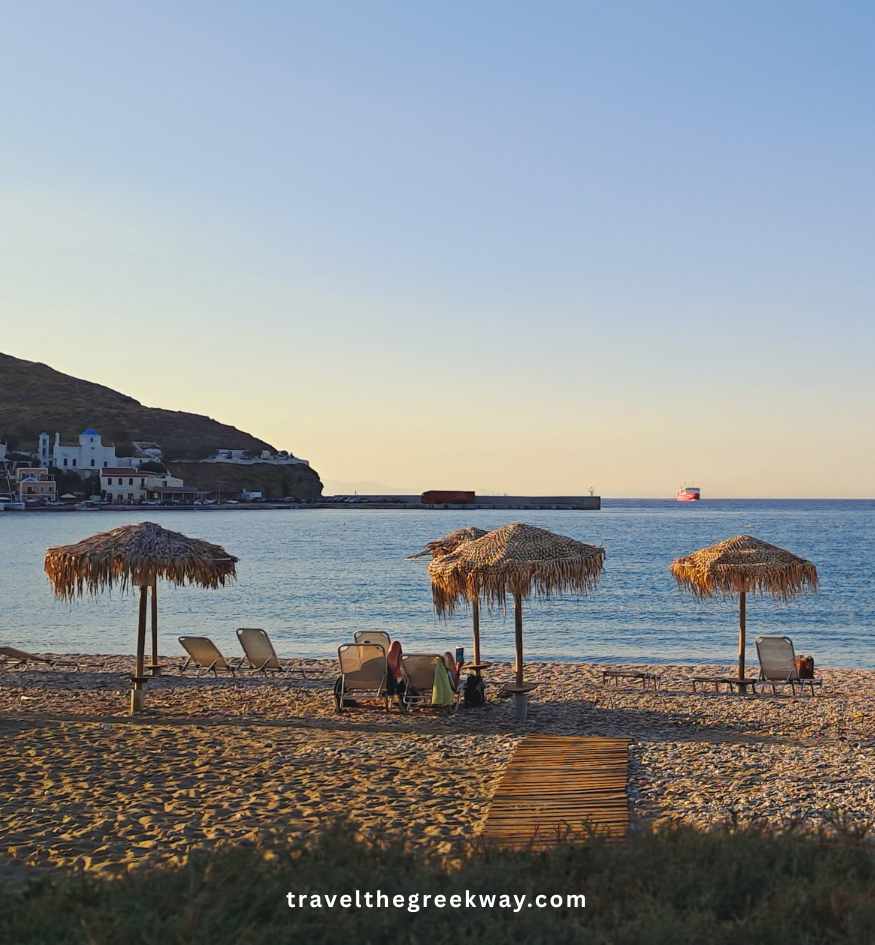
Kea is famous for its crystal-clear coves that range from deep sapphire to bright turquoise. While a few spots are “organized” (meaning you’ll find umbrellas and sunbeds), the island mostly keeps it quiet.
You won’t find many loud beach bars here—it’s more about relaxing under the shade of the tamarisk trees that line most of the shores. It is a very different experience from the lush, pine-scented beaches of Poros, but just as peaceful.
The Most Popular Spots:
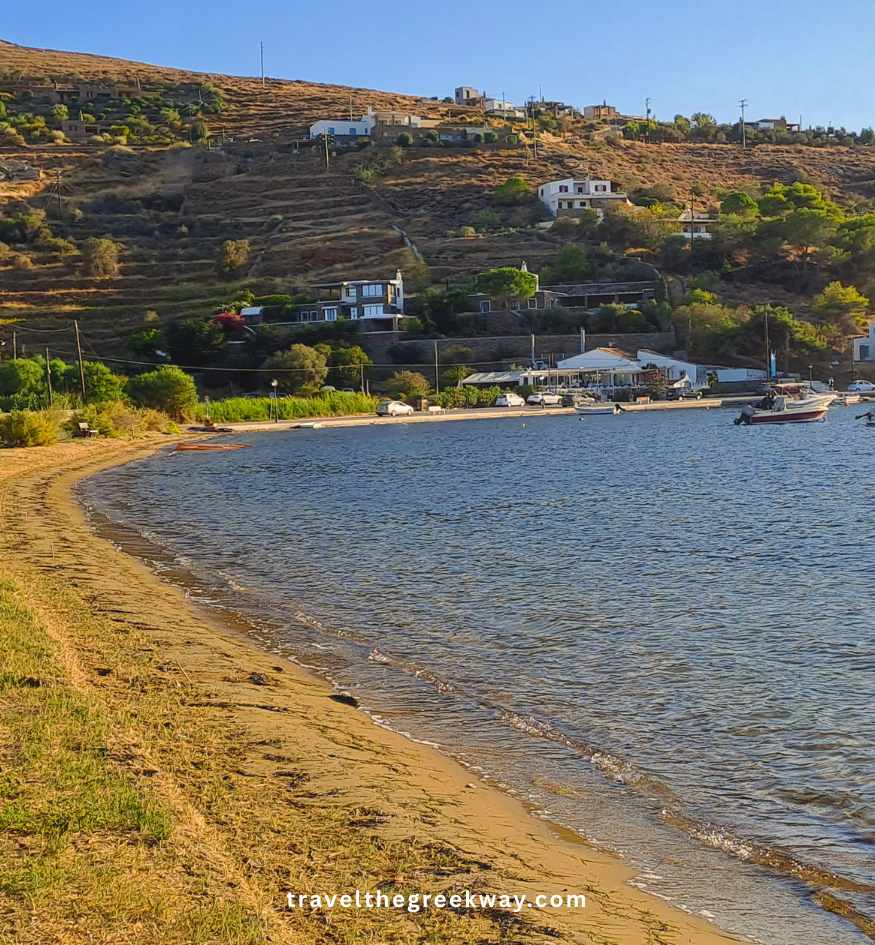
- Gialiskari Beach: If you want a bit of a “scene,” this is it. It’s the most cosmopolitan beach on the island, located just a few kilometers from the port. It’s perfect for families because the water is super calm, and there’s a great wooden-decked beach bar for a cold frappe or a cocktail.
- Koundouros: About ~18 km (~11.2 miles / ~59,055 ft) southwest of Ioulida, this is a beautiful, partly organized beach surrounded by trees and stone windmills. It’s a great place to spend the whole day since there are taverns right on the sand.
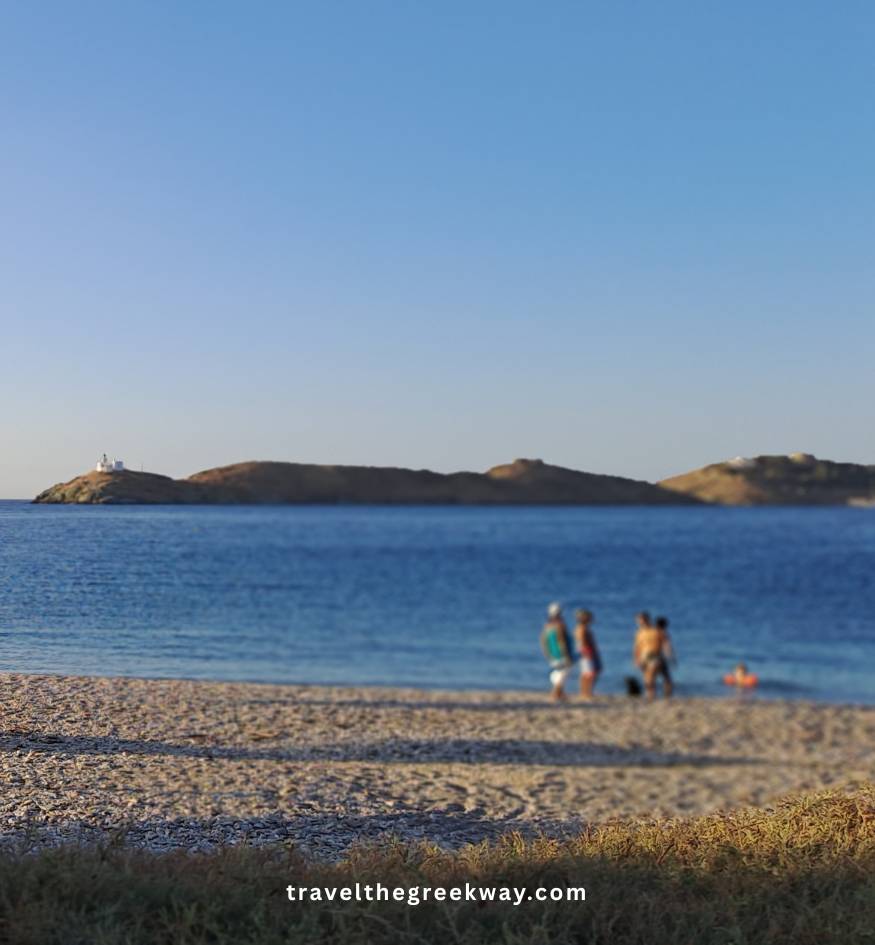
- Koundouraki: Right next door to Koundouros, this is the hub for water sports like SUP and wakeboarding.
- Pro Tip: Unless you are a highly advanced technical diver with a special permit, you won’t be visiting the wreck itself (it’s deep!), but you can still feel the history while swimming in the bay.
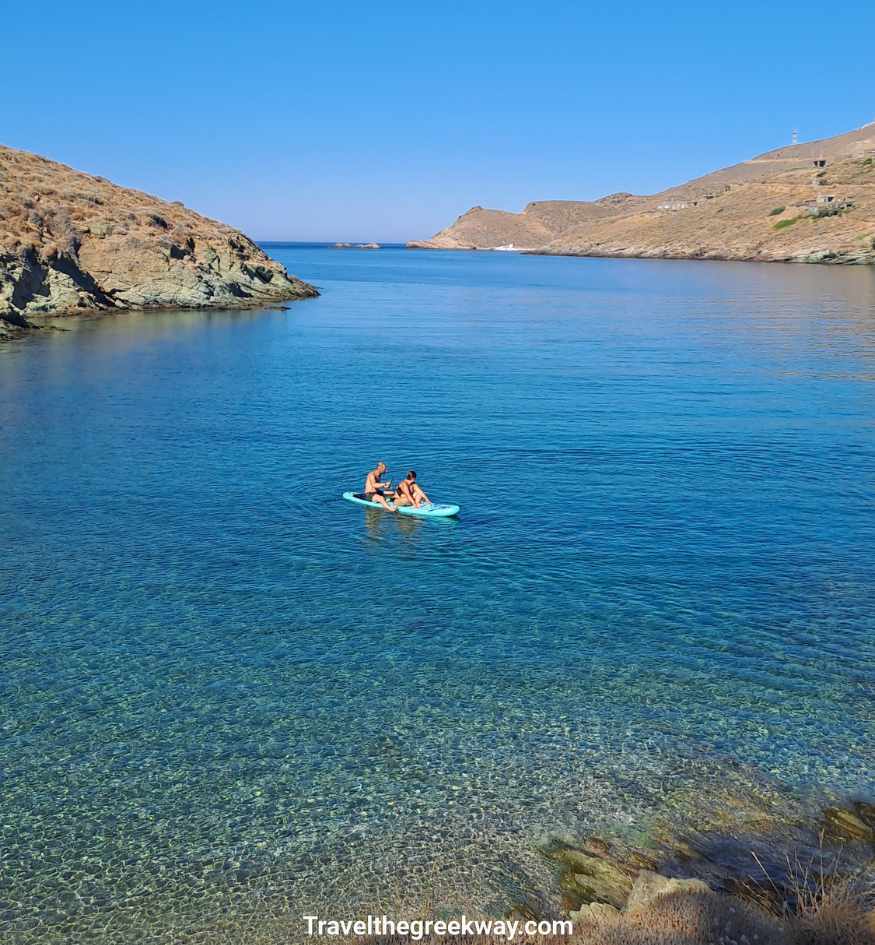
- Otzias Beach: This is the widest bay on the island, located ~11 km (~6.8 miles / ~36,089 ft) north of Ioulida. It has about ~700 meters (~0.4 miles / ~2,296 ft) of sandy shoreline and very shallow water, making it the #1 pick for families with little kids.
- Where to Eat: You have to try Otzias Kouzina. It’s right on the water and their gemista (stuffed veggies) is exactly what you want after a day in the sun.
- Where to Stay: Thinking of staying near the beach? See my Where to Stay in Kea guide for my accommodation picks in Otzias, Koundouros, and other parts of the island.
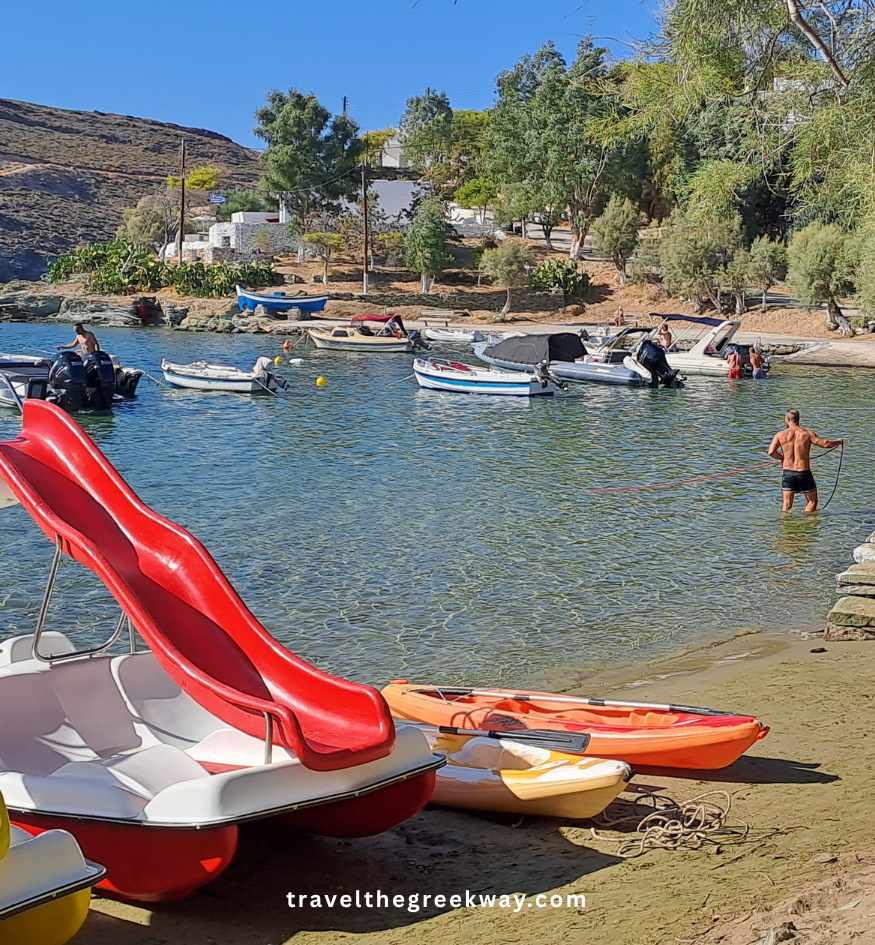
- Pisses Beach: Located ~11 km (~6.8 miles / ~36,089 ft) southwest of Ioulida, Pisses is a favorite for windsurfers when the meltemia (summer winds) kick in. It’s also home to the island’s only organized campground.
Looking for Seclusion? If you have a boat or don’t mind a rugged hike, head to Vroskopos, Kalogiros, or Kalamitsi. These are “wild” beaches—no umbrellas, no shops, just you and the Aegean.
6. Explore the Neolithic Settlements of Kea
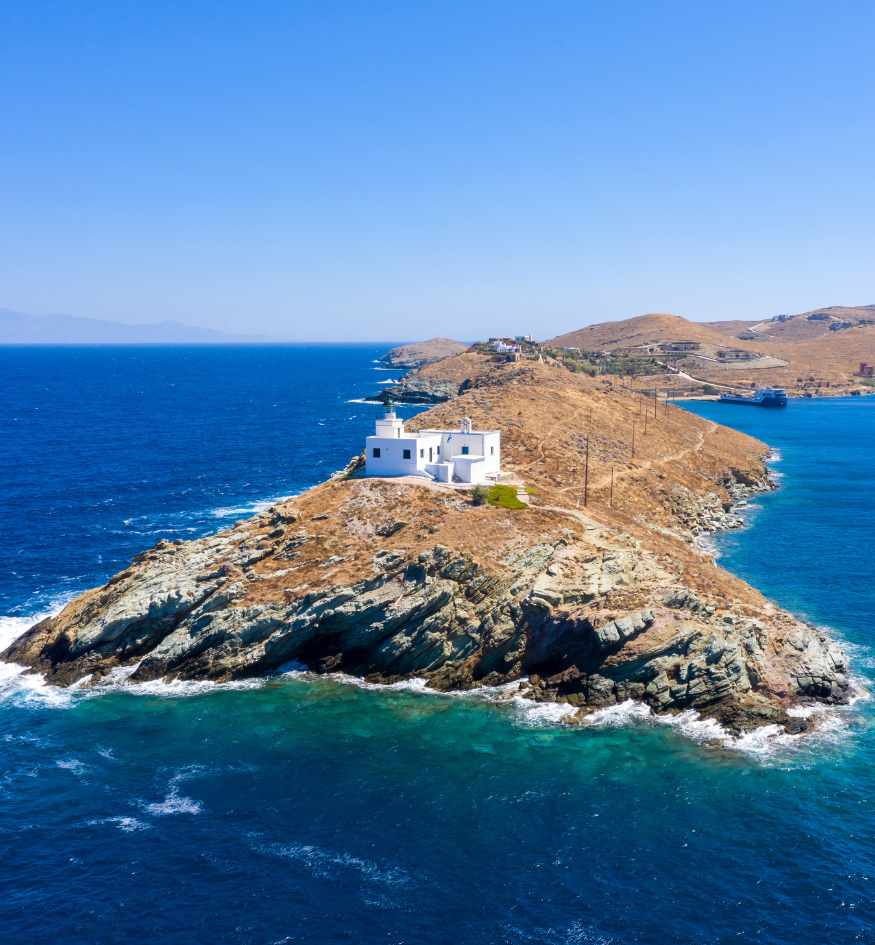
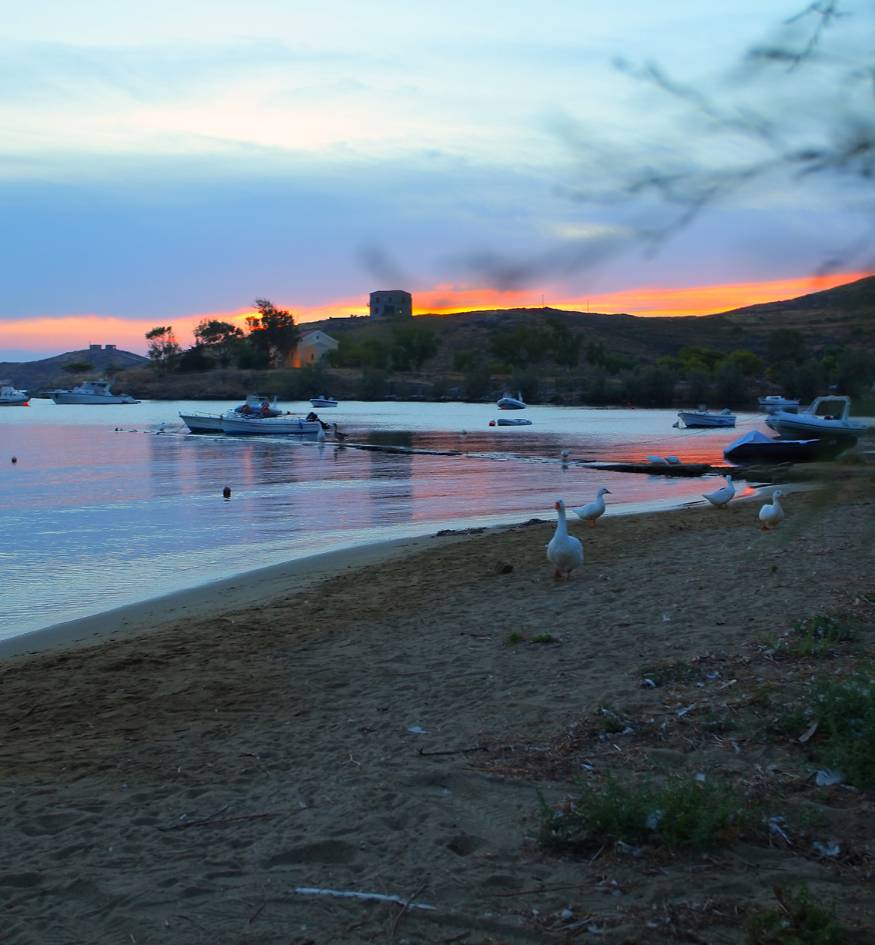
If you’re a history buff, you can’t skip the northwest coast. Kea is home to some of the most important prehistoric sites in the Aegean: Agia Irini and Akrotiri Kefalas. These settlements date back to the late Neolithic period (around 3300–3000 BCE).
At Kefala, archaeologists found the first organized cemetery in the Aegean outside of a settlement, featuring unique rectangular and circular stone tombs. Nearby, Agia Irini was a major Bronze Age hub.
While the site is currently fenced off to the public to protect the excavations, you can get a great view of the prehistoric temple and the massive fortifications just by walking along the perimeter fence near Vourkari.
My Insider Tips:
The Location: Both sites are located in the northwest, roughly ~8 km (~5 miles / ~26,247 ft) from Ioulida.
See the Artifacts: Since you can’t walk inside Agia Irini, the best way to “experience” it is at the Archaeological Museum of Kea in Ioulida. That’s where they keep the famous “Kea Ladies”—clay statues of women with bell-shaped skirts that were found at the site.
7. Go to Vourkari Village for Seafood and Yacht-Watching
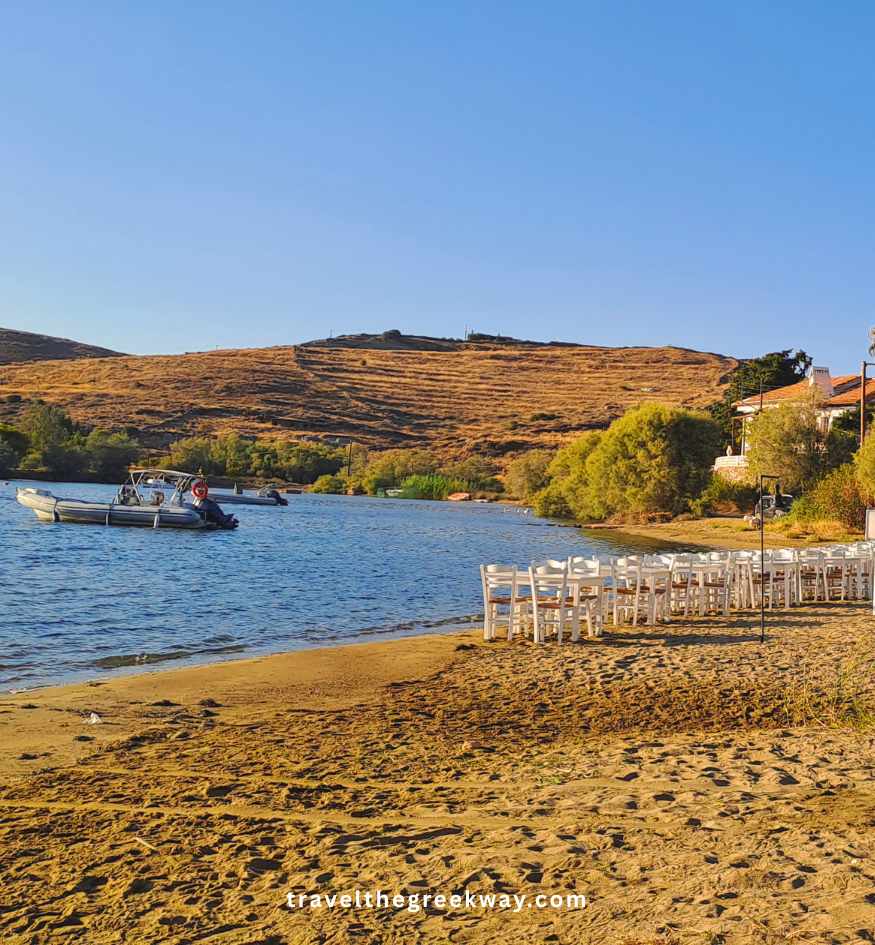
If Ioulida is the island’s heart, Vourkari is its living room. This tiny, picturesque fishing village—just ~2 km (~1.2 miles / ~6,561 ft) from the port—is the most cosmopolitan spot on the island.
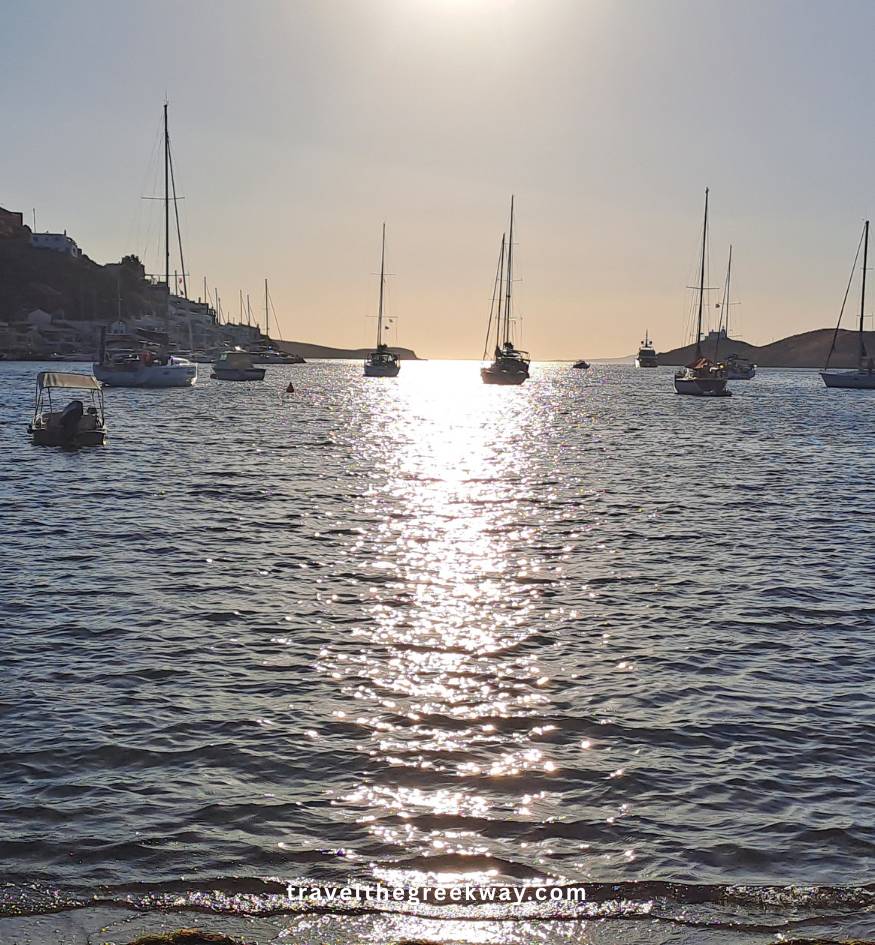
It’s where the “sailing crowd” docks their yachts, creating a super-cool, relaxed-luxury vibe.
Besides being a great place to people-watch, Vourkari is lined with a row of fantastic seafront cafes and bars.
It is officially Kea’s nightlife hotspot, but don’t expect loud clubs; think more along the lines of high-end cocktails and golden-hour playlists with a view of the sunset over the marina.
My Insider Tips:
- Fresh Catch of the Day: Head to Aristos or Strofi tou Mimi, but skip the standard menu and ask the waiter what the local fishermen brought in that morning. Whether it’s grilled sea bream, red mullet, or a perfectly seasoned scorpion fish, it’s as fresh as it gets.
- Sunset Cocktails: After dinner, grab a seat at Aegis Suites or Zeus Faber. The view of the sun dipping into the Vourkari bay from their terraces is arguably the best on the island.
- Where to Stay: For a serene stay, check out Vourkari Village. It’s a complex of 11 stone-built studios nestled on a hill about 100 meters (~328 ft) from the main road.
8. Dive into History: Shipwrecks and Sunken Planes
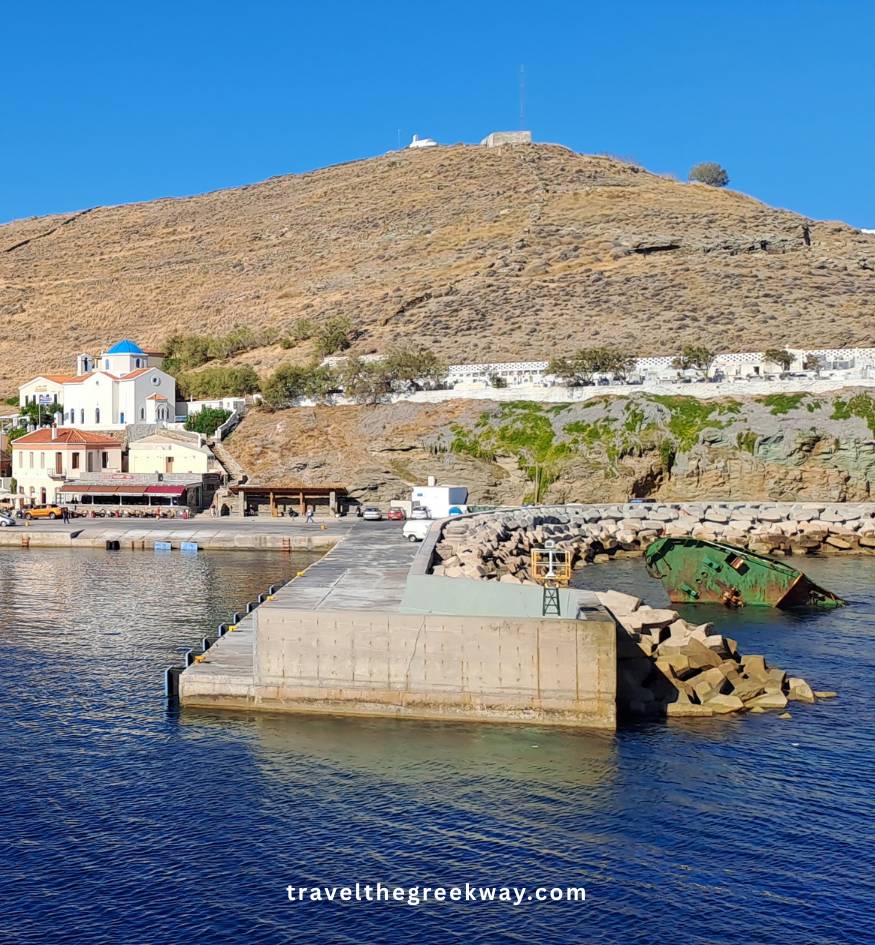
Kea is world-renowned among the diving community, often called an “underwater museum.” Because the island sits right on a major ancient and modern shipping lane, its seabed is a time capsule of maritime history.
The most famous resident is the HMHS Britannic, the Titanic’s sister ship, which sank in 1916. It’s nearly intact and sits at a depth of about ~120 meters (~0.07 miles / ~394 ft). While it’s only accessible to elite technical divers with special permits, its presence gives the island a mysterious, historical aura.
What you can explore:
- The Junker 52: This is a German World War II transport plane that was shot down and now rests on the sandy bottom. It’s remarkably well-preserved, and you can still see the three engines and the cockpit.
- S/S Burdigala: A French ocean liner that sank just a week before the Britannic. It’s a massive wreck (about 180 meters long) sitting at a depth of ~60 to ~75 meters (~197 to ~246 ft).
- The Koundouros Reefs: If you aren’t a pro technical diver, don’t worry! There are plenty of vibrant sea walls, colorful sponges, and rock formations at shallower depths (~15 to ~30 meters / ~49 to ~98 ft) that are perfect for recreational divers.
My Insider Tips:
- Kea Divers: If you want to get in the water, head to Koundouraki Beach. Kea Divers is the local authority there—they offer everything from “Discovery Dives” for beginners to guided trips for pros.
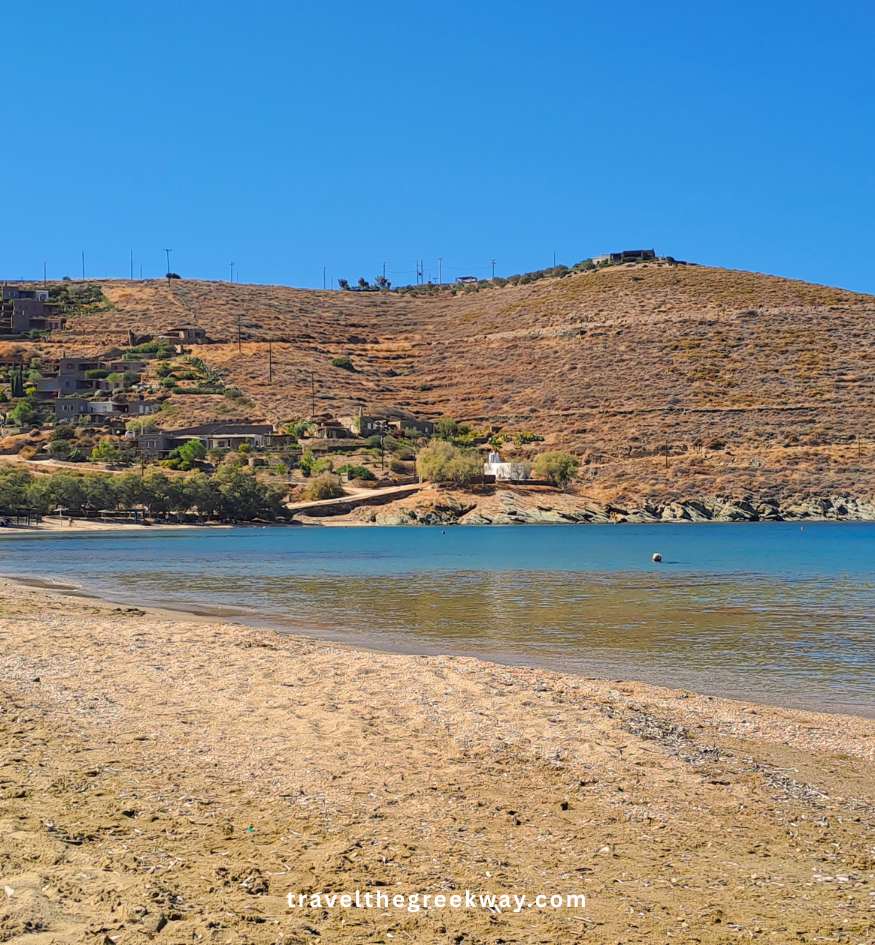
- Snorkeling: If you prefer staying on the surface, the rocky edges of Gialiskari and Koundouros offer incredibly clear visibility where you can see octopuses and schools of Mediterranean fish.
- Contact: You can reach the dive center at +30 6973 430 860 to check sea conditions before you head out.
9. A Taste of Kea: Local Recipes & Artisanal Sweets
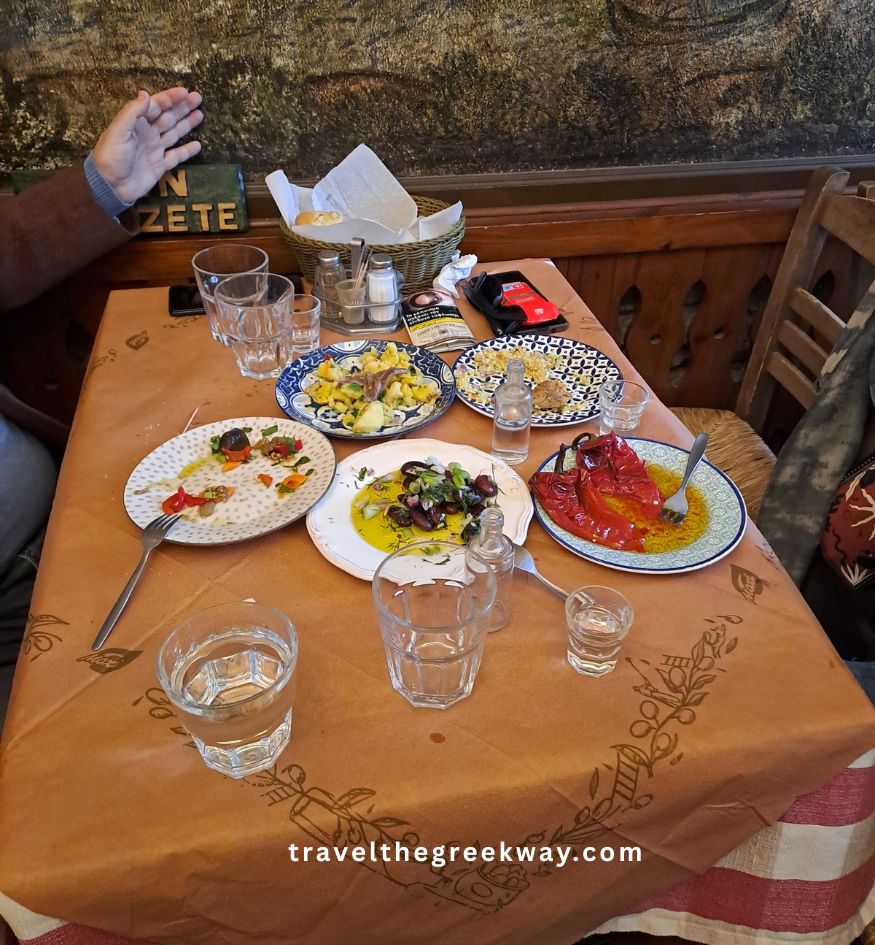
While the coast is for seafood, the heart of Kea’s gastronomy is in its hills. To truly eat like a local, you need to step away from the water and explore the traditional recipes that have sustained the islanders for generations.
Authentic Savory Flavors:
- Loza: Often called the “Prosciutto of Kea,” this is sun-dried pork marinated in red wine and local spices. It’s smoky, aromatic, and a must-try for any meat lover.
- Paspalas: This is Kea’s signature dish—a hearty scramble of slow-cooked pork, fresh tomatoes, and eggs. It’s the ultimate comfort food.
- Where to find it: Head to Kalofagadon in Ioulida’s main square. It is a legendary spot for traditional meats and local specialties.
The Sweet Side of Kea:
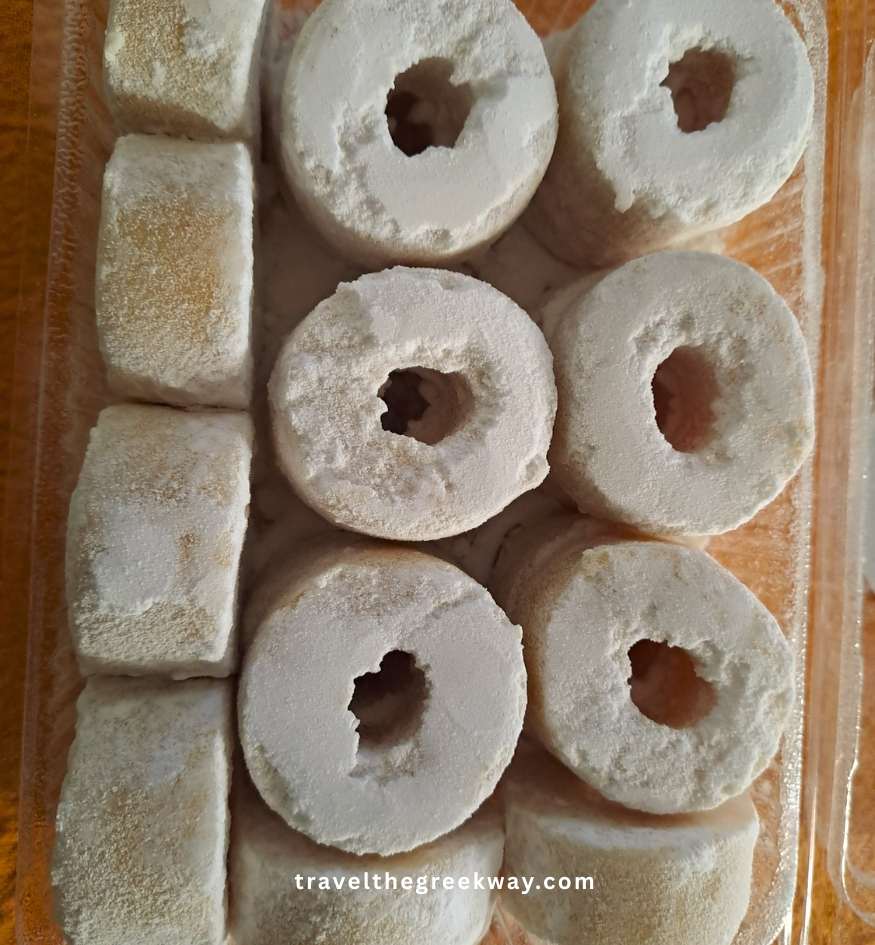
- Amygdalota: These are the island’s famous flourless almond cookies. Scented with flower water and dusted in sugar, they are naturally gluten-free and incredibly chewy. You can find the best ones at Panorama or Tsourtis Bakery in Ioulida.
- Thyme Honey: Kea has been world-renowned for its honey since ancient times. It’s thick, golden, and smells exactly like the island’s hills.
Top Dining Spots in Ioulida & Korissia:
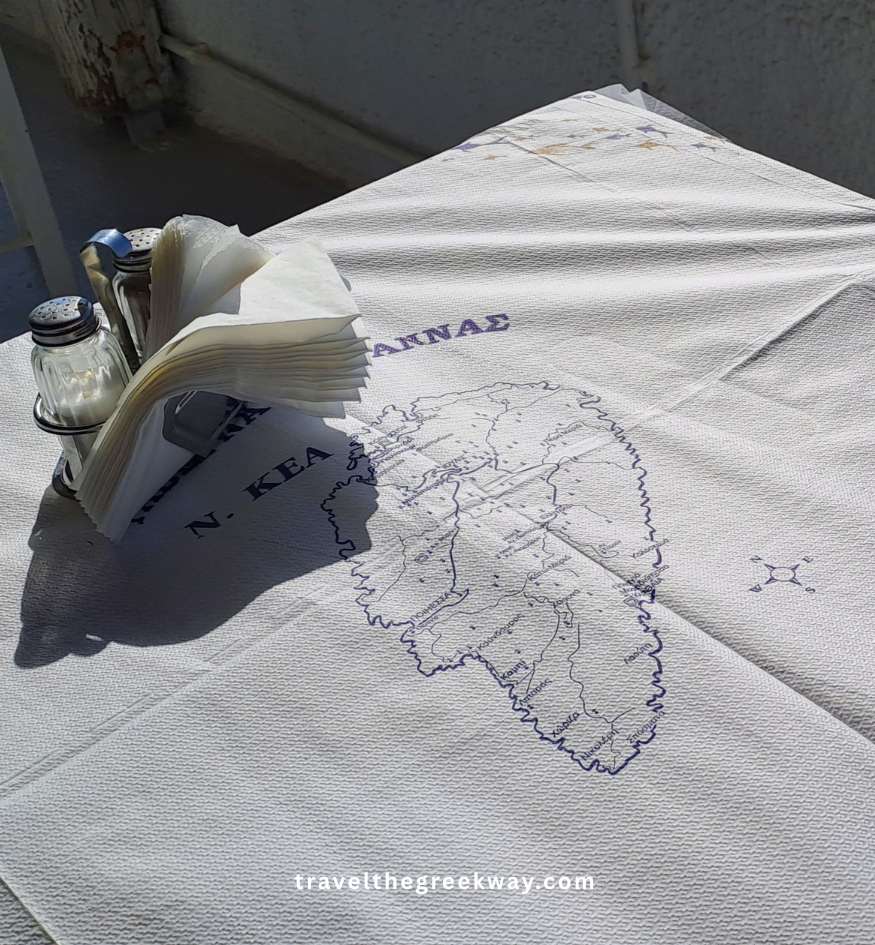
- To Steki (Ioulida): A beautiful family-run taverna tucked away from the main path. They serve amazing “mama-style” cooking—try the goat in lemon sauce or their black-eyed bean salad.
- To Steki tou Strogyli (Korissia): Located in a stunning neoclassical building near the port. It’s a bit quieter than the main strip and famous for its “pork in paper”—slow-cooked meat that just falls apart.
- Rolando’s (Korissia): A classic ouzeri at the port. It’s the perfect place for a relaxed lunch while waiting for your ferry.
The Cheese Lovers’ Stop:
Don’t leave without visiting Tyrakeion in Ioulida. This artisanal cheese shop is run by the Mykoniatis family. You must try their Xerotyri (aged hard cheese) and their unique Rice Pudding ice cream.
- Hours: Daily 8:00 am – 11:30 pm.
Where To Stay On Kea Island
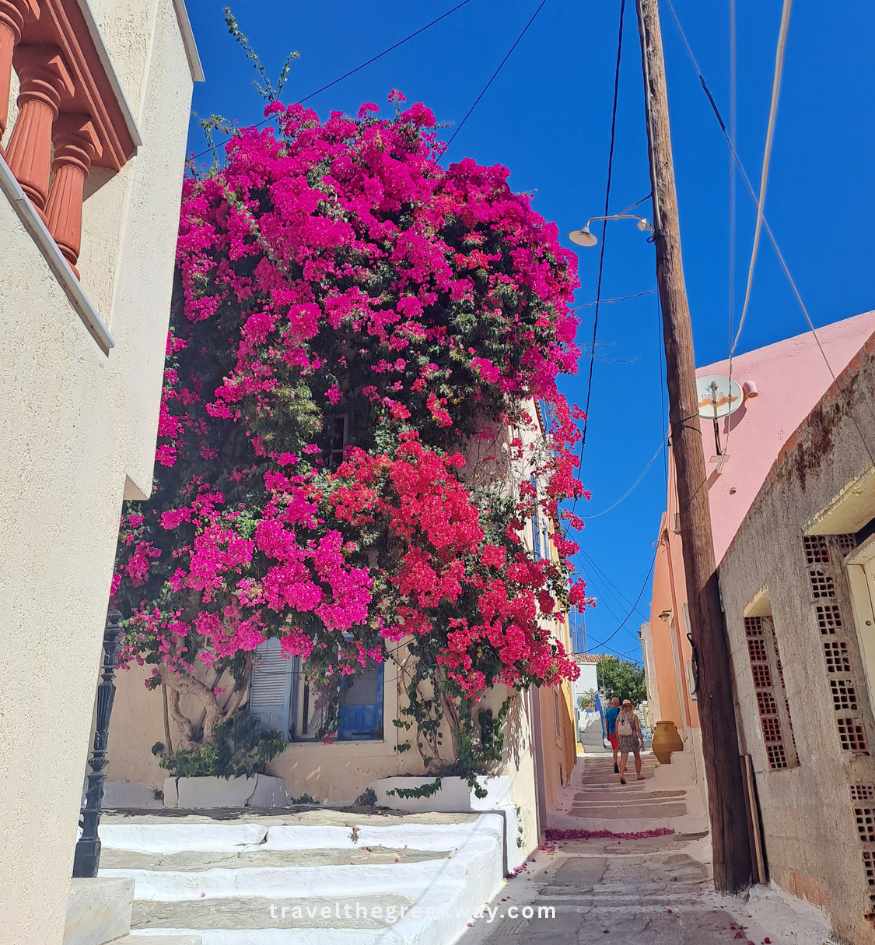
Where you stay in Kea depends on the kind of trip you want.
Ioulida is great for a traditional village atmosphere, Korissia is convenient for the ferry, Vourkari works well for restaurants and evenings out, while Otzias and Koundouros are better choices if you want to be close to the beach.
Planning where to base yourself? Read my complete Where to Stay in Kea guide for the best areas, hotels, apartments, and villas around the island.
FAQs for Kea
How do I get to Kea?
Kea is the closest Cycladic island to Athens, making it a favorite for quick escapes. Here is the best way to reach it:
From Lavrion Port: This is the main route. The ferry takes just~1 hour to cover the ~23 km (~14.3 miles / ~75,459 ft) distance.
Frequency: There are daily departures (usually 1–3 in low season and up to 7 per day in summer).
Cost: Tickets are very affordable, typically ranging from €11.50 to €15.
From Piraeus Port: There are no direct ferries from Piraeus to Kea. During the summer, you can take a ferry to Syros (approx. 2–4 hours) and then catch a connecting ferry to Kea (approx. 4.5 hours). This is a great option if you are already island-hopping, but not recommended for a direct trip from Athens.
From the Airport: Lavrion Port is only ~30 km (~18.6 miles / ~98,425 ft) from Athens International Airport (ATH). A private transfer takes about 30 minutes, while the KTEL bus takes about an hour.
Pro Tip: Always book your seats in advance during July and August, as these short routes sell out quickly with locals heading to their summer homes! You can check real-time timetables and book with no hidden fees at Ferryhopper.
Getting Around Kea
Kea is a rugged island with a primary road network of about ~70 km (~43.5 miles / ~229,659 ft) connecting the main villages. Here is how to navigate it:
Public Bus (KTEL): There is a reliable, budget-friendly bus service that departs from the port of Korissia. It primarily connects the port with Ioulida (the capital), Vourkari, Otzias, and Koundouros.
Tip: The schedule is usually timed to match the ferry arrivals. Look for the printed timetable posted at the bus stop right outside the ferry ramp.
Taxis: Kea has an extremely limited fleet of taxis (only about 4–5 for the entire island!).
Cost: A trip from the port to Ioulida typically costs between €15 and €20.
Pro Tip: Do not count on finding an available taxi at the port upon arrival, especially on summer weekends. Pre-booking is highly recommended. You can call the central radio-taxi at +30 22812 00150 or ask your hotel to arrange a transfer in advance.
Car & Scooter Rentals: If you want to explore the “wild” side of the island or visit the remote Neolithic sites, renting your own wheels is a must. Most rental agencies are located in Korissia Port (look for Leon Rent a Car or Avance).
Drive Times: Expect a 15-minute drive from the port to Ioulida and about 35–40 minutes to reach the southern beaches like Koundouros.
Note on Parking: Remember that Ioulida is completely car-free. You will need to park your vehicle in the public lot at the entrance of the village and walk in from there
Best Time To Visit Kea Island
Because Kea is just ~1 hour from the mainland, it’s a year-round destination where most shops in Ioulida and Korissia stay open even in winter. However, your experience will change drastically depending on the month:
For the Best Beach Weather (June – September) If you want to swim in Kea’s crystal-clear waters, this is your window. July and August are the hottest months, with air temperatures averaging ~28°C–30°C (82°F–86°F) and sea temperatures reaching a perfect ~25°C (77°F).
The Weekend Rule: In July and August, weekends are very crowded with Athenians. For a peaceful beach day at Koundouros or Otzias, visit Tuesday through Thursday.
For Hiking & Nature (March – May, October – November): Kea is famous for its ancient stone paths and the only oak forest in the Cyclades. In spring, the island is bright green and covered in wildflowers. Temperatures are a comfortable ~18°C–22°C (64°F–72°F), ideal for the ~12 signposted hiking routes.
For “Quiet Luxury” (September – October): This is the secret “sweet spot.” The sea is still warm from the summer heat, but the crowds disappear, and the light is golden and soft—perfect for photography.
Winter (November – February): While too cold for swimming, winter is great for a cozy retreat in Ioulida. You’ll have the stone alleys and the “Lion of Kea” all to yourself.
Pro Tip: If you visit during Orthodox Easter, you’ll witness incredible local traditions and candlelit processions through the narrow streets of Ioulida—but be sure to book your ferry and hotel months in advance!
What to Pack: Island Style Meets Practicality
Kea is more low-key than Mykonos, but it has a sophisticated “Athenian weekend” vibe. The terrain is rugged, so your packing list needs to balance chic seaside looks with sturdy gear for the ancient stone paths.
The Essentials:
Comfortable walking shoes: This is non-negotiable. Kea is mountainous, and the ancient stone paths (kalderimia) can be incredibly slippery, especially the marble sections in Ioulida.
Swimwear with Flair: For those impressive beach appearances at Koundouros or Gialiskari, a bold one-piece is the way to go.
Organic Sunscreen: The Greek sun is fierce. Use a reef-safe, high-SPF cream to protect your skin and the Aegean’s clear waters.
The Transition Dress: Pack a beautiful, flowy midi or maxi dress. It’s perfect for shifting from a day of sightseeing to a candlelit dinner in a Ioulida taverna.
How many days is enough for Kea?
Because Kea is so accessible from Athens, the “ideal” stay depends on your travel style. Here is a breakdown:
The Weekend Escape (2 Days / 1 Night): This is the most popular way to see Kea, especially for Athenians. You’ll have enough time to explore Ioulida, see the Lion of Kea, and enjoy a sunset dinner in Vourkari.
The “Perfect” Stay (3–4 Days): This is the sweet spot. It gives you one day for the main villages, one day for an organized beach like Koundouros, and a third day to hike to the remote ruins of Ancient Karthea or take a boat trip around the island.
The Slow Travel Week (7 Days): If you are a hiker, a diver, or someone looking to truly disconnect, a week is wonderful. You can explore the island’s ~70 km (~43.5 miles / ~229,659 ft) of trails, visit a different secluded beach every day, and settle into the local rhythm.
My Recommendation: If it’s your first time, aim for 3 days. This allows you to see the “musts” without feeling rushed, leaving plenty of time for those long, slow Greek lunches.
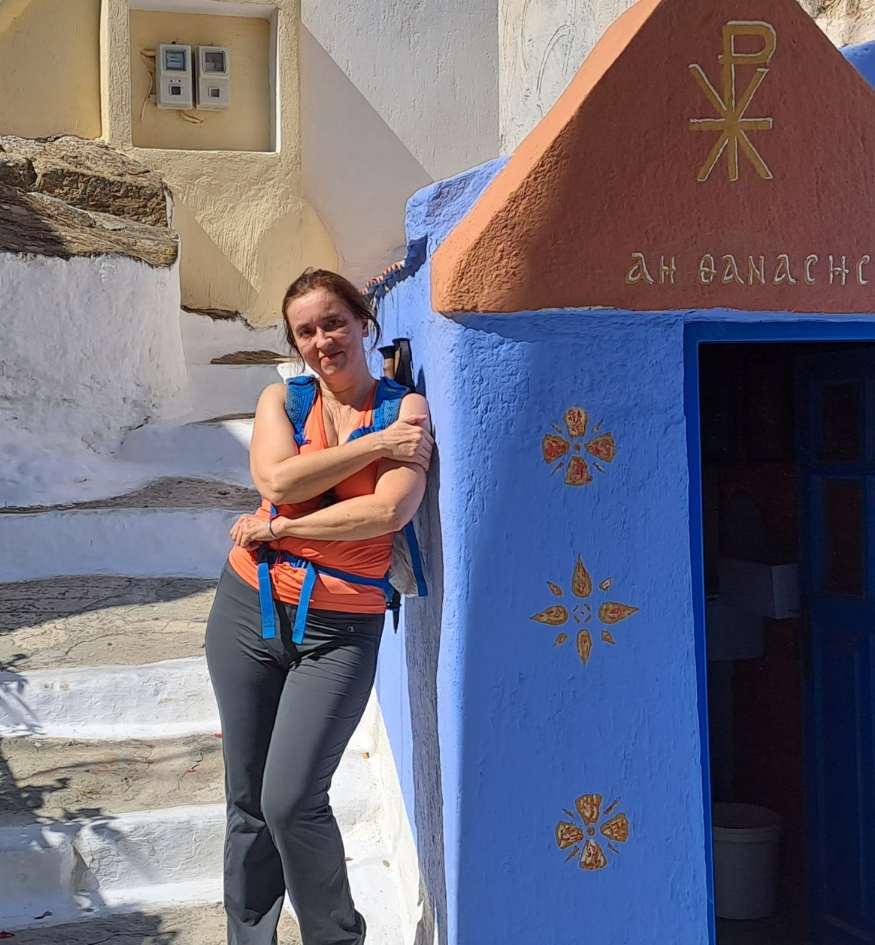
Is Kea worth it?
Yes. It’s the perfect “insider” island—close to Athens (~23 km / ~14.3 miles) but rugged and authentic.
The Pros: Elite hiking with ~81 km (~50 miles) of ancient paths, world-class diving, and car-free villages. The Cons: Best for “quiet luxury” and nature—skip if you want Mykonos-style nightlife or 24/7 public transport
What is the history of Kea?
Kea is an island where mythology and history are physically carved into the landscape. From ancient city-states to legendary shipwrecks, the island’s past is surprisingly “loud” for such a quiet place.
The Names: In antiquity, the island was known as Hydroussa (meaning “watery”) because of its lush vegetation and natural springs. According to legend, a fierce lion chased away the water nymphs, leading to a period of drought. To appease the gods, the locals carved the famous Lion of Kea, which you can still see today!
The Origins of “Tzia”: The name Greeks use most often today, Tzia, comes from the Frankish period (starting around 1210). Before that, it was named Kea after the hero Keos, a leader of the Locrian settlers.
The Tetrapolis: During the Archaic period (7th–6th century BCE), Kea was unique because it functioned as a “Tetrapolis”—four independent, powerful city-states (Ioulida, Korissia, Karthea, and Poiessa) that operated under a unified foreign policy.
A Heroic Ally: Kea has always been a fighter. They stood with Athens during the Persian invasion (480 BCE) at the battles of Salamis and Artemisium. Fast forward to 1821, and Kea was the very first Cycladic island to join the Greek War of Independence.
Famous Residents: The island was the birthplace of the famous lyric poets Simonides and Bacchylides, as well as the sophist Prodicus (who taught Socrates!).
Modern History: Since 1830, Kea has been part of the modern Greek state. In the early 20th century, it became an industrial hub (famous for its enamel factory in Korissia), and today, it is protected as a high-end cultural and ecological destination.
Beyond Kea: Your Island-Hopping Guide
Ready for more? From Kea, you can easily hop to Kythnos in just ~1 hour 25 minutes (~31 km / ~19.2 miles), or continue to Syros, the elegant capital of the Cyclades, in about ~4 hours. Whether you’re heading back to Athens or deeper into the Aegean, Kea is the perfect first stop for your island-hopping adventure!
Join Our FB Group & Subscribe to My YouTube Channel!
For more Greece travel tips and ideas for your next trip, join my free Facebook Group or follow me on YouTube for more videos from around Greece.
Happy and safe travels,
Evgenia

Hello, I love Kea Island, well I’ve never visited it, but the HMHS Britannic is one of my favorite ships and I have a dream of one day visiting this iconic ship that was the younger brother of the famous Titanic and that made me interested in Kea, I’ve always wanted to know more about this Island😍.
But if you allow me I just want to correct an error in your Post, the Britannic didn’t sink in 1911, in fact it started to be built this year on September 30th, still in the process of Titanic’s Equipment, the Britannic actually sank on November 21, 1916 in the middle of the First World War after hitting a Water Mine.
Hi Marcos. I also love Kea island, especially its main town and Karthea ruins. Thank you so much for the correction for Britannic, I have updated it :). Regards, Evgenia