Naxos is one of those islands that really has it all — green and fertile, full of history, and right in the heart of the Cyclades.
Even though some spots, like Plaka, have gotten more developed over the years, Naxos still feels authentic and keeps its charm.
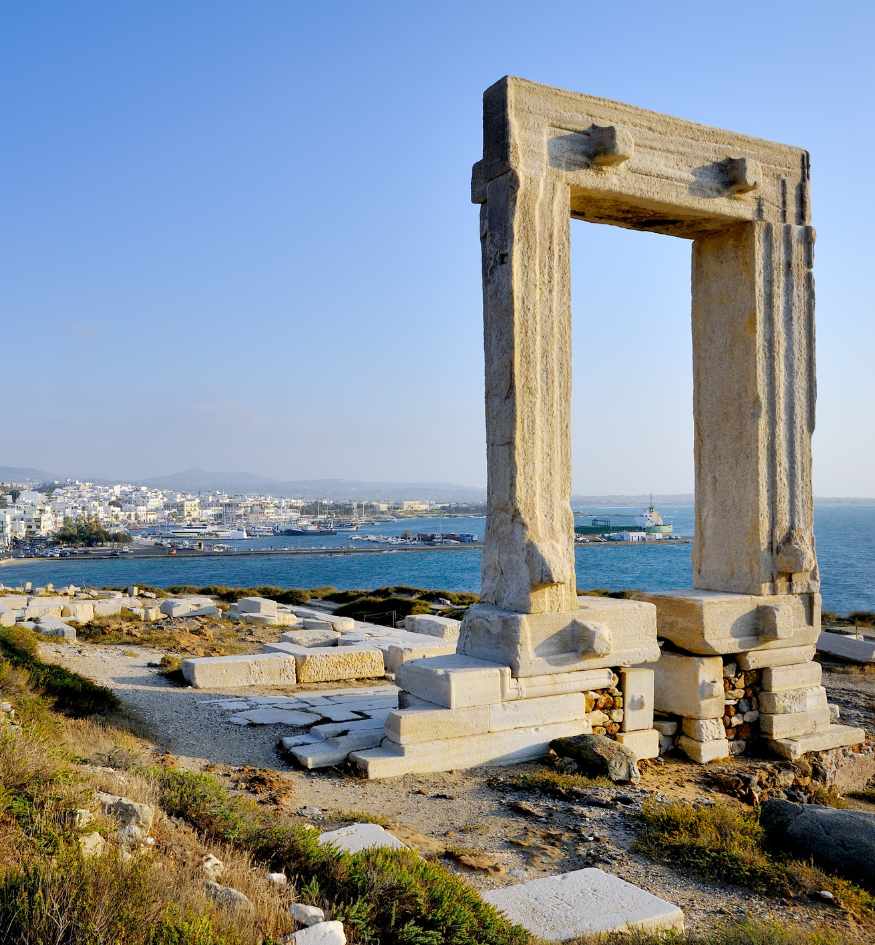
You’ll find plenty to keep you busy: the whitewashed alleys of Chora with its famous Portara, Venetian castles scattered around the island, traditional mountain villages, and endless sandy beaches with that dreamy turquoise water.
If you’re wondering what to do in Naxos, I’ve put together this guide with the best highlights to help you plan your trip.
This post includes links that may be affiliate links. If you choose to make a purchase through them, I may earn a small commission at no extra cost to you. Please see my disclaimer/privacy policy for more information.
Top Things to Do in Naxos

1. Explore Chora Naxos
I’ve got a soft spot for Chora Naxos, the island’s main town. It’s where classic Cycladic charm meets a touch of medieval flair.
When you wander along the port and coastal strip, you’ll find endless cafés and tavernas to chill out. And just a short walk away, Agios Georgios beach is perfect if you’re in the mood for a quick dip.

Take your time strolling the cobblestone alleys filled with bougainvillea, and don’t miss the mix of Catholic and Byzantine churches scattered around and the cute little shops.
One of the best parts? In summer, the coastal road turns into a pedestrian zone—no cars allowed—so you can enjoy the seafront cafés, bars, and tavernas without the traffic.
Naxos Venetian Castle
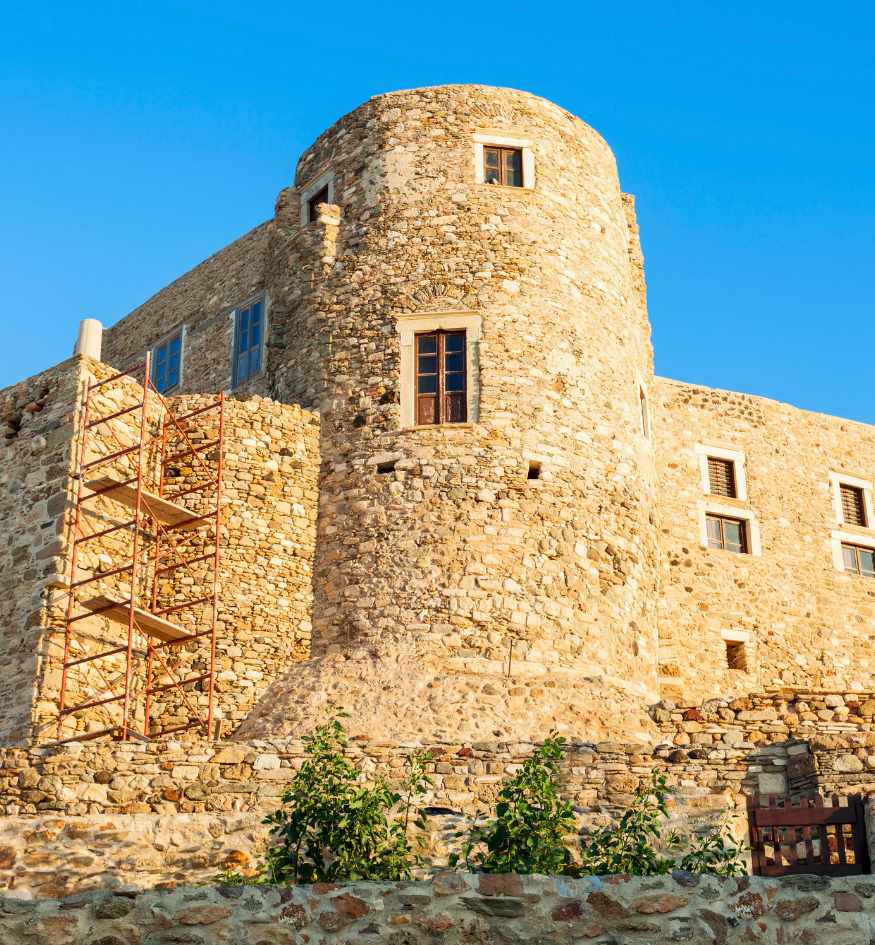
Right above the port in Naxos Chora, you’ll find Kastro—a maze-like old quarter that goes all the way back to the 13th century.
As soon as you step inside, you’ll spot the round, four-story Krispi Tower, and the views from there are pretty amazing.
The tower itself is home to the Byzantine Museum of Naxos, and just around the corner, you’ll find the Archaeological Museum (bonus: free entry!).
And if you’re up for a treat, head to Avaton 1739. It’s a cozy café and wine bar perched on the roof of an old Ursuline Monastery, and the views over Chora are simply unbeatable.
2. Sunset in Portara (Top Activity for Naxos)
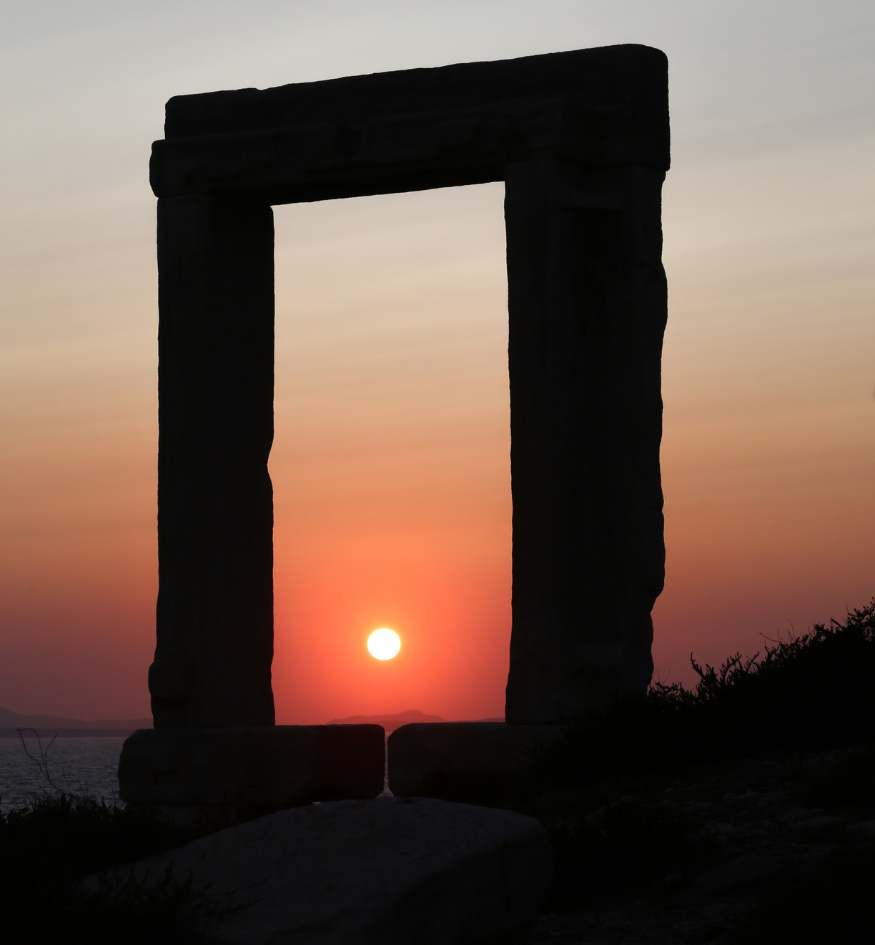
The Portara is one of the first landmarks you’ll spot as your ferry approaches Naxos.
The name means “huge door” in Greek, and that’s exactly what it is—a massive marble gate from an unfinished temple dedicated to Apollo, dating back to 522 BCE.
Until recently, visitors could walk right up to the monument, but in summer 2025, after a disrespectful tourist picked up a marble stone to pose for social media photos, authorities put up a fence around the site to protect it.
Still, you can walk around the site, sit at the large steps in front of the sea, and enjoy a beautiful sunset from there.
Cocktail Bar Tip:
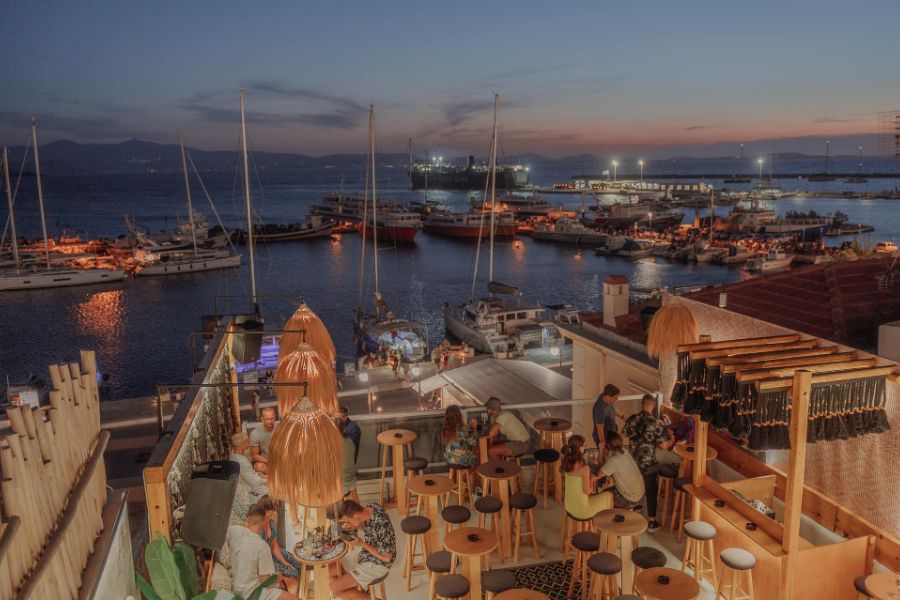
For a romantic sunset alternative, visit Chora Port and discover the charming bar “Like Home”.
It offers a rooftop with a clear view of the port, the yacht marina in the front, and the castle of Chora in the back—a fantastic location.
They have a wine list, a cocktail list, as well as a menu featuring sushi and other delightful options to try.
3. Naxos Best Beaches

Some of the best beaches in Naxos are on the west side—Agios Prokopios, Agia Anna, Maragas, and Plaka.
They all line up along one big bay, so whichever one you pick, you’ll get turquoise water, beach bars and tavernas, and plenty of space to chill.
That said, sunbed prices have gone a bit crazy lately—on the more popular beaches, you might end up paying €50 (or more!) for a set.
If that’s not your vibe, no worries. You can always grab a spot under a tree or bring your own umbrella—I do that every time I’m on the island, and it works perfectly.
Agios Prokopios

Agios Prokopios, just 5 km south of Chora, is one of the most cosmopolitan places on Naxos with a wonderful sandy beach.
It is a 1.2 km long sandy beach that is protected from the northern winds, making it an ideal choice for families with children.
To the north of the beach are some impressive salt marshes that add unique features to the landscape.
Consider staying at the gorgeous Villa Pari Manda in Agios Prokopios, an ideal self-catering accommodation for families and groups of up to 11 people.
Agia Anna
Agia Anna is not only my favorite beach but also one of the most popular beaches in Naxos, situated 7 km from Chora. Essentially, it continues from Agios Prokopios to the southwest.
This blue flag-awarded sandy beach is partially organized, offering sunbeds, umbrellas, restaurants, and beach bars.

- Best tavern on Agia Anna beach: Paradise Tavern is a family-run small business, located at the unorganized and peaceful part of the beach
- Scuba Diving Tip: Book a scuba diving tour to explore the marine life of Naxos, Greece.
Plaka

Plaka Beach is just 8 km south of Chora with impressive dunes.
It is organized with sunbeds and umbrellas in certain areas and is an ideal choice for families, as the beach is protected from the winds.
It is also one of the nesting areas of the protected turtles of Careta Careta. Please be cautious and avoid disturbing the nests.
Parthena and Mikri Vigla
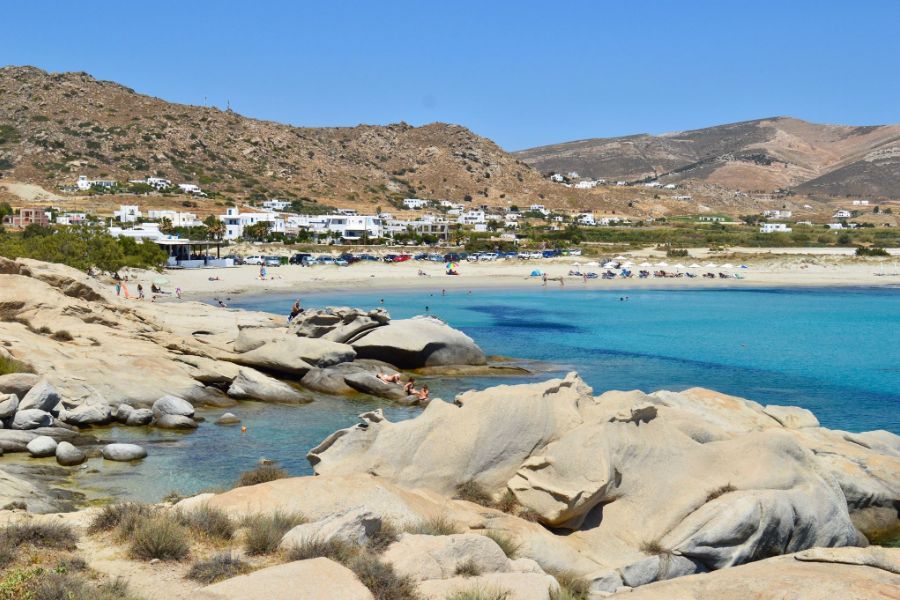
They are a single beach, divided into two by a rock, 16 km southwest of Chora.
Parthena is ideal for kite surfing and windsurfing enthusiasts.
On the other hand, the endless sandy beach of Mikri Vigla with its calm and shallow waters has a more family-oriented character.
4. Archaeological Sites of Naxos, Greece
Naxos played an important historical role not only in the Cyclades but also in the broader Greek region.
That’s why the island boasts incredible historical and archaeological monuments, as well as museums, where you can explore and gain insight into Naxos’ history.
Sanctuary of Dionysus

Dionysus, the protector god of Naxos, had his sanctuary in Iria, located approximately 3 km south of Chora.
This sanctuary, a significant construction for its time, was built between 575 to 550 BCE and is surrounded by vineyards, olive trees, and wild sycamore trees.
It’s open daily from 8:30 AM to 3:30 PM, except on Tuesdays when it’s closed.
Zeus Sanctuary
According to Greek mythology, baby Zeus, the king of all ancient Greek gods, was born in Crete but was raised in a cave on Mount Zas.
The sanctuary is located at the summit of Mount Zas, and while the hike is challenging, the breathtaking vista from the sanctuary makes it well worth the effort.
Temple of Demeter
The Temple of Demeter, located near the village of Sagri, was constructed between 530 and 520 BCE, nearly a century before the construction of the Parthenon.
It was crafted from exquisite Naxian marble and featured Ionic-style columns.
This temple was dedicated to Demeter, the goddess of the harvest, sowing, and fertility, and was a place of worship for both Demeter and her daughter, Persephone.
The sanctuary is historically associated with the Eleusinian Mysteries in Athens, and the artifacts and findings from the site are displayed in a museum built on the archaeological site.
Kouroi of Naxos
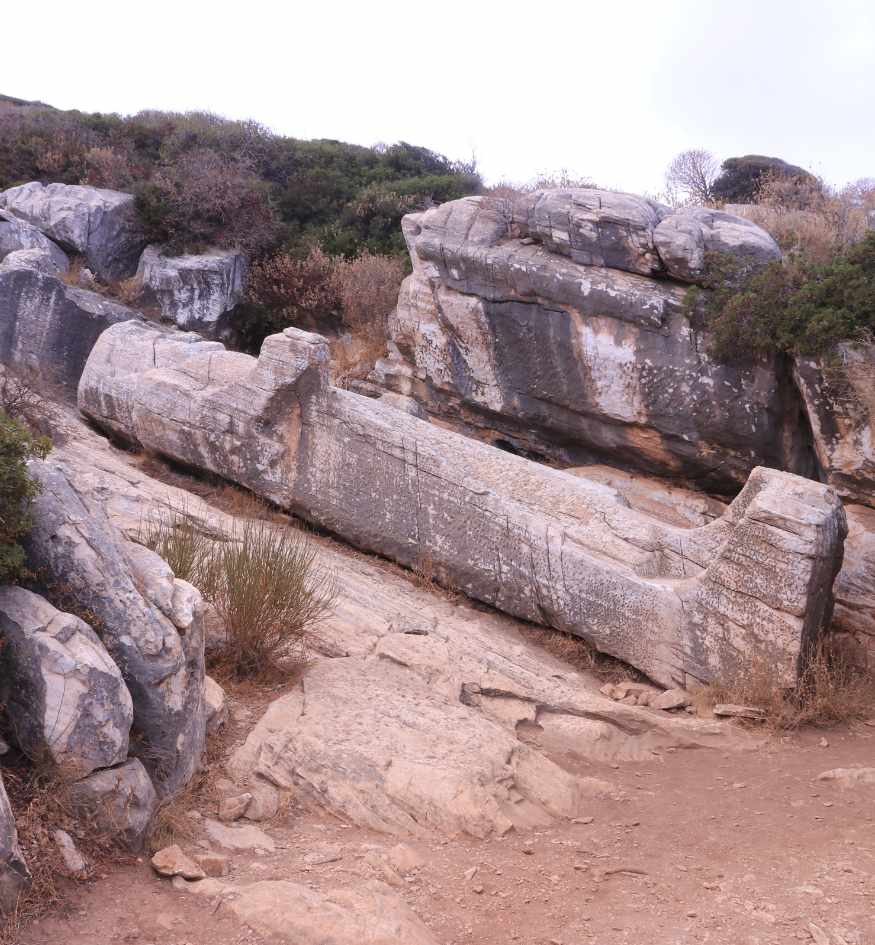
A Kouros (Kouroi in plural) is an archaic Greek statue of a young man, typically depicted standing and often naked, dating from the 7th to 6th century BCE.
In Naxos, you can explore three different Kouros statues: two of them are situated in the Melanes area, specifically in Flerio, about 9 km from Chora.
The largest one can be found at the top of the seafront village of Apollonas, in the northern part of the island.
5. Picnic at the Routsouna Waterfalls

To reach the Routsouna waterfalls, head to Keramoti village, where you’ll find a sign indicating that the waterfalls are 3 km away.
Follow the path, and you’ll see more signs guiding you to the waterfall, making it easy to locate.
During the summer, you can even swim in the small lagoon! Be sure to wear anti-slippery shoes and bring water and food with you, as there are no facilities available on-site.
Additionally, I recommend visiting the Olive Mill Museum in Keramoti village; it’s a great experience.
6. Traditional Villages of Naxos Greece
One of the best things to do in Naxos is to drive around its wonderful, traditional villages and walk its narrow, picturesque alleys.
Apiranthos

Apiranthos feels like it’s been frozen in time, with its stone-built houses, charming squares, and marble-paved alleys.
Sitting at 650 meters up on Fanari Mountain, some of its little cobblestone streets are barely a meter wide, giving the village a truly authentic vibe.
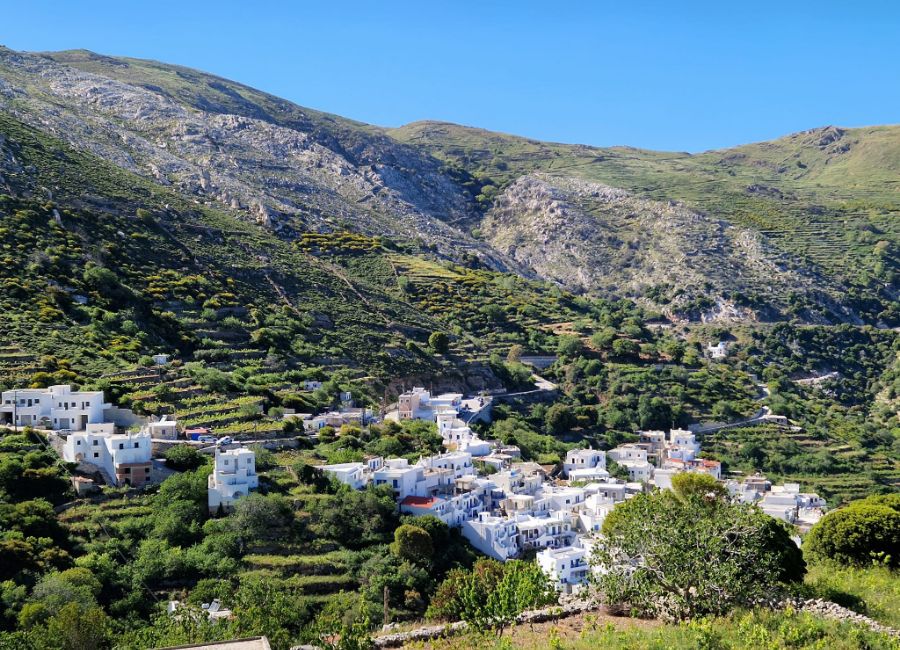
As you wander around, you’ll find cozy taverns shaded by big plane trees and picture-perfect houses that make you want to stop and just take it all in.
And here’s the cool part—this small mountain village actually has five museums, all right in the center of Apiranthos. Pretty amazing for such a tiny place!

- Archaeological Museum with findings from prehistoric Naxos times (It is not always open if you want to visit, call +30 22850 61725).
- The Geological Museum, with more than 2500 rare rocks displayed
- The Natural History Museum of Apiranthos has a large natural aquarium, as well as a wonderful collection of 265 shells from the island.
- The Museum of Fine Arts displays the works of 75 artists (painters, sculptors, engravers and potters).
- The Folklore Museum consists of three rooms (kitchen, workshop, and bedroom) and a courtyard. It is a reconstruction of the interior of a village house, just as it was 100 years ago.
Nearby is the Paleochristian Church of Panagia Drosiani (6th c.), one of the most beautiful and oldest churches in Greece.
For the best sunset views with amazing food, in Apiranthos, go to Rotonda Restaurant.
Filoti (Most Popular Village in Naxos)
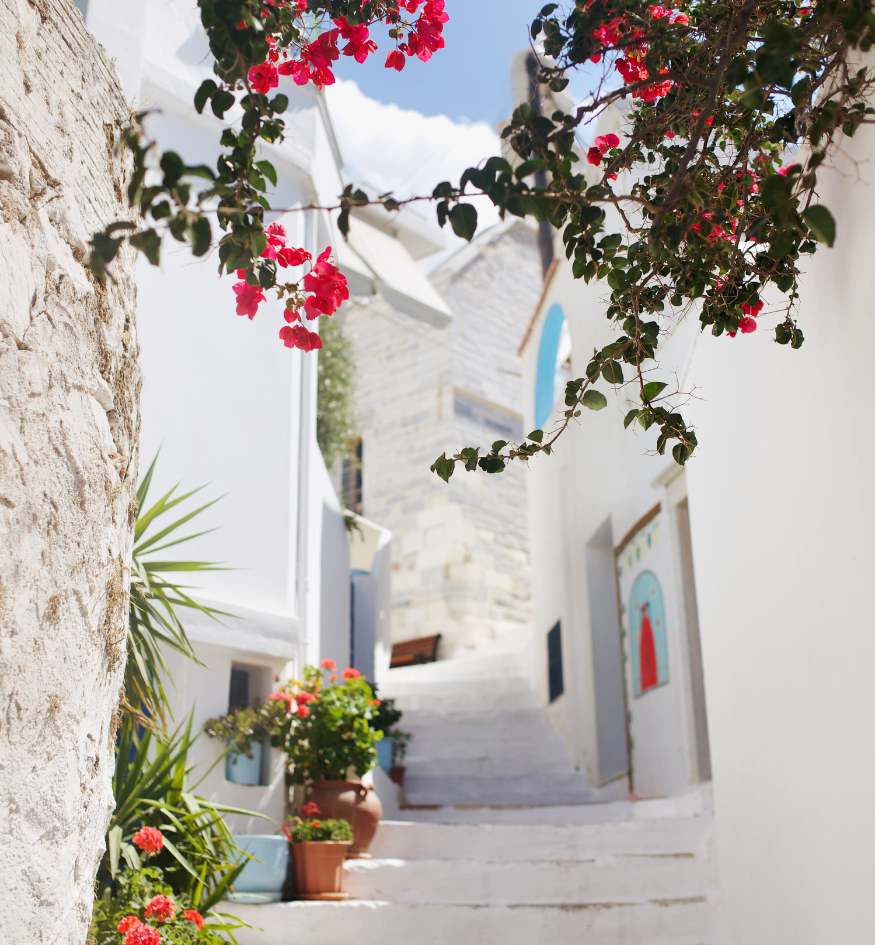
Filoti is a charming mountain village situated on the slope of Mount Zas at an altitude of 400 meters. It boasts cube-shaped houses and narrow cobbled alleys.
In Filoti, you’ll discover Panagia Protothroni, a Byzantine church dating from the 9th to 10th century. This church is the largest Byzantine church on Naxos and features excellent frescoes.
The village is shaded by plane trees, creating a charming atmosphere for exploration or enjoying a coffee with the locals.
Sagri
Don’t miss the village of Sagri, which comprises three districts (Upper, Lower, and Kanakari) and is home to Venetian towers such as Bazaios Tower and Sommaripa, as well as traditional windmills.

The plain of Kato Sagri is often referred to as ‘Little Mystras’ due to the large number of Byzantine churches it houses, with the most significant being Theoskepasti or Agios Mamas, dating back to the mid-9th century.
Agios (Saint) Mamas is the protector of the shepherds.
Chalki (Halki)

Chalki is a picturesque and traditional village known for its stone houses.
Once, it served as the capital of Naxos Island. Located 17 km from Chora, in the Traagia basin, the village is surrounded by olive trees and stands out for its magnificent architectural style.
When you visit Chalki, be sure to seek out the Tower of Barozzi/Gracia, which has been renovated and is inhabited by descendants of the Barozzi family. Additionally, explore the impressive temple of Panagia Protothroni.
Chalki offers many cafes and a few taverns where you can enjoy a lovely lunch break.
7. Hike Mount Zas
Naxos boasts two high mountains, Zas, standing at 1004 meters, and Fanari at 908 meters.
To reach these peaks, you’ll pass by springs, rivers, ancient settlements, plains, valleys, and groves of orange, lemon, and olive trees.
This route offers a truly beautiful experience for those who love walking in nature.
A popular yet challenging trail on Naxos is a well-marked 12.8 km loop starting from Filoti. The first half of the trail is well-signposted, guiding you to the cave.
However, beyond the cave of Zas, you should be prepared for a less-defined footpath that can become steep at times.
Since much of the hiking is done in areas without shade, it’s essential to wear sturdy hiking boots, a UPF sun hat and apply organic sunscreen. Finally, always carry lots of water with you.
8. Indulge in Local Cuisine
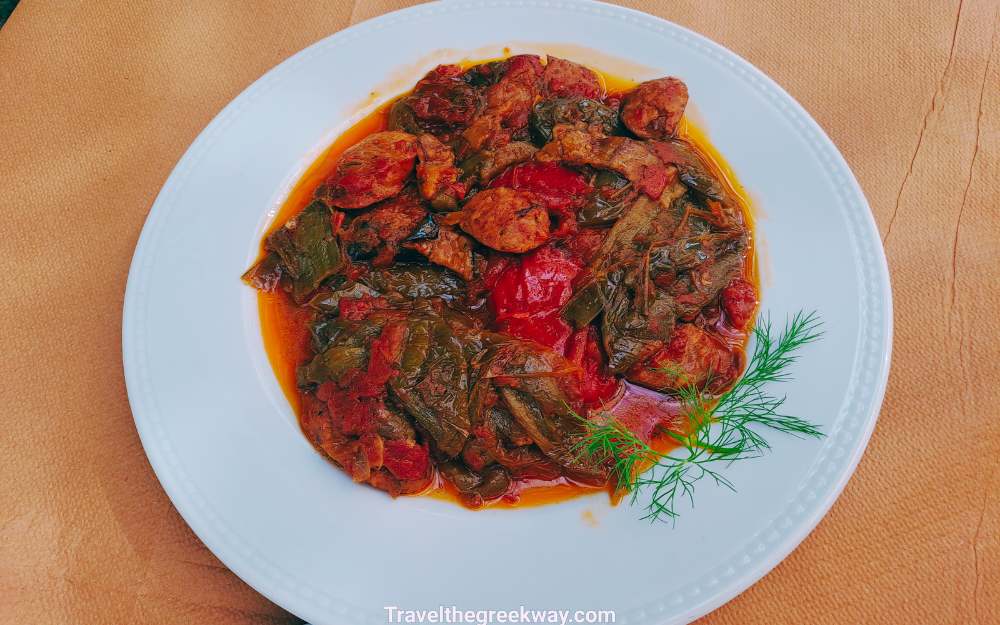
Naxos is famous for its various kinds of cheese and potatoes!
Some of my favorite, authentic restaurants that I recommend are:
- Maro’s Tavern
- Harry’s in Eggares. Doesn’t get more traditional! It’s one of the best on the island.
- Stella’s Tavern (imagine a Greek grandma cooking for you, no menu – she just tells you what she cooks) in Eggares
- To Elliniko, Nostimon, and Apostolis taverns in Naxos Chora
- Cafe Grecco (in Chalki) – the kindest staff and great food!
Don’t forget to taste the famous local liqueur made from the aromatic leaves of the citrus, distilled according to traditional family recipes.
9. Cedar Forest of Alykos Beach

Alykos Beach is one of the island’s most impressive beaches, situated 17 km from Chora and near the settlement of Pygaki.
This beach stands out for its wild, remote, and peaceful nature, remaining unorganized with no beach bars, umbrellas, or sunbeds.
There is parking available around the abandoned hotel near the main beach of Agios Georgios.
Above the small beach with its white sand and turquoise waters, you’ll find a cedar tree forest that provides natural shade to visitors.
The Alykos cedar forest is one of the largest and densest in Greece, covering an area of about 800 acres. Access is straightforward, as you can reach it via an easy dirt road that continues from a provincial road.
10. Monasteries of Naxos
Naxos is famous for the large number of Greek Orthodox and Catholic churches and monasteries on its territory.
The Monastery of Agia
The Tower and the Monastery of Agia are situated in northern Naxos, just 6 km from Apollonas village. Within the courtyard, you’ll find a spring surrounded by giant century-old plane trees and lush vegetation.
This site is dedicated to the Virgin Mary and is celebrated on August 15, the day of the Assumption of the Virgin Mary, with a grand festival.
The Holy Monastery of Fotodotis
The Monastery of Fotodotis sits just north of the village of Danakos and it’s one of the oldest — and most important — castle monasteries on Naxos.
Perched up at around 500 meters, it’s surrounded by vineyards, fig trees, and even a huge plane tree right by the entrance.
What makes it extra special? It was actually built on top of the remains of a 6th-century early Christian basilica. Pretty amazing spot to check out!
Where to Stay in Naxos
The Hotel Grotta (budget, family-friendly, breakfast) is on a picturesque hillside offering breathtaking views of Naxos Chora and the renowned ancient Portara.
If you prefer beachfront accommodation, especially if you’re traveling with small children, then you’ll love the seafront KYMA Apartments – Naxos Agios Prokopios.
How to Get to Naxos
Piraeus, Athens’ main port, offers 3-4 daily ferry services to Naxos during the summer, with travel times ranging from 3 to 6.5 hours, depending on the vessel.
In the winter, there is at least 1 daily ferry to Naxos from Piraeus.
Rafina, Athens’ smaller port, located about an hour from the city, provides up to 3 daily ferry crossings to Naxos, with travel times ranging from 3.5 to 4.5 hours.
Lavrio, Athens’ second smallest port, also has a weekly ferry to Naxos, with a longer journey of 8 hours.
You can take a 40-minute flight to Naxos from Athens Airport throughout the year. Just keep in mind that there is a weight limit for your luggage on the flight.
Suggested Itinerary for Greece: 10-Days Athens, Santorini, Naxos, Mykonos.
FAQ for Visiting Naxos
When is the best time to go to Naxos?
Naxos is at its liveliest between May and October, making it a popular choice for many visitors. However, Naxos is also a great destination in the winter, as there are plenty of enjoyable activities to experience on the island.
With around 18,000 permanent residents, you’ll find hotels, cafes, and taverns ready to accommodate any visitors.
July and August are the hottest and busiest months for all Greek islands.
If you prefer fewer crowds and more moderate prices, consider visiting in May, June, or September/October for the best combination of pleasant weather and reasonable costs.
How long should you stay in Naxos Greece?
Due to its size and the numerous attractions it offers, it’s recommended to stay on Naxos for at least 3-4 days, and ideally a week, to fully explore the island. Naxos provides amazing experiences for any visitor, whether you’re a family, a couple, or a solo traveler.
Is There Nightlife in Naxos?
Naxos isn’t a non-stop party island like Mykonos or Santorini, but summer here is still plenty lively! You’ll find a great mix of late-night bars and a few fun clubs where you can dance until sunrise, no matter what music you’re into.
Is Naxos Island Expensive?
No, it’s not. The most expensive islands in Greece are Santorini and Mykonos. In contrast, the rest of the islands and the Greek mainland generally offer quite reasonable prices.
What to Wear on Naxos Island?
If you are visiting the Cyclades in July and August, be prepared for meltemia, the northern winds, which can be quite strong. Also, evenings can get chillier, so it’s a good idea to have a light jacket with you.
Packing list to Greece: a dedicated post with tons of information so that you will not forget anything important at home!
How to Get around Naxos?
While there are frequent buses that connect well to various areas around the island, for those seeking more adventure and independence, I would suggest renting a car, especially during the hottest months (July-August).
A car with good air conditioning and shade from the sun can be particularly advantageous. Having your vehicle means you can explore remote areas at your leisure, without the stress of catching a late bus.
Is Naxos Safe for Solo Travelers?
Greece is a perfectly safe country for everyone regardless of age, gender, race, religion, or sexual orientation. In addition to that, Greek people are gene-programmed to be hospitable and are always eager to offer directions to your destination or any other advice, so ask freely.
Top Resources for Your Naxos Visit
- Where to Stay: For a peaceful retreat away from the Chora crowds, I highly recommend Casa Borealis. It’s about 4 km (~2.5 miles) outside the main town, offering exceptional views and quiet nights that you just won’t find in the center.
- Getting Around: To see the mountain villages like Halki and the remote eastern beaches, you really need a car. I always suggest renting a car in Naxos for total freedom.
- Best Experience: If you only do one tour, make it this All-Inclusive Catamaran Day Cruise. It’s the best way to see the ‘Small Cyclades’ and swim in turquoise waters that are only accessible by boat.
Join my FB Group & Subscribe to My YouTube & TikTok Channels!
For more Greece travel tips and ideas for your next trip, join my free Facebook Group or follow me on YouTube for more videos from around Greece.
Happy and safe travels,
Evgenia
How to Get to Athens Port (Piraeus) from Athens Airport

- Bus: If you are arriving at Athens International Airport you can travel straight to the port by taking the X96 express bus (€5.5, children <6 yo, free entrance), which departs every 40 minutes and the average trip lasts 1 hour – runs 24/7. X93 will take you to Athens center.
- Metro: (€9) is easily found across airport arrivals (blue line – M3) going directly to Piraeus port. The average trip to Piraeus lasts 1 hour.
- Taxis are available in front of the airport (around €45 to Athens, €55 to Piraeus (depending on the traffic in Kifisos), and take up to 3 or 4 people with small luggage)
- Rent a car with Discover Cars for reliable, new cars at affordable prices
- You don’t like driving but love hassle-free solutions? Book a Private transfer with an English-speaking driver from Athens International Airport to Piraeus Ferries, or anywhere else in Greece.
My Most Popular Posts
Essential Travel Resources for Greece
- ‘Hello’ and ‘Thank You’ in Greek: “Ya sou” and “Efharisto”
- Booking.com: I use Booking.com mostly for Europe.
- All-Inclusive Resorts in Greece
- Rent an Affordable Car in Greece
- Athens Metro Website (timetables and ticket info)
- Trains (Hellenic Train)
- Public Buses KTEL
- Get Your Guide: For all your day or multi-day tours and city guide needs, I use Get Your Guide
- Emergency Numbers Anywhere in Greece: AMBULANCE 166 – FIRE 199 – POLICE 100– EMERGENCY NUMBER 112
