Thebes, Greece (known as Thiva in Greek), is located 92 km (57.17 mi) northwest of Athens in the heart of Boeotia.
Often overshadowed by its ancient rival, Athens, Thebes is one of the oldest continuously inhabited towns in Europe and a place where Greek myth and real-world history collide.
Having visited Thebes three times—most recently in 2026—I can tell you that while the “Seven-Gated Thebes” of legend (birthplace of Hercules, Dionysus, and the tragic Oedipus) is mostly hidden beneath the modern streets, the city holds one of the most impressive Archaeological Museums in the world.

Whether you are a history fanatic coming to see the Church of Apostle Luke or a foodie looking for the region’s famous traditional meat dishes, this guide covers the best things to do in Thebes based on my personal experience.
This post includes links that may be affiliate links. If you choose to make a purchase through them, I may earn a small commission at no extra cost to you. Please see my disclaimer/privacy policy for more information.
Where is Thebes in Greece
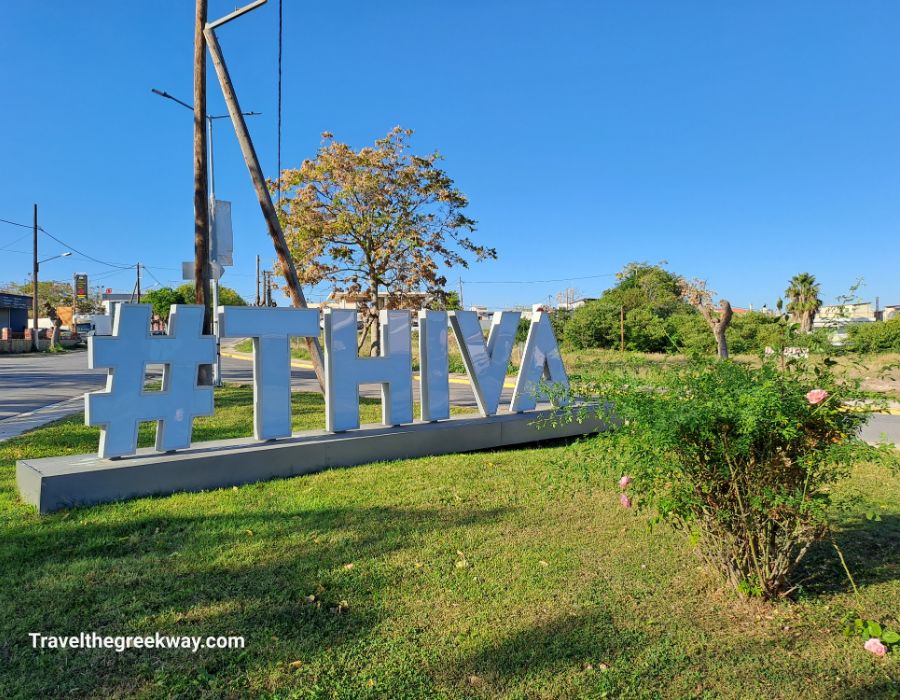
Geographically, Thebes sits on a low ridge dividing the surrounding fertile plains of Boeotia. It is strategically positioned between Mount Parnassus and the Euboean Gulf, making it a natural crossroads for travelers.
If you are planning a road trip, Thebes is perfectly located for a stop:
- Distance from Athens: 92 km (57 miles) — about a 1-hour and 15-minute drive.
- Proximity to Delphi: It is roughly 85 km (53 miles) east of Delphi, making it the ideal “halfway point” for those driving from the capital.
- Nearby Cities: It lies just south of Livadia and north of the Cithaeron mountain range. I recently explored a trail there, and the views over the Boeotian plains are spectacular—you can find my full trail map and hiking guide over on my dedicated hiking site.
How to Get to Thebes (Thiva)
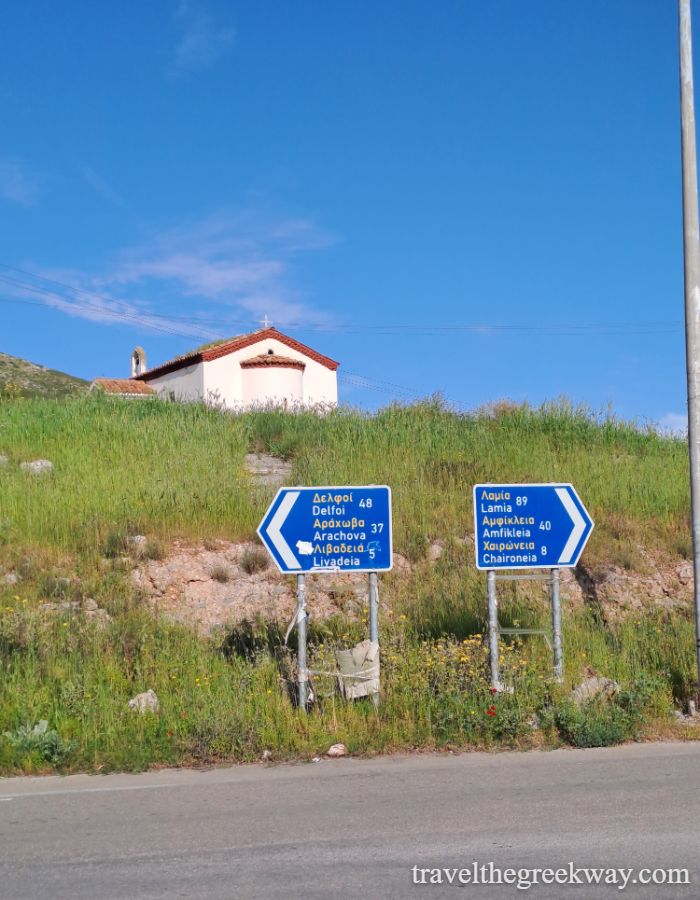
Thebes is an easy trip from the capital, whether you are visiting for a day or using it as a gateway to Central Greece.
By Train: Hellenic Train operates services from Athens (Larissa Station) to Thebes multiple times a day. It’s a scenic and affordable option, with the fastest trains reaching Thebes in just under 1 hour and 10 minutes.
By Car: I always recommend renting a car from Athens to have the freedom to explore the Boeotian countryside at your own pace.
You can drive to Thebes via the Athens-Lamia National Road (E.O. Athens-Lamia). The journey typically takes about 1 hour.
By KTEL Bus: Frequent intercity buses run from KTEL Liosion Street Station in Athens. The trip takes about 1 hour and 10 minutes, and the bus drops you off near the city center.
Best Things to Do in Thebes
Thebes is a brilliant stop if you are heading toward Delphi, Meteora, or the Pelion Peninsula. Interestingly, Homer’s Odyssey mentions three distinct cities by the same name:
- The Seven-Gated Thebes of Boeotia (where you are now!)
- The Hundred-Gated Thebes of Egypt
- Thebes of Asia, located near ancient Troy.
From ancient myths to modern-day treasures, here is my curated list of the best things to do in Thebes (Thiva):
Archaeological Museum of Thebes, Greece
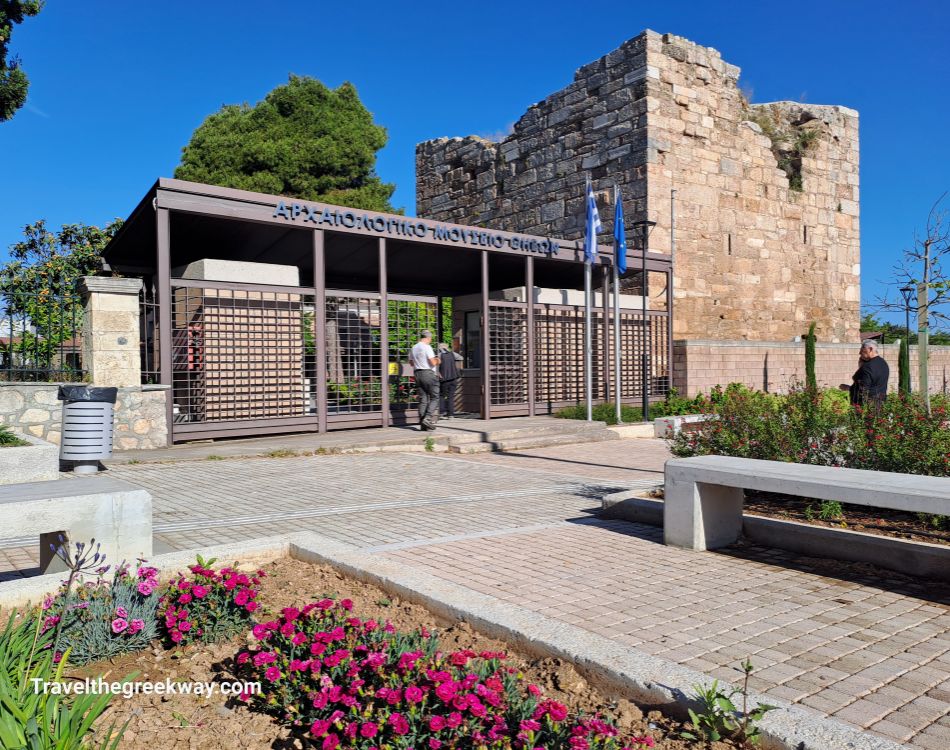
I had been meaning to visit the museum for a long time, as I had read that it is one of the top 5 best museums in Greece.
So I was very excited to reach it and get into the beautiful yard with fir and pomegranate trees.
The general admission is €6 in the high season (April – October, open 8.30-8.00 pm) and €3 in all the other months (8.30-15.30). Every Tuesday, the museum is closed.
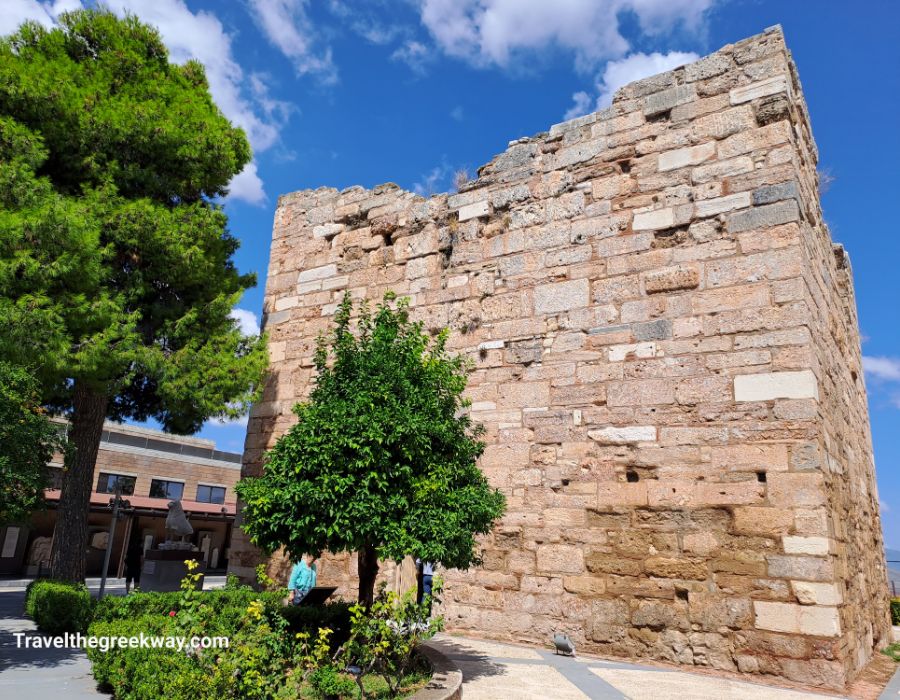
In the courtyard of the museum, a medieval tower dominates, which is believed to have been built in the late 13th century by Lord Nicholas II Saint-Omer (1258-1294).
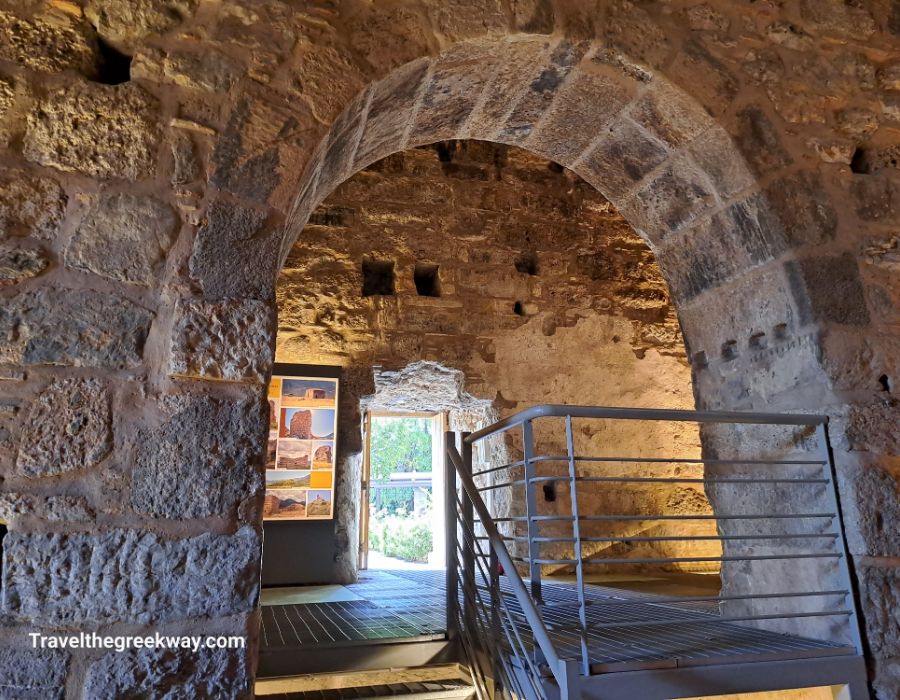
It is the best-preserved part of the extensive medieval fortifications of Thebes, with a rectangular plan, and its height reaches 14 meters.
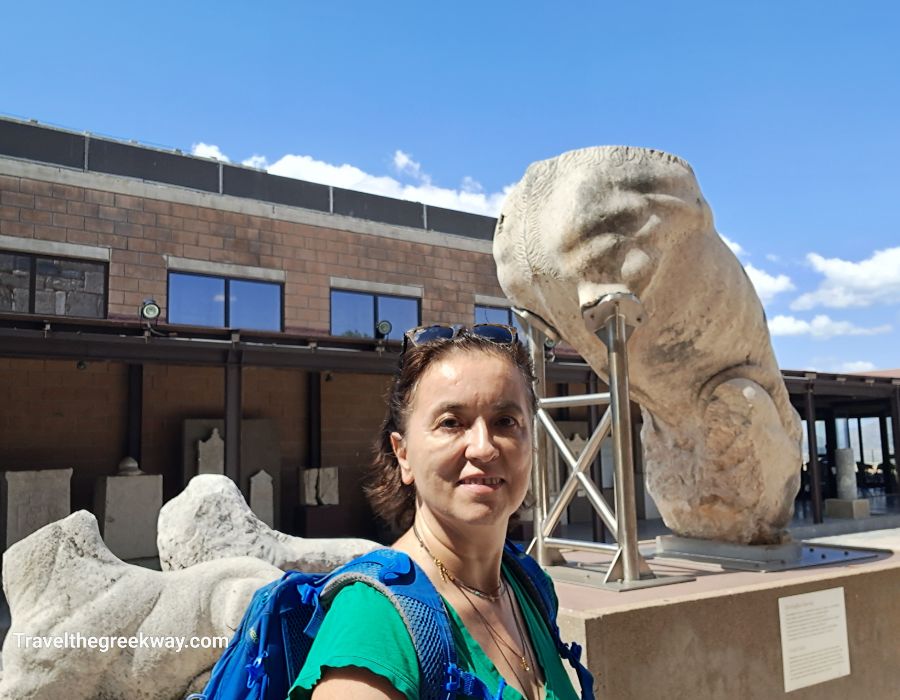
Next to the tower, there are 3 massive lion bodies, very impressive, and at the end of the courtyard is the cafe of the museum.
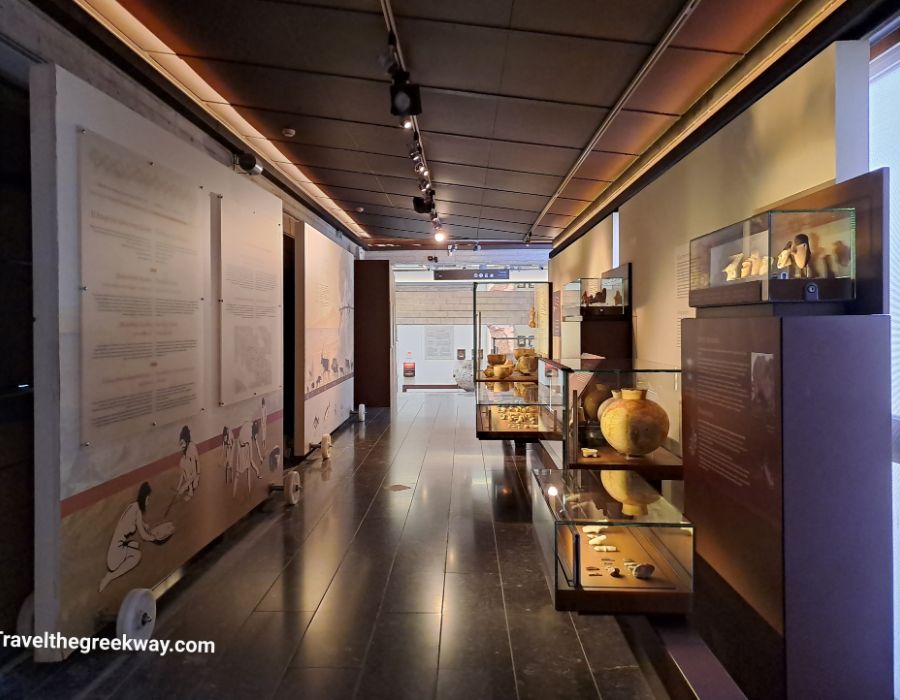
The museum is ingeniously divided into 18 sections, with eleven of them following a chronological order from the Paleolithic period to the end of the Ottoman era.
The signs narrating the culture, daily life, and political and social developments in Boeotia are so well written that you do not need a guide in the museum.
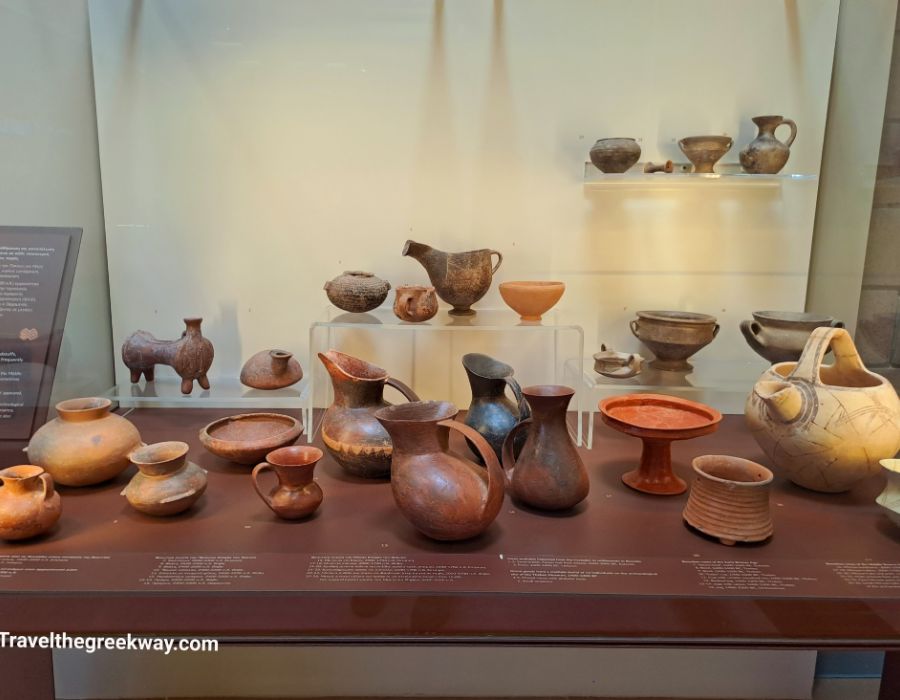
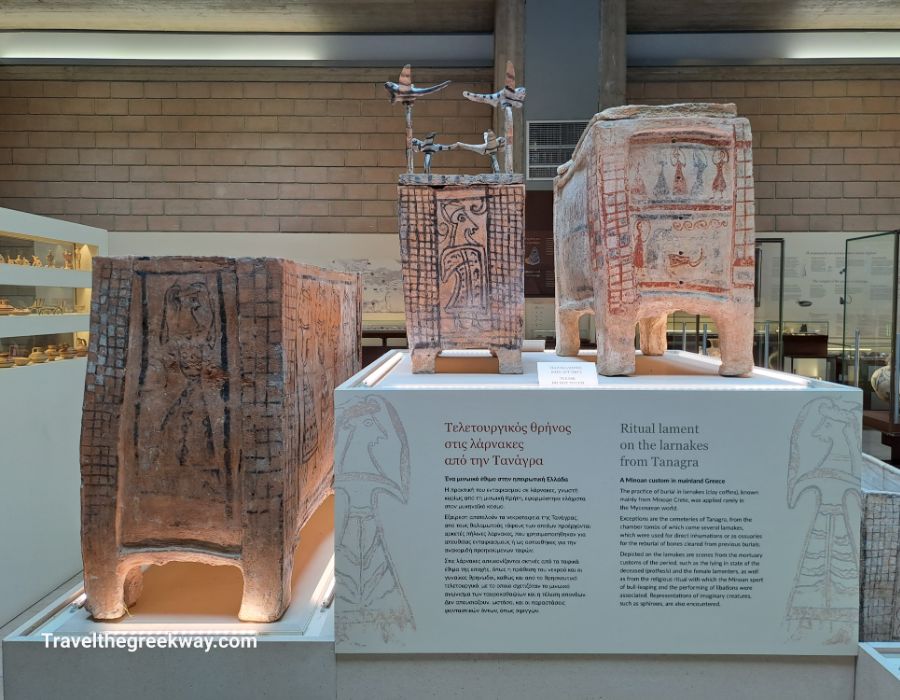
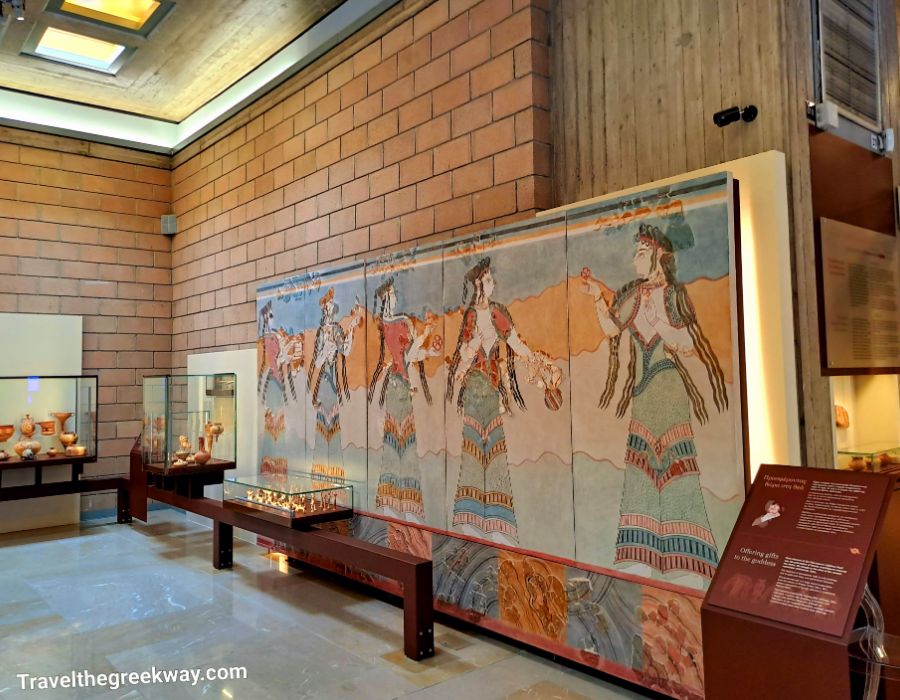
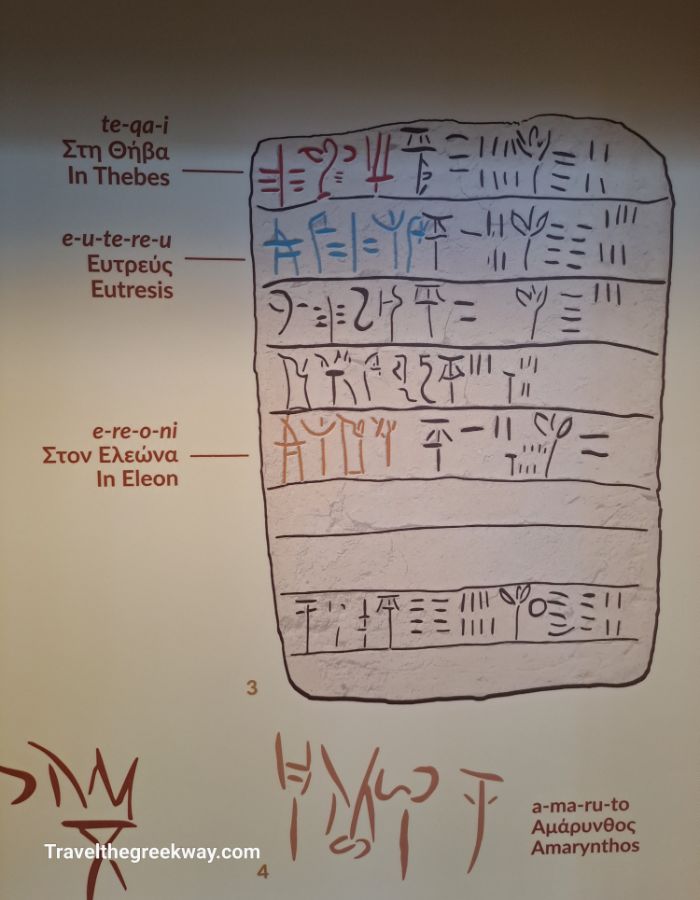
There is a section with special reference to the tragedies of the Theban mythological cycle.
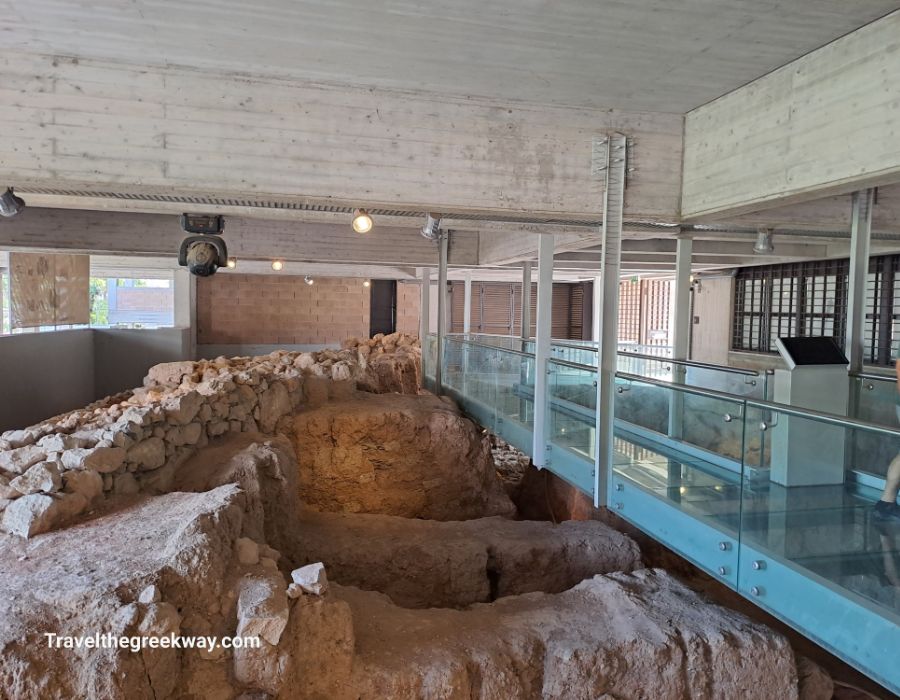
Under the museum, you can visit a house from the 3rd millennium, graves from the 17th century BCE, and the foundation of the Mycenaean wall of Kadmeia (13th century BCE).
I loved the Mycenaean larnakes from Tanagra, archaic Kouros statues from Ptoon, and characteristic funerary columns from the classical period made of black stone.
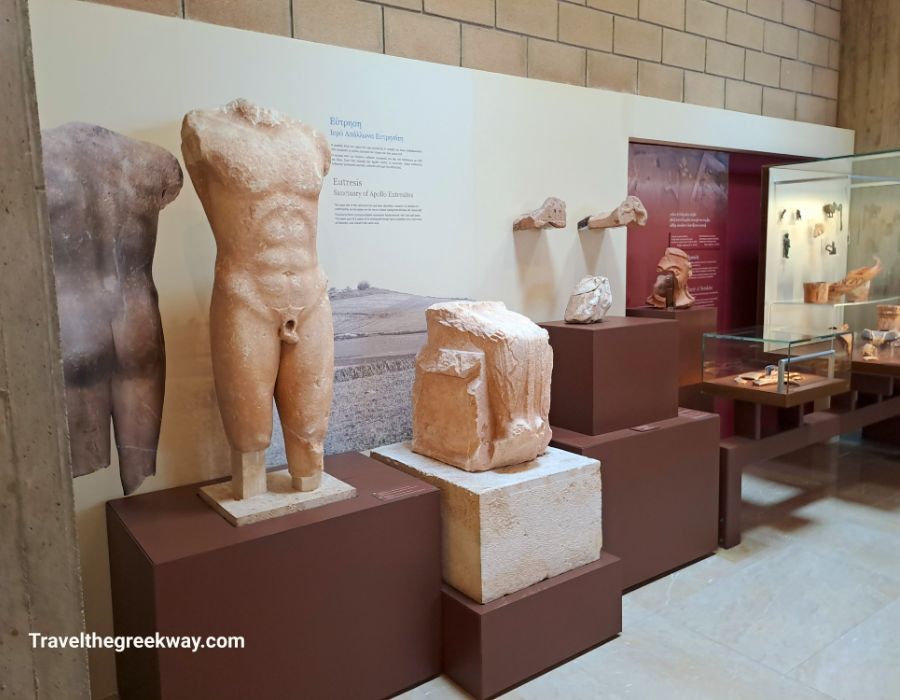

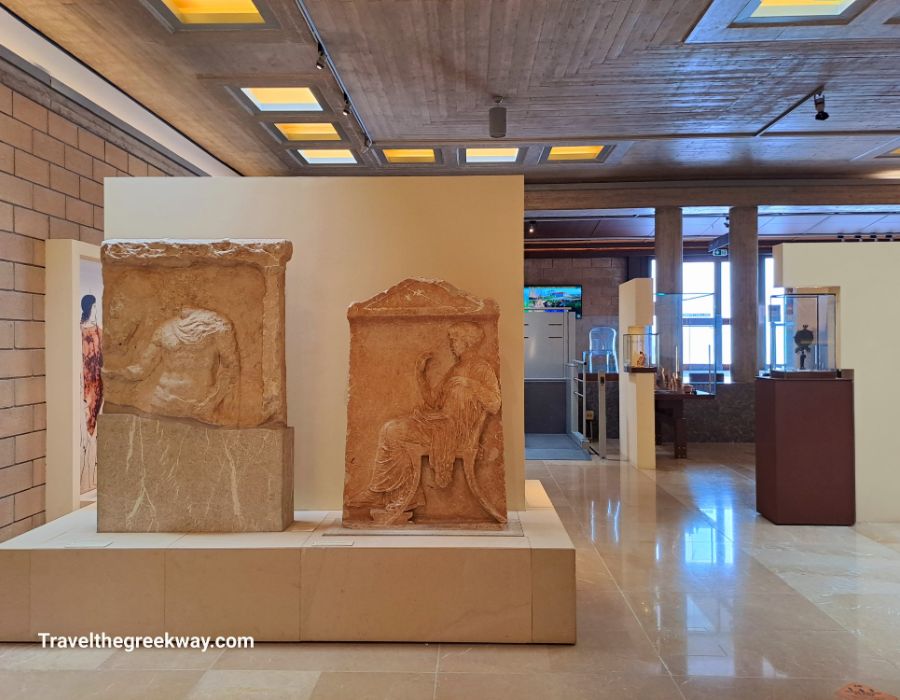
The exhibits from the Byzantine era of Thebes, Greece, with the stunning mosaic, are also very impressive and beautiful to look at:


Address: Archaeological Museum of Thebes, Greece, Threpsiadou 1, Keramopoulou Square, Phone: +30 22620 27913, Website: www.mthv.gr.
The Archaeological Ruins in Thebes
Unfortunately, the multiple destructions of Thebes, Greece, over the millennia have left us today with only a handful of monuments of its glorious past. You can visit the remains of:
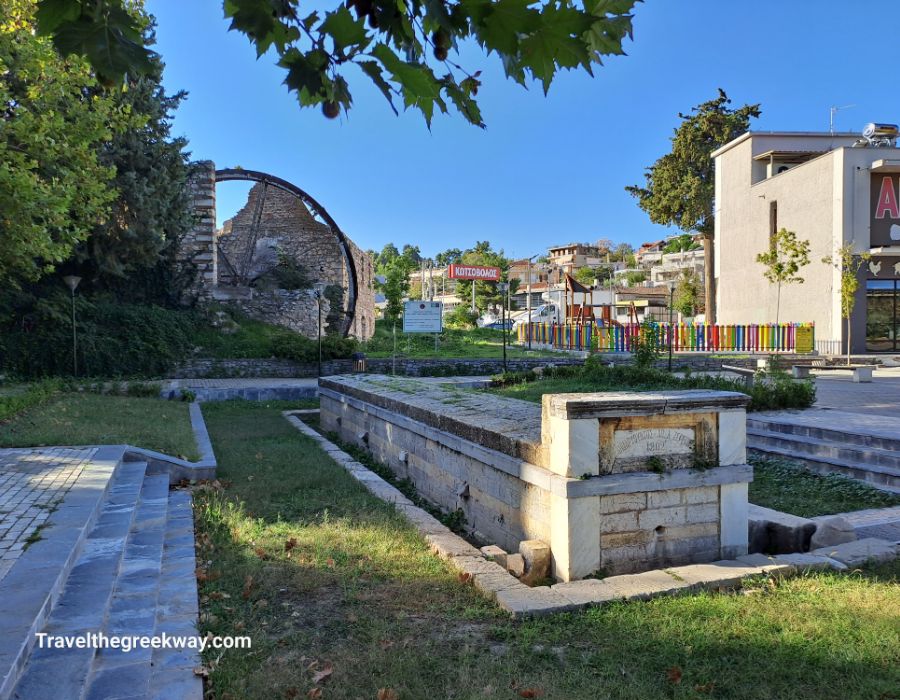
Oedipus’ Fountain at the entrance of Thebes. Oedipus supposedly washed his hands in this fountain after killing his father and the king of Thebes, Laius. Today, there is no running water.
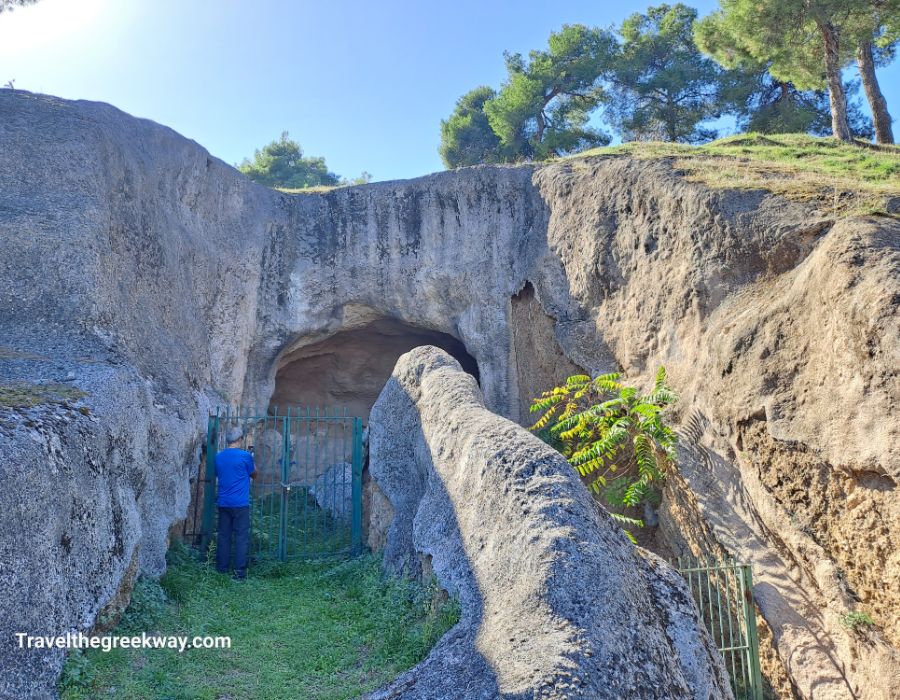
The Mycenaean chamber tombs from the 13th century BCE are right across from the Park of Saint John. The most famous Mycenaean tomb in Greece is in Mycenae.
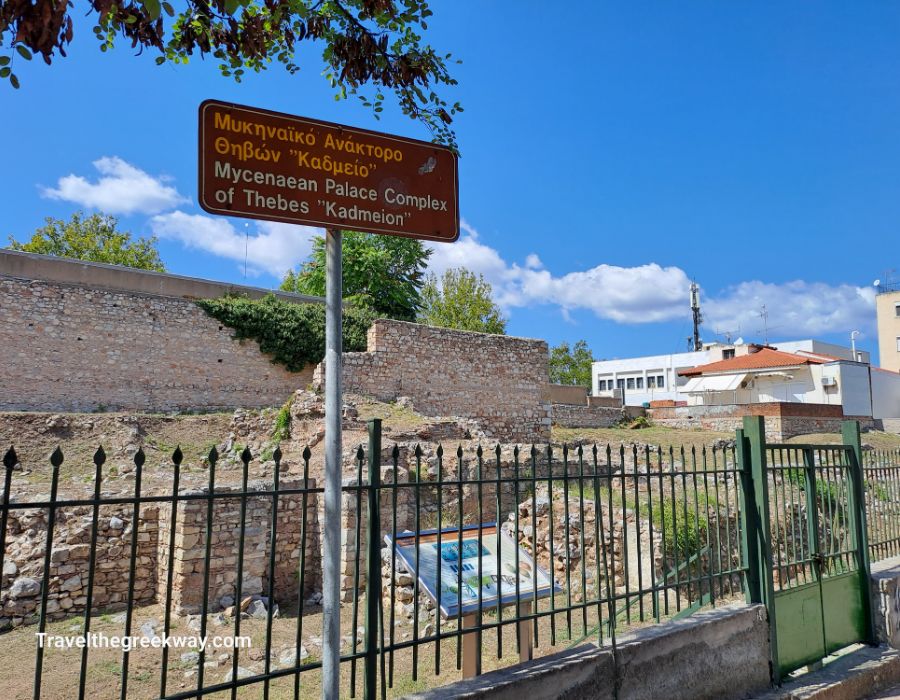

The Mycenaean Palace or Kadmeion is on the main street of Pindarou.
The Temple of Ismenian Apollo was built after the victory of Leuctra in 371 BCE and belonged to the most important cults of Thebes. You can visit it at the intersection of Oplarchigos Voglee and Apollo Streets.


The Gates of Kadmeion. Only the two gates out of the seven gates of Thebes survive today. I visited the Hlektrai Gates near the Church of the Apostle Luke.
Below is a short video I put together from my recent trips, showing the modern town of Thiva and the ancient ruins of the Cadmea.
Main Square of Thebes, Greece
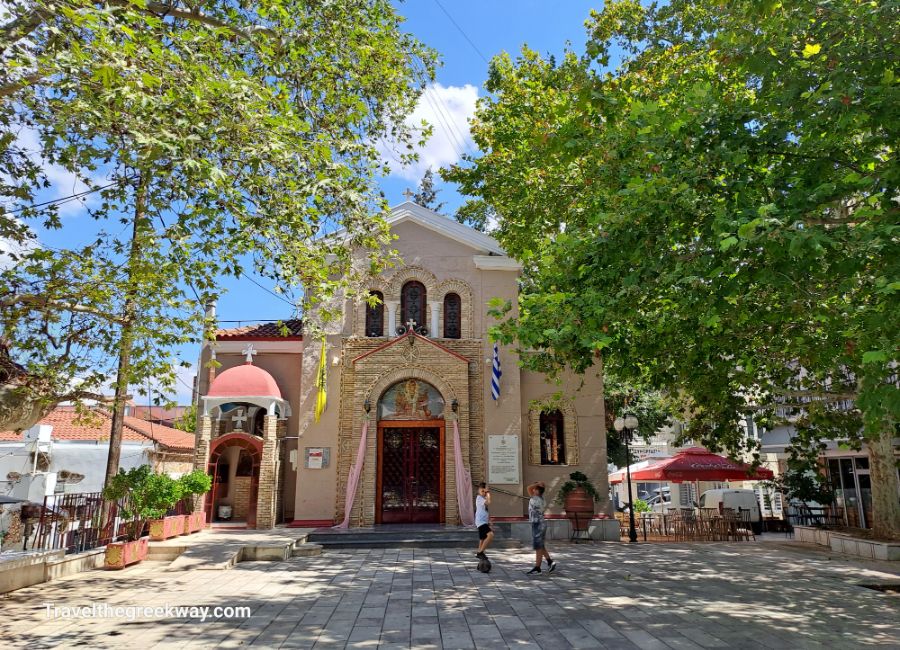
The pedestrian street of Epameinonda is in the heart of Thebes, always busy as it concentrates many local activities:
Pretty cafes and restaurants, children’s playgrounds, and churches are all here in a safe and beautiful place. One of the best things you can do is to take a stroll along the promenade and have a coffee break!
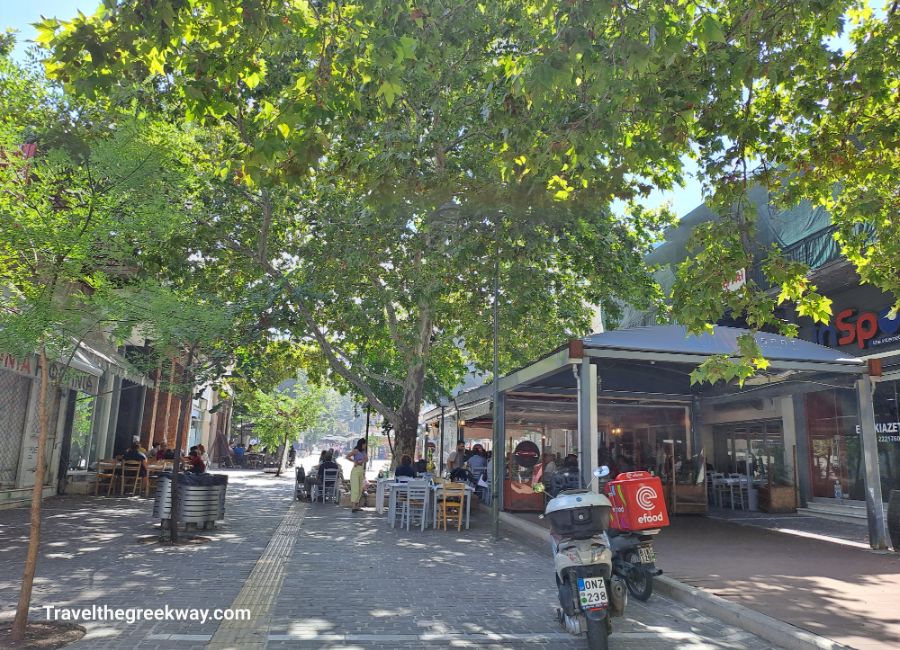
If you would like to taste the local cuisine, great places for your meals are:
- Tzaki Tavern: for traditional Greek flavors and a wide variety of homemade dishes
- Ladokolla Tavern: delicious Mediterranean cuisine cooked traditionally
- For more international cuisine, go to Barbeque with American-style burgers, juicy meats, pasta, and risotto.
The Church of Apostle Luke
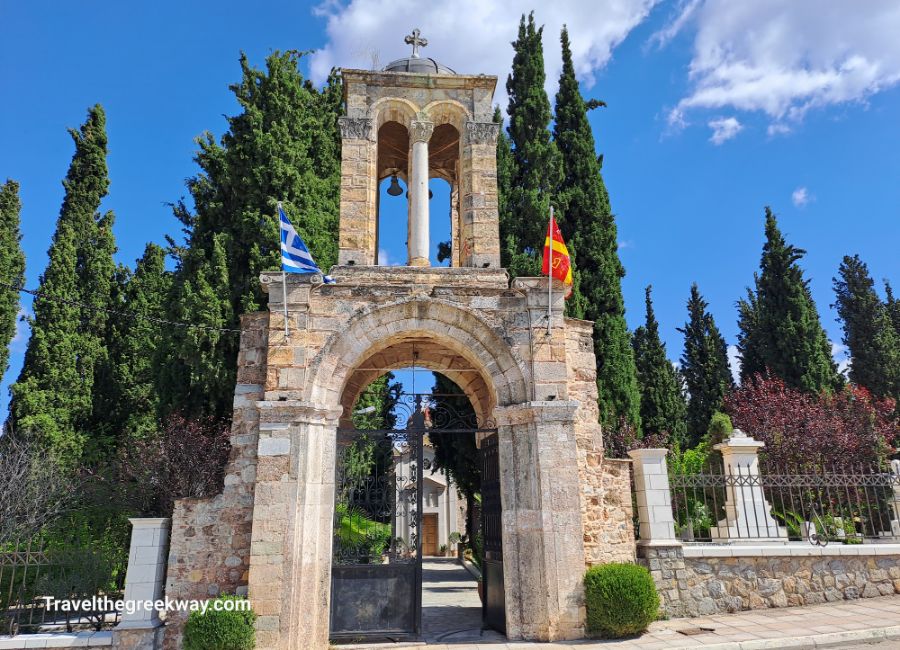
Visit the Holy Temple of Evangelist Luke, who, after the death of Apostle Paul (who stayed for 1,5 years in Corinth), lived, taught, wrote, and passed away in Thebes!
Here you can visit the tomb and relics of Apostle Luke, who died in Thebes between 84 CE and 100 CE.

The Bishop of Padua in 1992 delivered to Metropolitan Ieronymos the rib of Saint Luke that was closest to his heart to be kept at his tomb in Thebes.
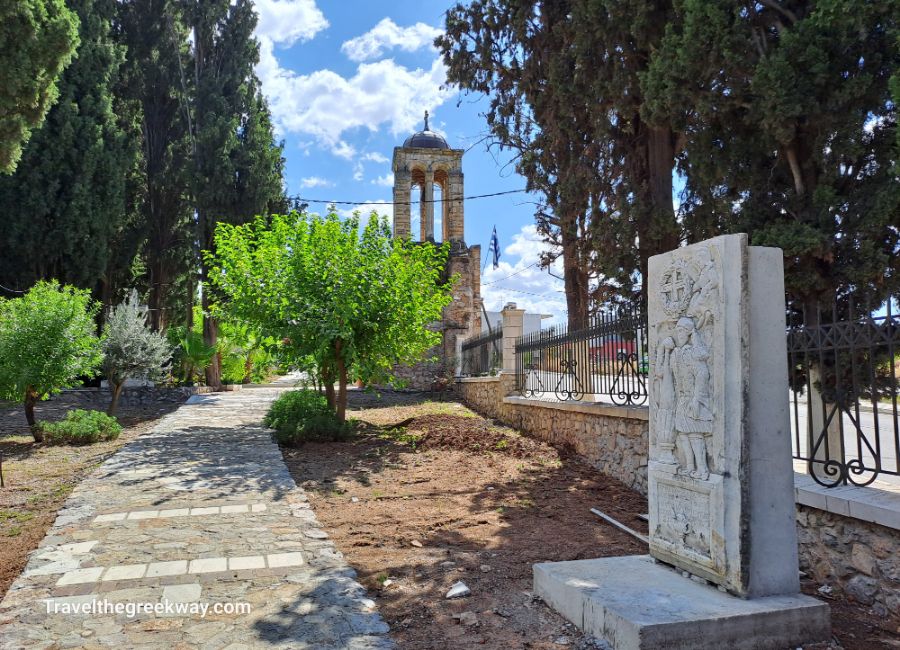
The church is closed at midday, so you’d better go there in the morning to be able to visit the church. I didn’t know that, so when I got there, I could only visit the beautiful courtyard.
Forest of Moschopodi

A mile out of Thebes, you get to the beautiful Moschopodi Forest, a wonderful pine forest, ideal for mountain biking and hiking.
The Association of Ski Mountaineers & Cyclists of Thebes often organizes hikes, which are announced on their website.
You can hike the 16-kilometer circular route, with several technical sections, starting from the Moschopodi Theater at an altitude of 265 meters. Or you can stroll through the pine forest and have a traditional meal at the Mparmpa Giannis restaurant.
History of Thebes, Greece
The myth says that Thebes was founded by Kadmos, brother of Europa from ancient Phoenicia (Lebanon today). The historical evidence, however, shows that Thebes was inhabited since the Paleolithic era.
Due to its rivalry with Athens, Thebes did not participate in the Hellenic alliance but instead allied with the Persians in 480 and 479 BCE.
In the Battle of Plataea (an area close to Thebes where the final battle against the Persians occurred), the Thebans fought alongside the Persians. After the Greek victory against the Persians, the Greek allies besieged Thebes and executed the Theban leaders without destroying the city. Thebes then became an Athenian subordinate.
In 335 BCE, the city of Thebes was obliterated by Alexander the Great. Twenty years later, Kassander rebuilt the city, but it never regained its previous hegemony in Boeotia.
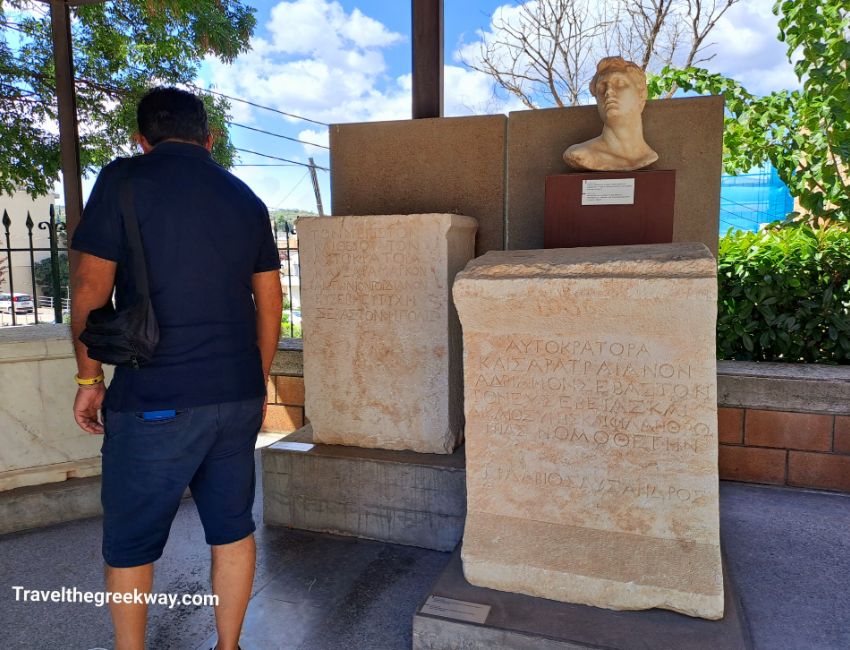
During the Roman era, Thebes was probably invaded and destroyed by Roman general Metellus (148 BCE) and by Sulla in 86 BCE.
Nero (66-67 CE) and Hadrian (125 CE) also visited the city.
Thebes became part of the vast Byzantine Empire and later on under the rule of the Franks (1204-1311), Catalans (1311-1379), Navarrese (1379-circa 1388), and Florentines (circa 1388-1460). Boeotia was annexed by the Ottomans in 1460.
The final liberation of Thebes from the Ottomans was completed with the Battle of Petra in Boeotia on September 12, 1829.
Best Tours for Thebes, Greece

Below are some of the top tours for Thebes from Athens:
- Marathon, Thermopylae, Thebes/Plataea, Herodotus Private Tour 11h (For History Buffs!)
- Thebes & Chalkida Island Private Tour from Athens (My Favorite!)
- 2 Days Herodotus Tour – Marathon, Thermopylae, Delphi, Thebes, Plataea, Salamis (Best Deal!)
Mythology and Thebes, Greece
Hercules
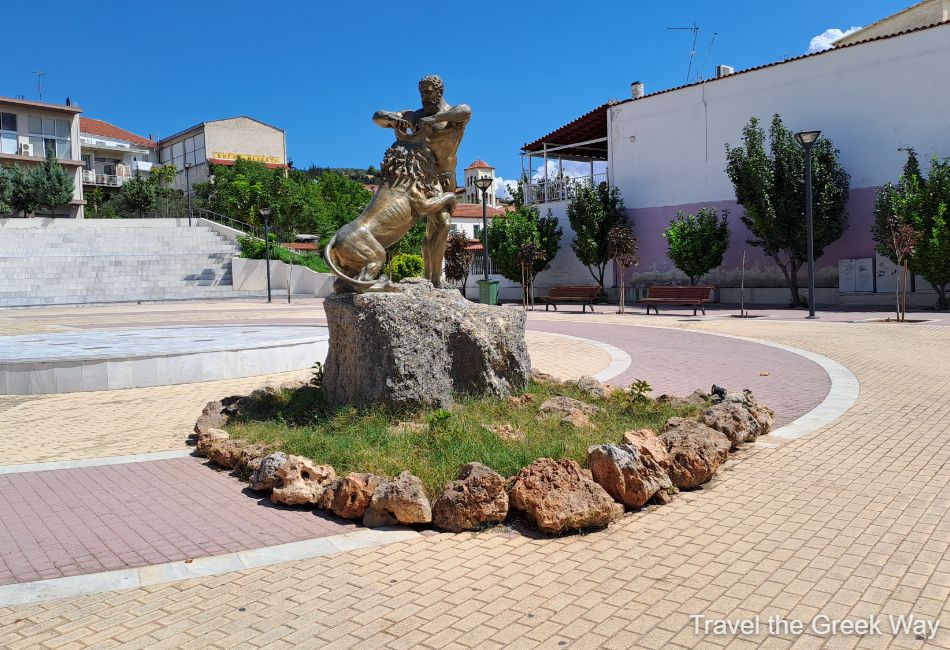
Hercules was born in Thebes and he was the son of Amphitryon and Alkmene, although Zeus is considered to be his real father. He married Megara, the daughter of the King of Thebes, and he had three children.
However, Hera drove him mad, leading him to kill his wife and children. When he realized what he had done, he went to the Oracle of Delphi to seek guidance on how to purify himself.
According to the Oracle’s advice, he had to serve King Eurystheus of Tiryns and Argos for twelve years and perform the 12 tasks that Eurystheus would command him. The first of Hercules’ tasks was to slay the Nemean lion.
Oedipus
Oedipus was the son of the King of Thebes, Laius, and Jocasta. As soon as he was born, his parents left him on a mountain to die because the oracle had prophesied that Oedipus would kill his father.
Lack made him accidentally meet his father, Laius, whom he indeed killed. Oedipus then became the new king of Thebes and married his mother, Jocasta.
When he learned of his origin and what he had done, he blinded himself and abandoned Thebes. His daughter Antigone helped him out of Thebes.
Aeschylus (c. 525/524 – c. 456/455 BC), born in Eleusis, wrote the Seven against Thebes tragic play.
Famous Ancient Thebans
- Pindar: the most important ancient lyric poet
- Isiodos: Historian
- Epaminondas, Pelopidas, and Pagon: Theban generals
- Crates: A Cynic philosopher.
- Simmias: Philosopher and a disciple of Socrates.
Thebes Greece FAQ
Where to Stay in Thebes
Lf Suites – Irene is a wonderful, brand-new, modern apartment in the center of Thebes with beautiful garden views.
How Much Time Do I Need for the Museum?
The museum is quite large (1000 sq m) with an amazing wealth of exhibits, so allow at least 2 to 3 hours to spend there. At the end of your tour, you can relax at the museum’s small cafe.
Is the Museum Accessible?
Yes, it is. There is flat access.
Do I need cash, or do they accept credit cards?
You can pay either with cash or with a credit card at the entrance of the museum.
Join Our FB Group & Subscribe to My YouTube Channel!
For more Greece travel tips and ideas for your next trip, join my free Facebook Group or follow me on YouTube for more videos from around Greece.
Happy and safe travels,
Evgenia
My Most Popular Posts
- Greece Packing List – What to pack for a 10-day trip to Greece
- First Time to Greece – Most Important FAQ
- Athens Hotels Near the Acropolis
- Athens Apartments Near the Acropolis
- Best Athens Beach Hotels
Essential Travel Info for Greece
- ‘Hello’ and ‘Thank You’ in Greek: “Ya sou” and “Efharisto”
- Booking.com: I use Booking.com mostly for Europe.
- All-Inclusive Resorts in Greece
- Rent an Affordable Car in Greece
- Athens Metro Website (timetables and ticket info)
- Trains (Hellenic Train)
- Public Buses KTEL
- Get Your Guide: For all your day or multi-day tours and city guide needs, I use Get Your Guide
- Emergency Numbers Anywhere in Greece: AMBULANCE 166 – FIRE 199 – POLICE 100– EMERGENCY NUMBER 112
