Have you ever been somewhere that felt both grounding and alive, a place where days move slowly, conversations linger, and nature shapes the rhythm of life?
In Pelion, that feeling comes naturally. It’s not about ticking off sights, but about how the mountain, villages, and sea come together to create a sense of balance.
Pelion is a mountain peninsula where stone villages sit among forests, paths connect settlements through shade and streams, and the landscape changes depending on which side of the mountain you’re on.
Life here follows the terrain: quiet mornings in village squares, long walks through greenery, swims in the Aegean, and evenings that stretch without hurry.
This Pelion travel guide covers the different areas of the mountain, how to get around, where to stay, and how to plan your time based on the season — whether you’re visiting for hiking, beach days, village life, or a mix of everything.

This post includes links that may be affiliate links. If you choose to make a purchase through them, I may earn a small commission at no extra cost to you. Please see my disclaimer/privacy policy for more information.
Where Is Pelion, Greece?
Pelion is located in Thessaly, in central mainland Greece, stretching between the Pagasetic Gulf on the west and the Aegean Sea on the east.
The closest city is Volos, which sits at the foot of the mountain and acts as the main gateway to the region and the Sporades Islands (Skopelos, Skiathos).
Pelion is about 330 km / 205 mi from Athens (around 4–4.5 hours by car) and 215 km / 134 mi from Thessaloniki (about 2.5–3 hours).
From Volos, village drives are short but winding, with distances usually measured in minutes rather than kilometers.

Why Visit Pelion
Pelion doesn’t match the stereotypical image of Greece that’s popular on social media. You won’t find dry landscapes, whitewashed villages with blue domes, or postcard-style island scenes.
Instead, Pelion offers a greener, more varied side of the country that feels closer to everyday Greek life.
Along its coastline, you’ll find numerous seaside villages and long beaches, while inland, the mountain is dotted with traditional stone villages, dense forests, natural springs, and old cobbled paths.
Water streams run through many areas, and centuries-old churches and monasteries appear both in villages and hidden along hiking routes.
Because of this mix of sea and mountain, Pelion works well in every season. Summer focuses on beaches and swimming, spring and fall are ideal for hiking and village exploration, and winter brings snow to the upper villages and the ski area near Hania.

How to Get to Pelion
BY PLANE
The closest airport to Pelion is the Nea Anchialos National Airport, 30 km from Volos near Almiros.
During the summer, several European airlines fly to Nea Anchialos.
BY CAR
National highways connecting Greece’s major cities are modern, well-maintained, and include toll sections along the way.
Once you enter Pelion from Volos, road conditions change, with narrow mountain roads, sharp turns, and frequent elevation changes that require slower driving and extra attention.
Book your rental car in Greece with Discover Cars
BY PUBLIC TRANSPORT
If you prefer not to drive, you can travel by public bus from the Athens KTEL station on Liosion Street. The larger KTEL station in Kifisos does not serve routes to Pelion.
Buses arrive in Volos, where you’ll need to transfer to a regional bus heading to your chosen Pelion village. Routes vary by destination and season, so it’s best to select your village in advance and check the current schedule.

Discover the Different Areas of Pelion, Greece
Pelion Mountain covers most of the Magnesia region. Because of its size and varied landscape, Pelion is usually divided into four main areas: Western, Central, Eastern, and Southern Pelion.
Understanding how these areas differ makes it easier to plan your time, choose where to stay, and decide which villages and activities fit your travel style.
Below is an overview of each region, moving clockwise around the mountain.

Western Pelion (Pagasetic Gulf Side)
Western Pelion lies along the Pagasetic Gulf and includes Volos and several villages that combine coastal access with easy mountain routes.
This side of Pelion is generally calmer, with shorter driving distances and more sheltered waters.
Volos

Volos is the largest town in the region and the main entry point to Pelion.
It is known for its waterfront promenade and traditional tsipouradika, where small seafood dishes are served alongside tsipouro or ouzo. Volos functions primarily as a transport and service hub rather than a village destination.
Agria
South of Volos, Agria is a lively coastal town with year-round activity. It is often used as a base for exploring western Pelion due to its seaside location and easy road connections.
Ano Lechonia & the Pelion Train
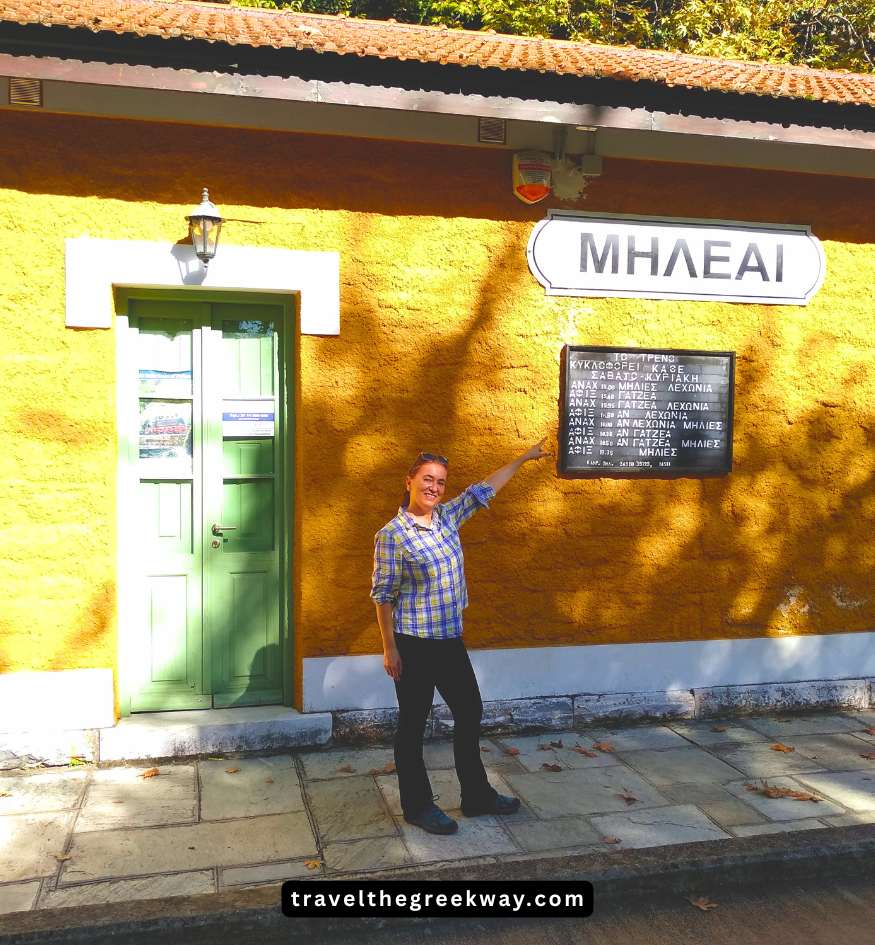
From Agria, the road climbs toward Ano Lechonia, where the historic narrow-gauge Pelion railway begins. The train connects Ano Lechonia with Milies, crossing forests, stone bridges, and ravines along a 16 km route. The railway dates back to the late 19th century and operates on limited days.
Ano Lechonia also includes historic mansions and traditional olive oil production facilities that can be visited locally.
Agios Vlasios & Agios Georgios Nilias
Further into the mountain, Agios Vlasios and Agios Georgios Nilias are smaller villages surrounded by forests and streams.
These villages are known for traditional architecture, quiet village squares, and walking paths through chestnut and beech trees.
Pinakates & Vizitsa
Pinakates and Vizitsa are protected settlements known for their stone mansions and preserved architecture. Vizitsa also serves as a starting point for several hiking routes and is located near the Pelion railway line.

Central Pelion
Central Pelion sits above Volos and includes some of the most accessible and well-known villages on the mountain. This area combines panoramic views with cultural sites and short hiking trails.
Anakasia
Anakasia is a small village near Volos and home to the Theophilos Museum, dedicated to the Greek folk painter Theophilos Hatzimichail.
Makrinitsa
Makrinitsa, often referred to as the “balcony of Pelion,” overlooks Volos and the Pagasetic Gulf. The village features cobblestone alleys, restored mansions, and historic churches.
Portaria
Portaria is one of the most developed villages in Pelion, with shops, taverns, and accommodation options. It also provides access to nearby walking paths and farms.
Hania
Higher up the mountain, Hania serves as a winter base for the Agriolefkes Ski Center and remains a transit village during warmer months.
Read my Makrinitsa village guide

Eastern Pelion (Aegean Sea Side)
Eastern Pelion faces the open Aegean Sea and is known for longer beaches, stronger waves, and cooler water temperatures. This side of the mountain is greener and more dramatic, with villages spread between the slopes and the coastline.
Kissos
Kissos is a traditional mountain village with a large central square and the Basilica of Agia Marina, known for its carved wooden iconostasis.
Zagora & Chorefto
Zagora is one of the largest villages in Pelion and is famous for the Chorefto Beach, a long sandy beach on the Aegean coast. The village is also known for its apple production and historic libraries.

Tsagarada
Tsagarada is made up of four small settlements, each with its own square. The village is famous for its centuries-old plane tree and serves as a base for hiking and beach access to Mylopotamos and Fakistra.
Agios Ioannis & Damouchari
Agios Ioannis is a coastal village with several beaches nearby, while Damouchari is a small fishing bay surrounded by dense vegetation and historic ruins. Both villages connect easily to eastern Pelion’s beaches and walking paths.
Read my Tsagarada village guide

Southern Pelion
Southern Pelion is less mountainous and more open, with olive groves, fishing villages, and calmer coastal waters. This area works well for slower travel and short road trips.
Argalasti
Argalasti is the administrative and cultural center of southern Pelion and provides access to nearby monasteries and beaches.
Chorto & Milina
Chorto and Milina are seaside villages with shallow waters and easy access to swimming, walking routes, and boat excursions. The area also includes museums and traditional village cafés.
Lafkos & Paleo Trikeri
Lafkos is an inland village with preserved mansions and historic cafés, while Paleo Trikeri is a small car-free island reached by boat taxi, known for its monastery and walking paths.
The southern part of Pelion Mountain has many small villages, found both on its coastline and the mainland, surrounded by mostly olive groves.

Where to Stay in Pelion, Greece
Where you stay in Pelion largely depends on which side of the mountain you want to explore. The peninsula is spread out, and while distances look short on a map, mountain roads and elevation changes make it practical to base yourself in one area at a time.
Western Pelion works well for easy access and calmer waters, central villages offer views and short hikes, eastern Pelion suits beach-focused trips along the Aegean, and southern Pelion is quieter and more open.
Below, you’ll find accommodation suggestions by area to help you choose a base that matches how you plan to move around Pelion.

Western Pelion
Western Pelion runs along the Pagasetic Gulf and includes Volos and several coastal and semi-mountain villages.
This area offers easier/flatter road access, shorter drives between villages, and generally calmer sea conditions, making it practical for combining town life with short excursions into the mountain.
Recommended stays in this area include:
- Sunset city apartment (Volos)
- Sakali Mansion (Pinakates)
- Mansion Karagiannopoulou (Vizitsa)
Central Pelion
Central Pelion sits above Volos on the mid-slopes of the mountain and is known for panoramic views, traditional villages, and short walking routes. Villages here are close to one another and work well for travelers who want easy access to sights without long daily drives.
Here are some accommodation choices for this region:
- Charis Guesthouse (Makrinitsa)
- Gastronomy Hotel Kritsa (Portaria)

Eastern Pelion
Eastern Pelion faces the open Aegean Sea and includes both mountain villages and coastal settlements. This area is greener and more dramatic, with longer beaches, cooler waters, and stronger winds. It suits trips focused on beach time, hiking, and outdoor activities.
Suggested places to stay in this region:
- Sunrise Tsagkarada
- Agapitos Villas & Guesthouses (Agios Ioannis)
- Guesthouse Kapaniaris (Zagora)
Southern Pelion
Southern Pelion is more open and less mountainous, with olive groves, small fishing villages, and quieter coastal areas. Roads are generally less steep, and the region works well for slower-paced travel and short road trips between seaside villages.
Below are a few accommodation options in this area:
- Sea Front (Milina)
- MELIES- Seaside Boutique Apartments (Chorto)

7-Day Pelion Itinerary
This 7-day itinerary offers a balanced way to experience Pelion by combining mountain villages, coastal stops, and short road trips. It follows a clockwise route around the mountain to limit backtracking and long drives.
Day 1: Volos → Portaria → Makrinitsa
Begin in Volos and drive uphill to Portaria, then continue to Makrinitsa. Spend the day walking through village squares and cobblestone alleys, with views over the Pagasetic Gulf. Short walking paths connect the two villages, making this a relaxed introduction to Pelion.
Overnight: Portaria or Makrinitsa
Day 2: Central Pelion Villages & Short Walks
Use the day to explore nearby villages such as Anakasia and Portaria, or walk part of the Centaur’s Trail. Distances are short, allowing time for museums, cafés, and village squares without long drives.
Overnight: Portaria or Makrinitsa

Day 3: Portaria → Chania → Tsagarada
Drive higher into the mountain toward Chania, then descend toward Tsagarada on the eastern side. This route shows the change in landscape from inland forests to Aegean-facing slopes. In winter, Chania also provides access to the ski area.
Overnight: Tsagarada
Day 4: Tsagarada → Mylopotamos → Fakistra
Explore Tsagarada’s village squares, then head to nearby beaches such as Mylopotamos or Fakistra. Short drives connect mountain villages with the coast, making it easy to combine sightseeing and swimming in one day.
Overnight: Tsagarada
Day 5: Kissos → Agios Ioannis → Damouchari
Visit Kissos and continue toward the coast to Agios Ioannis and Damouchari. This stretch includes traditional villages, beaches, and short walking routes between settlements. The day works well without a fixed schedule.
Overnight: Agios Ioannis or Chorefto
Day 6: Zagora → Chorefto
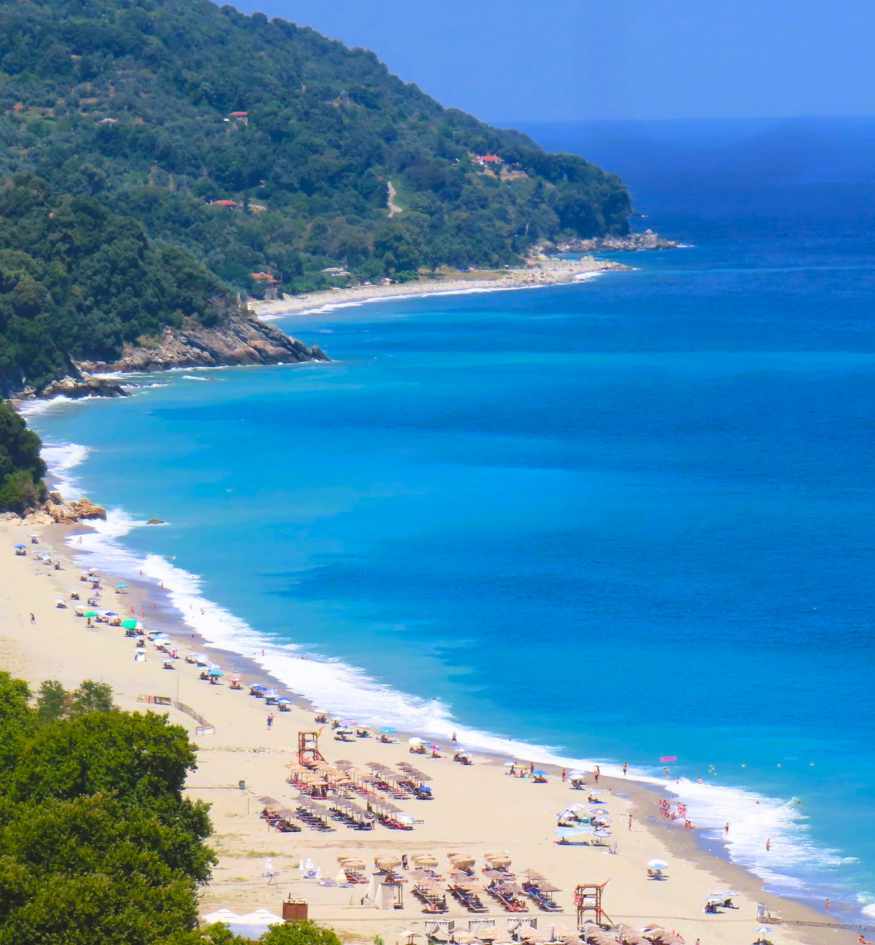
Drive north to Zagora, one of Pelion’s larger villages, then continue to Chorefto Beach. The area combines village life with long beach walks and open sea views.
Overnight: Agios Ioannis or Chorefto
Day 7: Milies → Return to Volos
Cross back toward western Pelion and visit Milies, known for its historic architecture and railway station. From here, return to Volos, completing a full loop around the mountain.
FAQs for Pelion
How many days do you need in Pelion?
A stay of 4 to 7 days allows time to explore villages, beaches, and hiking routes without rushing. Shorter visits usually focus on one area of the mountain.
Do you need a car to visit Pelion?
A car is highly practical for Pelion due to the mountain terrain and limited public transport between villages, especially outside peak season.
Is Pelion suitable for a first trip to Greece?
Pelion works well for travelers interested in villages, nature, and beaches rather than major archaeological sites or island hopping.
What is Pelion best known for?
Pelion is known for its stone-built villages, forests, cobblestone paths, beaches, local cuisine, and traditional architecture.
Does Pelion get snow in winter?
Yes. Higher villages and the Hania area often receive snow in winter, and Pelion has an active ski center during the season.
Is Pelion family-friendly?
Pelion is suitable for families, especially villages with easy access, gentle beaches, and short walking routes.
Are Pelion villages touristy?
Some villages are more developed than others, but many retain a traditional character and quieter pace, especially outside July and August.
Is Pelion expensive?
Costs in Pelion are generally moderate compared to popular island destinations, with a wide range of accommodation and dining options.
Is Pelion safe for solo travelers?
Pelion is considered a safe destination, with low crime and a strong sense of local hospitality.
How does Pelion compare to the Greek islands?
Pelion offers a different experience, combining mountain landscapes and beaches with village life, without ferries or island travel logistics.
Is there an organized tour for Pelion?
Yes. You can book this guided tour with a pickup from Volos and take you to so many beautiful villages: Agria, Lechonia, Milies, Damouchari, Tsagarada, and Makrinitsa.
If you’re planning a longer stay or combining Pelion with Athens, check out my Athens travel ebook, where I break down the best neighborhoods, hotels, and itineraries so you can plan the whole trip smartly.
History of Pelion Mountain (Brief Overview)
Pelion is deeply connected to Greek mythology and early history. In myth, Mount Pelion was home to the Centaurs, including the wise Chiron, teacher of figures such as Achilles, Jason, and Asclepius. Several myths linked to the Trojan War are also rooted in the area.
Archaeological evidence shows that Pelion and the wider Thessaly region were among the earliest inhabited areas in Greece. Nearby Neolithic sites such as Sesklo and Dimini, close to Volos, offer insight into early settlement and daily life thousands of years ago.
Through antiquity and the Byzantine period, Pelion experienced cycles of growth and decline due to invasions, piracy, and natural disasters. From the late medieval period onward, monasteries and mountain villages became more established, shaping the region’s current settlement pattern.
In modern history, Pelion played a role in the Greek War of Independence and later became an important resistance center during World War II, events that still influence local memory and village identity today.
WATCH MY YOUTUBE VIDEOS ON PELION
READ MY PELION GUIDES
Damouchari: Pelion’s Secret Beach Paradise
Discover Tsagarada Pelion: Greece’s Mountain Paradise
For more Greece travel tips and ideas for your next trip, join my free Facebook Group or follow me on YouTube for more videos from around Greece.
Happy and safe travels,
Evgenia

I would please like to get information about tsipouro festival?
Hi Naama,
Thanks for your message. Every June in the village of Katichori at Agios Athanasios sq, Tsipouro Festival is held with a lot of music and dance. The visitors can also watch the procedure of tsipouro making and of course they can taste it.
Hi Evgenia, i would like to know if in April in Pelion , i can find taverns and restaurants open in the villages. Thanks
Hi Paolo,
Yes, of course, you will. All major villages have a tavern or 2 or more that will be operating. Where are you going in Pelion?
ciao , passero’ una settimana in Grecia .Arrivero’ a Salonicco e con la macchina vorrei vedere Verghina e Pello per poi andare nel Pelion che non ho mai visto per passarci 4/5 notti. Accetto consigli su cosa vedere per la prima volta , ma intanto mi sto leggendo con interesse la tua guida .
grazie e complimenti per il sito .paolo
I am glad you liked the post and hope to be of help to you and have a great time in Pelion
Hello, your blog is amazing! so much helpful information. Can I please ask where would you suggest staying on the Pelion that is somewhat in the middle for visiting the main towns? Thank you. Anita from Ireland 🙂
Hello Anita,
Thank you for your kind words and I am glad you find my blog useful 😀
I always stay in Tsagarada and I travel to the other villages. You can stay for a few days in Tsagarada and some more in Argalasti which is on the south. Agios Ioannis is also fantastic and has some amazing beaches there: https://travelthegreekway.com/agios-ioannis-in-pelion/
Let me know how it went and if you need hotel suggestions please send me an email at info@travelthegreekway.com. Have fun in Pelion!
Hello Evgenia.
Your site is very detailled and informative. I’m glad I found it. I will definetly consider your tips for our family trips. We are every summer in Kala Nera.
I would like to find out more about the local folklore events ( panigiri), when there are in which village. Is there a blog or site to visit with whole information about it?
Thank you for your answer and keep up the good work.
Hi Luise,
Thank you for your kind words. I am afraid there is no website just for the panigiria or if there is I haven’t come across it yet. Have fun in Pelion!