Amorgos is one of the most dramatic and unforgettable Greek islands — all deep blue water, rugged mountains, whitewashed villages, and some of the best hiking in the Cyclades.
Known from the film The Big Blue, the island still feels wild and authentic, far away from cruise ships and crowds.
As a Greek living in Athens and someone who has always loved Amorgos for its calm, genuine vibe, I wanted to create a guide that helps travelers see what makes this place so special.
In this travel guide, you’ll find the best things to do in Amorgos, the most beautiful beaches, traditional villages worth exploring, top hikes, local food, where to stay, and all the practical tips you need to plan your trip.
This post includes links that may be affiliate links. If you choose to make a purchase through them, I may earn a small commission at no extra cost to you. Please see my disclaimer/privacy policy for more information.
Best Things to Do on Amorgos Island
Quick Guide to Amorgos
- Best things to do: Visit the cliff-top Hozoviotissa Monastery, explore Chora, swim at Mouros Beach, take the boat from Kalotaritissa to Gramvousa, see the Olympia shipwreck, wander Aegiali and Katapola, and hike the Blue Paths.
- Best villages: Chora for classic Cycladic charm, Aegiali for beach life and sunset views, Katapola for a relaxed port atmosphere, and Lagada/Tholaria for great taverns. Best Seafront Hotel: Petradi Studios & Villa.
- Best time to visit: Late May–June and September for great weather and fewer crowds. July and August are busier and windier.
- Who will love Amorgos: If you enjoy hiking, traditional villages, dramatic scenery, and a slower, more authentic island experience, then this is a great place for you.
- Who might not: Travelers looking for nightlife, luxury resorts, or sandy beaches everywhere.
- Getting around: Renting a car or scooter makes the trip much easier. Buses run, but not frequently.
- Island hopping: Easy ferries to Naxos, Koufonisia, Donoussa, Schinoussa, Iraklia, Ios, and Santorini (seasonal). Use sites like FerryHopper to compare prices and book online.
Best Things to Do in Amorgos (Top Ranked)
Explore the Villages of Amorgos
Chora — The Heart of Amorgos
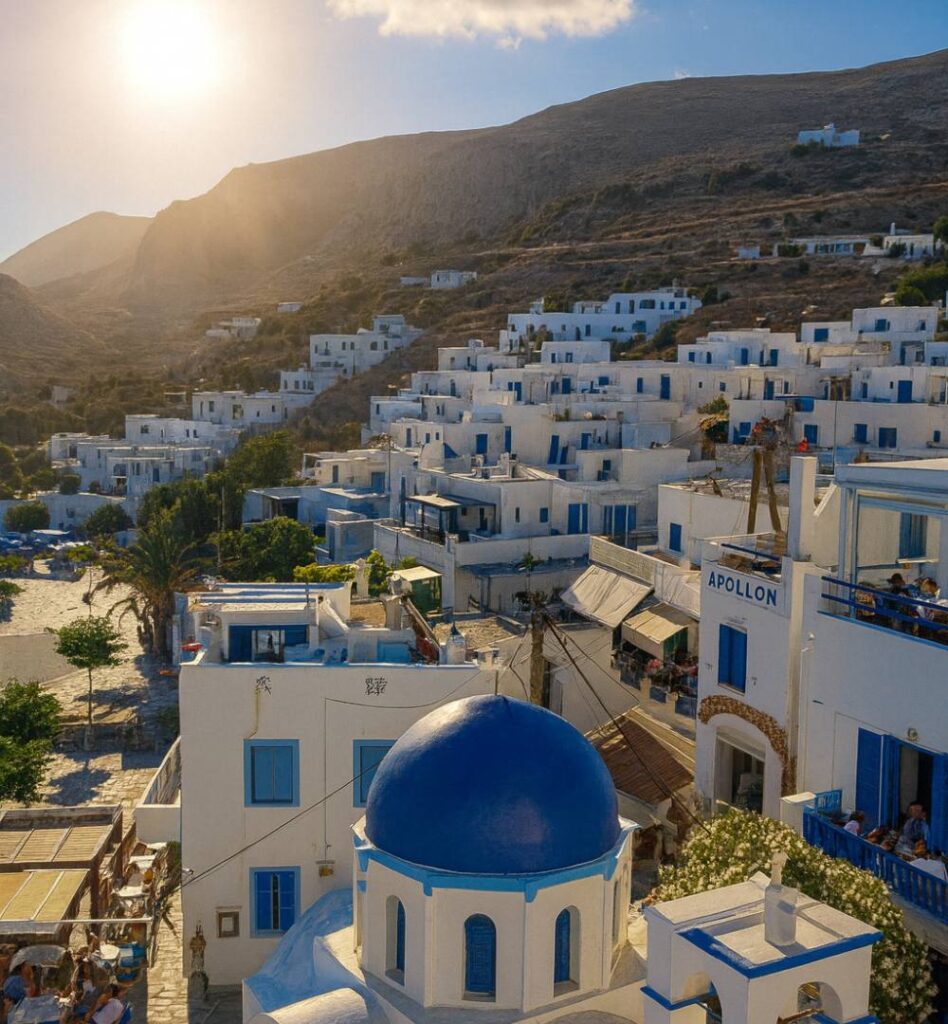
Chora is one of the most beautiful capitals in the Cyclades.
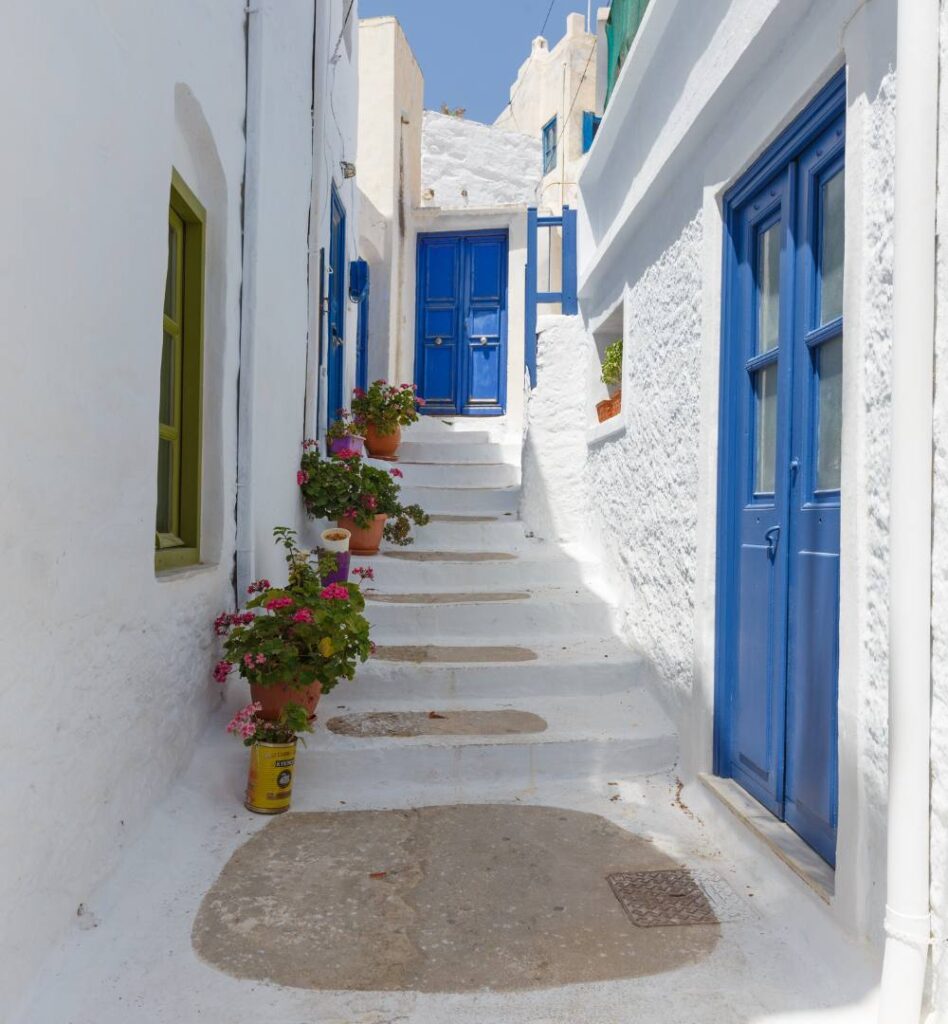
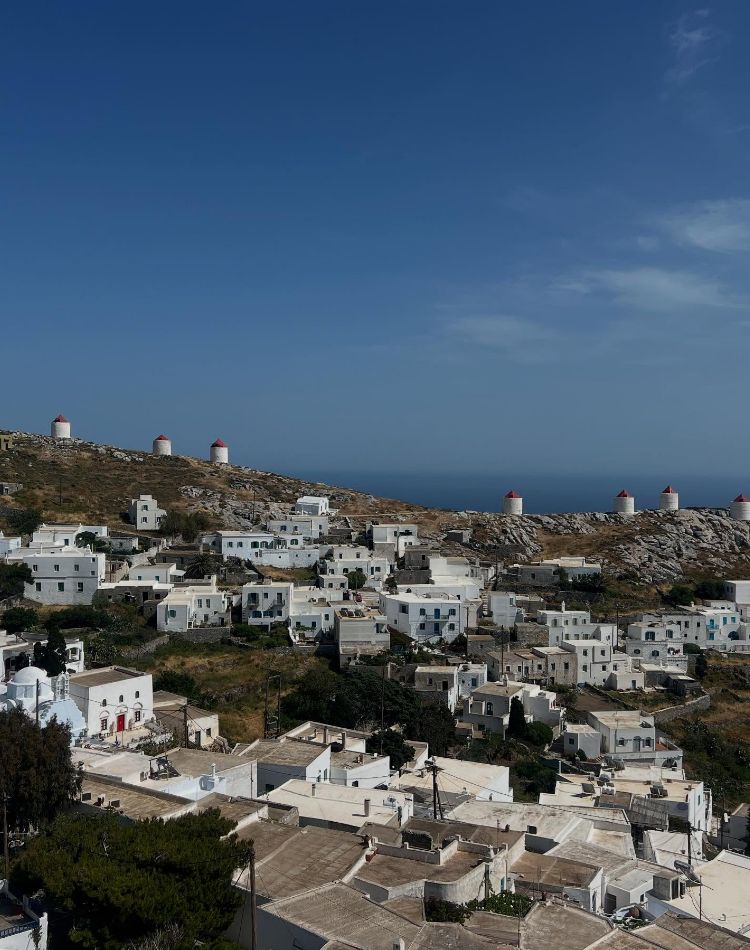
It’s a classic whitewashed village with narrow alleys, bright doors, tiny squares, and flower-filled corners.
What makes it special:
Pure Cycladic charm, calm, authentic atmosphere, and beautiful views from every corner.
What to see:
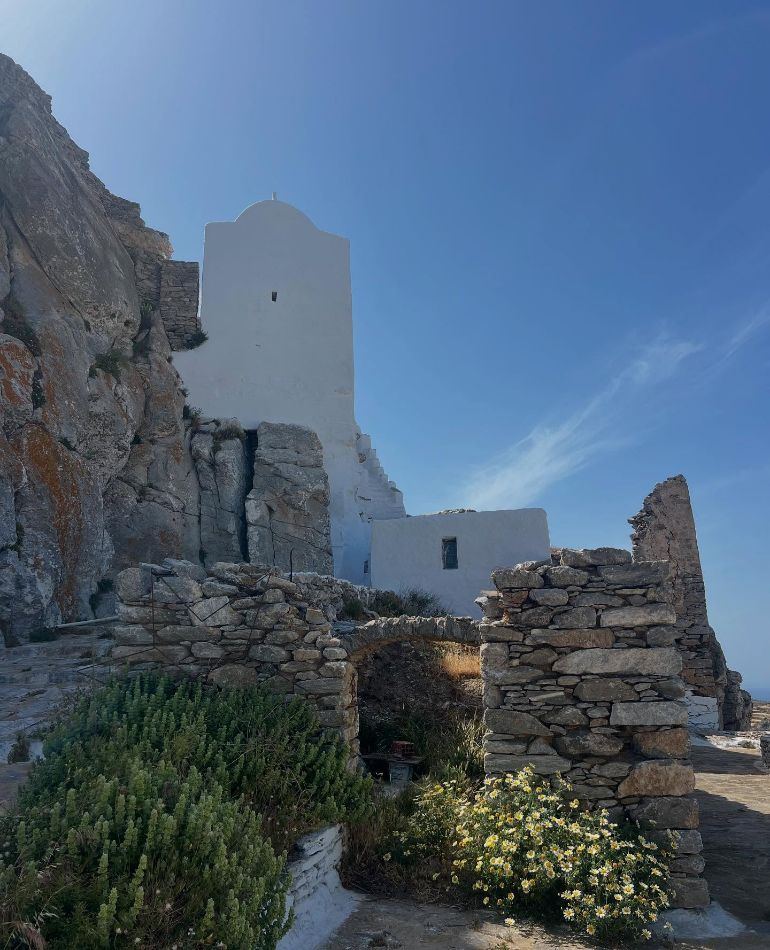
- Venetian Castle (Kastro): Climb up for sweeping views of Chora.
- Windmills: The old 19th-century windmills sit above the village in the Troullos area.
- Museums: Visit the Folklore Museum, the Archaeological Museum, and the Ecclesiastical Museum for a look into the island’s history.
Best places to eat:
- Kallisto: Perfect for anyone with a sweet tooth — their pastries are amazing.
- Local taverns: You’ll find cozy spots serving fresh Amorgian dishes and local raki.
Katapola — Port Village with Local Charm
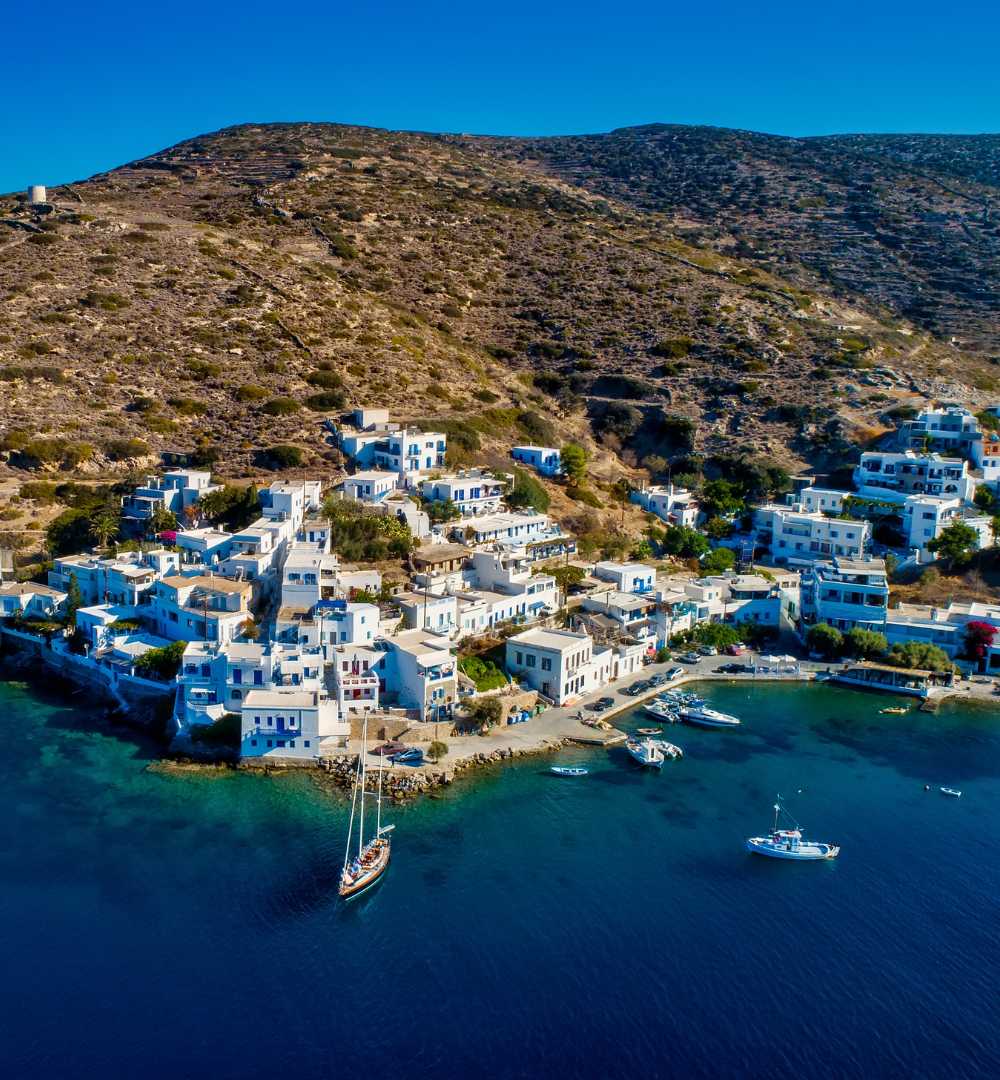
Katapola is one of the two main ports of Amorgos and has a relaxed, traditional vibe. It’s ideal if you prefer quiet evenings, family-run rooms, and easy access to ferries and coastal walks.
Best place for budget stays:
Plenty of affordable guesthouses and simple, clean rooms. A great option here is Pension The Big Blue—simple, affordable, and with amazing views over the port.
Where to swim:
The small beaches around the bay are great for morning or late-afternoon swims.
Where to eat & drink:
Cafés and taverns line the waterfront, perfect for sunset dinners or a drink by the sea.
Aegiali — Beaches, Views & Nightlife
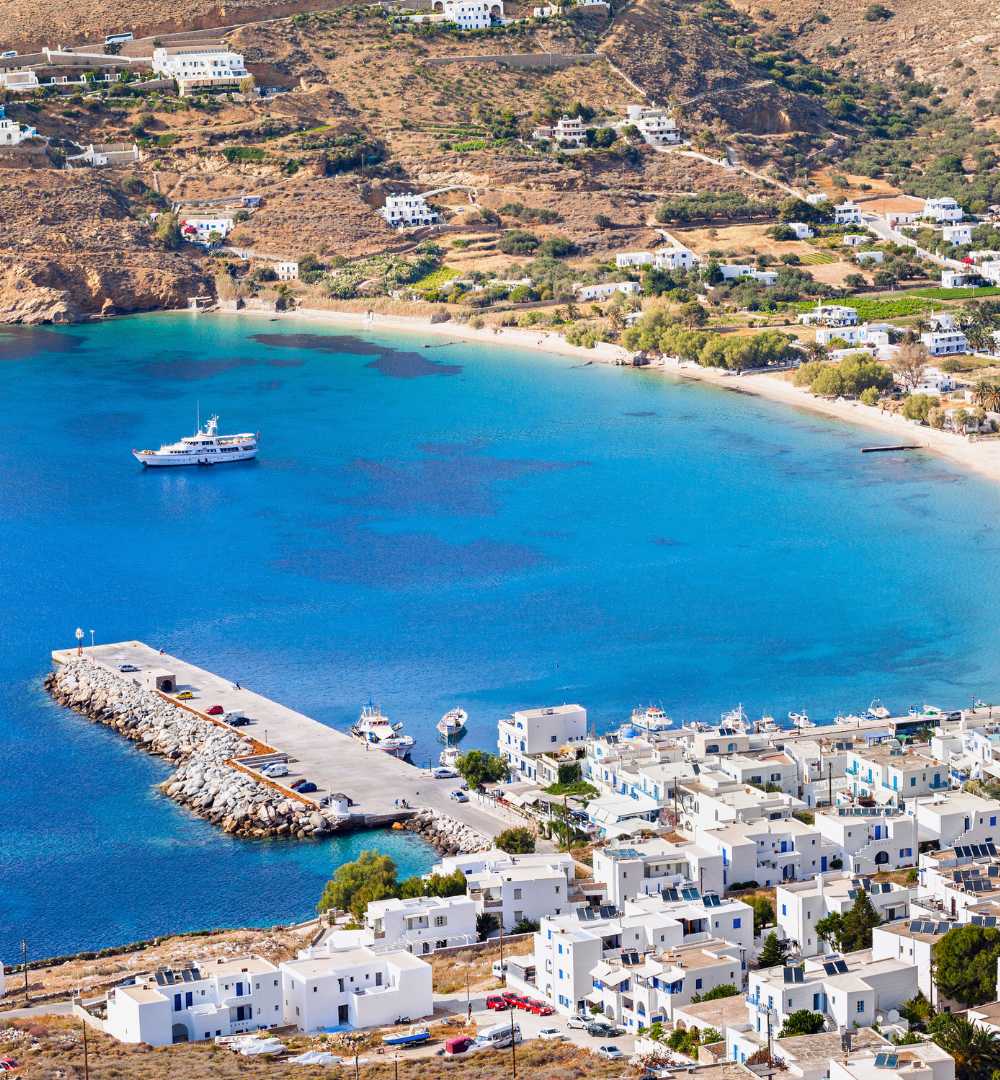
Aegiali is livelier than Katapola and is known for its long sandy beach, easy walks, and great sunset views.
It’s one of the best areas to stay if you enjoy a mix of nature, restaurants, and a relaxed bar scene.
Long sandy beach:
Great for swimming, sunbathing, and sunset walks.
Where to stay:
Many hotels overlook the bay and offer beautiful sea views. One lovely option is Kaerati Apartments.
Where to watch the sunset:
Anywhere along the waterfront — the colors over the bay are beautiful.
Lagada & Tholaria — Traditional Mountain Villages
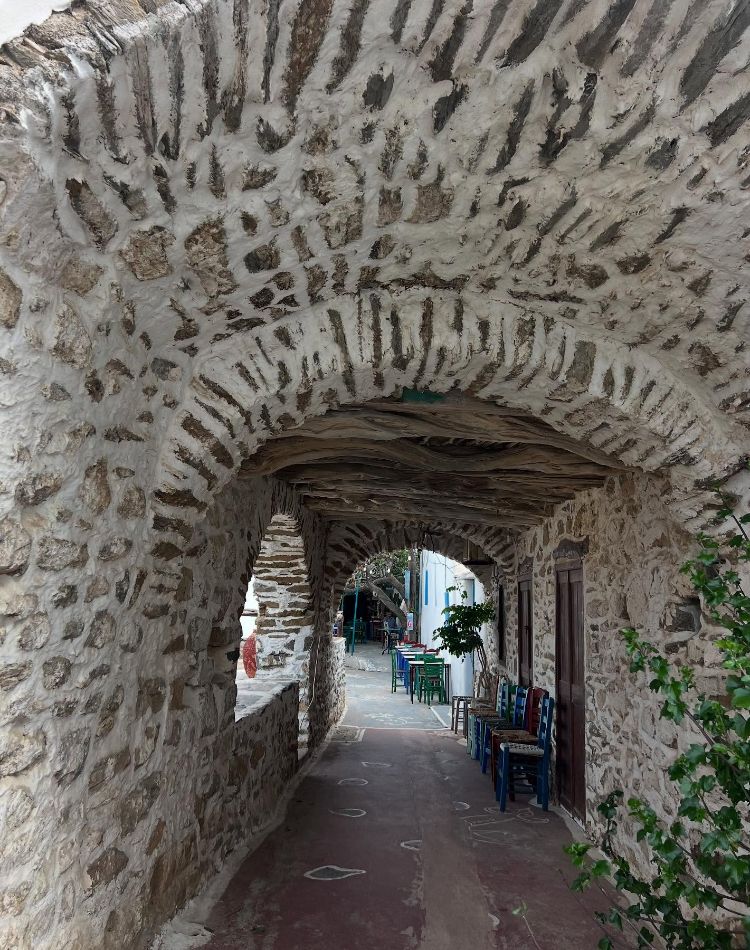
These two villages sit above Aegiali and feel wonderfully authentic. They’re quiet, picturesque, and full of traditional Cycladic architecture.
Atmosphere:
Narrow alleys, whitewashed houses, and peaceful courtyards.
Taverns:
Some of the island’s best family-run taverns are here, with homemade recipes and local wine.
Best Beaches in Amorgos
Agia Anna Beach
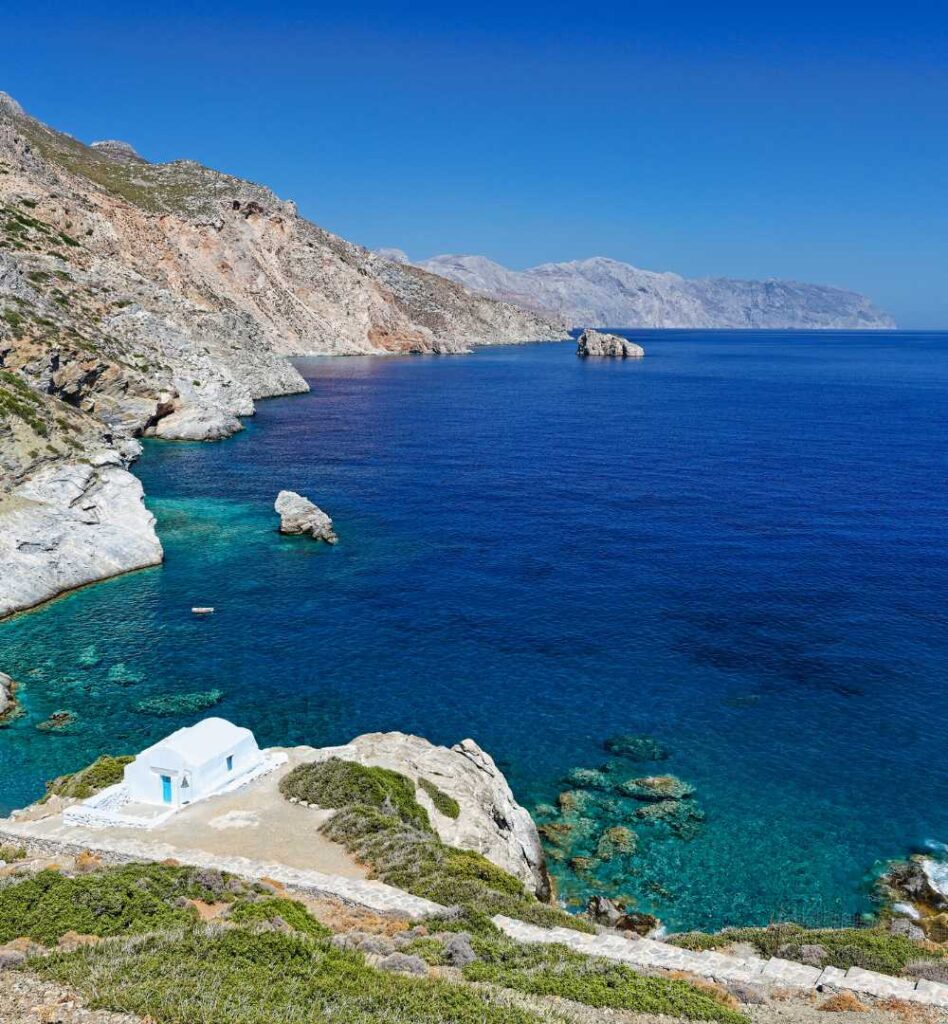
Agia Anna is probably the most famous beach on the island thanks to The Big Blue film location that made this tiny cove iconic.
Small, rocky, clear waters:
The water is unbelievably clear, but the beach is rocky, so water shoes are a good idea.
Extra tip:
You can see the Hozoviotissa Monastery perched above the cliffs from the water.
Kalotaritissa Bay
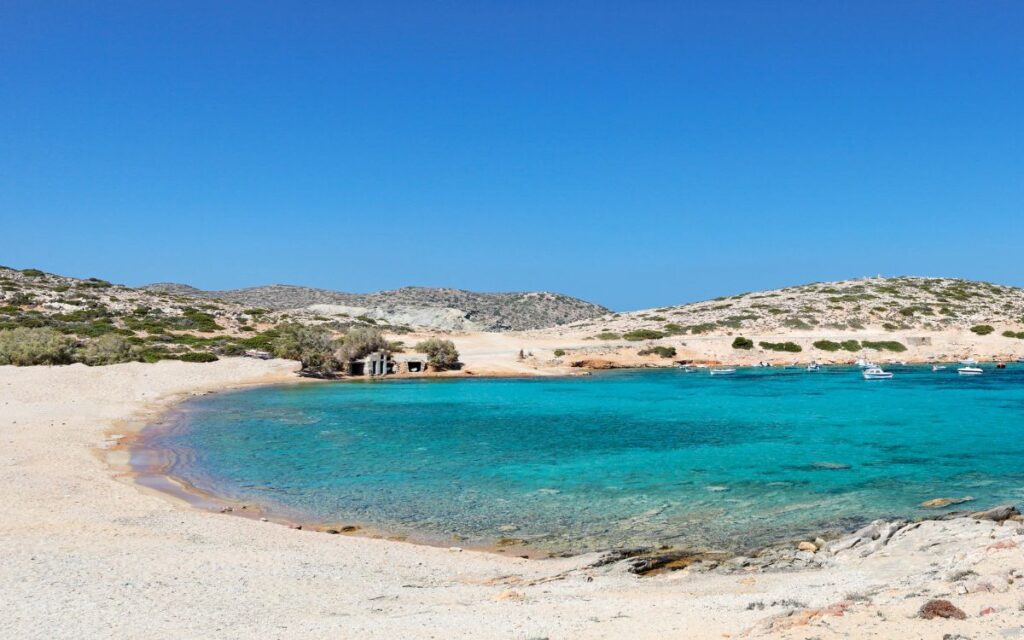
Kalotaritissa is a gentle, sheltered bay in the south of Amorgos with peaceful water and a relaxed vibe.
Beach café: A simple canteen for snacks, drinks, and sunbeds.
Sunbeds: Available during the summer months.
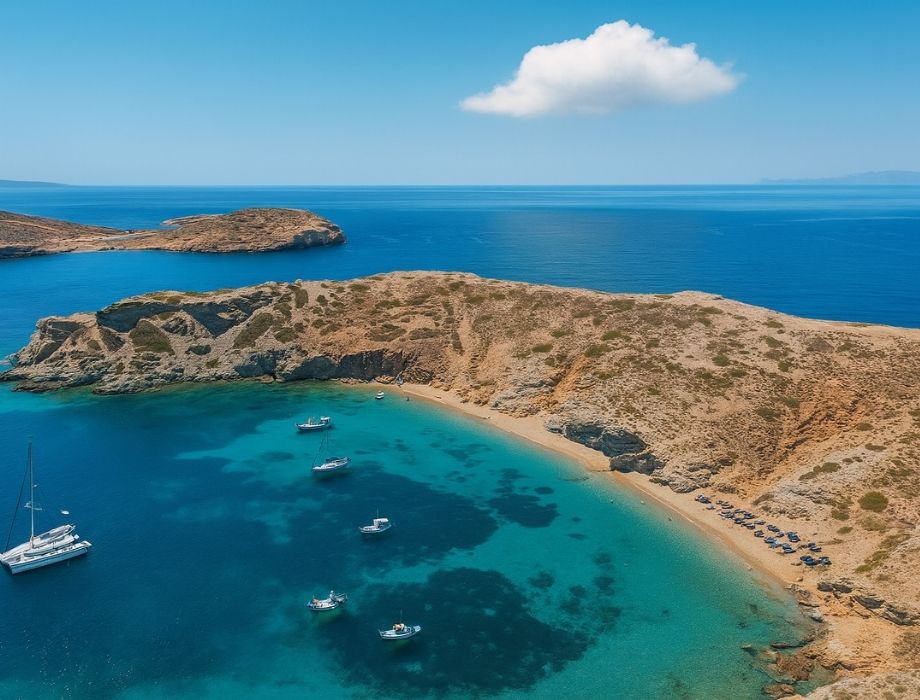
Boat to Gramvousa:
From here, small boats run to the islet of Gramvousa, one of the most beautiful swimming spots in Amorgos.
Mouros Beach
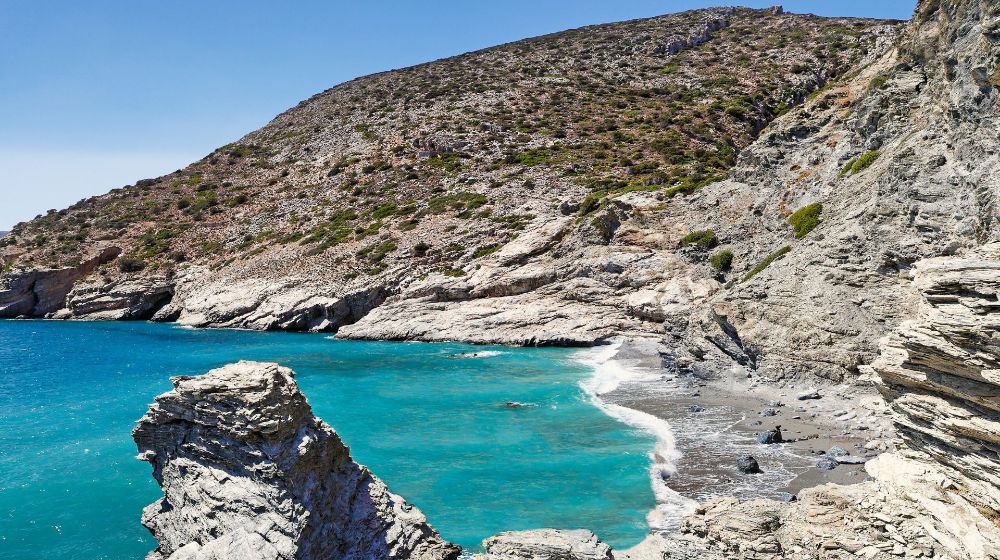
Mouros is one of the most dramatic beaches in Amorgos, known for its deep blue water and rocky landscape.
Why it’s unique:
- Striking blue, clear, deep water with a pebbly seabed
- Impressive rock formations
- Two sea caves you can swim into on the right side of the bay (always be careful and take a companion with you).
Who it’s best for:
Strong swimmers, snorkelers, and anyone who enjoys wild, scenic beaches. Definitely not ideal for very young children.
Maltezi Beach
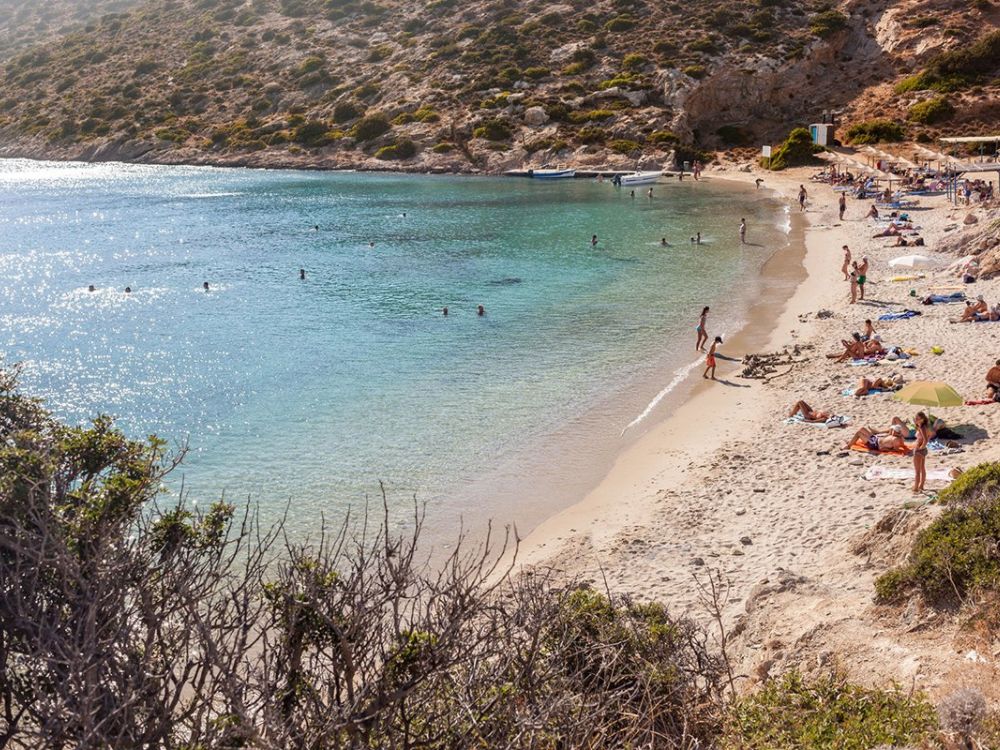
Maltezi is a beautiful, protected bay near Katapola.
How to get there:
Walk about 30 minutes from Xilokeratidi village along the coastline, or take a water taxi from Katapola port.
The water taxis run regularly in summer and it is a quick and easy ride, especially on hot days.
Wander around the Amorgos Shipwreck

Close to Kalotaritissa beach, in the small Liverio Bay, you will find the sunken ship, Olympia.
In February 1980, the captain of the ship faced very bad weather and tried to run aground on Amorgos.
Unfortunately, the ship was thrown onto the rocks of the bay, but luckily, the whole crew survived.
Liverio Bay is a very popular hiking destination and an exciting diving area, as it has rocks with rich sea flora and fauna.
Visit the Monastery of Hozoviotissa
One of the best things to do in Amorgos is to hike to the cliff-perched centuries-old Greek Orthodox monastery of Panagia (Holy Mary) Hozoviotissa.
It was built in the ninth century (812 – 813 AD) and renovated in 1088 AD by the Byzantine emperor Alexios I Komnenos.
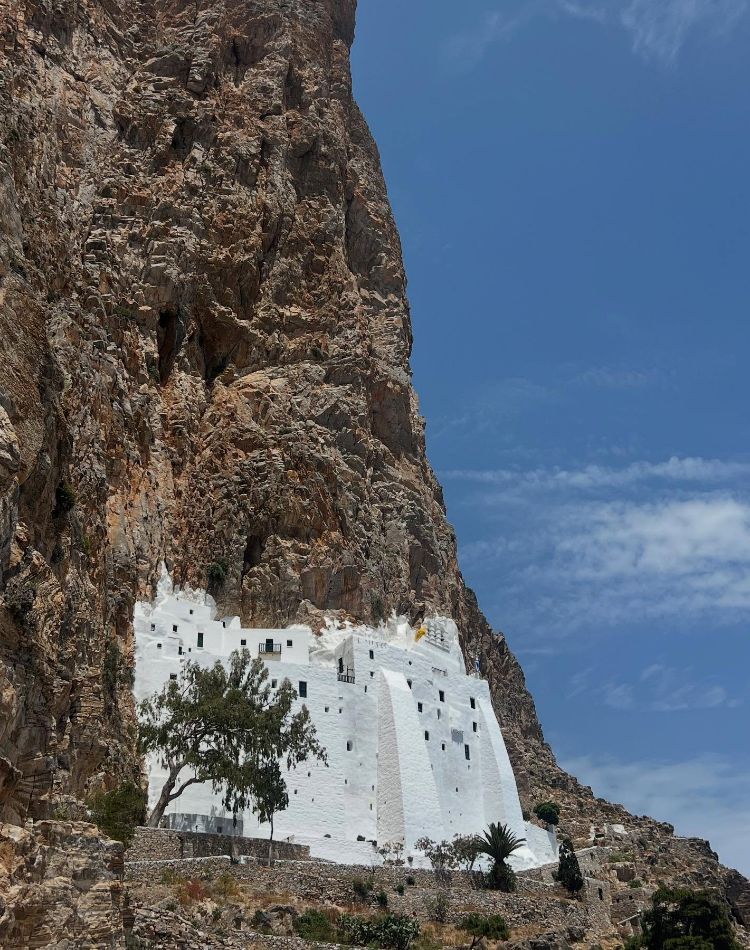
Perched on the cliffs and visible only from the sea, this monastery feels like a hidden gem.
To reach it, you’ll need to climb 300 steep steps — but trust me, the views and magical sunset make every step worth it!
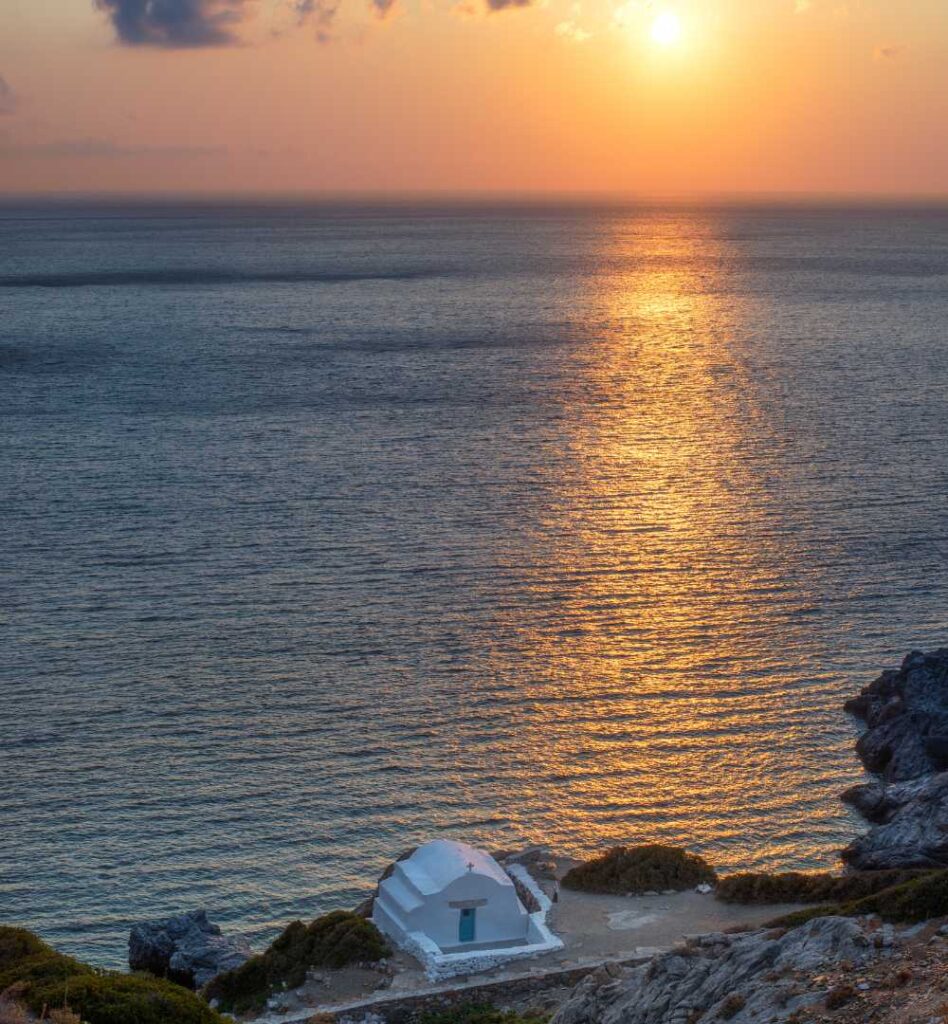
It’s about 2 km from Chora, near Agia Anna beach with its pretty little church.
You can hike up if you’re feeling adventurous, or just drive — there’s even parking nearby.

Here you will be served loukoumi, traditional roasted (psimeni) Amorgian raki, and Greek coffee!
To get into the monastery, you need to wear long pants or a skirt and have your shoulders covered. Free Entrance. Visiting hours: 08:00 – 13:00 & 17:00 – 19:00. Contact +30 2285 071274.
Taste Amorgos Local Delicacies
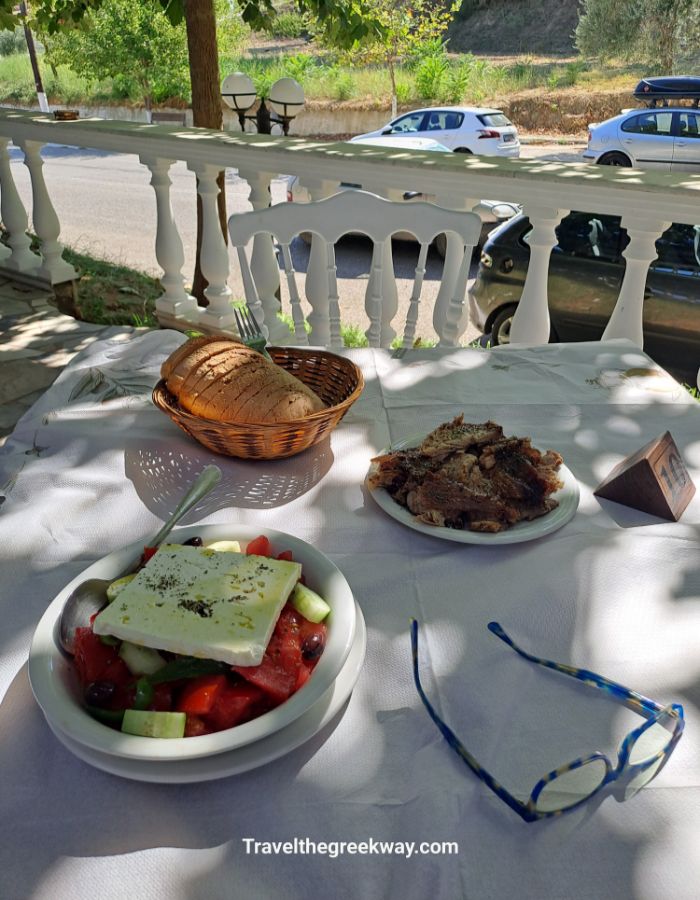
Amorgos has a rich food tradition, shaped by its small villages, local farming, and homemade recipes passed down for generations.
The island is especially proud of its cheeses, honey, pastries, and its famous psimeni raki.
Must-Try Dishes
- Patatato: A slow-cooked beef or goat stew with potatoes, onions, and spices. Usually served during festivals.
- Fava: A creamy yellow split-pea puree, often topped with onions, capers, and olive oil.
- Anevates: A soft cheese pie flavored with raki — sweet, mild, and very traditional.
- Kolokythokeftedes: Zucchini fritters with herbs, often served in mountain taverns.
Local Cheeses
Amorgos is known for excellent artisanal cheeses:
- Xynomyzithra, soft, tangy, and perfect with honey
- Xinotiro, sharp and salty
- Ladotyri, aged in olive oil
- Kefalotyri, hard, rich, and great for grating
- You’ll find these in local taverns, small grocery shops, and village festivals.
Traditional Sweets
Pasteli: Sesame-and-honey bar, a classic Cycladic sweet.
Xerotigana: Crispy fried pastries, usually eaten at Easter, Christmas, and weddings.
Psimeni Raki — The Taste of Amorgos
This is the island’s signature drink: a homemade liquor flavored with honey, cinnamon, and cloves.
It’s offered everywhere — at taverns, homes, and even inside the Hozoviotissa Monastery.
If you’re in Amorgos on July 26th, don’t miss the Psimeni Raki Festival in Katapola with food, desserts, dancing, and free tastings.
Best Places to Try Local Food
Taverns in Lagada and Tholaria – authentic recipes and homemade wine such as ‘Kali Kardia & Choreftis’.
Family-run spots in Chora – great sweets, pastries, and local dishes such as the coffeehouse Parvas.
Waterfront taverns in Katapola and Aegiali – fresh seafood and meze such as Nautilia Cafe.
Amorgos Hiking Guide (Blue Paths)

Amorgos is one of the best hiking islands in the Cyclades.
The trails are known as the Blue Paths because no matter where you walk, you’ll always see the sea.
Many of these routes date back to ancient times and still connect villages, monasteries, and old settlements.
Overall vibe:
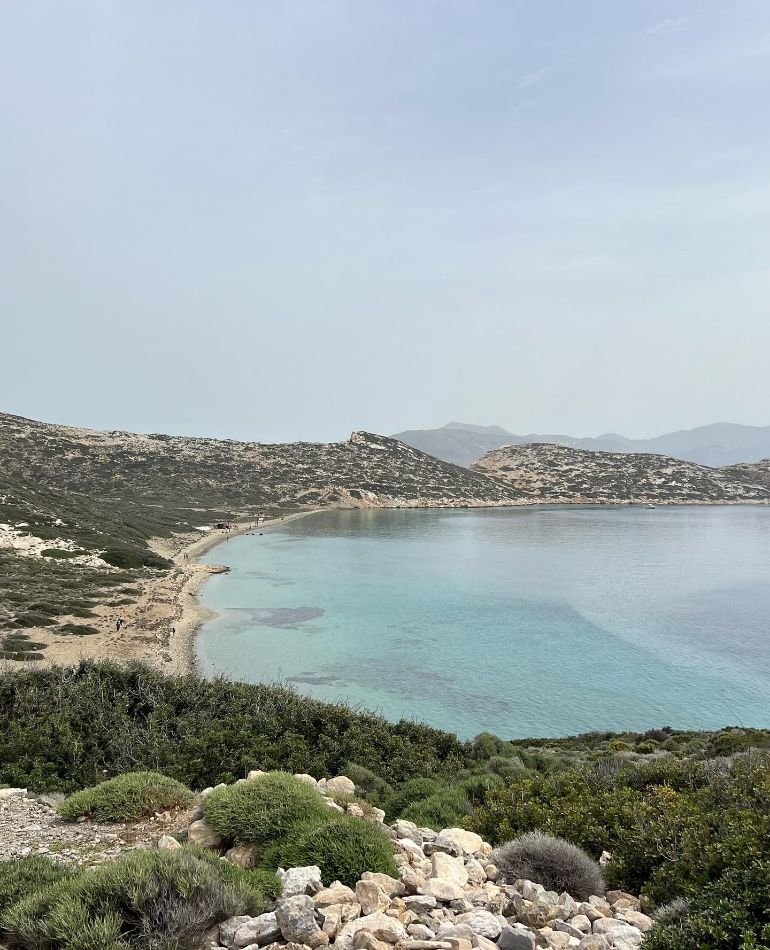
- Wild, scenic, and peaceful
- Expect wind, rocky terrain, and incredible views
- Suitable for all levels, depending on the trail.
General tips:
- Wear hiking shoes with a good grip
- Bring plenty of water (there are no shops on most routes)
- Avoid very windy days
- Start early in summer to avoid the heat. For more about hiking, check out my How to Hike Safely in Greece post.
Hozoviotissa to Asfondilitis Trail
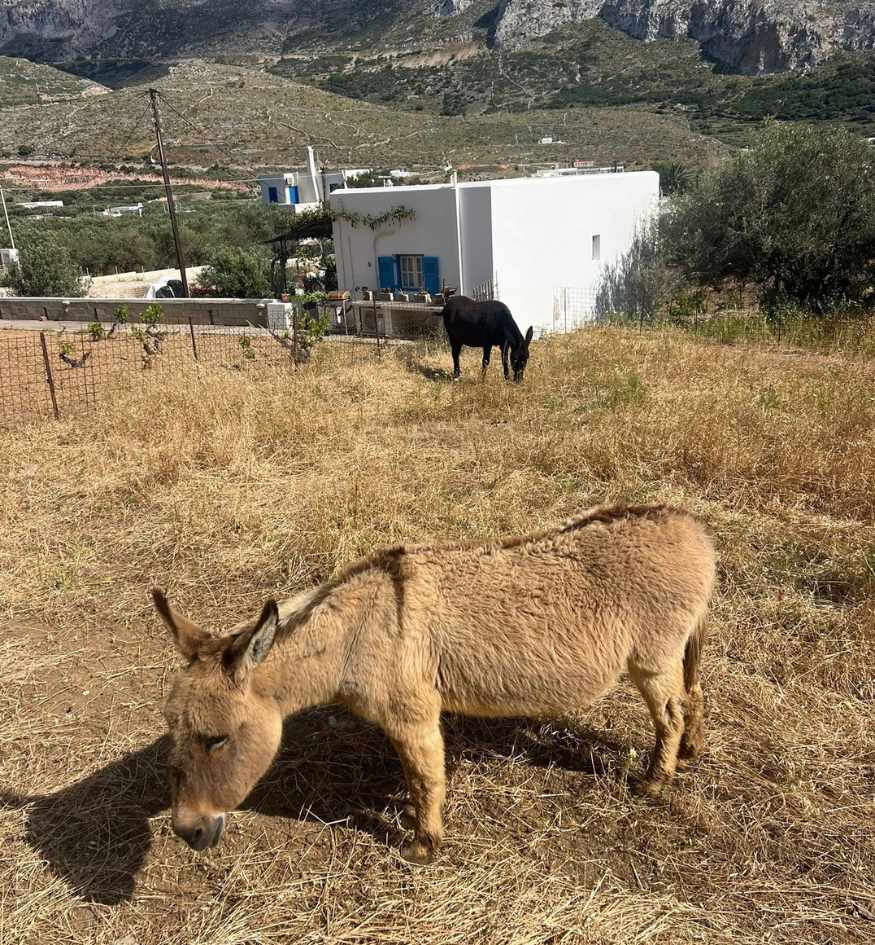
This is one of the most iconic hikes in Amorgos.
Highlights:
- Begins near the famous Hozoviotissa Monastery
- Passes through Kapsala and ends in the abandoned village of Asfondilitis
- Features old rural architecture and the famous rock carvings by Michalis Roussos.
Distance & time: About 3–4 hours
Difficulty: Moderate
Best for: Anyone who enjoys culture, history, and sea views.
Krokellos Peak Hike
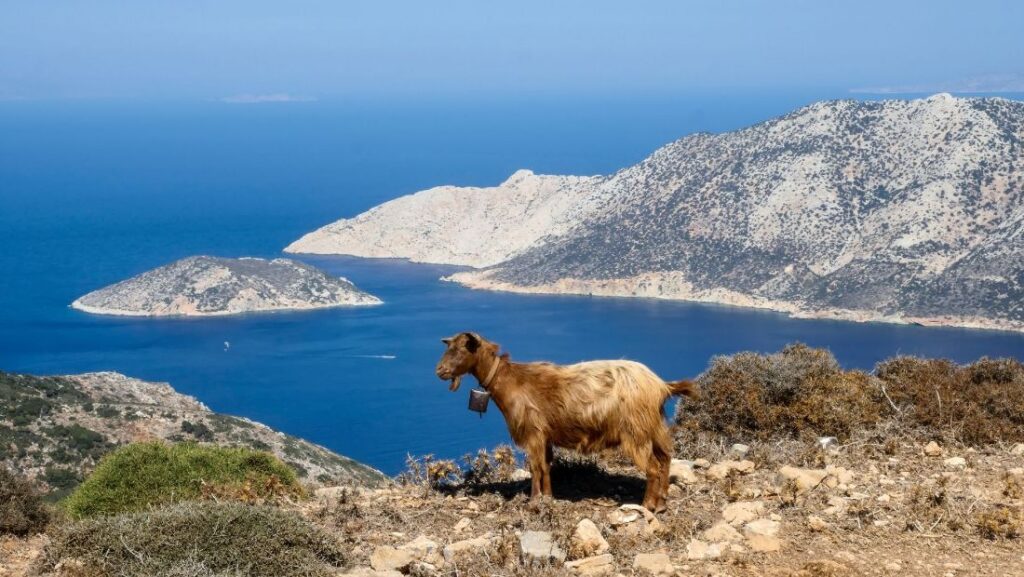
This is the highest point on the island at 821 meters.
Highlights:
- Panoramic 360° views over the sea and neighboring islands
- A true “on top of the world” feeling
- A satisfying challenge for hikers with experience
Distance & time: 4–5 hours
Difficulty: Hard
Best for: Experienced hikers and adventure travelers.
Practical Travel Tips for Amorgos
How to Get to Amorgos
Amorgos has no airport, so the only way to get there is by ferry.
From Athens (Piraeus Port):
Travel time: 5–9 hours, depending on the ferry type. Arrives at Katapola or Aegiali.
Tickets sell out in July and August — book early.
From Naxos (closest airport): Fast ferries: 1–1.5 hours. Travel all year. Great option if you want the shortest route.
Island-hopping connections:
Santorini (seasonal), Ios (seasonal), Koufonisia, Schinoussa, Iraklia, Donoussa (year-round via Skopelitis).
Where to book: Use sites like FerryHopper or FerryScanner to compare prices and book online.
Getting Around Amorgos
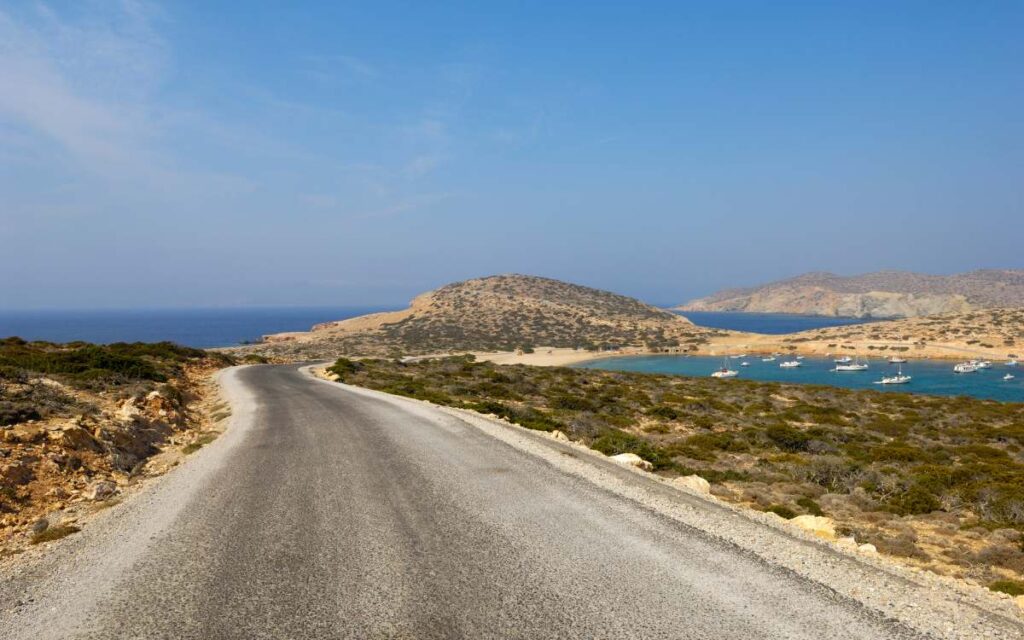
Amorgos is a long, narrow island with winding roads and lots of elevation changes. Transportation options exist, but a rental vehicle gives you the most freedom.
Rental car or scooter (best option): You’ll reach beaches, hikes, and remote viewpoints easily. Parking is usually simple outside peak season. Roads are safe but narrow — drive slowly.
Public bus: Runs between the major villages and beaches. Very affordable but not frequent enough for full flexibility.
Taxi: Limited number on the island. Book in advance, especially in summer.
Boats and water taxis: This is also a great option and you can get from Katapola to Maltezi Beach. From Kalotaritissa to Gramvousa and they also cover small tours to remote coves run in high season.
Best Places to Stay in Amorgos (Quick Picks)
Best area for first-timers: Aegiali and Chora.
Best for quiet evenings: Katapola
Best for hikers: Katapola or Aegiali
Best for couples: Aegiali or Chora
Best for budget stays: Katapola
Aegiali Hotels: Seafront Petradi Studios & Villa and Alonistria.
Chora Hotels: Theasis Suites and Pension Hlias – Chora Amorgos
Katapola Hotels: Seaviews Kaerati Apartments and Pension The Big Blue.
Best Time to Visit Amorgos?
Amorgos is most vibrant between May and September, with peak season in July and August.
Average summer highs: around 33 °C (91°F) in July and August.
Sea temperatures: at their warmest in August and September, 25–28°C (77–82°F).
Are there direct ferries from Santorini to Amorgos?
Yes, during the summer season, there are direct ferries from Santorini to Amorgos, usually operated by high-speed vessels. However, schedules vary, so it’s best to check in advance.
Is Amorgos a good destination for families?
Yes, Amorgos is a family-friendly island with safe beaches, charming villages, and a relaxed atmosphere. However, some beaches have rocky terrain, so water shoes might be helpful for kids.
Is Amorgos a crowded island?
Compared to more popular Cycladic islands like Mykonos or Santorini, Amorgos remains relatively untouched and less crowded, even in peak season. It’s perfect for travelers seeking tranquility and natural beauty.
What is the history of Amorgos?
Amorgos has a long, fascinating history shaped by ancient civilizations, island traditions, and its strategic spot in the Aegean Sea.
The island has been inhabited for thousands of years, and traces of each era can still be seen in its villages, ruins, and archaeological sites.
Early Settlements (4000 BC and earlier)
Human presence on Amorgos goes back to prehistoric times. Archaeologists have found ceramics, tools, and remains that show people lived here as early as 4000 BC.
The Minoan Influence (3000–1450 BC)
During the Bronze Age, the Minoans arrived from Crete and founded early settlements. Their influence can still be seen today in pottery styles and artifacts discovered around the island.
Classical Period (8th century BC onwards)
During this time, Amorgos flourished. Settlers from nearby Naxos founded Arkesini, one of the island’s most important ancient towns.
Today, you can still visit:
The ruins of Ancient Arkesini
The remains of a Hellenistic tower from the 4th century BC
Roman Era (146 BC onwards)
In Roman times, Amorgos served as an exile island due to its remote location. Despite that, trade and farming continued, and communities grew.
Byzantine Period (330–1453 AD)
This was a challenging period for the island. Amorgos suffered repeated pirate raids, forcing residents to build settlements inland and fortify their villages.
The most important creation of this era is the Hozoviotissa Monastery (built in 812–813 AD and renovated in 1088 AD), which remains the island’s spiritual symbol.
Venetian & Ottoman Rule (13th–19th century)
In the 13th century, Venetians built fortifications like the Castle (Kastro) in Chora.
In 1537, Amorgos fell under Ottoman rule after being attacked by the famous Ottoman admiral Hayreddin Barbarossa.
The island remained under Ottoman control until the Greek War of Independence.
Modern Era
Amorgos officially became part of Greece in 1824.
Today, it has around 1,970 residents who work mostly in farming, fishing, beekeeping, and tourism.
Despite tourism growth, Amorgos has managed to keep its traditional, slow-paced character — one of the main reasons travelers fall in love with it.
Final Thoughts
Amorgos is one of those Greek islands that stays with you long after you leave. It has a way of slowing you down — with its deep blue water, peaceful villages, dramatic cliffs, and warm, genuine people.
If you’re looking for an island that feels authentic and has soul, Amorgos is the place.
Join Our FB Group & Subscribe to My YouTube Channel!
For more Greece travel tips and ideas for your next trip, join my free Facebook Group or follow me on YouTube for more videos from around Greece.
Happy and safe travels,
Evgenia
How to Get to Athens Port (Piraeus) from Athens Airport

- Bus: If you are arriving at Athens International Airport you can travel straight to the port by taking the X96 express bus (€5.5, children <6 yo, free entrance), which departs every 40 minutes and the average trip lasts 1 hour – runs 24/7. X93 will take you to Athens center.
- Metro: (€9) is easily found across airport arrivals (blue line – M3) going directly to Piraeus port. The average trip to Piraeus lasts 1 hour.
- Taxis are available in front of the airport (around €45 to Athens, €55 to Piraeus (depending on the traffic in Kifisos), and take up to 3 or 4 people with small luggage)
- Rent a car with Discover Cars for reliable, new cars at affordable prices
- You don’t like driving but love hassle-free solutions? Book a Private transfer with an English-speaking driver from Athens International Airport to Piraeus Ferries, or anywhere else in Greece.
My Most Popular Posts
- Greece Packing List
- Mamma Mia Greece Locations
- First Time to Greece – Most Important FAQ
- Athens Hotels Near Acropolis
- Best Athens Beach Hotels
Essential Greek Travel Info
- ‘Hello’ and ‘Thank You’ in Greek: “Ya sou” and “Efharisto”
- Booking.com: I use Booking.com mostly for Europe.
- All-Inclusive Resorts in Greece
- Rent an Affordable Car in Greece
- Athens Metro Website (timetables and ticket info)
- Trains (Hellenic Train)
- Public Buses KTEL
- Get Your Guide: For all your day or multi-day tours and city guide needs, I use Get Your Guide
- Emergency Numbers Anywhere in Greece: AMBULANCE 166 – FIRE 199 – POLICE 100– EMERGENCY NUMBER 112

Can’t beat Amorgos for its hiking trails!
It is one of the best islands for hiking, I totally agree with you!